 SafeBOT

Bayliner Boat Covers: Fit, Buying & Care Guide
Bayliner Boat Covers: Fit, Buying & Care Guide Bayliner owners usually need a cover that fits the model, supports outdoor storage, and can handle the way t

Bayliner Boat Covers: Fit, Buying & Care Guide
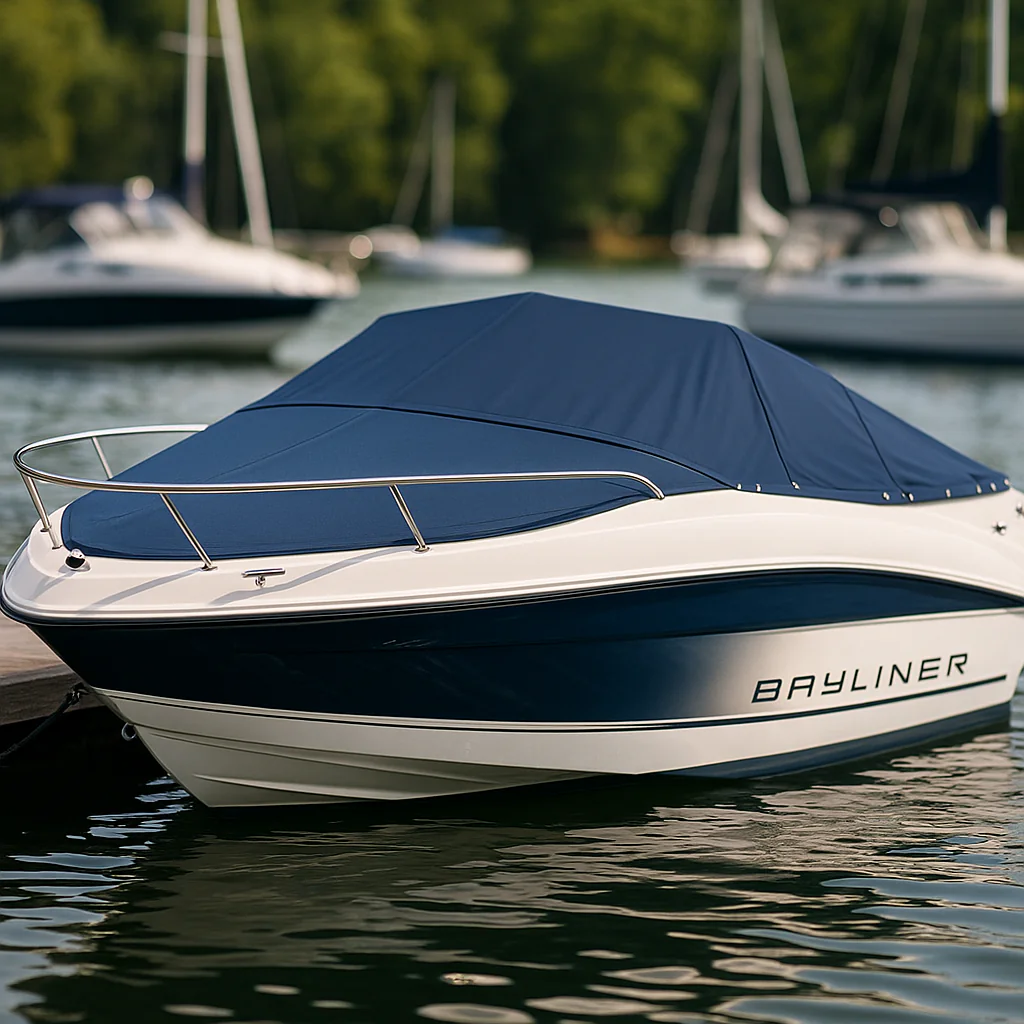
Bayliner owners usually need a cover that fits the model, supports outdoor storage, and can handle the way the boat is actually used. A cover for a bowrider kept in a driveway has different priorities from a cockpit cover on a marina-kept cruiser or a full cover used while trailering.
This guide keeps the decision practical: measure first, understand OEM versus aftermarket options, inspect used covers carefully, choose hardware that matches your storage routine, and build a care checklist that reduces moisture, abrasion, and loose-fabric problems. For measurement details, start with the Safeboatz boat measuring guide.
Quick Answer: What Matters Most for a Bayliner Cover?
Fit matters more than the brand label alone. A useful Bayliner boat cover should match length, beam, windshield height, rails, outboard or sterndrive layout, tower or bimini hardware, and the storage or trailering use case. Good fabric, reinforced seams, support poles, ventilation, and secure straps all help, but they cannot rescue a cover that is the wrong size.
Step 1: Identify Your Bayliner Setup
Before shopping, write down the model, model year, overall length, beam, engine layout, tower or bimini details, swim platform, trolling motor, rails, and whether the boat has unusual add-ons. Photos from the bow, stern, side, cockpit, and windshield help when comparing pattern-fit and semi-custom options.
- Bowriders often need careful windshield and bow-rail clearance.
- Deck boats may need more beam and cockpit coverage than length alone suggests.
- Fishing models may have trolling motors, pedestal seats, or console hardware to pad.
- Cruisers and cuddy models may need separate cockpit or mooring cover decisions.
OEM, Aftermarket, or Universal: How to Choose
OEM and pattern-fit covers
OEM or pattern-fit covers can be the easiest choice when the boat is close to factory configuration and the pattern is current. The benefit is predictable shape around the windshield, bow, cockpit, and stern. The trade-off is price, availability, and less flexibility if the boat has aftermarket hardware.
Aftermarket semi-custom covers
Semi-custom options can work well when you measure carefully and choose the correct hull style. Look for fabric weight, seam reinforcement, vents, support compatibility, strap layout, and whether the manufacturer describes the cover as suitable for storage only or trailering.
Universal covers
Universal covers are usually best for short-term dust or light storage use. They may leave extra fabric, weak contact points, or awkward strap routing. If the boat is stored outside for a season or towed covered, a closer fit is usually worth the extra effort.
Used Bayliner Covers: Inspection Checklist
A used cover can be a smart purchase only if the condition and fit are clear. Ask for photos of the label, all corners, hems, seams, straps, vents, snaps, elastic, ratchets, and the underside. If possible, confirm the exact Bayliner model the cover came from and compare hull changes between years.
- Avoid brittle fabric, powdery coating, stretched elastic, missing snaps, and thread rot.
- Check whether stains are surface dirt or signs of mildew and trapped moisture.
- Look for patched holes near windshield corners, cleats, and tower mounts.
- Confirm that strap locations will not cross tires, brake lines, or sharp trailer brackets.
- Do not assume a cover for a similar length will fit your beam or windshield shape.
Cockpit Cover vs Full Boat Cover
A cockpit cover protects the seating area and can be convenient for marina or short-term use. A full cover usually offers broader protection for outdoor storage, especially against leaves, bird droppings, UV exposure, and general debris. The better choice depends on where the boat lives, how often you uncover it, and how much of the hull and deck need coverage.
If the boat is stored outside, think beyond rain. You need runoff slope, airflow, clean contact points, and inspections after storms. The boat cover ventilation guide explains why moisture management matters even when the top fabric sheds water.
Trailering Considerations
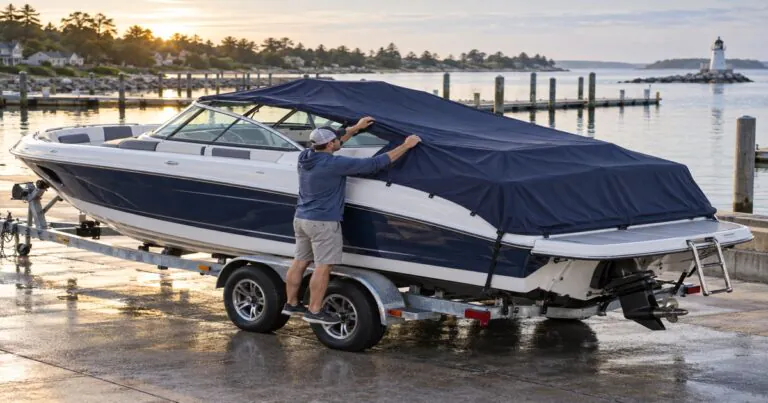
Do not tow with a cover unless it is intended for trailering and installed according to the maker’s instructions. Trailering adds wind load, vibration, strap movement, and abrasion. Before highway speed, take a short test drive, stop, and inspect the hem, straps, mirrors, transom, windshield, and any loose fabric.
For broader setup guidance, see the trailerable boat cover guide and the Amazon boat cover buying guide. Product listings can be useful, but they should be checked against your actual measurements.
Installation Framework
- Clean the boat so grit does not grind under the fabric.
- Pad windshield corners, cleats, rails, trolling-motor brackets, and sharp fittings.
- Install support poles or bows so water runs off instead of pooling.
- Set the hem evenly before tightening straps.
- Route straps away from tires, suspension, brake lines, and sharp trailer edges.
- Recheck after the first rain, windy day, or short tow.
Care and Storage Routine
After use, dry the cover before folding. Brush off leaves and dirt instead of packing them into the fabric. Use mild cleaning methods recommended by the cover maker, avoid harsh chemicals unless the maker allows them, and store the cover where rodents and moisture are less likely to reach it.
Keep a small photo log of fit, strap routing, wear marks, and seasonal repairs. This makes it easier to notice changes before a seam fails or a rub point becomes a hole.
Where Safeboatz Fits
Safeboatz focuses on measured fit, support, ventilation, and trailerable stability for covered use cases. If your Bayliner is in the current size range, compare the 17–19 ft trailerable cover and 20–22 ft trailerable cover. For a non-product checklist, download the free Safeboatz Boat Protection Guide.
Related Fit Guides and Trusted Resources
Bayliner owners should verify length, beam, windshield shape, and trailer clearance before choosing a cover. If you are still measuring, use the Safeboatz measuring checklist. For broader fit comparisons, see the boat covers by model guide and the bass boat cover guide.
For general boating maintenance context, the BoatUS expert advice archive is a useful non-competitor resource.
FAQ
Are OEM Bayliner covers always better?
No. OEM or pattern-fit covers can be excellent for factory layouts, but a quality aftermarket cover may be better when you need different fabric, vents, hardware, or support features.
Can I use a used cover from another Bayliner model?
Only if measurements, windshield shape, stern layout, and hardware match closely. Similar length alone is not enough.
Should a Bayliner cover be breathable or waterproof?
Look for water shedding plus moisture management. Ventilation, slope, and dry storage habits are as important as the fabric label.
What is the first sign the fit is wrong?
Watch for pooling water, tight seams at corners, loose fabric that flaps, straps that pull unevenly, or gaps that expose the cockpit.
Related Bayliner fit and ownership resources
Bayliner owners should treat model name as a starting point, then confirm measured length, beam, hardware height, storage conditions, and whether the boat is trailered. Safeboatz follow-ups include boat measurement steps, 17–19 ft cover fit, 20–22 ft cover fit, and strap and wind checks.
For neutral industry and safety context, review NMMA recreational boating statistics and U.S. Coast Guard boating safety resources.
Boating Enthusiasts — Join the Crew!
Free Boat Protection Guide Download Yours Now
Get your free copy of The Complete Boat Protection Guide — expert tips, real-world strategies, and exclusive insights from the Safeboatz team.