 SafeBOT

Boat Cover Ventilation: Moisture, Mold & Storage Guide
A complete guide to boat cover ventilation: airflow, condensation, mold prevention, support poles, vents, fabric choice, storage checks, and when to inspect.

Boat Cover Ventilation: Moisture, Mold & Storage Guide
Boat cover ventilation is one of the easiest details to overlook when choosing a cover. Most owners focus on waterproof fabric, strap strength, or UV resistance first. Those things matter, but a cover also changes the air space around the boat. If humid air is trapped under the cover for days or weeks, moisture can settle into upholstery, carpet, storage compartments, wiring areas, and canvas seams.
A good cover should shed water from the outside while giving trapped moisture a reasonable path to escape. That does not mean the boat should be left exposed. It means ventilation, support, fabric choice, and inspection habits should work together.
Why Moisture Builds Up Under a Boat Cover
Moisture under a cover does not only come from rain. It can come from damp carpet, wet ropes, life jackets, bilge water, fishing gear, upholstery, condensation, or temperature swings. A boat covered after a wet weekend can carry moisture inside even if the cover itself is doing its job.
Common moisture sources include:
- Damp gear: ropes, towels, jackets, and cushions can release moisture after the cover is installed.
- Temperature changes: warm days and cold nights can create condensation on metal, glass, and vinyl surfaces.
- Standing water: low spots in the cover can reduce airflow and push fabric against the boat.
- Blocked compartments: closed lockers and seat bases may hold humid air if the boat was not dried first.
- Oversealed edges: a tight perimeter helps the cover stay put, but the interior still needs planned airflow.
Ventilation vs Waterproofing: You Need Both
Waterproofing and ventilation are not opposites. A boat owner usually needs both: a cover that keeps rain and debris out, plus a design that helps moisture escape from inside the covered space.
Water resistance is about external protection. Ventilation is about what happens after the boat is covered. A cover can be very water-resistant and still create mildew problems if it sits flat on wet surfaces or blocks all airflow.
The practical goal is simple: keep outside water moving off the cover, keep the cover from sagging onto the boat, and give humid air a way out.
Breathable Fabric vs Built-In Vents
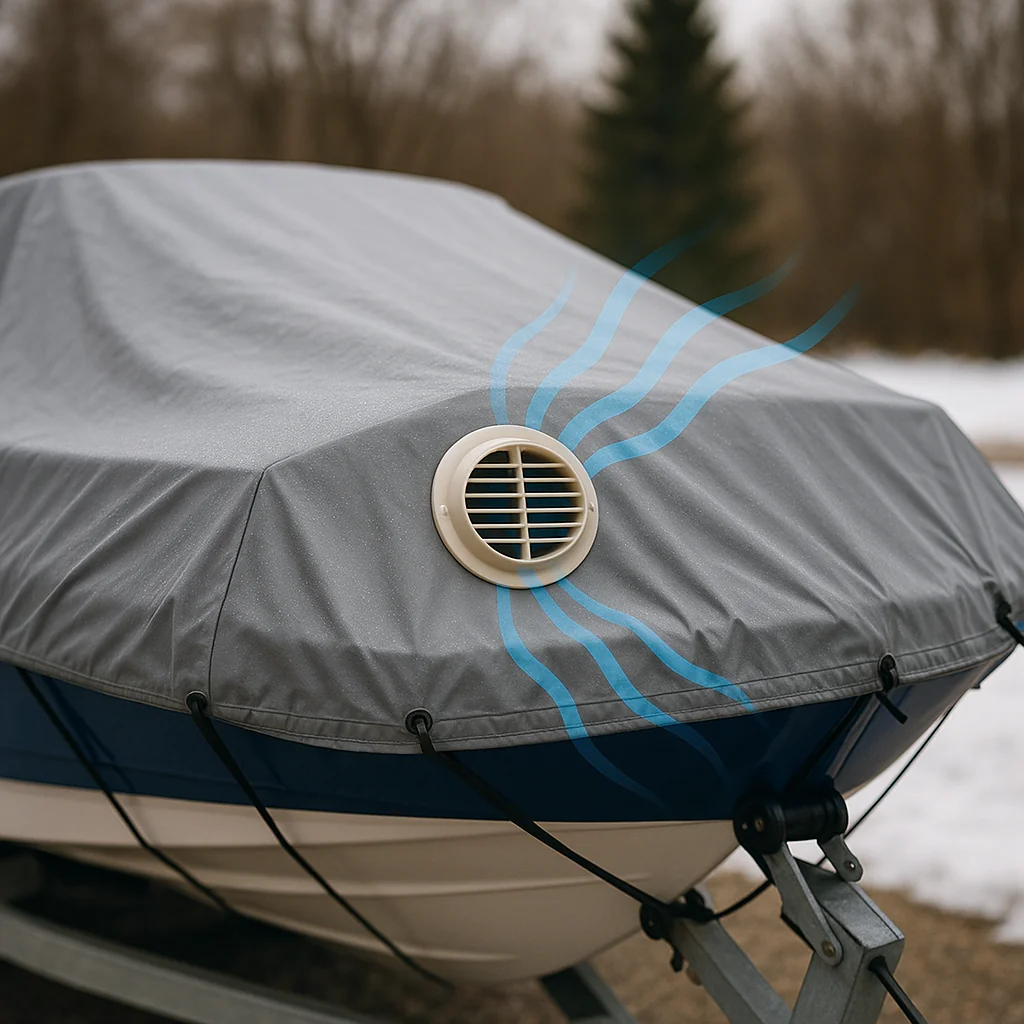
Breathable fabric can allow some vapor movement through the material. Built-in vents create more direct airflow points. Both can help, but neither solves the whole problem by itself.
- Breathable fabric can reduce the feeling of a sealed plastic shell, but it still needs slope and support.
- Vent ports can help air exchange, but they must remain open and correctly positioned.
- Support poles or bows create interior space so fabric does not sit directly on wet upholstery.
- Good strap tension reduces flapping while leaving the support system to maintain airflow space.
If you store outdoors, the best setup is usually a water-shedding cover with supported slope, stable tension, and ventilation points that are not blocked by folded fabric, leaves, or snow.
How Support Poles Improve Airflow
Support poles are not only for preventing water pooling. They also create air space under the cover. When fabric lies flat against seats or the cockpit, moisture has fewer places to move. A raised centerline or supported slope makes it easier for air to circulate and for water to run off.
For open bow boats, bass boats, pontoons, and cockpit layouts with large seating areas, support can matter as much as fabric. Without support, even a strong cover can sag into a pocket where water collects and airflow slows.
Ventilation Checklist Before Storage
Use this checklist before covering the boat for more than a few days:
- Remove wet towels, life jackets, ropes, and soft gear.
- Open compartments briefly so damp air can escape before covering.
- Dry visible standing water in the cockpit, bilge area, and storage lockers.
- Install support poles or bows so the cover sheds water.
- Check that vents are not folded shut or blocked by fabric.
- Tighten straps evenly without crushing the cover flat against upholstery.
- Inspect after the first rain, wind, snow, or sharp temperature swing.
Signs Your Cover Is Not Ventilating Well
You may need to adjust the cover setup if you notice musty odor, damp seats, mildew spots, condensation on electronics, water pooled in the cover, or fabric pressed tightly against the same interior surfaces after each storm.
One warning sign is moisture that returns even after you dry the boat. That usually means the problem is not only a wet boat; it may be airflow, pooling, or storage setup.
How Fit and Straps Affect Moisture Control
A loose cover can flap and wear, but an overly flat cover can trap moisture. The best fit is stable, supported, and inspectable. Ratchet-style systems can help hold a cover evenly around the hull, while support poles maintain the air space above the cockpit.
For more on tension and trailering, read the ratchet boat cover guide. If you are still choosing a material, see what 900D polyester means for boat covers.
When to Inspect During Storage
Inspection matters because the best cover setup can shift. Check the boat after heavy rain, snow, strong wind, or a long temperature swing. Look for blocked vents, loose straps, sagging fabric, pooling water, or new rub points.
If you store the boat for winter, a quick mid-season check can prevent small moisture problems from becoming spring cleanup work.
Final Take
Boat cover ventilation is not a luxury feature. It is part of keeping the covered space dry and manageable. Choose a cover that sheds water, supports airflow, stays stable, and is easy to inspect. Then build the habit of drying the boat before storage and checking it after weather changes.
For a simple seasonal checklist, download the free Safeboatz Boat Protection Guide.
FAQ
Do waterproof boat covers need ventilation?
Usually yes. Waterproofing helps block outside water, but moisture can still come from inside the boat. Ventilation helps reduce trapped humidity.
Can ventilation make a cover less waterproof?
A poorly designed vent can leak, but proper vent placement is meant to balance water shedding and airflow. The cover still needs slope and support.
What is the easiest way to reduce mold risk?
Dry the boat before covering it, remove wet gear, use support poles, keep vents clear, and inspect the boat during storage.
Do support poles help with ventilation?
Yes. Support poles create interior air space and help the cover shed water instead of lying flat against seats or cockpit surfaces.
Related moisture and storage resources
For a complete storage setup, pair this ventilation guide with Safeboatz articles on breathable vs waterproof covers, winter boat cover storage, and smart cover ventilation. The free Boat Protection Guide is useful if you want a step-by-step pre-storage checklist.
For neutral context, review the EPA mold resources and NOAA/NWS marine weather resources.
Boating Enthusiasts — Join the Crew!
Free Boat Protection Guide Download Yours Now
Get your free copy of The Complete Boat Protection Guide — expert tips, real-world strategies, and exclusive insights from the Safeboatz team.