 SafeBOT

Boat Cover Chafing: How to Stop Rub Marks on Gelcoat
A practical guide to boat cover chafing: how to stop rub marks on gelcoat, reduce fabric movement, protect contact points, route straps, and inspect a fitted trailerable boat cover before storage or towing.

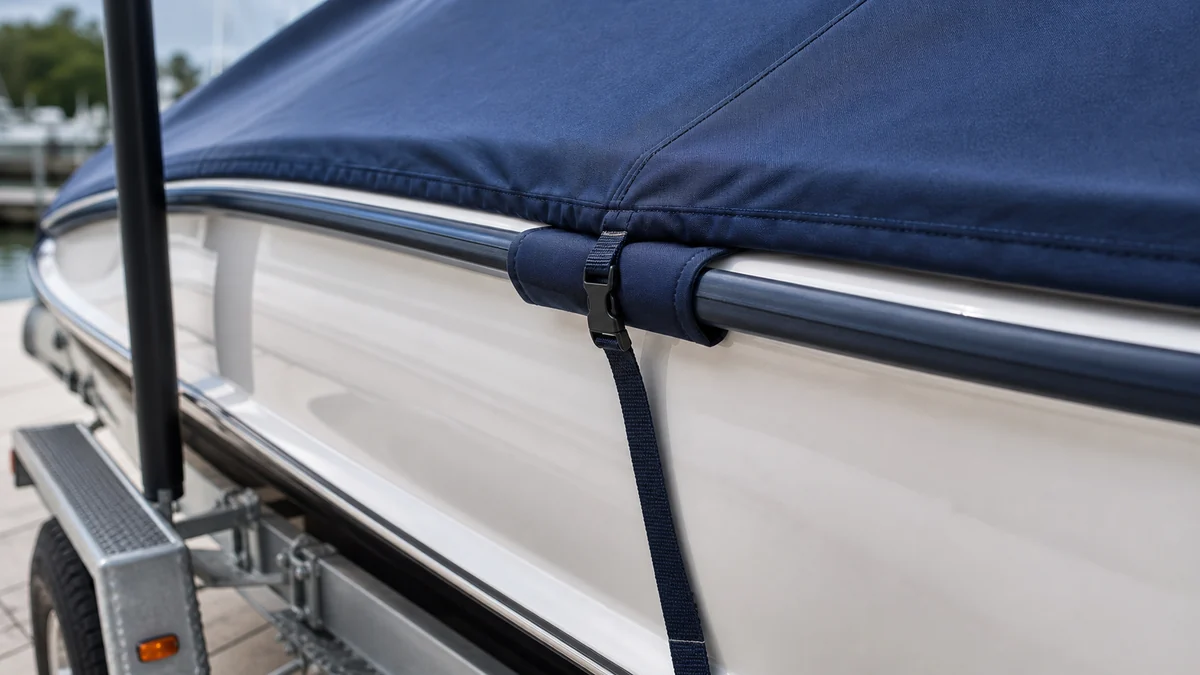
Boat cover chafing usually starts as a small rub mark: a bright spot on the gelcoat, a worn stripe near the rub rail, or a fuzzy patch where fabric has been moving over hardware. Left alone, that movement can wear the cover, dull the finish, and turn one storage habit into a repeat problem every time the wind picks up.
This guide explains how to stop a boat cover from rubbing on gelcoat, rails, consoles, windshields, trailer hardware, and sharp fittings. It is written for US boat owners who use fitted trailerable covers, including Safeboatz Storm Series owners, but the same inspection logic applies to many properly fitted marine covers.
Quick answer: how do you stop boat cover chafing?
To stop boat cover chafing, first remove loose fabric movement. Center the cover, confirm the size is correct, tension straps evenly, and check that the cover edge sits where it was designed to sit. Then protect unavoidable contact points with smooth padding or approved chafe guards, and inspect the same areas after wind, rain, and the first short tow.
Do not solve rubbing by simply pulling one strap harder. Over-tightening can move the rub point, stretch the fabric, or create a new pressure area at a seam. A clean setup comes from fit first, tension second, and contact-point protection third.
Why boat cover rubbing happens
A boat cover can rub when fabric, straps, buckles, or cover edges move repeatedly against a fixed surface. The contact may look harmless at first, but road vibration and wind can turn a light touch into a sanding motion. Common causes include loose cover fit, uneven strap tension, sharp trailer contact points, unsupported spans that flap, and hardware that sits directly under the cover.
- Loose fabric: wind can lift and slap the cover against the hull or fittings.
- Uneven straps: one tight side can drag the cover edge across the rub rail.
- Sharp hardware: cleats, windshield corners, trolling motor mounts, and trailer brackets can become wear points.
- Pooled water: sagging fabric can pull the cover into new contact zones.
- Trailering vibration: repeated movement at speed can magnify a small rub point.
BoatUS Foundation’s trailering education also emphasizes that towing a boat requires repeatable checks before the trip, not just a one-time setup. That same mindset applies to a covered boat: inspect the cover and strap contact points before the road does it for you. Reference: BoatUS Foundation trailering course.
Start with fit before adding padding
Padding can protect a contact point, but it cannot fix a cover that is the wrong size or sitting in the wrong place. If the cover is too loose, fabric can billow and drag across the same area. If it is too tight, the edge can pull hard against the rub rail, windshield frame, or stern corner.
Before you add any chafe guard, confirm the cover is centered from bow to stern, the fabric reaches the intended edge line, and the cover is matched to the boat’s length, beam, console height, and layout. If you are unsure about sizing, use the Safeboatz boat measurement guide before treating rub marks as a fabric problem.
The chafing inspection checklist
Walk around the boat slowly and look for places where the cover touches something hard, narrow, angled, or able to move. Run your hand under the cover edge where safe. A good inspection focuses on movement, not just visible damage.
- Rub rail edges and hull corners.
- Windshield frame corners and console edges.
- Cleats, bow rails, stern rails, and grab handles.
- Trolling motor heads, mounts, and brackets.
- Navigation lights, antennas, and removable hardware.
- Trailer fenders, brackets, winch posts, and exposed metal edges.
- Strap tails, buckles, ratchets, and S-hooks.
- Support pole caps and any support point under the fabric.
Mark the contact points mentally or with painter’s tape before removing the cover. The mark helps you understand whether the issue is fabric motion, strap angle, hardware position, or an unavoidable contact point that needs protection.
Use strap tension to control movement, not crush the cover
Straps should hold the cover down and slightly inward without distorting the cover shape. If one strap is much tighter than the others, it can pull fabric across the hull and create a diagonal rub line. If a strap tail is loose, it can whip against gelcoat, lights, trailer paint, or the cover itself.
The clean routine is simple: center the cover, connect straps lightly, alternate side to side, remove twists, secure strap tails, and then do a final walkaround. The boat cover straps guide goes deeper into routing and tension checks for trailerable setups.
Protect high-contact points with smooth chafe guards
Some contact points are unavoidable. A windshield corner, bow rail, cleat, or trolling motor mount may sit where the cover naturally passes. In those spots, use smooth protective material that spreads pressure and removes sharp edges. The goal is not to build a bulky lump under the cover. The goal is to create a soft, stable transition that the fabric can rest against without sawing back and forth.
- Use smooth, non-abrasive padding around hard corners when the cover instructions allow it.
- Avoid rough towels, loose rags, or anything that can hold water against the surface.
- Do not place padding where it blocks a vent, seam drain path, or support point.
- Make sure the padding cannot fall out and create a loose lump under the cover.
- Inspect the protected area after the first windy day or short tow.
If a contact point keeps returning after padding, the cover may be shifting. Go back to fit, support, and strap routing before adding more material.
Stop flapping before it becomes rubbing
Flapping is one of the fastest ways to create rub marks. When fabric lifts and snaps back, it can strike the same gelcoat or hardware point over and over. That motion can also loosen straps, move padding, and make a properly protected area start rubbing again.
If you see cover movement at driveway speed, solve it before highway trailering. Check bow gaps, stern corners, side tension, and loose fabric pockets. Use the dedicated guide on boat cover flapping while trailering if wind lift is the main symptom.
Support poles and rubbing: what to watch
A support pole helps water shed from the cover, but the pole cap can become a rub point if it is too narrow, too tall, or placed under the wrong part of the fabric. The cap should be broad, smooth, and positioned where the cover can carry the load without a sharp peak.
If the pole leaves a hard point in the fabric, lower it or move it. If water pools around the pole, the support may be too localized. The boat cover support pole guide explains how to create slope without stretching or rubbing the cover.
Moisture can make chafing worse
Moisture does not cause every rub mark, but a damp cover can pick up grit, salt, pollen, or dust. That debris can act like fine abrasive when the fabric moves. Clean surfaces and airflow matter because trapped moisture and dirt make inspection harder and cover movement more damaging.
Before long storage, remove wet gear, clean obvious debris, and let the cover and boat dry when possible. Keep vents open and avoid blocking airflow with padding or support. For moisture-specific guidance, read the boat cover vents guide.
How Storm Series fit helps reduce rubbing risk
A fitted trailerable cover has an advantage over a loose tarp: it is shaped to sit consistently around the boat instead of relying on random folds and tie points. The Safeboatz Storm Series is the current premium cover line, with ratchet-secured fit paths for 17–19 ft trailerable boats and 20–22 ft trailerable boats.
Fit still has to be checked on the actual boat. A console, rail, trolling motor, windshield, or trailer setup can change contact points. Use the Storm Series overview to confirm the current cover path, then inspect your own hardware before storage or trailering: Safeboatz trailerable boat covers.
A simple pre-tow rub-mark check
Before trailering with a cover, do one slow walkaround and one short re-check. This is especially useful after a new cover installation, after moving hardware, or after changing strap routing.
- Center the cover and seat the bow and stern.
- Confirm every strap is flat and routed away from sharp trailer edges.
- Secure loose strap tails so they cannot whip.
- Check high points: windshield, console, rails, cleats, trolling motor, and support cap.
- Look for fabric that can slap the hull in wind.
- Drive a short distance at low speed if safe, then stop and inspect the same points.
- If anything moved, fix it before highway speed.
When to repair or replace a cover
A small fabric scuff can be a warning, not a failure. If you see thinning fabric, torn seams, frayed strap points, broken buckles, or repeated wear in the same area, use the boat cover repair-or-replacement guide to decide whether a small repair is enough or the whole cover needs attention.
If you are comparing fabric choices, construction, and trailering expectations, the 900D vs 1200D boat cover guide explains how fabric weight fits into the bigger picture. Fabric strength helps, but fit, support, and tension are still what control movement.
FAQ: boat cover chafing
Can a boat cover scratch gelcoat?
A boat cover can dull or mark gelcoat if fabric, straps, buckles, or trapped grit move repeatedly against the same surface. Clean the contact area, reduce cover movement, and protect unavoidable hard points with smooth chafe guards.
Should I put towels under a boat cover to stop rubbing?
A loose towel is usually not the best solution because it can shift, hold moisture, and create a new lump under the cover. Use smooth, stable, non-abrasive protection designed for contact points, and inspect it after wind or towing.
Why does my boat cover rub in the same place every time?
Repeated rubbing usually means the cover is moving over a fixed contact point or being pulled off-center by uneven tension. Check cover size, alignment, strap routing, and nearby hardware before adding more padding.
Can over-tightening straps cause chafing?
Yes. Over-tightening can distort the cover shape, pull fabric across the rub rail, and increase pressure at seams or corners. Straps should be snug and even, not forced hard enough to warp the cover.
Is chafing more common while trailering?
Trailering can make chafing more obvious because wind and road vibration repeat the same movement quickly. If a cover shows rubbing after a short tow, inspect wind-entry gaps, strap tails, buckle positions, and hardware contact before the next trip.
Final takeaway
Boat cover chafing is a movement problem before it is a padding problem. Start with the right fit, center the cover, tension straps evenly, remove loose fabric, protect hard contact points, and re-check after weather or a short tow. That routine protects both the cover and the boat finish.
If your current cover shifts, flaps, or keeps rubbing the same spots, compare the current Safeboatz Storm Series trailerable cover options and use the correct size path for your boat. For a broader care routine, download the free boat protection guide.
Boating Enthusiasts — Join the Crew!
Free Boat Protection Guide Download Yours Now
Get your free copy of The Complete Boat Protection Guide — expert tips, real-world strategies, and exclusive insights from the Safeboatz team.