 SafeBOT

Boat Cover Flapping While Trailering: How to Stop Wind Lift
Practical guide to reducing boat cover flapping while trailering with fit checks, strap tension, ratchet setup, wind-entry gaps, rubbing inspection, and Storm Series sizing links.

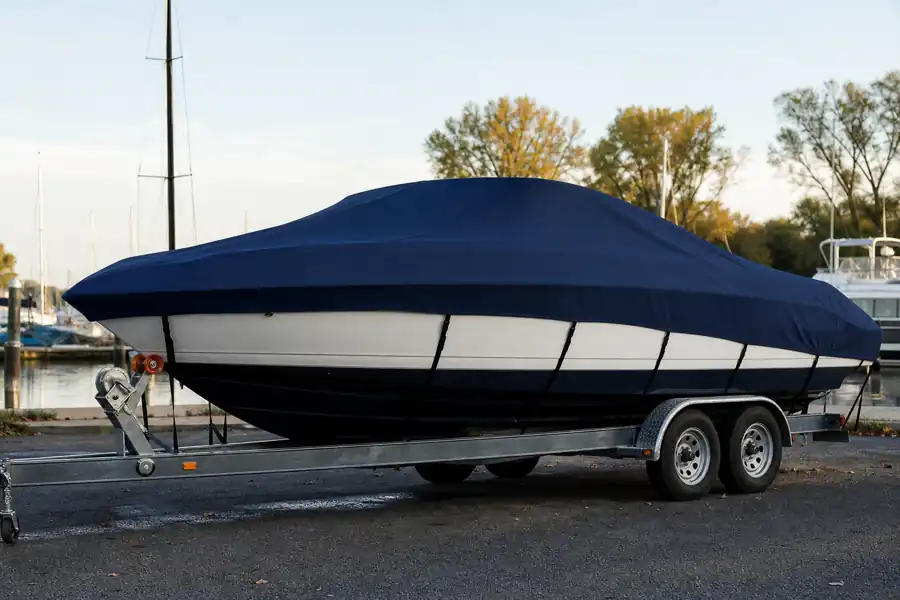
Quick answer: a boat cover usually starts flapping while trailering because air is getting under the fabric, the hem is not seated evenly, or one section of the cover is looser than the rest. The fix is not to crank every strap as hard as possible. Start with the fit, seat the cover at the bow and stern, remove slack in the center, tension the straps evenly, and stop after a short low-speed check to see what moved.
If the cover moves at driveway speed, it will move more at highway speed. That movement matters. Flapping fabric can work seams, rub against gelcoat or hardware, and create the kind of wind lift that turns a simple tow into a stressful stop on the shoulder. This guide walks through a practical pre-tow setup for reducing boat cover flapping while trailering, with special attention to fit, strap routing, ratchet tension, support, and inspection.
Why boat covers flap during towing
Most trailering problems start with one of four things: trapped slack, a loose perimeter, exposed openings where wind can scoop under the cover, or a cover that does not match the boat’s length, beam, and layout. Once air gets under the fabric, the cover can lift and settle over and over. That repeated movement is what owners often describe as flapping, ballooning, snapping, or fluttering.
A fitted cover should sit low enough to shed air instead of catching it. It should also follow the boat’s shape without loose pockets around the bow, windshield, console, swim platform, or outboard area. Straps help, but they work best after the cover is already positioned correctly. If the fabric is crooked or bunched, tightening the straps may lock the problem in place.
Start with the fit before touching the straps
Before you tighten anything, walk around the boat and check the cover from bow to stern. The bow pocket should be seated. The stern corners should sit where the cover was designed to land. The hem should follow the hull line evenly on both sides. If one side hangs lower, or if the cover is twisted around the console, fix that first.
For boats in the 17 to 22 ft range, small fit errors show up quickly because the cover spans a long open cockpit. A few inches of uneven fabric at the bow can become a large loose panel near the windshield or stern. If you are still choosing a cover size, use the product page and measuring guidance together. Safeboatz currently has Storm Series pages for the 17-19 ft trailerable boat cover and the 20-22 ft trailerable boat cover.
Use even strap tension, not one over-tight corner
Uneven tension is one of the easiest ways to create flapping. If the front straps are tight but the rear straps are loose, the back of the cover can breathe and lift. If one side is tighter than the other, the cover can pull off center and expose a gap. Work in pairs when possible: snug one side, then the other side, then move rearward.
Ratchet-secured covers are useful because they let you make controlled tension adjustments instead of guessing with loose tie-downs. The goal is a firm, even seat around the perimeter. You should not see deep distortion in the fabric, crushed hardware, or a strap angle that pulls against a sharp edge. If a strap rubs against the trailer frame, reposition it before the tow.
Safeboatz Storm Series cover pages use ratchet-secured designs, so this guide treats ratchet tension as part of the setup. For a deeper explanation of why tension matters, read the Safeboatz guide to ratchet boat cover benefits.
Remove the air scoops
Wind lift usually needs an entry point. Common air scoops include a loose bow edge, open fabric around the stern, gaps near tower or rail hardware, and slack around the outboard or swim platform. You may not be able to seal every shape perfectly, but you can reduce the biggest openings before you leave.
- Check that the bow area is seated before tensioning the side straps.
- Pull slack rearward in stages instead of leaving a loose cockpit pocket.
- Look at the stern from behind and close obvious gaps where wind can enter.
- Keep straps clear of sharp hardware, trailer edges, and hot exhaust areas.
- Use support poles or cover support only as directed by the cover design, especially for storage and water shedding.
Do a short movement check before highway speed
A cover can look right while parked and still reveal slack once air starts moving over it. Before a longer tow, drive a short distance at low speed, stop somewhere safe, and inspect the cover. Look for new wrinkles, raised corners, loosened straps, rubbing marks, and any area that has started to puff up.
This check is especially useful after the first installation, after storage, or after you change how the boat is loaded. Extra gear under the cover, a shifted support pole, or a different outboard position can change how the fabric sits. The Safeboatz boat cover installation guide covers the full fit sequence if you want a bow-to-stern setup checklist.
Watch for rubbing, not just loose fabric
Flapping is loud, but rubbing can be quieter and still do damage over time. Check contact points around windshield frames, cleats, trolling motor mounts, bow rails, stern corners, and the trailer winch area. A cover that slides back and forth over one hard point can leave marks even if the rest of the cover looks stable.
If you see rubbing after a short tow, do not simply add more tension at the nearest strap. First check whether the cover is centered. Then check the strap angle. A strap pulling down and backward may solve one wrinkle while creating pressure on another edge. Good setup is balanced: the cover is seated, the straps are aligned, and the fabric has enough support to stay calm.
When flapping means the cover is the wrong size
Some movement problems cannot be fixed with straps. If the cover is too short, it may not seat at the bow and stern at the same time. If it is too wide, the sides may hang low and catch air. If it is built for a different layout, the fabric may bridge awkwardly over the console, windshield, or outboard area.
A size mismatch often shows up as the same loose zone after every adjustment. If the same rear corner lifts every time, or the same cockpit pocket keeps filling with air, re-check the boat’s length, beam, and main raised features. For broader selection help, start with the Safeboatz trailerable boat covers page, then compare the size-specific Storm Series page that matches your boat.
Pre-tow checklist to reduce boat cover flapping
- Seat the bow pocket and stern corners before tightening straps.
- Make sure the hem sits evenly on both sides of the hull.
- Pull slack out of the cockpit area before final tension.
- Snug straps in a balanced sequence from front to rear.
- Close obvious wind-entry gaps around the bow and stern.
- Check strap angles and keep straps away from sharp trailer edges.
- Inspect windshield, rail, cleat, and outboard contact points for rubbing risk.
- Drive a short low-speed route, stop safely, and re-check movement before highway speed.
What to do if wind already damaged the cover
If a cover has already been stretched, torn, or scuffed by wind movement, inspect it before the next tow. Look at seams, strap attachment points, buckles, ratchets, and any area that rubbed against hardware. A small weakness can grow quickly once the cover starts moving again.
Do not tow with damaged straps, cracked buckles, or loose hardware. If the cover is still usable for storage but no longer stable for trailering, treat those as different jobs. Storage protection and highway towing put different loads on the cover. For more on failure patterns, see Safeboatz’s guide to wind-damaged boat covers.
Soft CTA: choose the cover around how you actually tow
If your boat is stored outside but rarely leaves the driveway, your priorities may be water shedding, UV exposure, and seasonal inspections. If you tow often, fit and tension matter more because the cover has to deal with moving air. Safeboatz Storm Series covers are built around that trailering mindset for the current 17-19 ft and 20-22 ft live cover pages.
FAQ
Why does my boat cover balloon on the highway?
Boat cover ballooning usually means air is getting under the cover through a loose edge, a gap at the bow or stern, or a section of fabric that was not pulled smooth before the straps were tightened.
Can I stop flapping by tightening the straps harder?
Sometimes, but only if the cover is already seated correctly. Over-tightening one area can pull the cover off center, stress attachment points, or create a new loose pocket somewhere else.
Should a boat cover be tight for trailering?
It should be snug and evenly tensioned, not distorted. The cover should sit low, follow the boat’s shape, and avoid loose fabric that can catch air while towing.
Do ratchet straps help with boat cover flapping?
Ratchet straps can help because they let you adjust perimeter tension more precisely. They work best when the cover size and position are correct before final tightening.
When should I replace a cover that flaps?
Consider replacement if the cover no longer seats at the bow and stern, has damaged straps or buckles, keeps lifting in the same area after careful setup, or no longer matches the boat’s size and layout.
Boating Enthusiasts — Join the Crew!
Free Boat Protection Guide Download Yours Now
Get your free copy of The Complete Boat Protection Guide — expert tips, real-world strategies, and exclusive insights from the Safeboatz team.