 SafeBOT

How to Measure a Boat for a Cover: Length, Beam & Fit Checks
A practical guide for US boat owners on how to measure a boat for a cover, including centerline length, beam width, console clearance, support poles, and Storm Series fit checks.

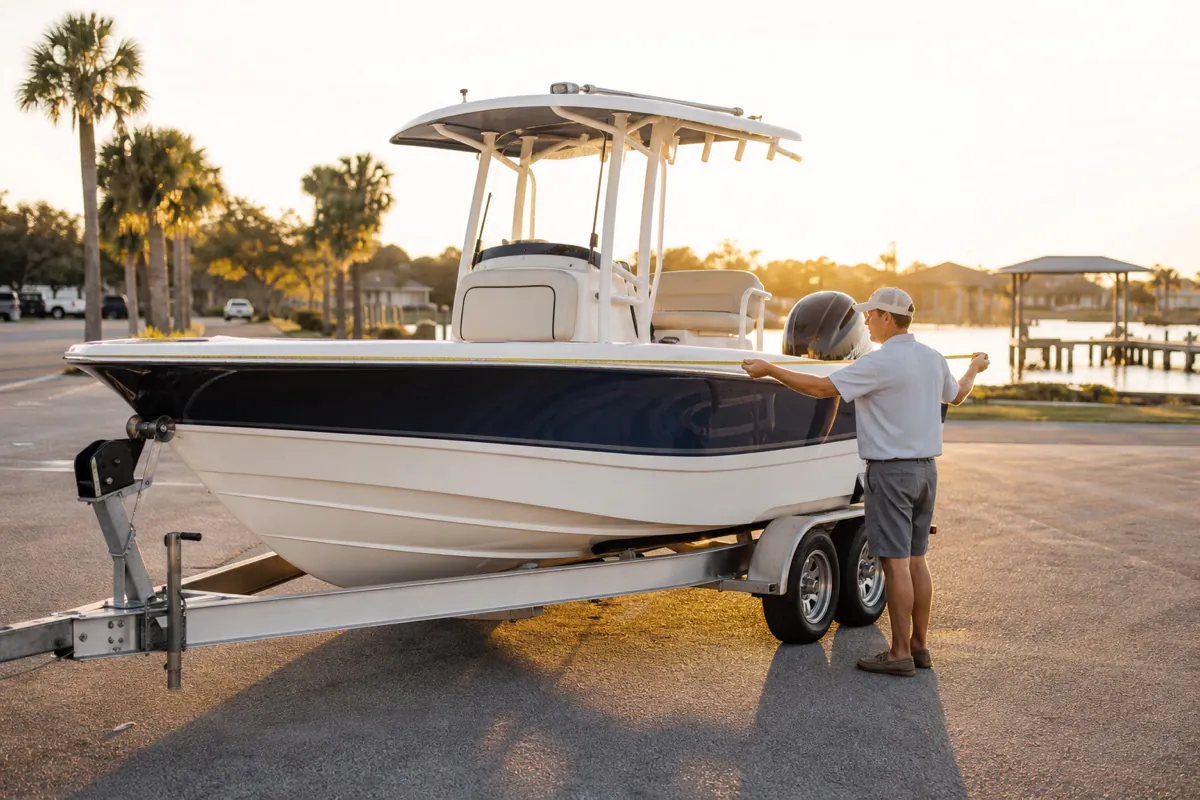
Measuring for a boat cover sounds simple until the tape measure has to work around an outboard, bow rails, a console, a trolling motor, or a swim platform. The safest starting point is still straightforward: measure the boat itself in a straight line, then check the widest beam and any tall hardware that could change the fit.
This guide explains how to measure a boat for a cover before you order, especially if you trailer, store outdoors, or want the cover to stay tight instead of flapping in the wind. It is written for US boat owners comparing universal, semi-custom, and Safeboatz Storm Series cover options.
Quick answer: what measurements do you need?
For most trailerable boat covers, you need two core measurements: centerline length and beam width. Centerline length is the straight bow-to-stern measurement of the boat you want covered. Beam width is the widest flat side-to-side measurement across the boat, usually near the windshield, console, or cockpit area.
- Length: measure straight from the furthest forward point you want covered to the furthest aft point you want covered.
- Beam: measure the widest horizontal width across the boat, not up and over rails or windshields.
- Height and hardware: note consoles, windshields, trolling motors, rails, folded bimini frames, wake towers, or tall seats.
- Use case: decide whether the cover is mainly for driveway storage, marina storage, winter layup, or trailering.
Step 1: measure centerline length, not the curve of the hull
Run the tape measure in a straight line from the bow to the stern. Do not follow the rub rail, deck curve, or windshield contour. If the tape rises and drops with every shape of the boat, the number can grow larger than the cover size you actually need.
Start at the forward-most part that should sit under the cover. On many boats, that is the bow tip. On others, it may include a bow pulpit, bow-mounted trolling motor, anchor roller, or hardware you intend to cover. Then measure to the aft-most point you expect the cover to protect, such as the transom, swim platform, or rear deck edge.
Do not include the outboard motor unless you are buying a cover built to cover the motor as well. Most trailerable boat covers fit the boat, not the full length of the motor hanging behind it.
Step 2: measure beam width at the widest usable point
Beam is the widest side-to-side width of the boat. Measure horizontally across the boat at the widest point. On many runabouts and fishing boats, that point is around the windshield, console, or middle cockpit area.
Keep the tape level. Do not run it up over a windshield, tower, rail, or bimini frame. Those parts matter, but they are not the beam measurement. Treat them as clearance notes after you record the actual width.
If your boat has removable accessories, take them off before measuring if that is how the boat will normally be covered. If the accessory stays on during storage or trailering, write it down and compare it against the cover shape before ordering.
Step 3: make a hardware checklist before you choose the cover
The numbers matter, but the hardware tells you whether the cover can sit cleanly. Before buying, stand beside the boat and list the parts that change the cover line.
- Trolling motor on the bow
- Bow rails, cleats, or anchor rollers
- Center console and windshield height
- Folded bimini frame or support bows
- Outboard motor position
- Swim platform or ladder
- Rod holders, antennas, or removable electronics
If the boat has a T-top, tower, hard top, or tall fixed equipment, a standard trailerable cover may not be the right product. Those setups often need a different cover style or a custom solution.
Step 4: match the measurement to the right size range
Once you have length and beam, compare both numbers against the cover’s stated fit range. A cover is not right just because the length looks close. The beam must fit too, and the cover still needs enough shape to sit over the cockpit without pulling tight across one corner.
Safeboatz currently routes trailerable Storm Series shoppers to two active size pages:
If your boat is close to the top of a range, check the beam, console height, hardware, and trailering use before assuming the smaller size is safer. A cover that is too tight can be difficult to tension, while a cover that is too loose can move, flap, and collect water.
What to include and exclude when measuring
The most common measuring mistakes come from including one part while ignoring another. Use this simple checklist as a sanity check before you order.
| Part of the boat | Include in length? | Notes |
|---|---|---|
| Bow tip | Yes | Start from the furthest forward point you want covered. |
| Trolling motor | Usually yes if it stays mounted | Measure the boat as it will actually be covered. |
| Swim platform | Yes if you want it covered | Use the aft-most protected point as your end point. |
| Outboard motor | Usually no | Only include it if the cover is designed to cover the motor. |
| Trailer tongue | No | The trailer is not part of the boat cover measurement. |
| Windshield or console height | Not in length/beam | Record it as a clearance note. |
How measuring changes for center console boats
Center console boats deserve an extra pass because the console, rail, windshield, leaning post, and electronics can raise the cover line. Measure length and beam first, then look at the profile from the side. If the cover has to climb over a tall console, the fit may feel different than it does on a lower runabout with the same length.
For a more detailed checklist, read the center console boat cover fit guide. It covers console clearance, hardware protection, trailering checks, and storage details that are easy to miss.
Why fit matters more when you trailer
A storage cover can forgive a little more movement than a cover used on the road. Trailering adds steady airflow, vibration, strap tension, and contact points. If the fit is wrong, the cover can lift, flap, or rub in the same place mile after mile.
Before you tow, install the cover slowly, tension it evenly, and check for loose fabric at the bow, stern, windshield corners, and side panels. If you use a ratchet-secured cover, the goal is firm tension without forcing the fabric into sharp hardware. The Safeboatz boat cover installation guide walks through those fit and strap checks step by step.
Do you need a support pole after measuring?
Length and beam help you choose the cover. They do not automatically solve water pooling. If the cockpit has a flat low area, rain can settle there unless the cover has enough pitch and support.
A support pole can help create a tent shape under the cover, but it has to be placed carefully. Too low and water still pools. Too high and the cover may stretch or pull at stress points. The boat cover support pole guide explains how to use support without overloading the fabric.
A practical measuring routine before you order
- Park the boat level on the trailer or in a stable storage position.
- Remove loose gear that will not be under the cover.
- Measure straight centerline length from the forward covered point to the aft covered point.
- Measure the widest beam horizontally across the boat.
- Write down console, windshield, rail, bimini, and trolling motor details.
- Compare both length and beam against the size range.
- Check whether you need trailering tension, support pole clearance, or winter storage pitch.
Storm Series fit note
Storm Series is Safeboatz’s current premium trailerable cover line. If your boat falls in the 17-19 ft or 20-22 ft ranges, start with the two active Storm Series product pages above and compare your measurements against the page details before you buy. The 20-22 ft cover is currently Storm Series only, so do not assume another Safeboatz line is available for that size unless a live product page confirms it.
If you are still early in the buying process, the free boat protection guide is a useful next step. It helps boat owners think through weather exposure, storage, road use, and routine cover care before choosing a cover.
FAQ
How do I measure a boat for a cover?
Measure the centerline length in a straight line from bow to stern, then measure the widest beam horizontally across the boat. Do not follow the hull curve or measure up and over rails or windshields.
Should I include the outboard motor in the boat cover length?
Usually no. Most trailerable boat covers are measured for the boat, not the outboard motor. Include the motor only if the product is specifically designed to cover it.
What if my boat is exactly between two cover sizes?
Check beam width, console height, hardware, and intended use before choosing. A tight cover can be hard to tension, while a loose cover can flap or pool water. If you trailer, fit and tension matter even more.
Do I measure beam over the windshield?
No. Beam is the widest horizontal width across the boat. Record windshield or console height separately as a clearance note.
Can one boat cover work for storage and trailering?
It can if the cover is built for trailering and fits correctly. For road use, check strap tension, wind-entry gaps, rubbing points, and loose fabric before every tow.
Measure once, then double-check the parts that make your boat different: beam, console, hardware, swim platform, and trailering use. A cover that fits those realities will be easier to tension, easier to inspect, and more dependable over a full boating season.
Boating Enthusiasts — Join the Crew!
Free Boat Protection Guide Download Yours Now
Get your free copy of The Complete Boat Protection Guide — expert tips, real-world strategies, and exclusive insights from the Safeboatz team.