 SafeBOT

Boat Covers 20–22 ft: Fit, Fabric and Trailering Guide
A practical 20–22 ft boat cover guide covering length, beam, console clearance, fabric, support poles, ventilation, trailering setup, care, and fit mistakes.

Boat Covers 20–22 ft: Fit, Fabric and Trailering Guide
Boat covers for 20–22 ft boats need more than the right length range. Larger boats have more surface area, higher consoles, bigger windshields, outboards, rails, seating, and accessories that affect fit. A loose cover can flap and pool water. A cover that is too tight can stress seams and straps.
This guide explains how to choose a 20–22 ft boat cover for storage or trailering with practical checks for length, beam, fabric, support, and installation.
Measure Length and Beam First
Measure overall length from bow tip to transom. Then measure beam at the widest point. Do not rely only on the model name or advertised boat length. A 20 ft boat with a wide beam may need more cover than a narrow 22 ft boat.
- Length: bow tip to transom, including fixed platforms if covered.
- Beam: widest point across the hull.
- Console/windshield height: important on center-console and bowrider layouts.
- Motor area: confirm whether the cover includes or excludes the outboard.
- Accessories: towers, rails, trolling motors, rod holders, seats, and electronics.
For a detailed process, use the boat measuring guide.
Why 20–22 ft Covers Need Better Support
Larger covers span more distance. That means more opportunity for low spots, pooling, wind movement, and stress at seams. Support poles or framing help create drainage slope and reduce fabric sag.
Do not wait until water pools to think about support. Install support before final tensioning, then check the cover from the side to confirm water can drain away.
Fabric and Construction Checks
For 20–22 ft boats, fabric durability matters because the cover is larger and harder to handle. Look for marine-grade material, reinforced seams, strong strap anchors, good stitching, and abrasion protection around high-contact points.
- Marine-grade polyester or comparable outdoor fabric.
- Reinforced bow, stern, seam, and strap areas.
- Water-resistant coating and seam treatment.
- Ventilation for longer storage periods.
- Support-pole compatibility.
- Durable buckles and straps for repeated tensioning.
See the heavy duty boat cover guide and 900D polyester guide for material background.
Trailering With a 20–22 ft Boat Cover
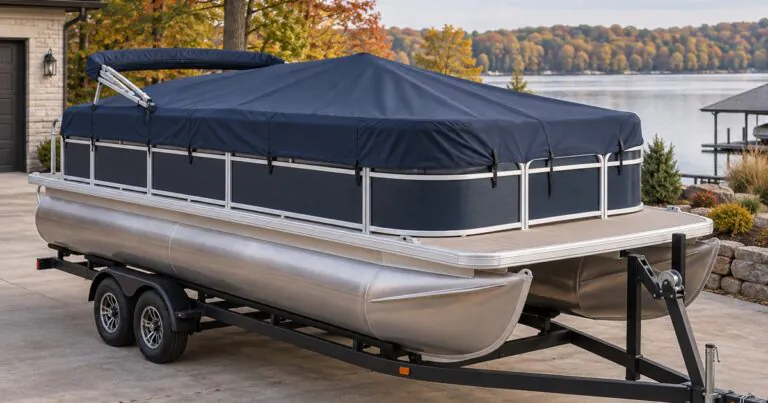
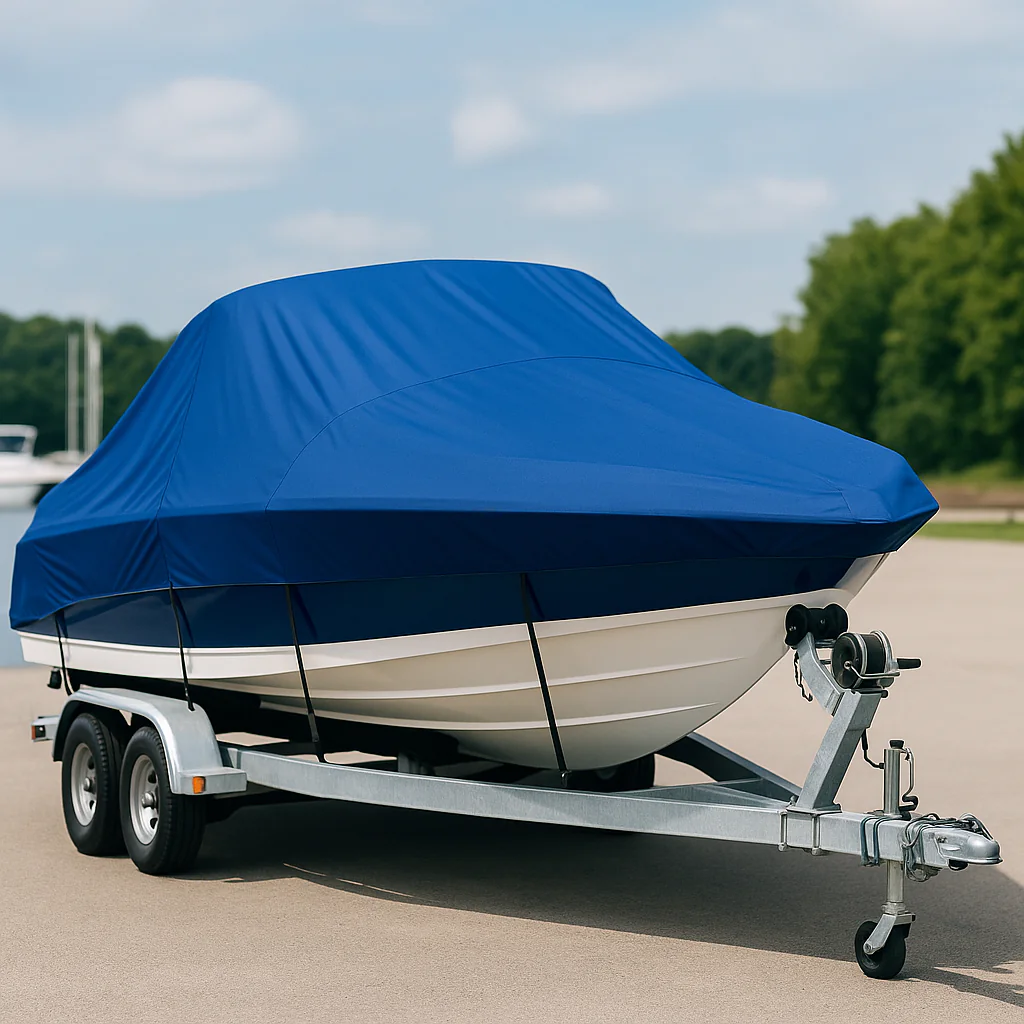
A larger cover catches more wind. If you trailer with the cover installed, use a cover designed for trailering and check the fit carefully before highway use.
- Center the cover from bow to stern.
- Align console, windshield, and stern sections.
- Route straps away from sharp trailer edges.
- Tighten evenly on both sides.
- Check that fabric cannot balloon heavily.
- Stop after a short drive and re-check tension.
For tension setup, read the ratchet boat cover guide.
Storage, Ventilation, and Moisture
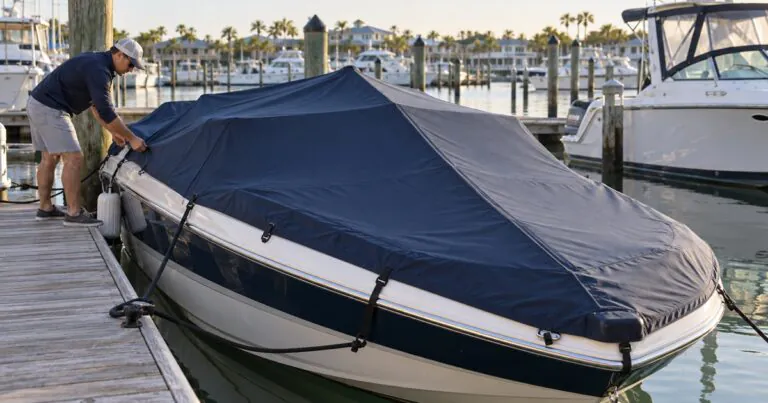
For outdoor storage, the cover should shed rain and manage moisture. Ventilation helps reduce trapped damp air. Support helps prevent pooling. A dry boat interior before covering helps reduce mildew risk.
Open compartments briefly before storage, remove wet gear, and avoid sealing damp fabric under the cover. See the ventilation guide and waterproof cover guide.
Common Mistakes With 20–22 ft Covers
- Choosing by length only and ignoring beam.
- Leaving tall accessories in place under the cover.
- Skipping support poles on a large cover span.
- Using a storage-only cover for trailering.
- Overtightening one side to compensate for poor fit.
- Storing the cover damp after removal.
- Ignoring chafe points around rails, windshields, or towers.
When to Choose a Trailerable Cover
Choose a trailerable cover if you tow with the cover installed, store outdoors in windy areas, or need a more secure tension system. A trailerable cover should fit tighter, use stronger straps, and reduce fabric movement better than a simple storage cover.
If your boat falls in this range, review the Safeboatz 20–22 ft trailerable boat cover.
Care and Seasonal Maintenance
A large cover is easier to damage if dragged, packed wet, or folded around debris. Rinse when needed, dry fully, inspect straps and seams, and repair small tears early.
- Remove leaves, dirt, and salt residue.
- Dry both sides before storage.
- Inspect vents, straps, buckles, and seams.
- Pad sharp contact points under the cover.
- Store in a dry place away from rodents.
20–22 ft Fit Framework Before You Buy
Use a simple three-part framework before choosing a cover: hull size, height profile, and use case. Hull size is the length and beam you measured. Height profile is everything that makes the boat taller than a bare hull: windshield, console, folded bimini, rails, pedestal seats, trolling motor, and electronics. Use case is whether the cover will sit in a driveway, protect the boat through a storage season, or ride on the boat during trailering.
For this length range, the best result usually comes from matching all three. A cover can be correct on length but wrong on profile if it pulls hard over a tall console. It can also look acceptable at the dock but behave poorly on the highway if there is too much loose fabric. If two sizes seem close, compare the beam range and the shape of your boat, not just the printed length.
Quick decision checks
- Choose a cover with enough beam and height allowance for the widest, tallest part of the boat.
- Confirm whether the outboard, swim platform, bow rails, and trolling motor are intended to sit under the cover.
- For driveway or marina storage, prioritize drainage slope, vents, and strap security.
- For trailering, prioritize a snug perimeter, balanced side straps, and low ballooning.
- If the boat has sharp hardware, plan padding before tightening the cover.
Setup Checklist for Large Covers
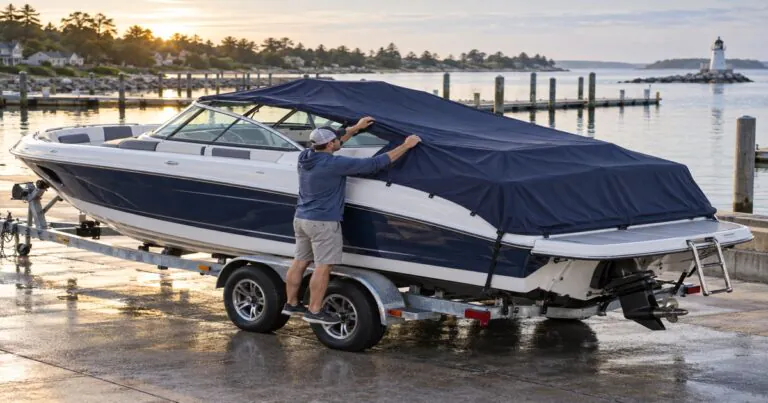
A 20–22 ft cover is easier to manage when you install it in the same order every time. Start at the bow, center the fabric, then work toward the stern before final tensioning. Add the support pole or support system while the fabric is still loose enough to adjust. Once the high point is correct, tighten in small steps from side to side instead of pulling one strap fully tight at a time.
After the cover is tensioned, walk around the boat and look for three things: low pockets where rain can collect, hard contact points that can chafe, and straps that touch tires, brake lines, lights, or sharp trailer brackets. Recheck after the first rain or short tow. Fabric and straps often settle once the cover has been under load.
Owner FAQ: 20–22 ft Boat Covers
Should I size up for a 22 ft boat?
Not automatically. Size up only if the published beam and height profile of the cover are too tight for your boat. Oversizing can create loose fabric, pooling, and extra wind movement.
How tight should the cover feel?
It should be smooth and secure, not drum-tight. You want enough tension to reduce flapping and pooling without forcing seams, buckles, or corners over hardware.
What should I inspect after storage?
Look at seam stress, strap wear, mildew odor, water marks, and abrasion points. These signs tell you whether the setup needs more support, better ventilation, or padding before the next storage period.
Where Safeboatz Fits
The Safeboatz Storm Series includes a 20–22 ft trailerable cover for owners who want a tighter fit and stronger trailering-oriented setup. If you are between sizes, download the free boat protection guide before ordering.
FAQ
Is a 20–22 ft boat cover suitable for any 21 ft boat?
Not automatically. Check beam, console height, motor area, and accessories before assuming the range fits.
Do larger boat covers need support poles?
Usually yes for outdoor storage. Larger spans are more likely to create low spots without support.
Can I tow with a 20–22 ft cover installed?
Only if the cover is designed for trailering and installed with proper tension and strap routing.
What fabric is best for a 20–22 ft boat cover?
Look for marine-grade fabric with reinforced seams, water-resistant coating, abrasion resistance, and hardware suited to your storage and trailering use.
How do I prevent mildew under a large cover?
Dry the boat before covering, remove wet gear, use ventilation, and inspect periodically during long storage.
Final Take
For 20–22 ft boats, cover fit and support matter more than a simple length label. Measure carefully, account for beam and profile, choose fabric and straps for your use case, and inspect the setup before long storage or trailering.
Related 20–22 ft cover resources
For a larger trailerable boat, confirm length, beam, tower or windshield clearance, and strap tension before ordering. Compare this guide with Safeboatz resources on boat covers by model, how to measure a boat for a cover, trailerable cover fit, and wind-resistant strap setup.
For neutral towing and boating safety context, review NHTSA trailering and towing guidance and U.S. Coast Guard boating safety resources.
Boating Enthusiasts — Join the Crew!
Free Boat Protection Guide Download Yours Now
Get your free copy of The Complete Boat Protection Guide — expert tips, real-world strategies, and exclusive insights from the Safeboatz team.