 SafeBOT

How to Measure a Boat for a Cover: Length, Beam & Fit Checklist
Measure centerline length, beam, motor clearance, console height, accessories, and storage use before buying a boat cover. Use this complete fit checklist to avoid loose or undersized covers.


How to Measure a Boat for a Cover
Good boat cover fit starts with measurements you take yourself. Model names and factory specs are useful, but they are not enough on their own. Two boats with the same advertised length can have different beam widths, console heights, trolling motor positions, rails, swim platforms, outboards, and electronics. Those details change how a cover sits.
You do not need special equipment. Use a flexible tape measure, a notebook or phone, and ideally a second person to keep the tape straight. Take photos of raised hardware and sharp contact points. If you are buying online, those photos help you compare your boat against the product images and fit notes.
What You Need Before Measuring
- A flexible tape measure long enough for the boat centerline.
- A second person if possible.
- Photos of bow, cockpit, console, stern, motor, and accessories.
- The boat model/year if available, but do not rely on it alone.
- A clear decision on whether the cover is for storage, trailering, winter, or daily use.
1. Measure Centerline Length
Centerline length is the most important starting point. Measure from the tip of the bow to the farthest point of the stern along the center of the boat. Keep the tape straight; do not follow the curve of the gunwale. Include fixed platforms or permanent extensions if the cover needs to go over them.
Do not automatically include the outboard motor unless the cover listing specifically says it covers the motor. Many covers are designed for the hull and deck, not for wrapping the motor. If you need motor coverage, confirm that separately.
2. Measure Beam Width
Beam is the widest point of the boat. Measure straight across from side to side. Do not measure around the curve of the hull. Include rub rails, permanent hardware, or other parts that affect where the cover will sit.
Beam matters because a cover that is long enough can still be too narrow. A narrow cover may pull up at the sides, expose rub rails, strain seams, or make strap tension uneven.
3. Measure Console, Windshield, and Accessory Height
Anything that raises the cover profile matters. Check windshield height, console height, pedestal seats, trolling motors, bow electronics, fish finders, towers, rails, leaning posts, and mounted accessories. A cover that fits the hull but crushes or rubs against hardware can wear quickly.
For trailering, some owners lower or remove gear before covering. For storage, you may prefer more clearance and better ventilation. Write down what will stay on the boat when the cover is installed.
4. Check Bow and Stern Shape
Bow shape affects how the cover pulls forward. Stern layout affects how the cover finishes around swim platforms, transoms, motors, and ladders. Look for corners where fabric might catch or hang loose. A cover that fits well at the center can still need attention at the edges.
5. Decide How the Cover Will Be Used
- Outdoor storage: prioritize water shedding, ventilation, support poles, and regular inspection access.
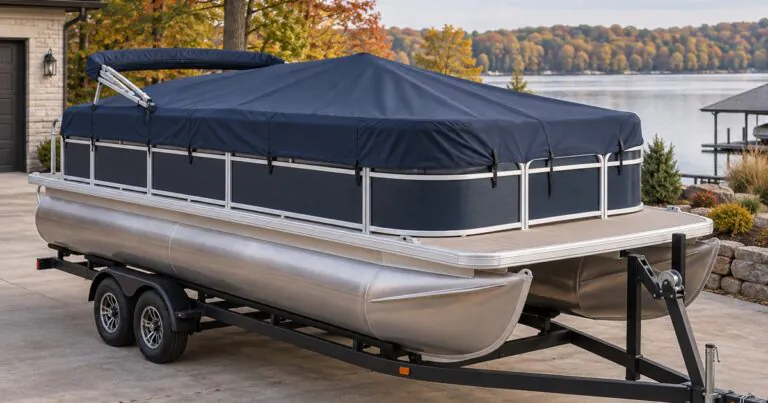
- Trailering: prioritize snug fit, strap layout, reduced fabric movement, and product approval for towing.
- Winter storage: prioritize support, slope, moisture control, and snow/rain shedding.
- Dock or driveway use: prioritize easy installation, security, and quick removal.
The same measurements matter in every case, but the buying decision changes. A loose tarp may be acceptable for temporary dust coverage under shelter. It is not the same as a fitted trailerable cover for outdoor use.
Size Range: What to Do If You Are Between Sizes
If your boat lands near the edge of a size range, read the fit notes carefully. Do not force a cover that is too small. Too-small covers strain seams, pull at corners, and can be hard to secure. Too-large covers can flap and collect water. The right answer depends on beam, accessories, and the product’s actual fit range.
For Safeboatz Storm Series covers, compare your measurements with the active 17–19 ft cover and 20–22 ft cover. If your boat is outside those ranges, use the measurement process to evaluate other options rather than guessing by name.
Common Measuring Mistakes
- Using the model length instead of measuring the actual boat.
- Forgetting swim platforms, rails, trolling motors, or mounted electronics.
- Ignoring beam width and focusing only on length.
- Choosing the smaller cover when the boat is already at the edge of the range.
- Assuming every “18 ft” boat has the same cover needs.
- Not deciding whether the cover is for storage, trailering, or winter before buying.
Quick Measurement Worksheet
- Centerline length: ______
- Beam width: ______
- Console/windshield height: ______
- Motor position and clearance: ______
- Rails/trolling motor/electronics: ______
- Use case: storage / trailering / winter / daily cover
- Known sharp contact points: ______
FAQ: Measuring for a Boat Cover
Should I measure around the curve of the boat?
No. For centerline length and beam, measure straight. Do not follow the curve of the gunwale.
Should I include the outboard motor?
Only if the cover is designed to include the motor. Many covers fit the hull and deck, while motor covers are separate.
Is the boat model enough?
No. Model is useful, but year changes, accessories, and hardware can affect fit. Always measure the actual boat.
What if my boat is exactly 19 ft?
Check beam, hardware clearance, and the manufacturer’s fit guidance. Do not choose by length alone.
Final Take
Measure length, beam, clearance, hardware, and use case before buying a boat cover. A cover that fits evenly, clears the right gear, and tensions correctly will usually protect better than one chosen only by model name.
Next step: compare your numbers with the 17–19 ft Storm Series cover or the 20–22 ft Storm Series cover. You can also download the free Safeboatz Boat Protection Guide for a broader checklist.
Related measuring and safety resources
After you record length, beam and height, compare your notes with the Safeboatz 17–19 ft fit guide, 20–22 ft fit guide, and trailerable cover checklist. A measured cover still needs secure tie-downs if the boat is stored outside or moved on a trailer.
For neutral context, review NHTSA trailering and towing guidance and U.S. Coast Guard boating safety resources.
Boating Enthusiasts — Join the Crew!
Free Boat Protection Guide Download Yours Now
Get your free copy of The Complete Boat Protection Guide — expert tips, real-world strategies, and exclusive insights from the Safeboatz team.