 SafeBOT

Winter Boat Cover for Trailered Boats: Fit, Vents & Tie-Downs
A complete winter boat cover guide for trailered boats: measured fit, support poles, ventilation, strap tension, inspections, moisture control, and storage mistakes to avoid.


Winter Boat Cover Priorities for Trailered Boats
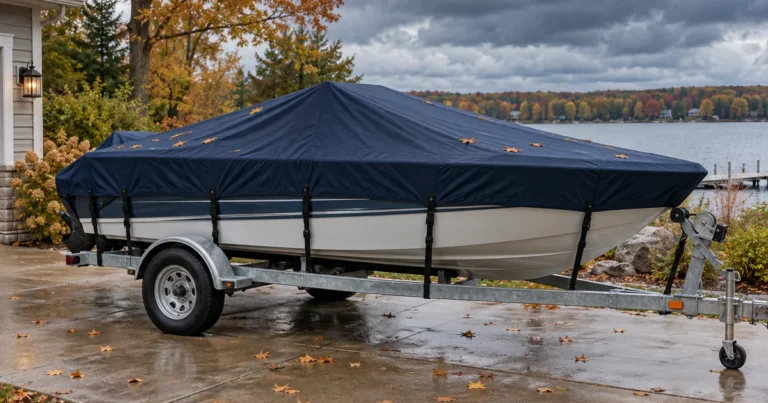
A trailered boat stored outside has a different protection problem than a boat sitting under a roof. The cover must deal with rain, snow, wind, trapped humidity, strap movement, and repeated freeze-thaw cycles around the trailer. The goal is not to wrap the boat so tightly that no air moves. The goal is to create a stable cover system that sheds water, reduces fabric movement, allows some airflow, and can be inspected throughout the season.
For most owners, winter cover problems come from a few repeat causes: loose fabric that flaps in wind, low pockets where water or snow collects, blocked vents, sharp hardware rubbing through the fabric, and straps that were never rechecked after the first storm. A good winter setup solves those problems before the boat is left alone for weeks.
Start With Measurements, Not Just Boat Length
Boat length is only the beginning. A cover that says 17–19 ft or 20–22 ft still needs to match your actual centerline length, beam width, windshield height, console shape, rails, trolling motor, and stern layout. If the cover is too small, it strains seams and exposes corners. If it is too large, it can flap, collect water, and become harder to tension.
Before winter storage, measure the boat again and note anything that changes the cover profile. Raised electronics, pedestal seats, rails, bimini hardware, and trolling motors can all create pressure points. If you need a measurement refresher, use the Safeboatz boat measuring guide before choosing or reinstalling a cover.
Build a Water-Shedding Shape
A flat cover is a winter risk. Water and snow look for low spots. Once a low pocket forms, weight pulls the fabric lower, which collects more water, which adds more stress. Even a strong fabric performs better when the setup creates slope.
- Use support poles or a frame where the boat design creates low cockpit areas.
- Raise the centerline enough that water can move toward the sides instead of sitting in the middle.
- Check the bow and stern corners because they often form small catch points.
- Avoid sharp peaks that overstress one small area of fabric.
If snow is common in your area, read the snow-load boat cover guide as well. The important habit is simple: after the first real storm, look at the cover shape. If you see sagging, pooling, or uneven pull, fix it early.
Ventilation Is Not Optional
Many owners focus only on rain protection and forget moisture under the cover. A cover can shed water from above and still trap humid air below. That trapped moisture can contribute to mildew, odor, corrosion on hardware, and damp upholstery. Ventilation does not mean leaving the boat exposed; it means giving damp air a way to move.
Before covering the boat, remove wet gear, open compartments when appropriate, dry bilge areas, and avoid sealing soaked carpet or upholstery under the cover. Built-in vents, support poles, and a cover shape that does not collapse against the deck can all help. For more detail, see the Safeboatz guide to boat cover ventilation.
Tie-Downs and Strap Tension
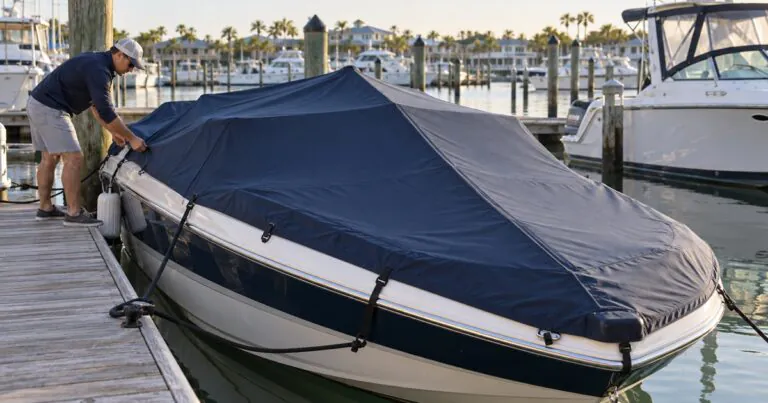
Winter wind can punish loose fabric. Tie-downs should hold the cover evenly, not pull one corner so hard that another side becomes loose. Start at the bow, work toward the stern, and tension gradually. If the cover uses multiple straps, adjust them in stages instead of tightening one strap completely before touching the others.
- Keep straps straight and avoid twisting.
- Do not route straps across sharp trailer edges without protection.
- Recheck tension after the first windy day.
- Pad contact points near windshields, cleats, rails, and electronics.
- Replace worn or UV-damaged straps before storage.
A ratchet or perimeter tension system can make adjustments easier, especially for owners who store outdoors or trailer between seasons. If tension is your main concern, compare the ratchet boat cover guide.
Pre-Storage Checklist
- Clean the deck and remove leaves, fishing gear, towels, and food residue.
- Dry upholstery, carpet, compartments, and bilge areas as much as possible.
- Pad sharp hardware and raised accessories.
- Confirm the cover clears the windshield, console, motor, and rails.
- Add support poles or frame sections where water could pool.
- Tension the cover evenly on both sides.
- Leave vents clear and avoid blocking airflow.
- Take photos after installation so you can compare later if the cover shifts.
Inspection Schedule During Winter
A winter cover is not a set-and-forget item. You do not need to inspect every day, but you should check after strong wind, heavy rain, snow, or major temperature swings. Look for pooling, loose straps, rubbing marks, blocked vents, and fabric that has shifted toward one side.
If you see sagging, remove weight carefully and adjust support. If straps loosen, retension evenly. If moisture is building inside, increase airflow and check whether the boat was stored with wet gear or standing water. Small corrections in January can prevent a frustrating cleanup in spring.
When to Use a Safeboatz Storm Series Cover
Safeboatz Storm Series covers are the active premium trailerable options for common 17–19 ft and 20–22 ft ranges. They make the most sense when you want a stronger fit-and-tension system than a basic loose storage tarp. Before choosing a size, confirm your centerline length, beam, hardware clearance, and whether the boat falls cleanly into the stated range.
Compare the Storm Series 17–19 ft cover or the Storm Series 20–22 ft cover if your boat matches those ranges.
FAQ: Winter Boat Covers for Trailered Boats
Should a winter boat cover be completely airtight?
No. A winter cover should shed rain and snow while allowing moisture control. Too little airflow can trap humidity under the cover.
Do I need support poles?
If your cover forms low spots over the cockpit or deck, support poles or a frame can help create slope. The goal is to prevent water and snow from sitting in pockets.
Can I trailer with the same cover I use for winter storage?
Only if the cover is designed and fitted for trailering. Check the product instructions, strap layout, and fit before towing with any cover installed.
How often should I inspect the cover?
Inspect after storms, heavy wind, snow, or major temperature changes. Also check early in the season after the first real weather event.
Final Take
The right winter boat cover for a trailered boat is a system: measured fit, water-shedding support, steady tie-downs, ventilation, and inspection habits. Do those well and you give the boat a much better chance of coming out of storage clean, dry, and ready for spring prep.
Helpful next step: download the free Safeboatz Boat Protection Guide before winterizing your boat.
Related winter storage resources
For winter trailered storage, use this guide alongside the Safeboatz winter boat cover guide, snow-load support guide, ventilation guide, and strap and wind-control guide.
For neutral context, review National Weather Service winter safety guidance and NHTSA trailering and towing guidance.
Boating Enthusiasts — Join the Crew!
Free Boat Protection Guide Download Yours Now
Get your free copy of The Complete Boat Protection Guide — expert tips, real-world strategies, and exclusive insights from the Safeboatz team.