 SafeBOT

Best Winter Boat Cover Guide: Fit, Snow Load & Storage Checklist
A practical winter boat storage cover guide for trailerable boats: fit checks, snow-load support, ventilation, strap tension, and storage inspections before freeze-thaw weather.

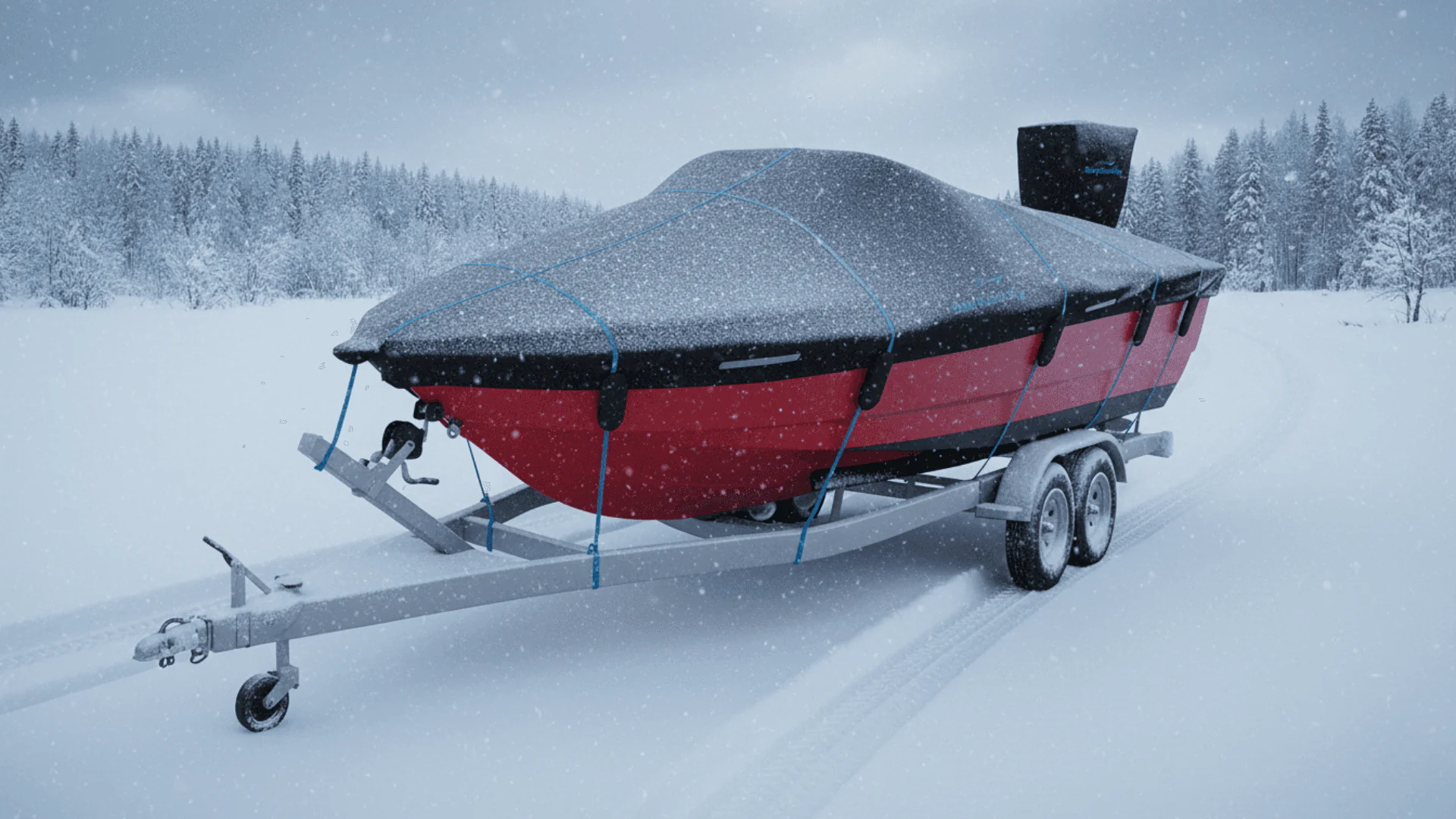
The best winter boat cover is not simply the thickest fabric or the most aggressive waterproof claim. For winter storage, the cover has to fit the boat, shed water and snow, manage moisture, hold tension, and survive repeated checks during cold weather.
This guide explains how to choose a winter boat cover for trailerable boats, what to inspect before storage, and how to avoid the common mistakes that lead to sagging, trapped moisture, torn seams, or spring surprises.
What a winter boat cover must do
A winter cover has three main jobs. First, it keeps rain, snow, leaves, and debris off the boat. Second, it creates enough slope and support so water does not sit in low spots. Third, it lets trapped moisture escape so the boat does not sit under a damp sealed tent for months.
- Fit: the hem should sit close to the hull without large gaps at the bow, stern, or beam.
- Support: poles, bows, or a frame help create slope for runoff.
- Fabric: marine polyester with a water-shedding coating is common for trailerable covers.
- Ventilation: vents or airflow reduce condensation risk during long storage.
- Tension: straps or ratchets should hold the cover steady without distorting seams.
Start with fit before fabric
Many winter cover failures start with poor fit. A cover that is too loose can flap, sag, and create pockets. A cover that is too small can pull hard on seams, rails, or windshield edges. Measure your boat before comparing products.
Record overall length, beam, console or windshield height, rails, outboard position, and any accessories that change the profile. If you are unsure, use the Safeboatz boat cover measuring guide before choosing a size.
Snow load and support poles
Snow load is not only about fabric strength. Even a strong cover can fail if it is installed flat. Wet snow and meltwater collect in low points, pull the fabric down, and increase stress on seams and straps.
Use support poles, bows, or a frame where the cockpit or bow can sag. Check the cover after storms, thaw cycles, and strong wind. For deeper setup details, compare the snow load boat cover guide, the boat cover support pole guide, and the strap routing checklist before the first hard freeze.
Waterproofing vs trapped moisture
A winter cover should shed water, but a fully sealed setup can create a different problem: trapped moisture. Condensation, damp carpet, mildew smell, and corrosion risk often come from poor airflow under the cover.
Look for a setup that balances water resistance with ventilation. Support poles also help here because they keep fabric off cushions and create space for air movement. See the boat cover ventilation guide for practical airflow checks.
Winter storage checklist
- Clean and dry the boat before covering it.
- Remove food, trash, bait, and soft nesting material.
- Measure the boat and confirm the cover size against length and beam.
- Install support poles or bows before tightening the cover.
- Tension straps evenly and secure loose strap tails.
- Protect sharp contact points around rails, windshield edges, cleats, and trailer hardware.
- Inspect the cover after heavy rain, snow, wind, or freeze-thaw cycles.
- Vent the boat when conditions allow and check for damp compartments.
When a trailerable winter cover makes sense
If your boat is stored on a trailer outdoors, a trailerable cover can be useful because it is designed around a tighter fit and strap control. Do not assume every storage cover is safe for towing. If you tow with a cover installed, follow the cover maker’s instructions and check the fit after a short distance.
Safeboatz Storm Series covers are available for 17–19 ft trailerable boats and 20–22 ft trailerable boats. Compare your measurements before ordering.
Common winter cover mistakes
- Buying by length only and ignoring beam or accessory height.
- Skipping support poles, which allows pooling in the cockpit.
- Over-tightening one strap instead of tensioning evenly.
- Leaving the cover unchecked for the entire winter.
- Using a loose tarp where a fitted cover and support system are needed.
- Forgetting ventilation and trapping damp air under the fabric.
Final take
The best winter boat cover is the one that fits your boat, sheds snow and water, allows moisture management, and can be inspected easily through the season. Start with measurements, add support, check ventilation, and choose a cover built for your actual storage conditions.
For a printable prep list, download the free Safeboatz Boat Protection Guide.
FAQ
Is a waterproof boat cover enough for winter?
No. Waterproofing helps, but winter storage also needs support, slope, ventilation, fit, and regular inspections.
Should I remove snow from my boat cover?
Yes, when accumulation builds or the cover starts to sag. Use a soft broom or non-abrasive tool and avoid scraping the fabric with sharp metal edges.
Can I use a tarp instead of a fitted winter boat cover?
A tarp can work temporarily if it is well supported and tied, but it usually lacks fit, ventilation, reinforced seams, and strap control.
When should I inspect the boat during winter?
Check after major storms, strong wind, thaw cycles, or any time you see sagging, loose straps, pooling, or fabric movement.
Related winter storage resources
For a winter-ready setup, use this guide with the Safeboatz winter cover storage guide, snow-load checklist, breathable vs waterproof cover guide, and free Boat Protection Guide.
For neutral context, review National Weather Service winter safety guidance and NOAA/NWS marine weather resources.
Boating Enthusiasts — Join the Crew!
Free Boat Protection Guide Download Yours Now
Get your free copy of The Complete Boat Protection Guide — expert tips, real-world strategies, and exclusive insights from the Safeboatz team.