 SafeBOT

Snow Load Boat Cover Guide: Support, Slope & Winter Checks
A practical snow load boat cover guide covering support poles, slope, water pooling, strap tension, ventilation, winter inspections, and safe storage habits.


Snow Load Boat Cover Guide: Support, Slope & Winter Checks
A snow load boat cover is not just a thicker piece of fabric. Winter protection depends on how the cover fits, how it is supported, how water drains, how straps hold tension, and how often the setup is inspected after storms. Even a strong cover can fail if it is allowed to sag into a bowl.
This guide explains how to reduce snow and ice stress on a covered boat without making unsupported promises about exact load ratings. Always follow the cover manufacturer’s instructions and use safe judgment around heavy snow.
Why Snow Load Is Really a Drainage Problem
Snow becomes most dangerous when the cover allows low spots. A small depression can collect snow, then meltwater, then ice. That added weight deepens the depression and creates a cycle of pooling and stretching. The goal is not to let the cover “hold” winter. The goal is to help it shed water and snow safely.
- Good slope helps snow slide or drain instead of collecting.
- Even strap tension keeps the cover from shifting into low pockets.
- Support poles or framing reduce flat areas.
- Ventilation helps limit trapped moisture under the cover.
- Periodic checks catch problems before they become failures.
Start With Fit Before Adding Supports
Support poles cannot fully fix a badly fitted cover. If the cover is too loose, it can still flap, stretch, and collect water between support points. If it is too tight, seams and straps may carry too much stress.
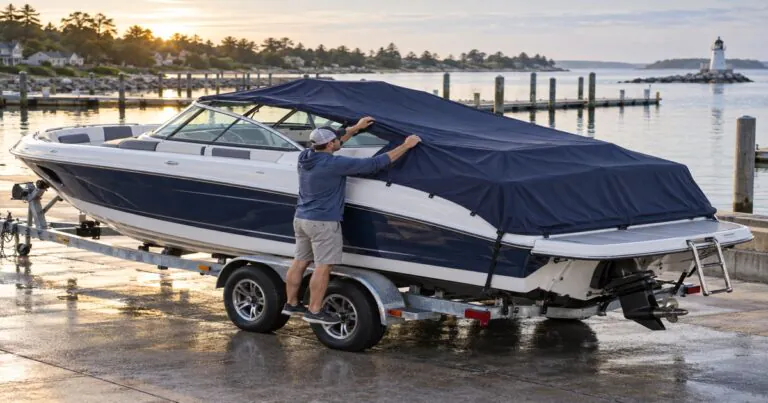
Measure length, beam, console height, windshield height, trolling motor position, and outboard clearance before choosing a winter cover. If you are unsure, use the Safeboatz measuring guide before buying or replacing a cover.
Support Poles, Frames, and Drainage Angle
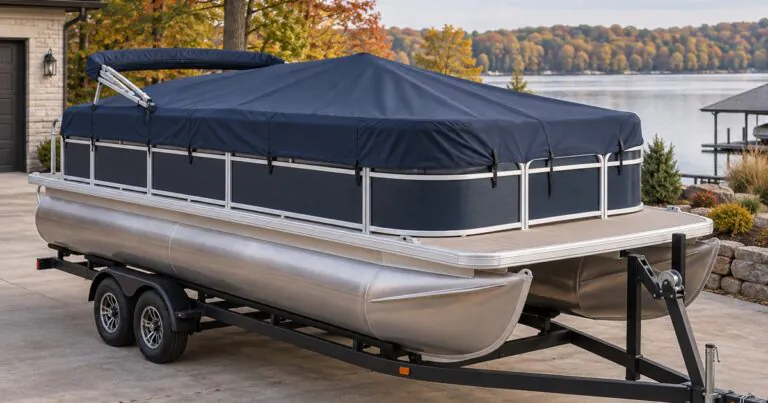
Support should create a tent-like shape that encourages water to leave the cover. A single pole may work on a small boat, but longer boats often need more support points. The support should be stable, padded if needed, and positioned so it does not create sharp stress on the fabric.
- Place supports before final strap tightening.
- Create slope from the centerline toward the sides.
- Avoid sharp pole tips or uncovered hardware under the fabric.
- Check that the cover does not bridge tightly over fragile accessories.
- Re-check support after the first storm or freeze-thaw cycle.
If water pools even with supports installed, change the support layout rather than simply tightening straps harder.
Strap Tension Matters in Winter
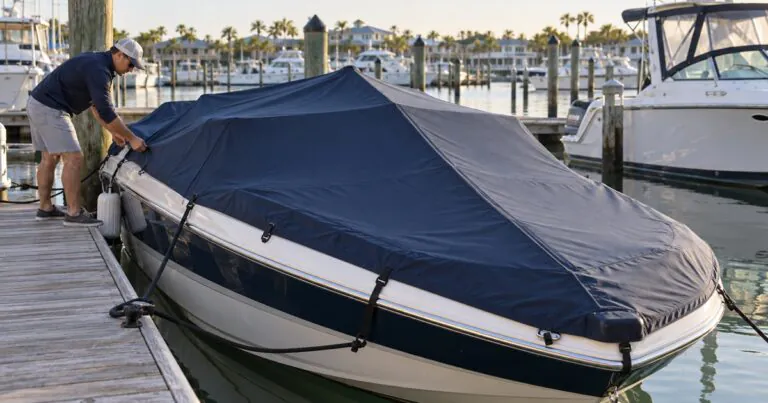
Loose straps allow fabric movement. Over-tightened straps can overload seams and attachment points. The best winter setup uses even tension around the hull so the cover stays centered and supported.
Ratchet systems can help because they make tension more repeatable, but they still need to be used carefully. See the ratchet boat cover guide for tensioning steps and common mistakes.
Fabric, Seams, and Reinforced Stress Points
Fabric quality matters, but it is only one part of snow-load performance. Look for marine-grade fabric, coated water resistance, reinforced seams, strong strap anchors, and areas reinforced around common stress points. A heavier fabric can help with abrasion and durability, while support and slope reduce the load that fabric has to carry.
For material context, read the 900D marine-grade polyester boat cover guide. For water-shedding principles, see the waterproof boat cover guide.
Ventilation Still Matters in Snow Season
It is tempting to seal a boat as tightly as possible for winter, but long-term storage also needs airflow. Trapped moisture can lead to odor, mildew, corrosion, and damp compartments even if direct rain is blocked. Good winter storage balances water resistance with ventilation.
Use vents when available and avoid storing a wet boat under a sealed cover. The boat cover ventilation guide explains how airflow helps during covered storage.
After-Storm Inspection Checklist
If the boat is stored outdoors, inspect after major storms when it is safe to do so. Do not climb onto unstable icy surfaces or overload the boat while clearing snow.
- Look for new sagging or low spots.
- Check whether support poles shifted.
- Confirm straps and buckles are still secure.
- Remove excessive snow carefully if the manufacturer recommends it.
- Check for ice dams near hems or trailer bunks.
- Look for chafe points where frozen fabric may rub.
If the cover moved significantly, reset the whole system. Do not only tighten one strap.
Common Snow Load Mistakes
- Buying by length only and ignoring beam or console height.
- Using one support pole on a larger boat with multiple low areas.
- Leaving pedestal seats or accessories raised under the cover.
- Letting leaves and debris hold moisture before snowfall.
- Assuming “waterproof” means snow-load resistant.
- Failing to inspect after the first winter storm.
Where Safeboatz Fits
If your current cover sagged, stretched, or left low pockets during winter, compare it with a tighter trailerable cover setup. Safeboatz Storm Series options are available for 17–19 ft trailerable boats and 20–22 ft trailerable boats. You can also download the free boat protection guide before planning next winter storage.
FAQ
Can any boat cover handle snow?
No. A cover needs proper fit, support, drainage, and inspection. A light storage cover may not be appropriate for outdoor winter conditions.
Do I need support poles under a winter boat cover?
Usually yes for outdoor storage. Supports help create slope and reduce low spots where snow, water, or ice can accumulate.
Is thicker fabric enough for snow protection?
No. Fabric strength helps, but slope, fit, seams, strap tension, and support layout are just as important.
Should I remove snow from the cover?
Follow manufacturer guidance and use safe judgment. If excessive snow is stressing the cover, remove it carefully without using sharp tools or unsafe footing.
Why does water pool after snow melts?
Meltwater follows low spots. If the cover is flat or sagging, water collects instead of draining. Adjust support and tension to restore slope.
Final Take
Snow load protection is a system: fit, support, slope, fabric, strap tension, ventilation, and inspections all work together. The best cover setup is the one that sheds winter moisture instead of asking fabric to carry it all season.
Related snow-load and winter resources
Snow-load protection works best when slope, support, ventilation, and inspection routines are planned together. Continue with Safeboatz guides on winter boat covers, trailered winter storage, reusable covers vs shrinkwrap, and boat cover ventilation.
For neutral winter and weather context, review National Weather Service winter safety guidance and NOAA/National Weather Service marine weather resources.
Boating Enthusiasts — Join the Crew!
Free Boat Protection Guide Download Yours Now
Get your free copy of The Complete Boat Protection Guide — expert tips, real-world strategies, and exclusive insights from the Safeboatz team.