 SafeBOT

Ventilated Boat Covers: Moisture, Mold & Storage Guide
A practical guide to ventilated boat covers: airflow, drying habits, cover support, mildew prevention, winter storage checks, and trailering setup.


Why Ventilation Matters Under a Boat Cover
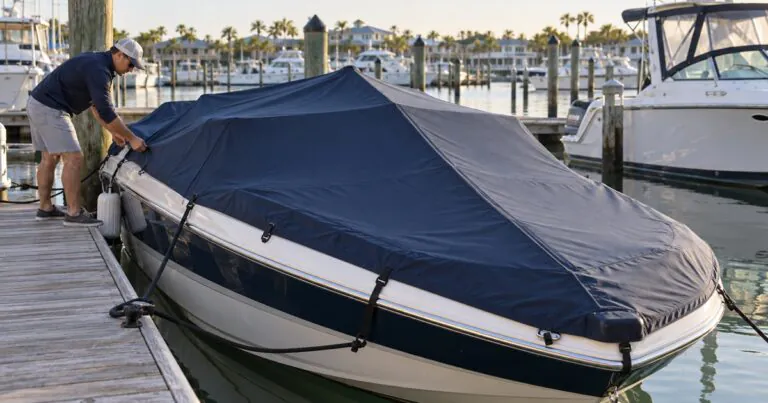
A boat cover has two jobs that can pull against each other. It needs to shed rain, block debris, and reduce UV exposure, but it also has to avoid trapping damp air against seats, carpet, compartments, electronics, and hardware. When a boat is covered while wet or the cover sags into low pockets, moisture can sit in the same places for days.
Ventilated boat covers help by allowing measured air exchange under the cover. They do not make a boat mildew-proof, and they do not replace cleaning or drying. The best result comes from the full setup: dry the boat first, support the cover so water runs off, keep vents open, and inspect after major weather changes.
What Causes Moisture Under a Covered Boat?
- Covering the boat before upholstery, carpet, ropes, or compartments have dried.
- Water pooling on a flat or sagging cover and pressing against seams.
- Warm days and cool nights that create condensation under the fabric.
- Wet gear stored in lockers with no chance to air out.
- A tarp or loose cover that blocks rain but seals vapor inside.
- Leaves, food residue, or organic debris left in the cockpit before storage.
The issue is often repeated dampness rather than one obvious leak. That is why airflow matters even when a cover looks like it is shedding rain correctly.
Cover Features That Improve Airflow
Vents and vent placement
Built-in vents give humid air a path out from under the cover while limiting direct rain entry. A vent works best when it is not buried under a fold, pressed against upholstery, or covered by a storage item.
Support poles or a frame
Support poles create slope and space. That helps water run off instead of forming pockets, and it gives air room to move across the cockpit. Without support, even a good fabric can collapse into the areas you most want to protect.
Fit and tension
A cover that is too loose can flap, sag, and collect water. A cover that is over-tightened can strain seams and crush airflow paths. The goal is a secure, even fit with enough shape to shed water.
Storage Checklist Before Covering
- Remove wet towels, ropes, life jackets, and loose fabric items.
- Open compartments long enough to dry before final storage.
- Clean food residue, leaves, and organic debris from the cockpit.
- Follow your normal bilge and drain plug storage process.
- Dry seats and carpet as much as practical before covering.
- Install support poles where the cover would otherwise sag.
- Check that vents are clear and not flattened by folds.
If the boat is stored outside, inspect after the first heavy rain. A small sag or blocked vent early in the season can become a larger moisture problem if it stays hidden for weeks.
Ventilation for Winter Storage
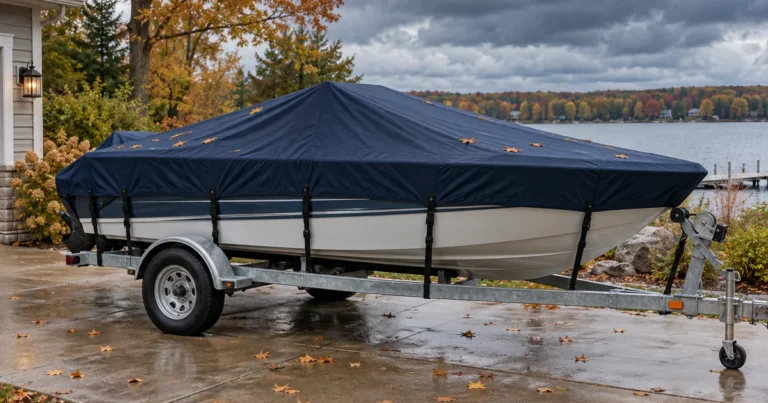
Winter storage is harder on a covered boat because the boat may sit for months through temperature swings, rain, snow, and freeze-thaw cycles. A winter setup should shed water and snow while still allowing enough airflow to reduce trapped humidity.
Use slope and support as the foundation. If snow or water presses the cover down into the cockpit, airflow drops and stress increases. If winter storage is part of your plan, pair this guide with the snow-load boat cover guide and the winter boat cover checklist.
Ventilation for Trailering
Trailering changes the problem. Wind movement, strap tension, and rain at road speed can push water and fabric differently than dockside storage. A trailerable cover should be secure enough to reduce fabric movement without crushing vents or pressing hard against wet upholstery.
After towing in rain, remove the cover when practical and let the boat dry before long storage. If trailering is a primary use case, review the trailerable boat cover guide and confirm that your cover is intended for towing.
Signs Your Cover Setup Needs More Airflow
- Musty odor when the cover is removed.
- Condensation on the underside of the cover.
- Damp carpet or seats after dry weather.
- Mildew spots near seams, cushions, lockers, or carpet edges.
- Water pooling outside and pushing the cover into the cockpit.
If you see these signs, do not assume the fabric alone is the problem. Check support, drying habits, blocked vents, and storage conditions before replacing the cover.
Quick Decision Framework
Choose more ventilation when
Your boat is stored for long periods, the cockpit has carpet or upholstered seating, the climate is humid, or the boat is often covered after rain or towing.
Choose more support when
The cover forms low pockets, water pools after storms, or snow load is a seasonal concern.
Choose a better fit when
The cover shifts, flaps, exposes corners, or needs uneven strap tension to stay in place.
FAQ: Ventilated Boat Covers
Does a vented cover let rain in?
A well-designed vent should allow airflow while limiting direct rain entry, but installation angle, sag, and storm direction still matter.
Can ventilation prevent all mildew?
No. Ventilation reduces risk, but mildew control also depends on cleaning, drying, airflow, and storage environment.
Is waterproof always better than breathable?
Not always. A cover must shed water, but a cover that traps damp air can still create problems. For a deeper comparison, read breathable vs waterproof boat covers.
Final Take
A ventilated boat cover is not just a cover with vents. It is a storage system: dry interior, measured fit, enough slope, clear airflow paths, and periodic checks. When those pieces work together, the cover is more likely to protect the boat instead of trapping moisture against it.
Use the free Safeboatz Boat Protection Guide as a seasonal checklist, and compare the 900D marine-grade polyester guide if fabric choice is your next decision.
Where Safeboatz Fits Into a Ventilation Plan
For boats in the active 17–19 ft and 20–22 ft Storm Series ranges, Safeboatz is most relevant when the owner needs a trailerable cover that can also support regular outdoor storage. The cover still has to be installed correctly: use the included/compatible support approach, keep the strap pattern even, and avoid storing damp gear under the fabric.
If your main problem is mildew, do not buy a cover and ignore the routine. Pair the cover with a dry-down checklist, open compartments before storage, and a post-storm inspection habit. That is the difference between buying fabric and building a repeatable boat-protection system.
Three-Minute Post-Storm Check
- Look for water pockets and raise or re-tension low areas.
- Touch the underside near vents and low corners for condensation.
- Confirm straps are snug but not cutting into the cover.
- Open one or two access points briefly when conditions allow airflow.
- Remove any wet gear that was left under the cover by mistake.
Related ventilation and weather resources
Ventilation should be planned together with fabric choice, fit and tie-downs. Continue with the Safeboatz breathable vs waterproof comparison, smart ventilation guide, and winter cover guide.
For neutral background, use EPA mold guidance and NOAA/National Weather Service marine weather resources.
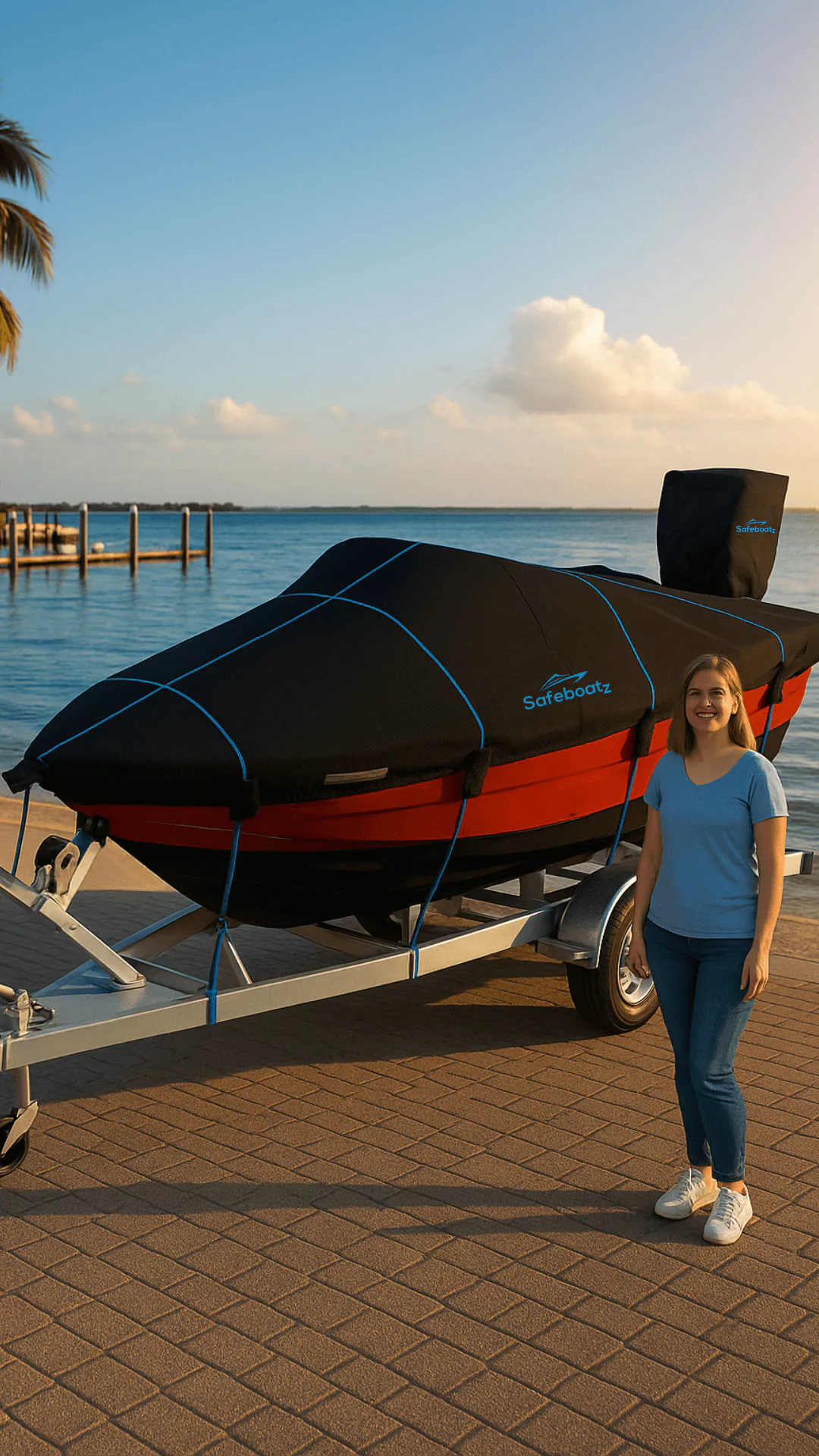
Trailerable Boat Cover 17-19ft
Fits 17–19ft boats – 102” beam. Heavy-duty 900D fabric, waterproof & UV-resistant. Reinforced for trailering. Built to protect, wherever you go.
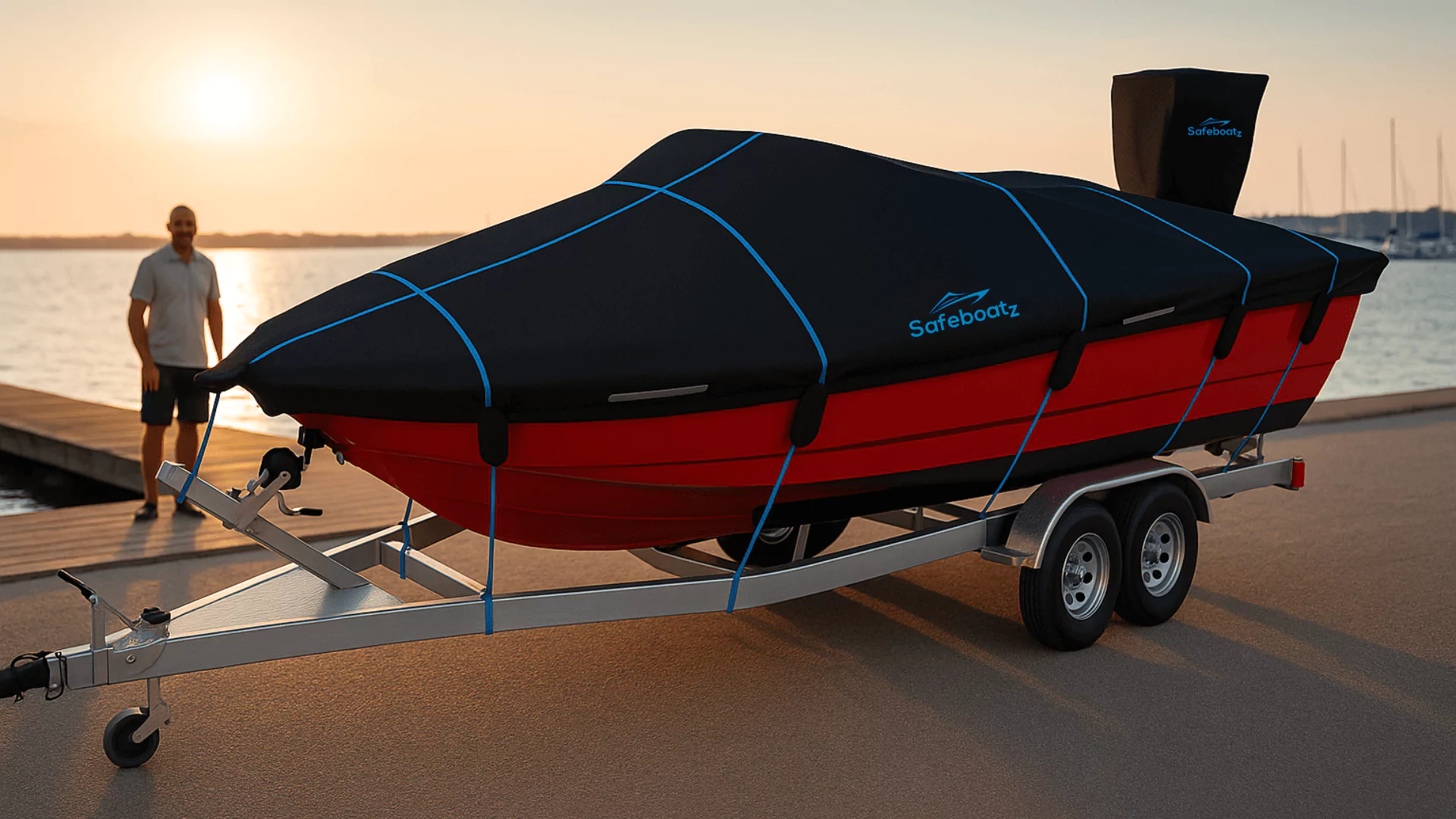
Trailerable Boat Cover 20-22ft
Fits 20–22ft boats – 106” beam. Heavy-duty 900D marine fabric, waterproof & UV-resistant. Secure fit for trailering and winter storage.