 SafeBOT

Heavy Duty Boat Cover Guide: Fit, Fabric & Care
A practical heavy duty boat cover guide covering fabric, seams, fit, straps, trailering, waterproof expectations, ventilation, storage support, and maintenance.

Heavy Duty Boat Cover Guide: Fit, Fabric & Care
A heavy duty boat cover should be more than a thick fabric sheet. It should fit the boat, resist abrasion, shed water, hold tension, support ventilation, and survive repeated installation, storage, and trailering checks. If any one part of that system is weak, the cover may still leak, flap, pool water, or wear through early.
This guide explains what “heavy duty” should mean when comparing boat covers and how to choose one without relying only on marketing language.
What Makes a Boat Cover Heavy Duty?
Heavy duty usually refers to a combination of fabric weight, coating, seams, strap hardware, reinforced stress points, and intended use. A heavy fabric can help with durability, but construction and fit matter just as much.
- Fabric suited to marine UV, rain, and abrasion exposure.
- Coating or treatment that helps shed water.
- Reinforced seams and corners.
- Durable straps, buckles, and attachment points.
- Ventilation for longer storage.
- Support-pole compatibility for drainage.
- Fit designed for the boat’s length, beam, and profile.
For material background, see the 900D marine-grade polyester boat covers guide.
Fit Comes Before Fabric
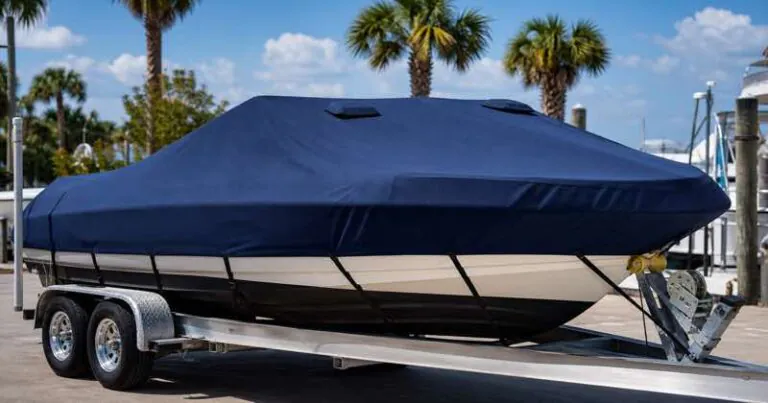
A poorly fitted heavy cover can perform worse than a lighter cover that fits correctly. Loose fabric flaps and rubs. Tight fabric stresses seams and hardware. Low spots collect water. A good fit follows the boat’s shape without creating unnecessary strain.
Measure overall length, beam, console height, windshield height, motor position, and raised accessories. Use the boat measuring guide before buying.
Waterproof Claims vs Real Water Management
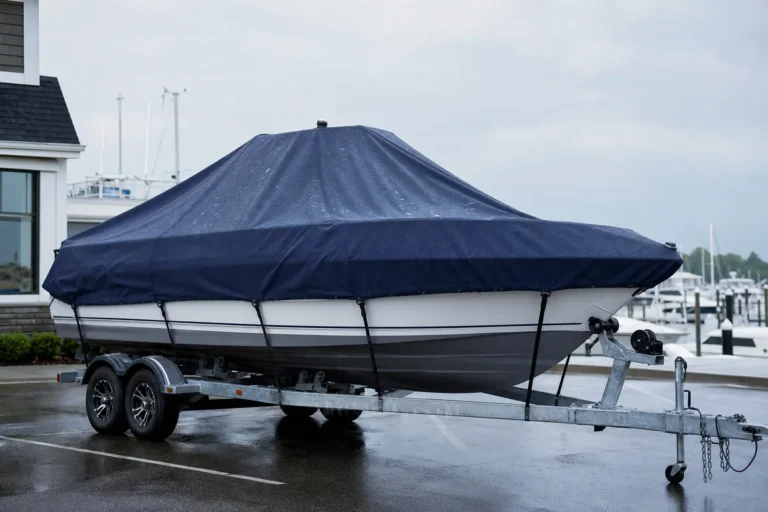
Many covers use waterproof language, but real-world performance depends on more than coating. Water has to leave the cover. If it pools, the pressure can eventually stress seams, stretch fabric, and find weak points.
Look for a setup that combines water-resistant fabric, treated seams, support poles, drainage slope, and proper tension. The waterproof boat cover guide explains the difference between fabric resistance and full storage performance.
Straps, Buckles, and Tension Systems
Heavy duty covers need hardware that can handle repeated tensioning. Weak straps or light buckles can fail even when the fabric is strong. Strap placement also matters: too few straps create loose areas, while poorly routed straps can rub on the trailer or hull.
- Center the cover before tightening.
- Work from bow to stern gradually.
- Keep tension even on both sides.
- Avoid sharp trailer edges and hot components.
- Re-check after the first drive or storm.
For repeatable tension, see the ratchet boat cover guide.
Trailering vs Stationary Storage
A heavy duty storage cover is not automatically a trailering cover. Trailering adds road wind, vibration, strap movement, and repeated load cycles. If you tow with a cover installed, choose a cover intended for trailering and inspect it after short test drives.
- Storage cover: prioritize water shedding, UV resistance, ventilation, and support.
- Trailering cover: prioritize secure fit, reinforced straps, low flap, and chafe protection.
- Winter cover: prioritize support, drainage, moisture control, and after-storm checks.
The trailerable boat cover guide covers road-use details.
Ventilation and Moisture Control
Heavy duty fabric can sometimes trap moisture if the cover is sealed tightly for long periods. A good storage setup lets damp air escape while still blocking rain and debris. Ventilation helps reduce musty odor, damp compartments, and condensation risk.
Before covering, dry the boat as much as possible. Open compartments briefly, remove wet gear, and avoid sealing damp fabric under the cover. For more, read the boat cover ventilation guide.
Winter and Snow Considerations
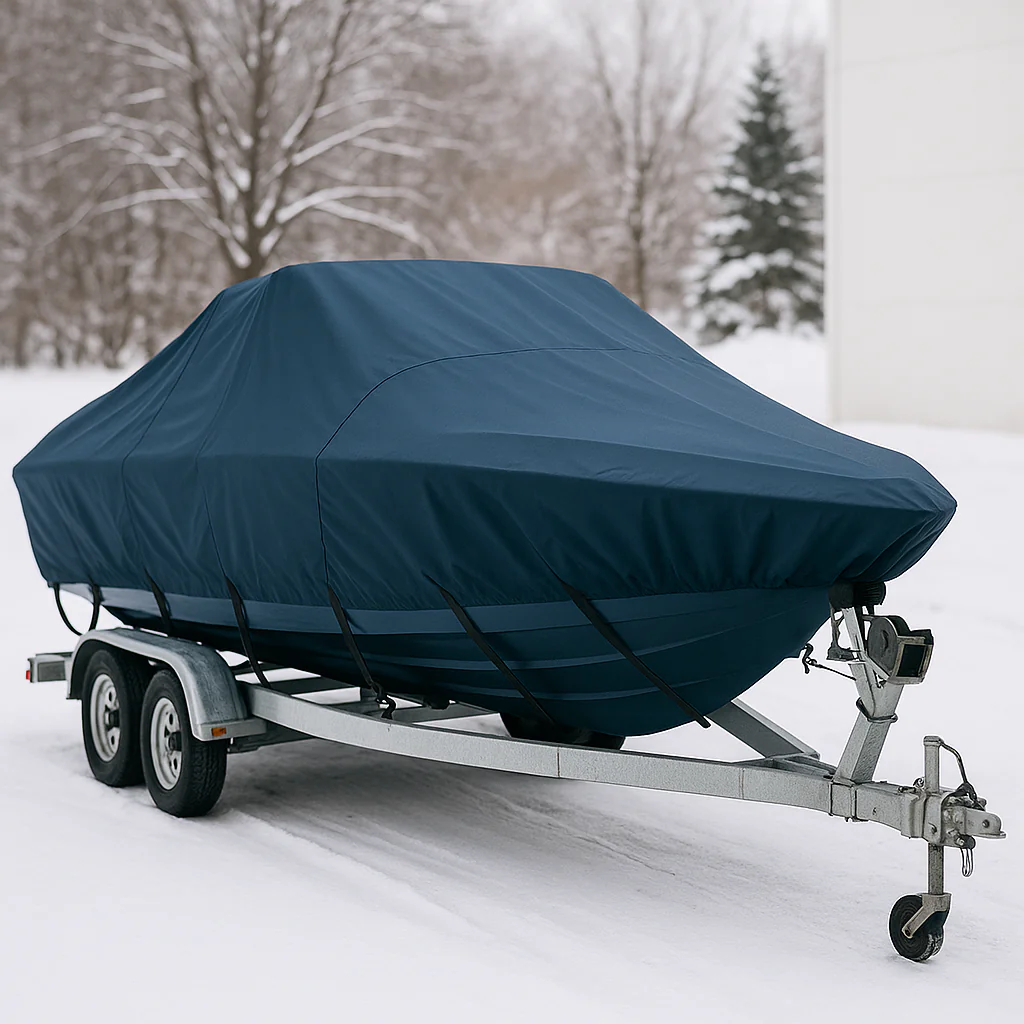
If the cover will be used outdoors in winter, support and slope become critical. Heavy duty fabric should not be expected to carry pooled snow and ice for long periods. Use support poles or a frame to create drainage and inspect after storms when safe.
See the snow load boat cover guide for winter storage checks.
Maintenance Checklist
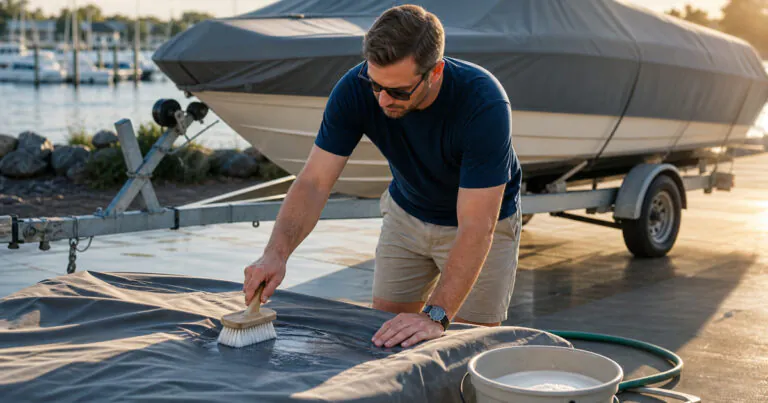
- Rinse dirt, pollen, and salt residue when needed.
- Let the cover dry fully before folding.
- Inspect seams, vents, straps, and buckles each season.
- Repair small tears before they spread.
- Do not drag the cover over gravel or sharp trailer parts.
- Store dry and away from rodents.
- Re-check tension after the first storm or short tow.
When a Heavy Duty Cover Is Worth It
A heavier-duty cover makes sense if the boat is stored outdoors, trailered with the cover installed, exposed to strong sun, parked under trees, used seasonally, or has had previous problems with water pooling, flap, or fabric wear. For light indoor dust protection, a simpler cover may be enough.
Where Safeboatz Fits
Safeboatz Storm Series covers are designed for tighter trailerable protection in common boat-size ranges. Review the 17–19 ft option or 20–22 ft option, and download the free boat protection guide if you want a buying checklist first.
FAQ
Is a heavy duty boat cover always waterproof?
No. Heavy duty usually describes durability, but water protection depends on fabric coating, seams, drainage, fit, and support.
Can I use a heavy duty cover for trailering?
Only if it is designed and secured for trailering. Heavy fabric alone does not guarantee road stability.
What fabric should I look for?
Look for marine-grade polyester or similar material, reinforced seams, UV resistance, durable straps, and construction suited to your climate and use case.
How do I make a heavy cover last longer?
Keep it clean, dry it before storage, avoid sharp contact points, maintain even tension, inspect seams and straps, and repair small damage early.
Does a heavy duty cover need ventilation?
Yes, especially for longer storage. Ventilation helps manage trapped moisture under the cover.
Final Take
A heavy duty boat cover is worth buying when the whole system is strong: fit, fabric, seams, straps, support, ventilation, and maintenance. Choose for your real storage and trailering conditions, not just the heaviest fabric label.
Related heavy-duty cover resources
Heavy-duty performance is strongest when fabric weight, seam quality, ventilation, and tie-down layout are considered together. Compare this article with Safeboatz guides on 900D polyester covers, water resistance, wind-proof strap setup, and high-quality cover selection.
For neutral safety and maintenance context, see the BoatUS expert advice archive and U.S. Coast Guard boating safety resources.
Boating Enthusiasts — Join the Crew!
Free Boat Protection Guide Download Yours Now
Get your free copy of The Complete Boat Protection Guide — expert tips, real-world strategies, and exclusive insights from the Safeboatz team.