 SafeBOT

Boat Covers on Amazon: Buying, Fit & Care Guide
Boat Covers on Amazon: Buying, Fit & Care Guide Buying a boat cover on Amazon can be convenient, but the listing still has to match your boat, climate, sto

Boat Covers on Amazon: Buying, Fit & Care Guide
Buying a boat cover on Amazon can be convenient, but the listing still has to match your boat, climate, storage style, and trailering routine. The safest approach is to measure first, compare the listing carefully, and treat reviews as clues rather than proof that the cover will fit your exact boat.
Start with the Safeboatz measuring guide so your length and beam numbers are accurate. Then compare those numbers with the listing’s size chart, fabric description, strap system, vents, support expectations, return window, and seller answers.
Compare the Active Storm Series Covers
If your measurements are already confirmed, compare the current Safeboatz Storm Series sizes before leaving the site: 17–19 ft trailerable boat cover and 20–22 ft trailerable boat cover. Both pages summarize fit range, beam guidance, ratchet tension, fabric, and Amazon checkout options.
Amazon Buying Framework
Use a three-step framework before adding a cover to your cart: fit, use case, and evidence. Fit means the listed length, beam, height profile, and boat type match your measured boat. Use case means the cover is appropriate for storage, trailering, sun exposure, rain, snow, or a mix of those conditions. Evidence means the listing gives enough photos, dimensions, installation details, and recent review context to make a reasonable decision.
Fit signals to verify
- Published length and beam range, not just “fits 17–19 ft boats.”
- Boat type or hull style, such as bass boat, bowrider, center console, fishing boat, or pontoon.
- Allowance for windshield, console, trolling motor, rails, outboard, swim platform, or folded bimini.
- Photos showing real installation angles, not only folded fabric or generic studio images.
- Clear return instructions in case the fit is wrong after careful measurement.
Material and Hardware: What to Read Carefully
Fabric labels, denier numbers, coatings, vents, seams, and buckles can help you compare listings, but they are not guarantees by themselves. A higher-denier fabric can still perform poorly if seams, fit, support, or ventilation are weak. A listing that says “waterproof” may still need slope and airflow to avoid pooling and condensation.
Read the whole description, then check whether photos and reviews support it. Look for reinforced stress points, practical strap routing, corrosion-resistant hardware language, and clear installation instructions. If the listing uses broad claims without showing measurements or details, ask the seller a specific question before ordering.
Review Reading Checklist
Recent reviews can be useful when you read them for patterns. Focus less on star average and more on whether owners mention boats similar to yours. A review from a different hull type, climate, or storage use may not predict your result.
- Filter for recent reviews and verified purchases when possible.
- Search within reviews for your boat length, brand, hull type, and use case.
- Look for repeated comments about pooling, strap failure, loose fit, fabric abrasion, or return problems.
- Give more weight to reviews with photos and measured dimensions.
- Treat one extreme review as a warning to investigate, not as the only decision point.
Storage vs Trailering Decisions
A cover that is acceptable for parked storage may not be appropriate for highway trailering. Trailering adds wind load, vibration, strap movement, and contact with trailer hardware. If the listing does not clearly say the cover is intended for trailering, assume it is for storage until the seller or manufacturer confirms otherwise.
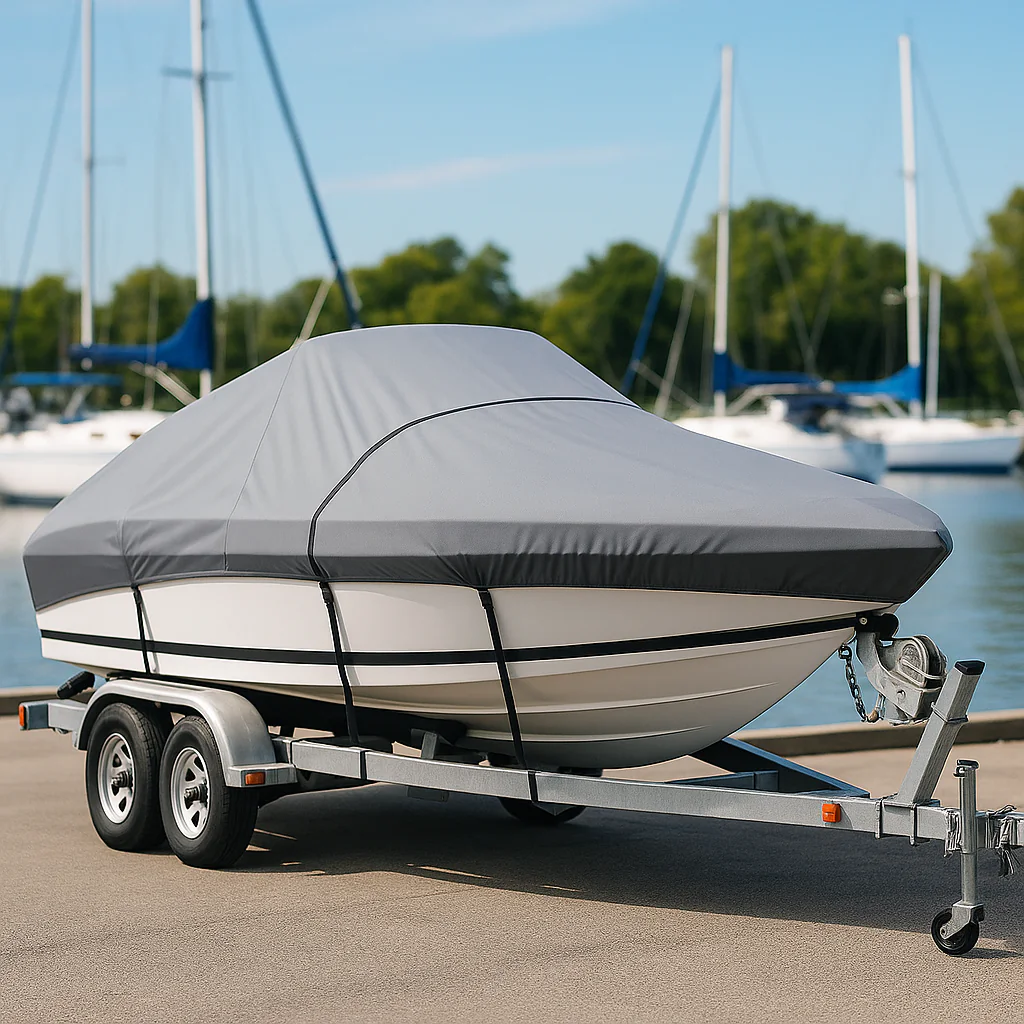
For outdoor storage, prioritize drainage slope, ventilation, UV exposure, and inspection access. For trailering, prioritize snug fit, low fabric movement, balanced side straps, protected contact points, and a short test drive before longer trips.
Before You Buy: Practical Checklist
- Measure length and beam on the actual boat, not from memory or a brochure alone.
- Check whether the cover includes or excludes outboard and platform coverage.
- Compare the listing to your tallest features: windshield, console, seats, rails, and accessories.
- Read the return policy before opening or installing the cover.
- Plan support poles or a frame if the cockpit or bow has flat areas where water can pool.
- Decide whether you need storage only or a cover designed for trailering.
Care After Delivery
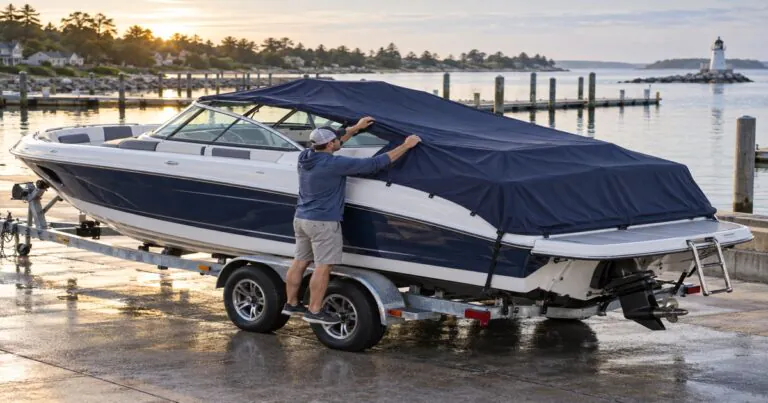
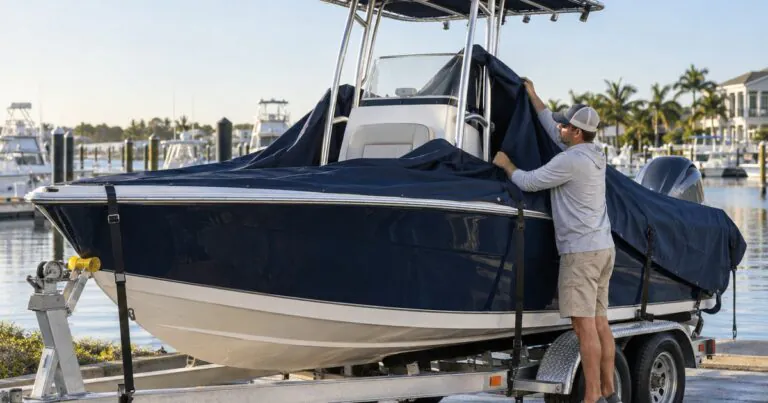
Install the cover on a dry day if possible. Center it from bow to stern, add support before final tensioning, and tighten straps gradually from side to side. After the first rain or short tow, inspect pooling, strap movement, chafe points, and loose fabric. Let the cover dry before folding it for long-term storage, and clean grit or leaves before they abrade the fabric.
Where Safeboatz Fits
If you prefer to compare a boating-focused cover after measuring, review the current Safeboatz 17–19 ft and 20–22 ft Storm Series options when your boat is in range. For a printable pre-purchase and storage checklist, download the free Safeboatz Boat Protection Guide.
Red Flags in Boat Cover Listings
Some listings deserve extra caution even when the price looks attractive. Be careful when the size chart is missing, when every photo is a generic product render, when the seller cannot answer whether the cover is for storage or trailering, or when reviews repeatedly mention the same fit problem. Also watch for descriptions that promise extreme protection without explaining fabric, seams, support, vents, or installation.
A good listing does not need hype. It should help you decide whether the cover matches your measured hull and real storage conditions. If the seller gives clear dimensions and practical limitations, that honesty is usually more useful than a broad “all-weather” claim.
Pause before buying if you see:
- No beam range or only a vague length range.
- No photos of straps, buckles, vents, seams, or support expectations.
- Conflicting answers about whether the cover can be used while trailering.
- Many recent reviews mentioning returns, pooling, torn straps, or poor fit.
- Claims that sound absolute but no details on care, limits, or installation.
Related Buying Guides and Trusted Resources
When comparing boat covers on Amazon, do not rely only on a title or star rating. Check fit first with the measuring checklist, then compare fabric and care tradeoffs in the heavy duty boat cover guide. If the boat is stored outside, pair your buying decision with the winter boat cover checklist.
For safe towing context before using any trailerable cover, review the NHTSA trailering and towing guidance.
Frequently Asked Questions
Is Amazon a good place to buy a boat cover?
It can be, especially for comparison shopping. You still need to verify measurements, material details, vents, hardware, seller support, and return policy before ordering.
Should I buy only by boat length?
No. Length is only one measurement. Beam, height profile, accessories, stern shape, and storage or trailering use can all change the fit.
Are “waterproof” claims enough?
No. Water shedding also depends on slope, seams, support, fit, and care. Ventilation remains important because trapped moisture can create mildew and odor problems.
What should I do if two sizes seem close?
Compare beam and profile first, then review photos and seller guidance. Oversizing can create loose fabric, while undersizing can stress seams and leave gaps.
Related buying and fit resources
If you are comparing boat covers on Amazon, use the product page only after checking fit, trailerability, fabric, and return details. Safeboatz guides that help with that decision include measuring a boat for a cover, matching covers by model, trailering with a cover, and heavy-duty cover selection.
For neutral consumer and boating context, review the FTC online shopping guidance and U.S. Coast Guard boating safety resources.
Boating Enthusiasts — Join the Crew!
Free Boat Protection Guide Download Yours Now
Get your free copy of The Complete Boat Protection Guide — expert tips, real-world strategies, and exclusive insights from the Safeboatz team.