 SafeBOT

Boat Trailer Tire Blowout Prevention: Spring Towing Checklist
Boat Trailer Tire Blowout Prevention: Spring Towing Checklist The first tow after storage is a good time to slow down and inspect the whole trailer system:

Boat Trailer Tire Blowout Prevention: Spring Towing Checklist
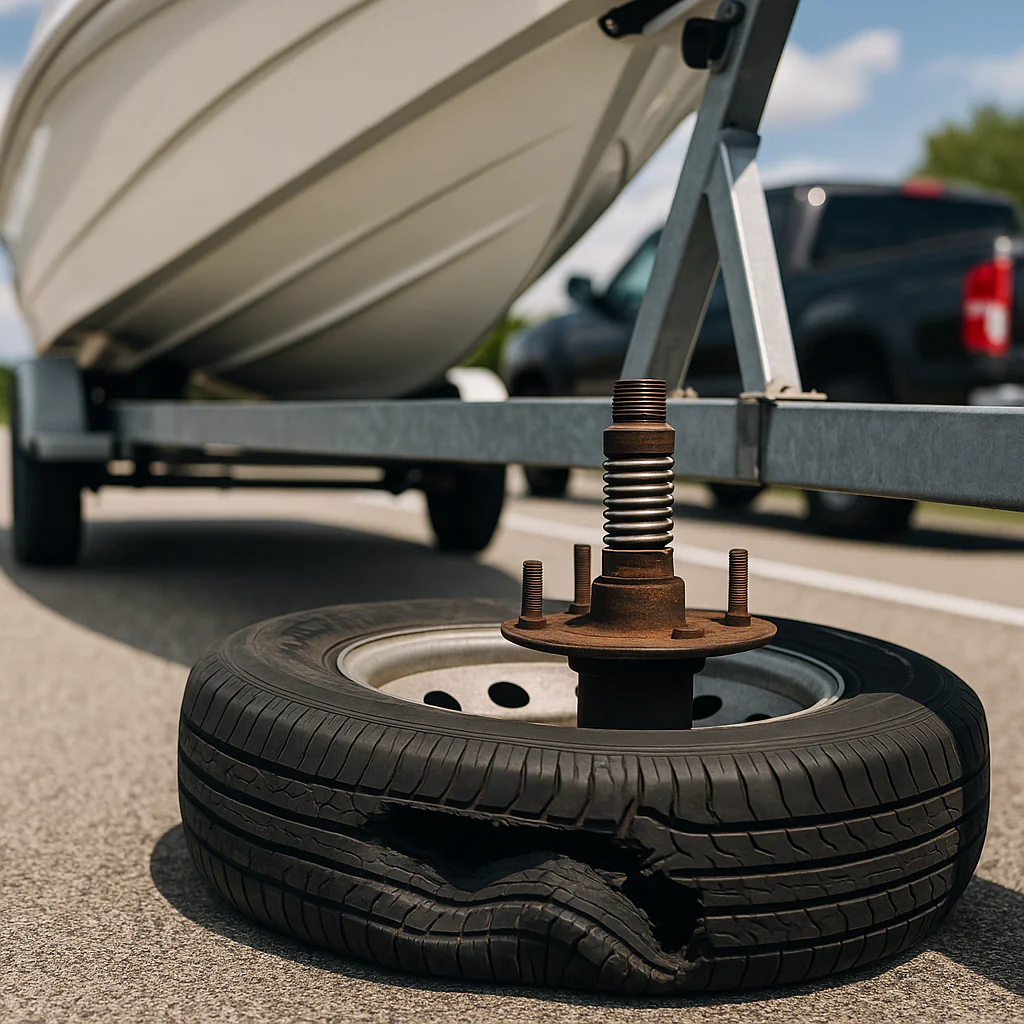
The first tow after storage is a good time to slow down and inspect the whole trailer system: tires, bearings, lug nuts, lights, safety chains, tie-downs, and the way your cover sits on the boat. A tire blowout is rarely caused by one visible problem alone. Age, under-inflation, heat, overload, damaged sidewalls, worn bearings, and loose gear can combine during a highway trip.
This guide keeps the advice practical and verifiable. It does not claim that a specific mileage, month, or temperature swing will cause failure. Instead, it gives you a repeatable pre-trip framework you can use before the first ramp run of the season and before longer road trips.
Quick Answer: What Should You Check Before Towing?
Before towing, verify tire age and condition, set cold tire pressure to the tire sidewall or trailer/manufacturer guidance, check lug nuts, inspect hubs and bearings, confirm lights and brakes, secure the boat, and make sure the cover is not flapping into tires, trailer brackets, or straps. If anything looks cracked, loose, hot, noisy, or uneven, stop and fix it before highway speed.
Why Spring Towing Reveals Stored-Trailer Problems
Storage can hide small problems because the trailer is not moving under load. A tire may look acceptable until it warms on the highway. Bearing grease may need attention. A strap may have stretched. A cover edge may sit too close to a sharp bracket. The first spring trip should therefore be treated as a controlled shakedown, not a rushed full-distance tow.
Plan a short low-speed inspection stop soon after leaving. Walk around the trailer, look at tire sidewalls, feel near hubs without burning your hand, check straps, and confirm that the cover and support system stayed in place. This simple stop often catches movement before it becomes damage.
Pre-Trip Tire and Wheel Checklist
- Check the DOT date code or service records so you know the tire age instead of guessing from tread alone.
- Look for sidewall cracks, bulges, cuts, uneven wear, exposed cords, or a tire that has been run flat.
- Set cold pressure before driving; do not bleed air from a warm tire just because pressure rises after use.
- Confirm the tire load rating is appropriate for the loaded trailer and boat.
- Inspect the spare tire, jack, lug wrench, and any locking lug tools before you need them roadside.
- Verify lug nuts are secure according to the trailer manufacturer’s guidance.
For general tire-safety context, the NHTSA tire safety resources are a useful reference. Your trailer manual, tire sidewall, and local service technician remain the sources for exact pressure and maintenance requirements.
Bearings, Hubs, Brakes, and Lights
Tires get the attention during a blowout, but hub and bearing problems can create similar roadside emergencies. Before a long tow, inspect for grease leakage, loose dust caps, abnormal wheel play, grinding sounds, brake drag, and uneven hub temperature after a short test drive. If the trailer has brakes, confirm they activate correctly and release cleanly.
Lights also matter because a breakdown is more dangerous when other drivers cannot read your signals. Test running lights, brake lights, turn signals, side markers, and the license-plate light. Clean corroded connectors and route the harness where it will not rub against the frame or boat hardware.
Cover and Load Security: The Overlooked Connection
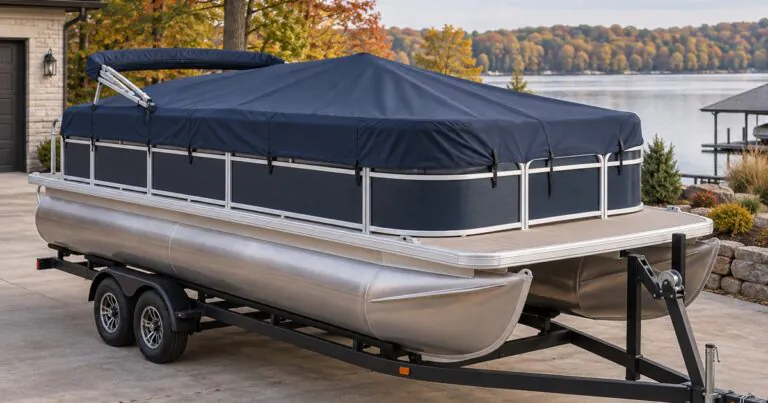
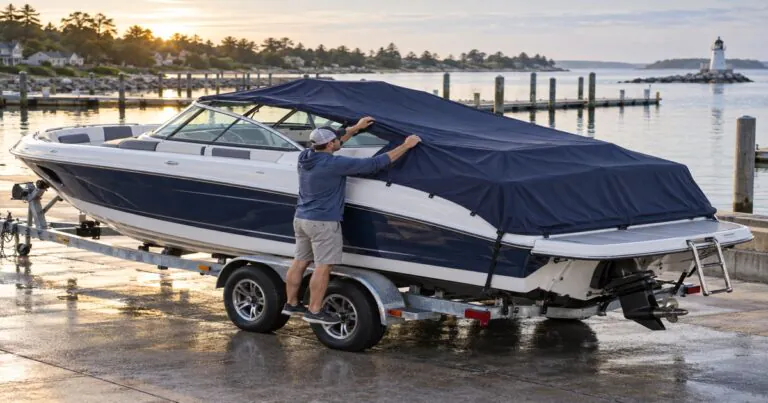
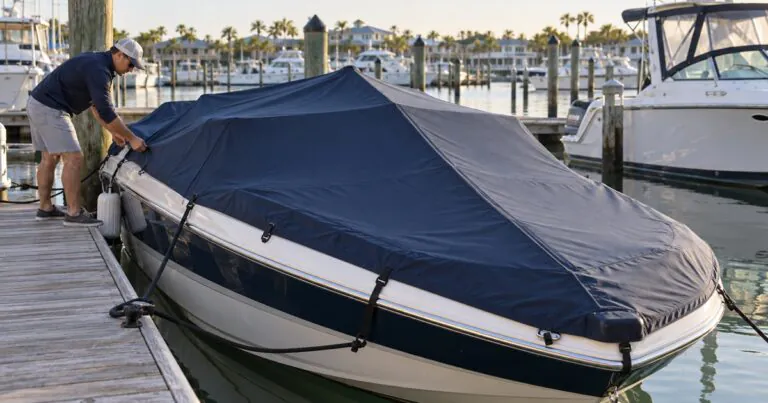
A loose boat cover usually does not cause a tire blowout by itself, but it can create distraction, chafe, strap tangles, and uneven movement. If fabric flaps hard at speed, stop and correct it. If a strap hangs near a tire, spring, brake line, or axle, reroute it before driving.
- Use the Safeboatz measuring guide before buying a trailerable cover.
- Pad windshield corners, cleats, trolling-motor brackets, and other sharp contact points.
- Keep support poles or bows positioned so water does not pool during stops or storage.
- Check that straps pull down evenly without crossing tires or brake components.
- Do a short test tow and retighten after the cover settles.
Roadside Safety Framework
If you feel vibration, hear a pop, see smoke, or notice the trailer pulling strangely, reduce speed gradually and move to a safe location. Avoid abrupt steering. Turn on hazard lights, stay away from traffic lanes, and use warning triangles or flares if safe and legal. If the trailer is unstable or the shoulder is narrow, call roadside assistance rather than trying to work beside traffic.
Keep a roadside kit that matches your trailer: spare tire, jack rated for the load, lug wrench, wheel chocks, reflective triangles, gloves, flashlight, tire-pressure gauge, basic tools, and a charged phone. Practice where the jack contacts the trailer before the first trip.
After a Failure: What to Inspect Before Continuing
Do not simply install the spare and drive away. Inspect the fender, brake line, wiring, hull, bunks, straps, and cover for damage. Look at the opposite tire too; if one tire failed from age, overload, or under-inflation, the other may have been stressed. Drive slowly to a safe service location if anything looks questionable.
Seasonal Maintenance Rhythm
Create a small log for tire pressure, bearing service, brake checks, and strap or cover adjustments. Keep photos of tire sidewalls and the loaded trailer setup. For spring preparation beyond trailer tires, use the spring boat commissioning checklist. For cover stability, compare the 17–19 ft and 20–22 ft trailerable cover pages if your boat is in range, or download the free Safeboatz Boat Protection Guide.
Related Trailering and Spring Checklist Resources
Before a long tow, pair tire checks with the trailerable boat cover guide, the spring commissioning checklist, and the strap security guide so the cover and trailer are checked together.
For broader owner-maintenance context, the BoatUS expert boating advice archive is a stable non-competitor reference.
FAQ
How old is too old for trailer tires?
There is no single visible rule. Check the tire date code, condition, service history, load rating, and manufacturer guidance. Replace tires with cracking, bulges, uneven wear, or unknown history before long trips.
Should trailer tire pressure be checked hot or cold?
Set pressure cold before towing using the tire sidewall or trailer guidance. Pressure changes as tires warm, so do not use a warm reading alone to decide that a tire was overfilled.
Can a boat cover affect towing safety?
Yes, if it flaps, blocks visibility, loosens straps, or routes webbing near moving parts. Use a trailerable cover only as intended and inspect after a short test drive.
What should I carry for tire emergencies?
Carry an inflated spare, load-rated jack, lug wrench, wheel chocks, reflective warnings, tire-pressure gauge, gloves, flashlight, and the correct keys or sockets for your wheels.
Related spring towing and storage resources
Before the first tow of the season, pair tire checks with cover fit, tie-down tension, and launch-day inspection. Useful follow-ups include Safeboatz guides to spring commissioning, launch damage checks, trailering with a cover, and strap security in wind.
For neutral road and boating safety context, see NHTSA tire safety guidance and U.S. Coast Guard recreational boating resources.
Boating Enthusiasts — Join the Crew!
Free Boat Protection Guide Download Yours Now
Get your free copy of The Complete Boat Protection Guide — expert tips, real-world strategies, and exclusive insights from the Safeboatz team.