 SafeBOT

Bowrider Boat Cover Guide: Fit, Windshield & Trailering Checks
Choose a bowrider boat cover with fewer fit surprises. Measure length, beam and windshield height, account for towers and platforms, support the open bow, and inspect the setup before trailering.

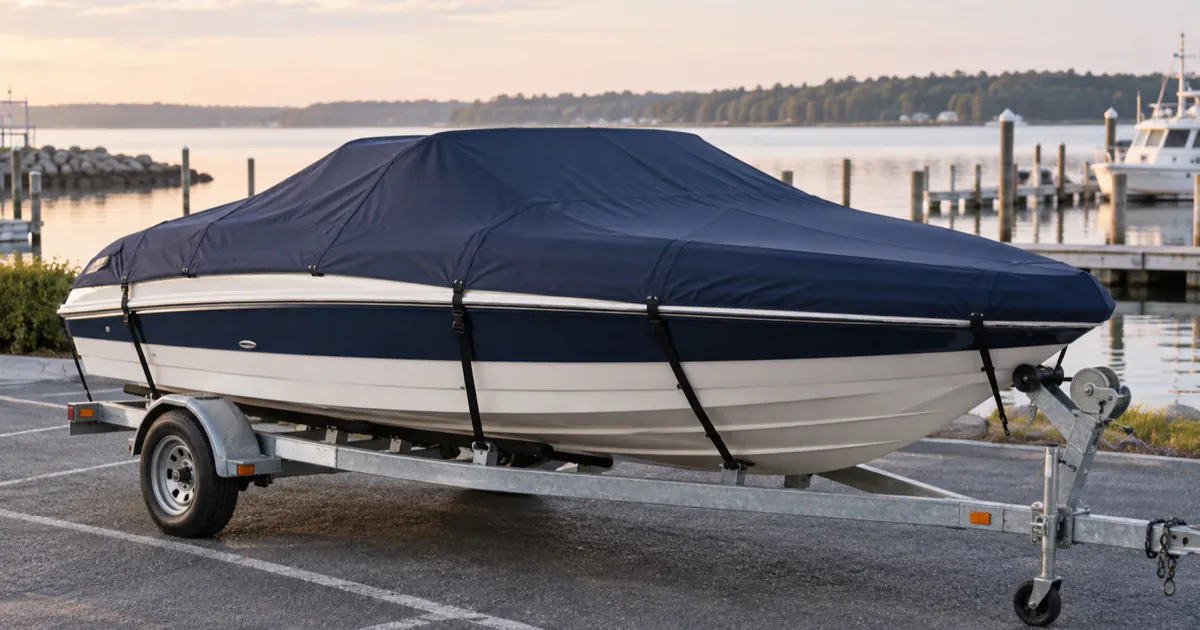
A bowrider looks simple to cover until the fabric reaches the windshield, open bow, swim platform, and engine area. Those features create height changes and contact points that a size label alone cannot explain. A good bowrider boat cover setup starts with the boat’s actual measurements and layout, then uses even support and controlled tension to keep the cover stable.
This guide explains how to measure a bowrider, account for common hardware, compare storage and trailering needs, and inspect the cover after installation. It also shows when a current Safeboatz Storm Series size may be worth reviewing without claiming that every bowrider in the range will fit.
Quick answer: what should you look for in a bowrider boat cover?
Choose a cover from measured centerline length, maximum beam, windshield height, bow seating profile, stern layout, and engine position. The cover should sit over smooth, supported high points without stretching across the windshield frame or sagging into the open bow. For trailering, use a cover specifically approved for that use and complete a short low-speed inspection before highway travel.
Why bowriders need more than a length label
A bowrider is a runabout with seating ahead of the windshield. That open-bow layout is useful for day cruising and watersports, but it changes the shape the cover must follow. Two boats with the same advertised length can have different beam widths, windshield heights, swim platforms, towers, rails, or engine arrangements.
Discover Boating’s bowrider overview shows how varied the category can be. Treat the model name and nominal length as a starting point. The measurements and configuration of your boat decide whether a particular cover can sit correctly.
1. Measure centerline length and maximum beam
Measure centerline length in a straight line from the bow to the farthest stern point the cover must reach. Do not follow the curve of the gunwale. Record fixed swim platforms or other permanent extensions when the cover needs to pass over them. Do not automatically include the outboard unless the cover listing says it is designed to cover the motor.
Measure beam straight across the widest part of the boat. Include rub rails or permanent features that change the cover’s path. Repeat both measurements instead of relying on a registration document or model brochure. Our complete boat cover measurement checklist explains the process in more detail.
2. Record the windshield and open-bow profile
The windshield is often the highest rigid feature on a bowrider. Measure its height from the cover’s expected edge line, not from the ground or trailer frame. Then note whether the windshield has sharp corners, exposed fasteners, a center walk-through panel, or hardware that could rub the fabric.
Look forward from the windshield into the bow seating area. A cover that drops too sharply can form a basin between the windshield and bow. A setup with too little support may collect rain there. A support that is too tall can pull at seams or concentrate pressure on the fabric. The aim is a smooth slope that sheds water without forcing the cover into a tent-like peak.
3. List hardware that changes the fit
Walk around the boat before comparing covers. Photograph or write down every feature that sits above the normal deck line or extends beyond the hull. Bowriders commonly carry accessories that were added after the boat left the factory.
- Bimini tops and folded frames
- Wakeboard towers or tow pylons
- Removable cockpit tables
- Antennas, lights, mirrors, and flag sockets
- Swim platforms and boarding ladders
- Outboard motors or sterndrive hardware
- Bow rails, cleats, and windshield corners
Return removable equipment to the position required by the cover maker. Never force fabric over a raised tower, sharp fitting, or hot component. If a feature falls outside the cover’s stated configuration, ask the seller or manufacturer before buying rather than assuming extra fabric will solve the problem.
4. Decide whether the cover is for storage, trailering, or both
A storage cover and a trailerable cover do not face the same loads. Outdoor storage calls for rain-shedding support, ventilation, UV exposure management, and periodic inspection. Trailering adds sustained airflow, vibration, strap movement, and the possibility of fabric rubbing against the hull.
Use a cover for trailering only when its instructions permit it. Follow the stated speed, setup, and inspection guidance. Stop after a short low-speed test to check the hem, windshield area, straps, and contact points. If the cover begins to balloon or flap, correct the fit before continuing. The Safeboatz installation guide provides a full bow-to-stern setup sequence.
5. Support the cover without creating pressure points
Support should create broad, useful slope rather than one hard peak. Position approved support equipment where it will not press against delicate upholstery, glass, switches, or unsupported panels. Keep ventilation openings clear and check that the support cannot slide as the fabric is tensioned.
Look at the cover from the side and from the bow. Low areas behind the windshield or between seat backs can collect water even when the center looks high enough. Correct the support geometry before tightening straps harder. Strap tension cannot fix a poorly placed low point.
6. Center the bowrider boat cover before tightening
- Start with a clean, dry boat and identify the bow end of the cover.
- Place the bow section without dragging it across cleats or the windshield.
- Pull the cover toward the stern in short, controlled steps.
- Check that the hem sits at a similar height on both sides.
- Connect straps lightly, alternating from port to starboard.
- Remove twists and route each strap to a solid trailer point.
- Increase tension in stages while watching the windshield and bow.
- Secure loose strap tails away from the hull, wheels, wiring, and road.
The final setup should feel snug and balanced, not stretched. One very tight strap can pull the cover off center and move pressure to a windshield corner or rub rail. If a rub mark appears, use the diagnosis steps in our boat cover chafing guide before adding random padding.
7. Run a bowrider-specific inspection
Inspect the places where this boat style commonly creates trouble. Reach under the cover only when the boat and trailer are secure. Check that the fabric is not stretched tightly over the windshield frame, trapped under a folded bimini fitting, or pulled into the open-bow footwell.
- Bow point: centered, fully seated, and not riding upward
- Open bow: supported with no deep water-catching pocket
- Windshield: fabric clear of sharp corners and exposed hardware
- Cockpit: vents and support points remain upright
- Stern: cover reaches its intended edge without forcing the engine area
- Trailer: straps avoid tires, brake lines, lights, and sharp metal
- Hull sides: no loose fabric or strap buckle striking the gelcoat
8. Recheck after rain, wind, and the first short tow
A cover can look correct in calm weather and change after the fabric settles. Inspect it after the first rain for pooling near the bow seats and windshield. Recheck tension after a windy period. For a trailerable setup, stop soon after departure in a safe place and look for movement, heat near contact points, shifted support, or loose strap tails.
Do not leave a new setup unattended for a full season. Short, regular checks catch a low point or rub area while it is still easy to correct. Remove leaves and debris before they block drainage or ventilation.
Common bowrider cover mistakes
- Buying by model length alone: beam, windshield height, platform length, and engine layout still matter.
- Pulling fabric hard over the windshield: this creates a concentrated contact point instead of a stable fit.
- Leaving the open bow unsupported: the seating area can become a rain pocket.
- Covering a raised tower or bimini by guesswork: the cover must be designed for the actual configuration.
- Using one strap to correct an off-center cover: recenter the cover before adding tension.
- Assuming storage approval means trailering approval: check the cover instructions for the intended use.
Review current Storm Series fit paths
Safeboatz currently offers premium Storm Series trailerable boat covers in 17–19 ft and 20–22 ft size ranges. These are measurement ranges, not a promise that every bowrider of the stated length will fit. Compare the live product dimensions and instructions with your centerline length, beam, windshield height, stern configuration, and intended use. The 20–22 ft cover is Storm Series only.
For a broader checklist covering trailering, storage, weather, and cover care, download the free Boat Protection Guide.
Frequently asked questions
How do I measure a bowrider for a boat cover?
Measure straight centerline length from the bow to the farthest stern point the cover must reach, then measure the maximum beam. Record windshield height, swim platforms, towers, bimini hardware, and the engine position because they can change the required cover shape.
Should a bowrider cover go over the outboard motor?
Only when the cover is specifically designed and sized to include the motor. Many covers protect the hull and deck while leaving the outboard separate. Follow the product instructions rather than adding the engine to the measured length automatically.
How do I keep rain from pooling in the open bow?
Use approved support to create a continuous slope from the windshield area toward the cover edges. Check the bow seating area from several angles before tightening and again after the first rain. Do not try to remove a low pocket with extra strap tension alone.
Can I trailer a bowrider with the cover on?
Use the cover for trailering only if its instructions approve that use. Center and tension it as directed, secure every strap and loose tail, inspect contact points, and stop after a short low-speed test before continuing.
What if my bowrider has a wakeboard tower?
Use a cover or tower accommodation designed for that exact configuration. Do not stretch a standard cover over the tower or cut an opening without approved instructions. Measure the boat with the tower in the required storage position.
Boating Enthusiasts — Join the Crew!
Free Boat Protection Guide Download Yours Now
Get your free copy of The Complete Boat Protection Guide — expert tips, real-world strategies, and exclusive insights from the Safeboatz team.