 SafeBOT

Boat Cover With a Bimini Top: Fold, Measure & Protect
Learn when to fold or remove a bimini, how to measure the folded profile, protect hardware, prevent pooling, set strap tension, and check trailering compatibility.

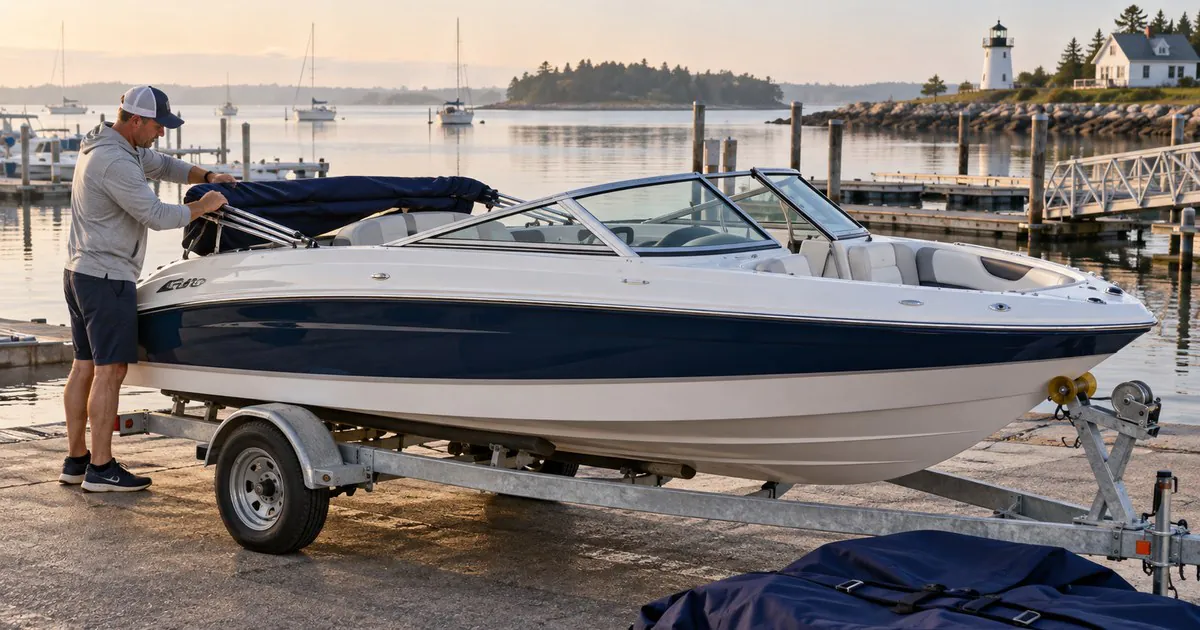
A bimini changes the shape of your boat even when the canvas is down. Hinges, bows, support struts, and the folded fabric can all sit above the gunwale, right where a cover expects a clean run. Pull a cover over that hardware without a plan and you may end up with a pressure point, a loose pocket that collects rain, or a cover that simply cannot reach its intended attachment points. A listing described as a “boat cover with bimini top” option still needs to match the boat’s measured profile and the frame’s approved storage position.
Quick answer: can you use a boat cover with a bimini top?
Yes, in many cases, but the bimini normally needs to be folded into its lowest approved storage position or removed before the boat cover goes on. Measure the boat with the folded assembly in that position, pad every hard contact point, and confirm that the cover can tension evenly without riding on the bimini frame. A fixed, tall, or unusually wide bimini may require a different cover design or a custom cover. Never assume a universal cover will clear it.
Decide whether to fold, remove, or leave the bimini in place
Start with the bimini manufacturer’s storage instructions. Frame geometry varies, and the safe folded position on one boat may put too much load on another boat’s hinges or deck mounts. The cover must work around the position the bimini is designed to occupy, not force the frame into a convenient angle.
Fold it when the frame stows low and securely
Folding is usually the practical choice when the bows collapse into a low bundle inside the boat’s normal profile. Secure the folded canvas in its storage boot if one is supplied, restrain the frame so it cannot swing, and check that the bundle does not create a sharp ridge under the cover. West Marine’s bimini top guide is a useful overview of common frame, mounting, and storage arrangements, but your own hardware instructions take priority.
Remove it when the folded profile is still too tall
Removal makes sense if the stored bows stand well above the windshield, land outside the cover’s intended perimeter, or place metal fittings directly under a tight fabric span. Quick-release hardware can make this manageable, but do not improvise by disconnecting load-bearing fittings unless the bimini maker permits it. Label loose pins and store the assembly dry so the next installation is not a dockside puzzle.
Leave it standing only with a cover designed for that geometry
A standard trailerable cover should not be draped over a deployed bimini. The frame was not meant to serve as a cover support, and the broad upright profile gives wind more structure to work against. A fixed hardtop, tower-mounted shade, or bimini that cannot fold below the cover line needs a fitted solution with the correct cutouts, boots, or reinforced clearances. That is custom-cover territory more often than universal-cover territory.
How to measure for a boat cover with a bimini top
Measure the boat in the exact configuration you plan to cover. Lower the bimini into its approved storage position, secure the bows, fit the boot, and put removable seats or gear where they will live under the cover. A measurement taken with the frame loose or half-folded does not describe the profile the cover will actually meet.
- Measure the centerline length from the bow to the stern point the cover must reach. Do not follow the curve of the deck.
- Measure the maximum beam at the boat’s widest point, using a straight side-to-side measurement.
- Find the highest point of the folded bimini bundle and note where it sits in relation to the windshield and gunwales.
- Check the full perimeter for hinges, deck mounts, windshield corners, cleats, and frame ends that could interrupt the cover’s path.
- Compare those dimensions with the cover maker’s fit range and intended boat style. Length alone is not enough.
Our boat cover measurement guide explains the basic length and beam process. If you own a bowrider, the bowrider cover guide adds context for windshields, open bows, and cockpit layouts. Write the folded bimini height and location beside your main dimensions; those notes matter when comparing shapes that share the same nominal length.
Pad the hardware before it touches the cover
A folded bimini concentrates several hard parts into a small area. Zipper pulls, hinge knuckles, bow ends, and mounting screws may not feel sharp in your hand, yet repeated movement under tension can polish gelcoat or wear the cover from the inside. Road vibration magnifies the problem.
Use smooth, nonabrasive padding over every raised contact point. The padding should stay in place, shed water, and have no hard buckle facing the fabric. Avoid bulky towels that can soak up water, bunch into a ridge, or escape in the wind. Check that the bimini boot’s zipper and fasteners face away from the cover where possible.
Then protect the boat beneath the system. Frame hardware can move against gelcoat even if the cover itself remains intact. The chafing and gelcoat protection guide shows where to look and how to separate rubbing surfaces. After the first windy night or short tow, remove the cover and inspect the padding. A gray scuff or shiny spot is an early warning, not normal wear to ignore.
Create drainage without loading the bimini frame
The folded bimini may look like a convenient ridge, but it should not become the main support for the cover unless both manufacturers specifically approve that use. A cover stretched across aluminum bows can press down on the frame, pull sideways on deck mounts, and leave shallow basins on either side.
Build the drainage shape with the cover’s intended support system. A properly placed, capped support pole can create a peak so rain runs toward the perimeter. Keep the pole away from the folded bimini and make sure its base cannot slide. The cover should stay taut rather than overtight, with another inspection after wind or heavy rain.
Walk around the covered boat and look across the fabric at a low angle. Any flat pocket between the windshield, support pole, folded bimini, and stern can hold water. Adjust the support position before rain tests it for you. Our support pole and pooling guide covers placement, runoff, and common setup errors in more detail.
Set strap tension in stages
Install the cover from its natural reference points rather than pulling one corner tight and chasing the rest. Center it, seat the bow and stern, and connect straps loosely. Confirm that seams lie where the cover maker intended and that the fabric clears the bimini hardware. Then tighten opposite areas in small steps.
The finished cover should be firm enough to resist flapping and preserve its drainage slope. It should not crush padding, distort the windshield frame, bend a bimini bow, or pull the hem above the hull area it is supposed to cover. If extra tension is the only way to make the cover reach, stop. That is a fit problem, not a strap adjustment.
For the full sequence, use the boat cover installation guide. Recheck the setup after the fabric has settled, after a temperature change, and after heavy weather. Straps and padding can move even when the first installation looked clean.
Trailering requires a separate compatibility check
A storage-ready setup is not automatically road-ready. Before towing, confirm that the cover is rated for trailering, the bimini is secured in the travel position specified by its manufacturer, and the folded assembly is allowed to remain under that cover at road speed. Some bimini makers require additional travel supports or removal. Some cover shapes cannot control airflow around a raised bundle.
- Make sure no strap, frame part, or cover edge can touch a tire, hot exhaust component, propeller, or sharp trailer hardware.
- Secure loose bimini straps and boot flaps so they cannot whip beneath the cover.
- Check mirror visibility, lights, plate clearance, and the trailer’s normal safety equipment.
- Stop after a short distance in a safe place. Inspect strap tension, heat, shifting padding, and any new flutter.
Do not tow with the bimini deployed. If the folded frame creates a tall hump, the conservative choice is to remove it or use a system expressly designed for that boat, bimini, and towing setup.
Check cover compatibility before you buy
Safeboatz Storm Series covers are premium trailerable motorboat covers offered in current 17–19 ft and 20–22 ft ranges. Those ranges do not mean every boat or bimini arrangement will fit. Treat any “boat cover with bimini top” claim as a starting point, then check hull style, beam, windshield height, folded-frame location, and the overall covered profile.
If your bimini folds low inside the boat’s normal envelope, careful measurement and padding may produce a clean setup. If it remains tall, fixed, tower-mounted, or wider than the gunwales, ask for a fit review or consider a custom cover. Buying a larger generic cover to gain height often creates excess fabric elsewhere, which can flap or pool.
Frequently asked questions
Can I put a boat cover over a folded bimini top?
Often, yes, if the bimini is in its approved low storage position and the cover fits without resting heavily on the frame. Pad the hardware, preserve the cover’s drainage slope, and verify the instructions for both products.
Should I remove the bimini canvas before covering the boat?
Remove it if the manufacturer calls for removal, if the canvas cannot dry, or if the folded bundle creates a poor cover fit. If it can stay installed, let it dry fully and secure it in the proper boot before covering the boat. Discover Boating’s canvas-care guidance also recommends drying the canvas thoroughly before stowing it.
Can the folded bimini replace a boat cover support pole?
Do not assume it can. Bimini frames and deck mounts are built for their specified use, not automatically for cover tension or rain loads. Use the cover’s approved support system unless both manufacturers state otherwise.
How much extra height should I allow for a folded bimini?
There is no universal allowance. Measure the actual highest point with the bimini folded, booted, and secured. Then compare the full profile, not just that height, with the cover maker’s fit guidance.
Can I trailer a boat with the bimini folded under the cover?
Only when the cover is trailerable and both the cover and bimini manufacturers permit that configuration. Secure the bimini in its travel position, inspect all contact points, and stop early in the trip to check for movement or heat.
Make the first covered night a test
Install the system in dry weather, then inspect it again after several hours and after the first rain. Look for damp folded canvas, shifted padding, frame pressure, loose straps, and water pockets. That short test tells you more than forcing a questionable setup through a full season.
For a broader storage and protection checklist, download the free boat protection guide. It is a useful companion when you are sorting out cover fit, support, tie-downs, and the small contact points that cause expensive wear.
Boating Enthusiasts — Join the Crew!
Free Boat Protection Guide Download Yours Now
Get your free copy of The Complete Boat Protection Guide — expert tips, real-world strategies, and exclusive insights from the Safeboatz team.