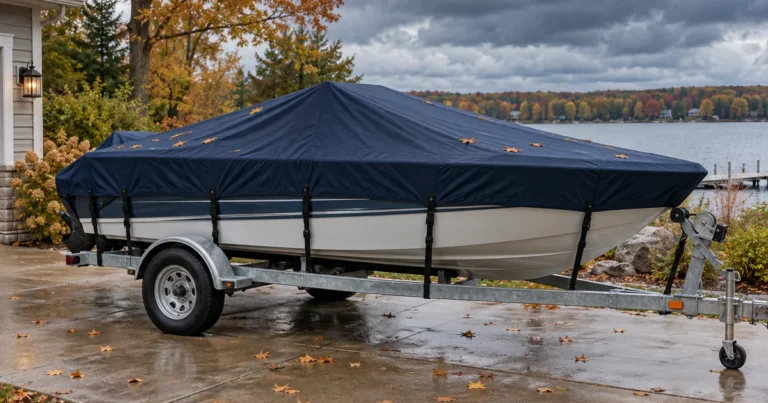
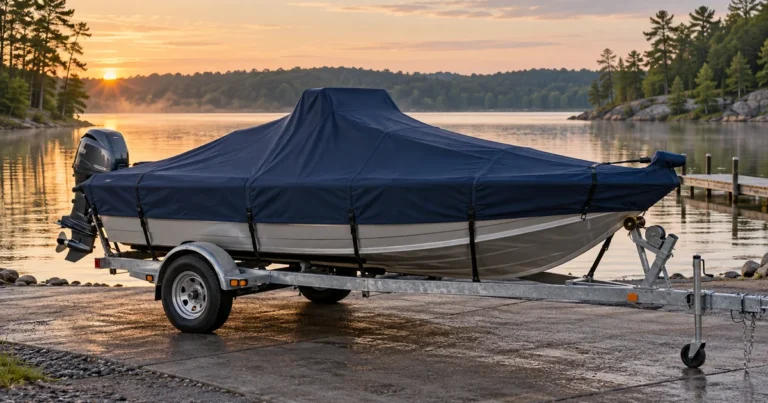
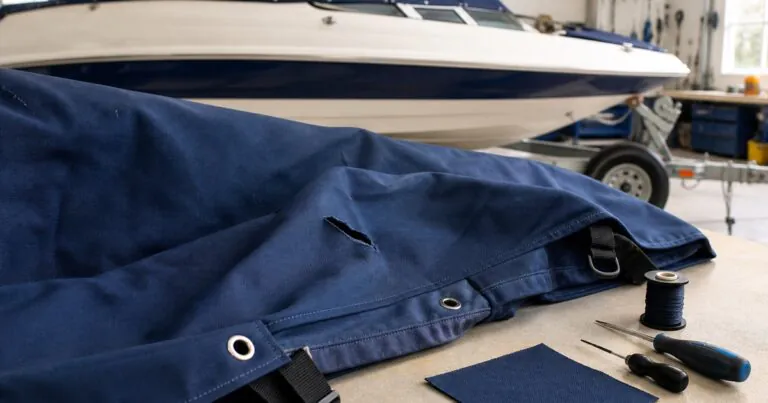
 SafeBOT

How to Cover a Boat After Saltwater Use: Rinse, Dry & Protect
Use this post-saltwater routine to rinse the boat and trailer, follow the engine flush instructions, dry hidden spaces, and install the cover without trapping moisture.

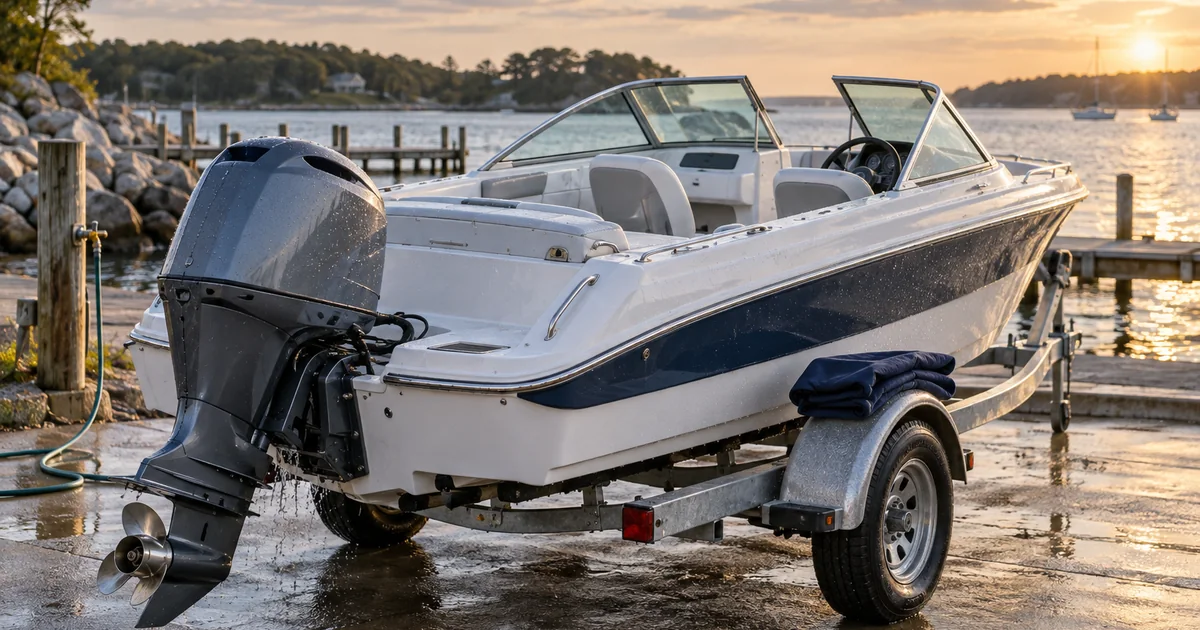
A saltwater trip is not finished when the trailer leaves the ramp. Salt can remain on the hull, trailer, outboard, hardware, and cover fabric. If you install a cover while those surfaces are still wet, the cover can hold damp air over the boat instead of helping protect it.
The best way to cover a boat after saltwater use is to rinse first, follow the engine maker’s flushing instructions, remove wet gear, open the spaces that need to dry, and wait until the boat and cover are dry. Then install the cover with even support, clear vents, and a clean tie-down path.
Quick answer: can you cover a boat right after saltwater use?
Not while the boat is still salty or wet. Rinse the boat and trailer with fresh water, flush the engine exactly as its manual directs, remove damp equipment, and let seams, lockers, upholstery, and the cover dry. Covering too soon can trap moisture and hide salt residue in the places you need to inspect.
Why the order matters after a saltwater trip
Fresh water removes salt best when the residue is still easy to reach. Drying comes next because a fitted cover slows direct airflow around seats, carpet, lockers, and hardware. The cover should be the last step in the routine, not the first.
This does not require an elaborate detailing session after every outing. A consistent rinse-dry-cover sequence is more useful than a rushed wash followed by a wet cover. Product-specific maintenance still comes from the boat, engine, trailer, and cover manufacturers.
1. Set up a safe rinse area
Park on a stable surface where water can drain without creating a slick walking area or running into an unsuitable drain. Chock and secure the trailer as required for the location. Let hot components cool before washing around them, and keep the hose away from open electrical connections or equipment that the manufacturer says should stay dry.
- Remove the drain plug only where appropriate and follow local rules.
- Take wet life jackets, towels, dock lines, and soft bags out of the boat.
- Empty bait, fish, food, and trash before they sit under a cover.
- Open access areas only after the trailer is secure and it is safe to do so.
2. Rinse the boat and trailer with fresh water
Work from high areas toward the ground so the runoff carries residue away. Rinse the windshield frame, rails, cleats, console, rub rail, transom, lower hull, trailer frame, winch area, jack, wheels, and visible hardware. Give extra attention to seams, brackets, and overlapping parts where spray can dry into a white film.
Use a gentle stream instead of forcing water into bearings, seals, vents, switches, upholstery seams, or electrical components. A pressure washer can drive water where it does not belong and may damage finishes or fabric coatings. If the boat maker specifies a cleaning product, dilution, or no-spray zone, follow that guidance.
3. Flush the engine according to its manual
Engine flushing is not a one-size-fits-all task. Use the fitting, water supply, engine position, and run-or-no-run procedure specified for your exact engine. Discover Boating recommends fresh-water rinsing after saltwater use and following the engine, boat, and trailer manuals. Always use the model-specific flushing procedure in your engine manual.
Do not improvise the procedure from a different engine model. Once the approved flush is complete, inspect the outboard area for salt streaks, trapped weeds, fishing line, or water sitting where it should drain. Let the exterior dry before fitting any separate motor cover.
4. Clean the places a cover can hide
A cover hides the cockpit, which is useful only after the cockpit is ready. Wipe standing water from seats and deck surfaces. Check the bilge, livewell, fish boxes, anchor locker, ski locker, under-seat storage, and the base of the console. Remove damp gear rather than expecting ventilation to dry a pile of wet equipment.
- Rinse and dry removable dock lines before storing them.
- Leave lockers open long enough for damp air to escape.
- Check metal fasteners and hinges for salt residue.
- Wipe the underside of seat cushions if spray reached them.
- Confirm that drains are clear before the boat goes into storage.
5. Let the boat dry before you cover it
A hull can look dry while seams, carpet edges, cushion bases, and folded canvas still hold water. Give the boat an open-air drying window when conditions allow. Raise or remove cushions as their manufacturer permits, keep lockers open, and wait until the damp areas you found during inspection have dried.
Do not use the cover as a shortcut for drying. Vents can help humid air escape after installation, but they cannot remove a soaked towel, a wet locker, or water trapped beneath a cushion. Our guide to boat cover vents and moisture control explains how airflow, pitch, and a dry interior work together.
6. Rinse and dry the cover if salt reached it
If the cover was used at the dock, during transport, or near salt spray, rinse it with fresh water according to its care instructions. Salt and grit can collect along hems, strap exits, reinforced corners, and folds. Those particles can become abrasive when the cover moves.
Let the cover dry completely before folding or reinstalling it. If it needs more than a rinse, use the steps in our boat cover cleaning guide. Avoid harsh chemicals or high-pressure cleaning unless the fabric maker specifically approves them.
7. Install the dry cover without trapping new problems
Before the cover goes on, walk around the boat once more. Confirm that antennas, trolling motors, folded bimini hardware, windshield corners, and other high points are in the positions expected by the cover design. Make sure no wet hose, brush, or cleaning rag has been left in the cockpit.
- Center the cover from bow to stern before tightening.
- Build enough support and slope for rain to run off.
- Keep the vent area raised and unobstructed.
- Route straps to solid trailer points without crossing tires, wiring, brake lines, or sharp edges.
- Bring the cover to even tension in stages.
- Secure loose strap tails so they cannot whip against the hull.
Use the full boat cover installation guide if the cover has shifted, the strap paths have changed, or the boat was reconfigured for the trip.
8. Recheck the boat after the first covered night
The next morning is a useful test. Lift an edge in a safe location and feel for damp air or condensation. Check the underside of the cover near seams and low points. Look at cushion bases, carpet edges, and lockers that were wet after the trip.
If moisture remains, uncover or vent the boat during a suitable dry period and correct the source. Also inspect the cover after the first rain. A new water pocket, blocked vent, or shifted strap should be fixed before it becomes the normal shape of the setup.
Common mistakes after saltwater boating
- Covering immediately at the ramp: this hides salt and traps the water that still needs to drain or evaporate.
- Rinsing only the hull sides: the trailer, transom, hardware, and cockpit also receive salt spray.
- Guessing at engine flushing: the correct procedure depends on the exact engine and manual.
- Leaving wet gear aboard: ventilation cannot dry a sealed bag, towel pile, or closed wet locker.
- Installing a damp cover: hems and reinforcements may stay wet after the broad fabric feels dry.
- Overtightening one strap: uneven force can pull the cover off center and create a rub point.
How to cover a boat after saltwater use: checklist
- Secure the trailer in a suitable wash-down area.
- Remove wet gear, bait, trash, and soft items.
- Rinse the boat and trailer from high areas downward.
- Flush the engine exactly as its manual directs.
- Check lockers, livewells, bilge areas, cushions, and drains.
- Let the boat dry with damp spaces open.
- Rinse and dry the cover if it received salt spray.
- Install the cover centered, supported, vented, and evenly tensioned.
- Check for condensation the next morning.
- Inspect the setup after the first rain or strong wind.
Choose a cover that fits the complete setup
A careful wash-down routine cannot correct a cover that is too short, too wide, or forced over hardware it was not shaped to clear. Safeboatz currently offers premium Storm Series trailerable boat covers for 17–19 ft boats and 20–22 ft boats. Measure the boat and review the live fit information before selecting a size. The 20–22 ft cover is Storm Series only.
For a broader maintenance routine, download the free Boat Protection Guide. It provides a practical reference for trailering, storage, weather, and cover checks beyond saltwater wash-down day.
Frequently asked questions
How long should a boat dry before I cover it?
There is no reliable fixed number of minutes. Cover it when the surfaces, seams, upholstery bases, lockers, and gear that became wet are dry. Humidity, temperature, airflow, and boat layout all change the drying time.
Should I rinse my boat after every saltwater trip?
Follow the maintenance instructions for your boat, trailer, and engine. Major marine engine makers recommend fresh-water rinsing and model-specific flushing after saltwater use. A consistent rinse also makes salt residue easier to spot before the boat is covered.
Can boat cover vents dry a wet boat?
No. Vents help humid air escape, but the boat should be dry before the cover is installed. Remove wet gear, drain water, and air out damp compartments first.
Do I need to wash the boat cover after salt spray?
Start with the cover maker’s care instructions. A fresh-water rinse is often appropriate after salt exposure, followed by complete air drying. Use mild cleaning methods only when the fabric guidance allows them.
Can I put the cover on while the outboard is still wet?
Let the outboard exterior drain and dry, then follow the engine and cover manufacturers’ instructions. Do not trap water around the cowling or use a cover that blocks required ventilation.
Boating Enthusiasts — Join the Crew!
Free Boat Protection Guide Download Yours Now
Get your free copy of The Complete Boat Protection Guide — expert tips, real-world strategies, and exclusive insights from the Safeboatz team.