 SafeBOT

Rodent Damage Boat Storage: Practical Prevention Guide
A practical rodent damage boat storage guide covering cleaning, cover fit, access points, storage area management, wiring checks, inspections, and spring commissioning.

Rodent Damage Boat Storage: Practical Prevention Guide
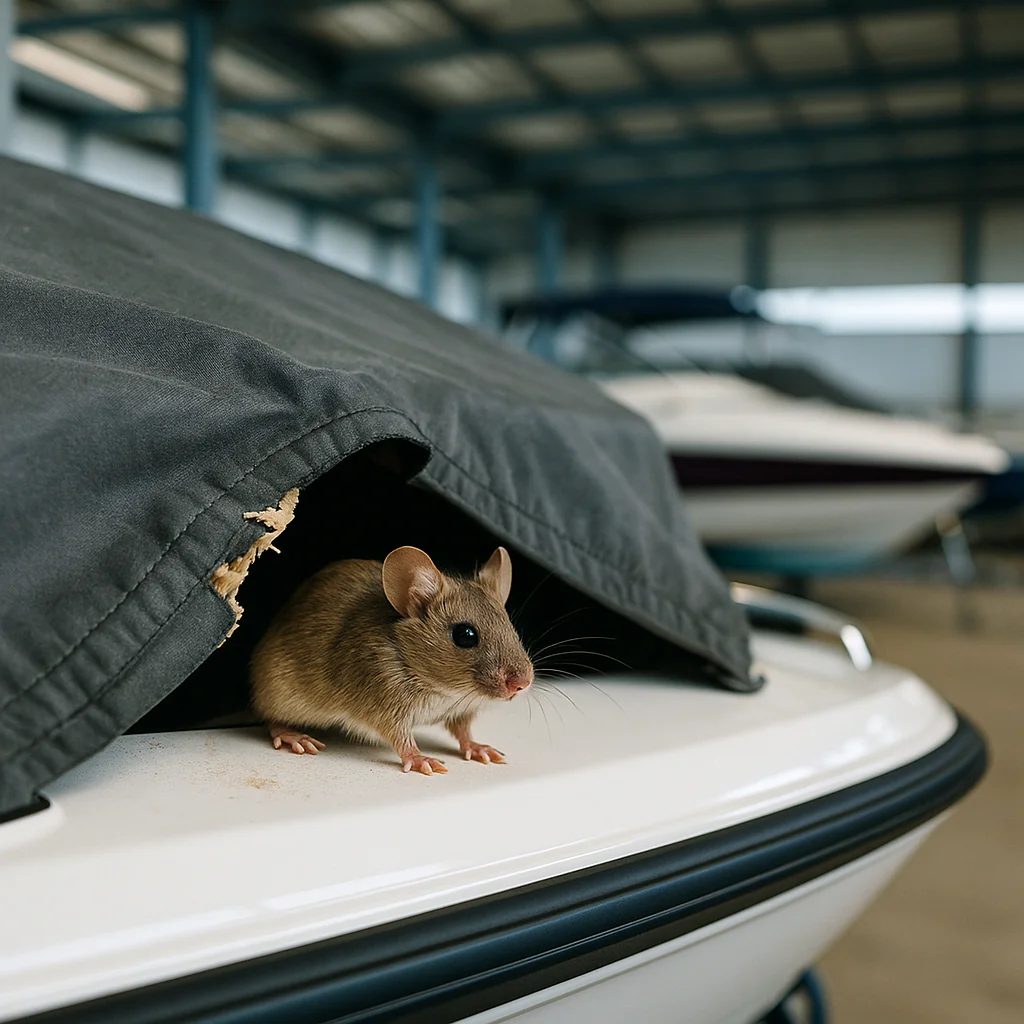
Rodent damage during boat storage is frustrating because it often happens quietly. Chewed wiring, nesting material, shredded upholstery, odor, droppings, and damaged insulation may not appear until spring commissioning. A good cover helps reduce access points, but rodent prevention also depends on cleaning, storage location, inspection habits, and removing attractants.
This guide explains practical steps to reduce rodent risk without relying on scare tactics or miracle repellents.
Why Boats Attract Rodents During Storage
Stored boats can provide shelter, warmth, nesting material, and hidden pathways. Food crumbs, fishing bait residue, damp fabric, cardboard boxes, life jackets, and soft upholstery can make the boat more attractive. Rodents may enter through small gaps near the transom, trailer, vents, cover openings, or loose fabric along the gunwale.
- Food or bait residue inside compartments.
- Soft nesting material such as towels, foam, paper, or old life jackets.
- Gaps created by a loose or poorly fitted cover.
- Storage near tall grass, brush, wood piles, or clutter.
- Long periods without inspection.
Clean the Boat Before Covering
The most useful prevention step is simple: remove anything that attracts pests before the cover goes on. Vacuum the cockpit, clean storage compartments, remove snacks, bait, trash, and damp gear, and let the boat dry before covering.
- Empty compartments and remove unnecessary soft items.
- Vacuum carpet, seats, cup holders, and lockers.
- Clean fish, bait, or food residue.
- Dry damp areas before closing the cover.
- Store gear separately in sealed containers when possible.
This also helps with moisture control and spring commissioning.
Use Cover Fit to Reduce Access Points
A cover cannot guarantee rodent prevention, but a tighter fit can reduce easy entry points. Loose fabric, open hems, sagging stern corners, and gaps around the outboard area can create sheltered access routes. A cover should sit evenly around the hull and maintain tension without overstressing seams.
For fit guidance, use the tight boat cover fit and rodent prevention guide and the boat measuring guide.
Manage the Storage Environment
Rodent prevention is easier when the storage area is clean. Cut tall grass, remove clutter around the trailer, avoid storing pet food or seed nearby, and keep the boat away from brush piles when possible. If the boat is in a garage or barn, inspect the building for obvious entry points too.
- Keep the trailer area clear.
- Do not store food, bait, or birdseed near the boat.
- Use sealed bins for gear.
- Move fabric items indoors if possible.
- Inspect the storage area after storms or cold snaps.
Check Wiring, Hoses, and Compartments
Rodent damage often appears around wiring and hidden spaces. During storage checks and spring commissioning, inspect battery areas, bilge spaces, wiring harnesses, fuel-line routing, and under-seat compartments before powering systems.
If you find chewed wiring or fuel-line damage, do not operate the boat until the affected area is inspected and repaired. Rodent damage can create electrical faults or safety risks.
Repellents, Traps, and Cautions
Some owners use repellents or traps around storage areas. Results vary by location and product. If you use any product, follow the label, keep pets and children in mind, and avoid placing chemicals directly on upholstery or surfaces that may stain.
Do not rely on scent products alone. Cleaning, access control, and inspection are more dependable than any single repellent.
Storage Inspection Schedule
If the boat is stored for months, check it periodically. A quick inspection can catch early signs before major damage develops.
- Look for droppings, nesting material, odor, or shredded fabric.
- Check whether the cover shifted or opened along the edges.
- Inspect straps and stern corners.
- Confirm vents and support poles are still in place.
- Remove leaves and debris that create shelter or hold moisture.
Spring Commissioning After Rodent Signs
If you find rodent activity in spring, inspect before starting the boat. Check wiring, batteries, bilge pumps, fuel lines, upholstery, and hidden compartments. Clean affected areas carefully and document what you find.
The spring boat commissioning guide explains how to combine cover inspection with launch prep.
Rodent Prevention Framework for Stored Boats
Rodent prevention works best when you think in layers: remove attractants, reduce access, make the storage area less comfortable, and inspect on a schedule. A cover is one layer, not the entire system. It can help block easy access and keep leaves or nesting material out of the cockpit, but rodents can still enter through openings, trailers, docks, buildings, or nearby clutter.
Start with cleaning because food residue, fish smell, damp fabric, cardboard, and forgotten snacks make a stored boat more interesting. Then manage access points around the boat: gaps near the transom, loose cover edges, open compartments, and lines that act like bridges from the dock or ground. Finally, check the storage site. Tall grass, stacked gear, firewood, and trash near the boat can create shelter before the rodents ever reach the hull.
Layered checklist
- Vacuum compartments, cup holders, lockers, and under-seat storage before covering.
- Remove food, soft bags, towels, cardboard, and paper products.
- Let damp gear dry before putting the boat into storage.
- Fit the cover snugly around the perimeter without leaving open fabric tunnels.
- Keep grass, leaves, and stored items away from the trailer and hull.
- Inspect wiring, hoses, and nesting-prone compartments during the storage season.
Cover Fit Details That Matter
A loose cover can create sheltered pockets where debris collects. A cover that is too tight can lift at corners or leave gaps around the stern. Aim for a secure, even fit with support that sheds water and avoids hidden sagging areas. If the boat is stored outdoors, drainage and ventilation matter because damp, quiet spaces are more inviting for pests and mildew.
Pay special attention to the transom, outboard area, and trailer contact points. These are common places where straps, cables, or fabric folds create paths. A few minutes of adjustment can reduce easy entry points without making unrealistic “pest-proof” claims.
Inspection Schedule During Storage
For long storage, do a quick check every few weeks and after storms. Look for droppings, chewed material, nesting, new odors, loose straps, pooled water, and fabric that has shifted. If you find signs early, clean and reset the storage environment before damage spreads to wiring or upholstery.
Owner FAQ: Rodents and Boat Covers
Can mothballs or strong scents replace cleaning?
No. Scent products are inconsistent and may create safety or odor problems. Cleaning, access control, and inspection are more dependable foundations.
Where do rodents usually hide first?
Common areas include under seats, enclosed lockers, battery compartments, upholstery folds, and quiet areas near wiring or hoses.
Should I seal the boat completely?
No. The goal is controlled protection, not trapping moisture. Maintain ventilation while reducing obvious access points and nesting material.
Where Safeboatz Fits
If your current cover leaves wide gaps or shifts during storage, compare it with a tighter trailerable setup. Safeboatz Storm Series options are available for 17–19 ft boats and 20–22 ft boats. Download the free boat protection guide for a broader storage checklist.
FAQ
Can a boat cover prevent rodents completely?
No. A good fit can reduce access points, but cleaning, storage-area management, and inspections are also necessary.
What is the first sign of rodent activity in a stored boat?
Droppings, odor, nesting material, shredded fabric, and chewed wiring are common early signs.
Should I leave gear inside the boat during storage?
Remove food, bait, towels, paper, and soft gear when possible. Store items in sealed bins away from the boat.
Are scent repellents enough?
No. They may help in some cases, but they should not replace cleaning, access control, and inspection.
What should I inspect before starting the boat?
Check battery terminals, wiring, bilge, fuel-line areas, compartments, and any place where rodents may have nested or chewed.
Final Take
Rodent prevention is not one trick. It is a storage routine: clean the boat, remove attractants, reduce cover gaps, manage the storage area, inspect periodically, and check systems before spring launch.
Related storage and moisture-control resources
Rodent prevention works best with dry storage, good airflow and a tight but not trapped cover. Pair this guide with the Safeboatz boat cover ventilation guide, winter trailered-boat storage guide, and tight-cover fit and rodent guide.
For non-product context, see the EPA mold resources and CDC rodent information.
Boating Enthusiasts — Join the Crew!
Free Boat Protection Guide Download Yours Now
Get your free copy of The Complete Boat Protection Guide — expert tips, real-world strategies, and exclusive insights from the Safeboatz team.