 SafeBOT

Fall Boat Cover Checklist: Rain, Leaves & Storm Prep
Use this fall boat cover checklist to clear leaves, prevent rain pooling, inspect straps and chafe points, keep vents open, and check the setup after storms.

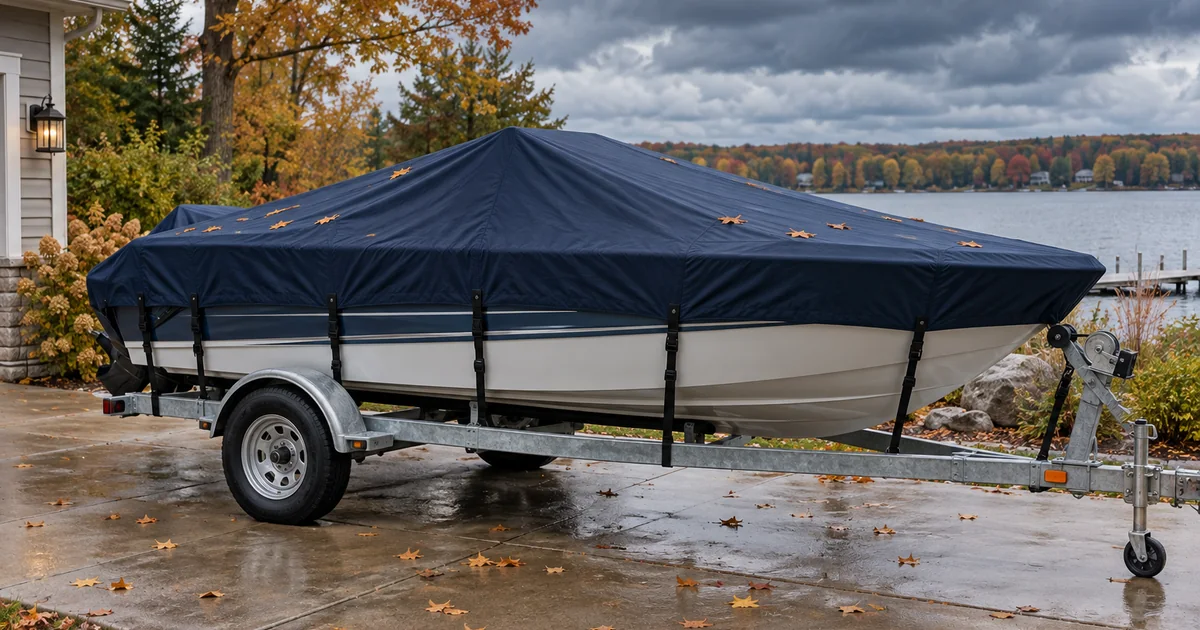
Fall weather can change a boat-cover setup faster than most owners expect. One week brings dry leaves and warm afternoons; the next brings cold rain, gusty fronts, and long damp nights. A cover that worked through summer may now have a low spot, a loose strap, or a blocked vent.
This fall boat cover checklist is for trailerable boats that stay outdoors, beside the house, in a storage lot, or near a marina between late-season trips. It focuses on the ten-minute checks that help a cover shed rain, resist movement, and keep moisture from sitting underneath.
Quick answer: what should you check in fall?
Remove leaves, confirm that rain has a clear path off the cover, inspect straps and contact points, keep vents open, and look underneath for trapped moisture. Repeat the walk-around after heavy rain or strong wind. If severe weather is forecast, follow local emergency and marina guidance; a cover is not a substitute for a proper storm plan.
Why fall changes the cover setup
Summer storage is often predictable. Fall adds debris, longer wet periods, sharper temperature swings, and more frequent fronts in many parts of the United States. Leaves can cover a vent or collect at the base of a support ridge. Rain finds the smallest sag. Cooler nights can also leave condensation under a cover even when the fabric looks dry outside.
The goal is not to pull every strap harder. A better fall setup has an even fit, a supported slope, secure attachment points, open ventilation, and no repeated rubbing. Those pieces work together.
1. Clear leaves before they become wet weight
A few dry leaves are harmless. A thick layer of wet leaves is different. It holds water against the fabric, hides low spots, and can block vents or drains around the storage area.
- Brush debris toward the edge instead of dragging it across the cover.
- Check the base of windshields, consoles, support ridges, and folded tops where leaves collect.
- Clear the ground around the trailer so runoff can move away.
- Remove small branches before they press a hard point into the fabric.
If the cover needs washing before longer storage, use the steps in our boat cover cleaning guide. Let the cover dry before reinstalling it.
2. Look for the first sign of rain pooling
Do not wait for a deep puddle. A shallow dimple after light rain shows where the next storm will load the cover. Check broad cockpit spans, the bow seating area, and any section between a windshield and the stern.
A support system should create a smooth slope toward the cover edges without forcing one sharp peak into the fabric. If you need to adjust the setup, review our boat cover support pole guide. The useful test is simple: water should run off instead of returning to the same pocket.
3. Retension straps in stages
Temperature changes and repeated wet-dry cycles can alter how the cover sits. Walk around the boat before tightening anything. If one side has shifted, recenter the cover first. Then bring the straps up to even tension in stages.
- Confirm that each strap follows a clean path to a solid trailer point.
- Keep straps away from sharp trailer edges, tires, brake lines, and wiring.
- Check that buckles and hooks cannot strike the hull.
- Use balanced tension; one over-tight strap can pull the cover off center.
- Secure loose strap tails so they do not whip in the wind.
For a full installation sequence, use the Safeboatz boat cover installation guide.
4. Inspect every contact point for movement
Wind damage often starts with a small area that moves over the same edge for hours. Check the windshield corners, rub rail, cleats, console, trolling-motor mount, folded bimini hardware, outboard area, and the cover hem along the hull.
Look for polished spots, light-colored dust, fuzzy fabric, stretched stitching, or a buckle that has migrated toward the gelcoat. Fix the movement rather than simply adding more force. Our guide to stopping boat cover chafing explains the fit-first approach in more detail.
5. Keep vents open and the boat dry underneath
Leaves can sit over a vent, while a sagging cover can press the vent area flat. Make sure each vent remains raised and unobstructed. Then look beneath the cover rather than judging moisture from the outside.
- Feel the underside of the fabric near seams and low points.
- Check carpet, seat bases, lockers, and soft gear for dampness.
- Remove wet life jackets, towels, and cleaning supplies.
- Open compartments when the storage setup and security conditions allow.
- Air the boat out during a dry window if condensation keeps returning.
Boat cover vents help manage moisture, but they cannot correct a wet interior, a leaking seam, or a deep water pocket by themselves.
6. Check seams, hems, and reinforced areas
Fall is a good time to find small damage before the cover spends longer periods outside. Inspect the stitching around vents, strap points, hems, and shaped corners. Pay attention to repairs that are lifting or opening beside the old patch.
A small isolated issue in otherwise sound fabric may be repairable. Brittle fabric, several failing seams, or repeated tears point to a wider problem. Use our repair-or-replace assessment before trusting a weak cover through another wet season.
7. Review the trailer and storage area
The cover is only one part of outdoor storage. Confirm that the trailer is stable on firm ground, the tongue is supported correctly, and runoff will not pool around the tires or jack. Trim or move anything that can fall or rub against the covered boat.
Keep the trailer away from weak branches when possible. If severe thunderstorms are possible, monitor official forecasts and local alerts. The National Weather Service severe thunderstorm safety page explains the hazards and points to preparation guidance. Follow marina, storage-facility, and local emergency instructions for the boat itself.
8. Do a post-storm walk-around
The most useful inspection happens after the weather passes. Start at the bow and work around the trailer. Look for a shifted hem, loose hook, new sag, trapped branch, torn seam, moved padding, or strap that changed angle.
Then lift an edge in a safe spot and check beneath the cover. A dry exterior does not prove that the cockpit stayed dry. Catching a damp cushion or wet low point now is easier than finding mildew weeks later.
A ten-minute fall boat cover checklist
- Brush off leaves and remove branches.
- Check for shallow rain pockets and restore a smooth slope.
- Recenter the cover before adjusting tension.
- Inspect every strap, hook, buckle, and attachment path.
- Look for rubbing at windshields, rails, consoles, and hardware.
- Confirm vents are open and raised.
- Check beneath the cover for damp gear or condensation.
- Inspect seams, hems, reinforcements, and old repairs.
- Clear runoff around the trailer and remove nearby hazards.
- Repeat the walk-around after heavy rain or strong wind.
When the cover no longer fits the job
If the cover cannot stay centered, hold even tension, clear the boat’s hardware, or shed water with reasonable support, recheck its size and condition. Safeboatz currently offers premium Storm Series trailerable covers for 17–19 ft boats and 20–22 ft boats. Measure the boat and review the live product-page fit details before choosing a size. The 20–22 ft cover is Storm Series only.
For a broader seasonal routine, download the free Boat Protection Guide. It gives you a practical set of checks to use beyond the cover itself.
Frequently asked questions
How often should I inspect a boat cover in fall?
Check it at least after heavy rain, strong wind, or a large leaf drop. A quick weekly walk-around also helps when the boat stays outside and weather changes often.
Should I tighten the cover before every storm?
Inspect it before tightening. Recenter a shifted cover, correct the support shape, and then bring straps to even tension. Pulling one loose-looking strap hard can create a new rub point or distort the fit.
Can leaves damage a boat cover?
A few dry leaves are not a concern. A wet layer can hold moisture, hide pooling, block vents, and add weight to a low section. Brush accumulated leaves off before they mat together.
What should I do if water pools on the cover?
Remove the water safely, inspect the fabric and seams, then adjust the support system to create a smooth runoff slope. Do not leave the same pocket in place for the next rain.
Is a boat cover enough for severe fall weather?
No. A cover helps with ordinary exposure when installed correctly, but it is not a severe-weather plan. Follow official forecasts and the instructions from your marina, storage facility, manufacturer, and local emergency authorities.
Boating Enthusiasts — Join the Crew!
Free Boat Protection Guide Download Yours Now
Get your free copy of The Complete Boat Protection Guide — expert tips, real-world strategies, and exclusive insights from the Safeboatz team.