 SafeBOT

Boat Cover Repair or Replacement? How to Make the Right Call
Assess torn fabric, failed seams, weak attachment points, and overall cover condition to decide between a minor repair, professional canvas work, or replacement.

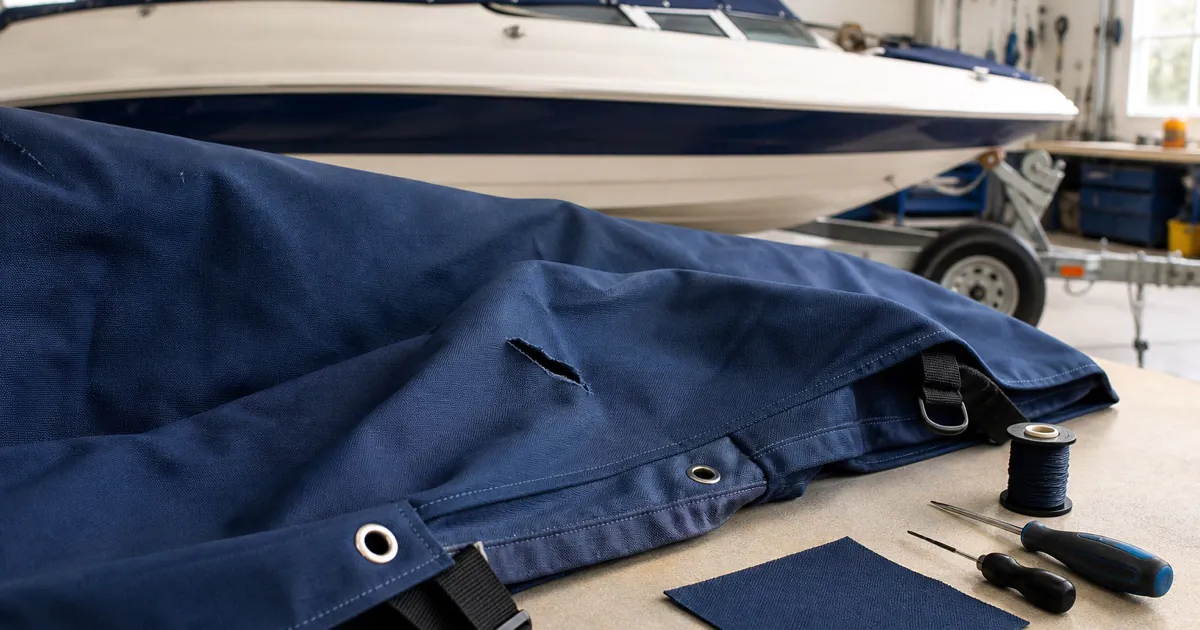
A small tear in a boat cover can look like a simple patch job. Sometimes it is. Other times, that tear is only the first visible sign that the fabric, stitching, or fit has started to fail across a much larger area.
The useful question is not just, “Can this hole be covered?” It is whether the surrounding material can still carry tension after the repair. This guide explains how to assess boat cover damage, when a limited repair may make sense, when to call a marine-canvas professional, and when replacement is the more dependable choice.
Quick answer: should you repair or replace a boat cover?
Consider a minor repair when the damage is small and isolated, the surrounding fabric remains flexible and strong, and the cover still fits correctly. Ask a marine-canvas professional to assess failed seams, hems, reinforced corners, attachment points, or damage that crosses shaped sections. Replacement is usually the better direction when the fabric is brittle, several areas are failing, old repairs keep reopening, or the cover no longer stays seated and supported as intended.
A patch does not correct a sizing problem, poor support, repeated chafing, or widespread material breakdown. Find the cause before choosing the repair.
Start with the whole cover, not the obvious tear
Remove the cover when practical, clean it according to its care instructions, and let it dry completely. Spread it on a smooth surface in good light. Working on a dirty or damp cover hides weak stitching and can interfere with repair materials. The Safeboatz guide on how to clean a boat cover covers the preparation step in more detail.
Inspect both sides. A slit on the weather-facing surface may sit above thinning fabric, an open seam allowance, or a hard fitting that has been rubbing underneath. Photograph every damaged area and mark its location before moving the cover. That record helps if a canvas shop needs to review the damage remotely.
- Small puncture or clean tear: Check whether it came from a one-time snag or from repeated movement.
- Open seam: Look at the thread and the fabric on both sides of the stitch line.
- Damaged hem or attachment point: Inspect the reinforcement, webbing, buckle, hook, or grommet area around it.
- Shiny, fuzzy, or thin patch: Treat it as abrasion even if the fabric has not opened yet.
- Brittle or flaking material: Check several areas. The visible damage may be part of broader aging.
- Distorted cover shape: Note whether the cover still centers, reaches its intended edge, and tensions evenly.
Check whether the surrounding fabric is still sound
A repair depends on material beyond the damaged edge. If that surrounding fabric is weak, a new patch or stitch line may simply move the load to the next fragile spot. Handle the cover gently. Flex the area, compare it with a protected section, and watch for new cracking, separation, or tearing. Do not use a destructive pull test that enlarges the damage.
Fading alone does not prove that a cover has failed, but a papery feel, loss of flexibility, coating separation, or tearing during ordinary handling deserves more caution. Inspect seams, hems, high points, and the edge exposed to the strongest sun. Multiple weak zones change the decision from one-hole repair to whole-cover condition.
When a minor field repair may be reasonable
A limited field repair may be reasonable when the opening is isolated, the surrounding panel is sound, and the damage sits away from a loaded seam, hem, reinforced corner, or attachment point. The cover should still fit and tension normally. There should be no pattern of similar failures elsewhere.
The purpose of a minor repair is to stabilize local damage and reduce the chance that it spreads. It should not be described as restoring the cover to original strength or performance. Repair suitability varies with the cover material, coating, construction, damage location, and the conditions in which the cover is used.
Use a repair system made for the actual material
Marine covers may use woven fabrics, coated fabrics, vinyl components, reinforcement panels, and different thread or hardware systems. A patch product that works on one material may be wrong for another. Read the cover instructions and the repair-product label before applying anything. Confirm surface preparation, temperature limits, patch orientation, and cure time for that specific system.
General repair guidance from Sailrite’s canvas repair guide also starts with a full-cover assessment and separates one-time tears from damage caused by chafing. Its guidance is useful because the cause changes the repair: a surface patch over an active rub point does not remove the rubbing.
Prepare the area without creating new damage
- Work with the cover clean, dry, and unloaded whenever possible.
- Support the damaged area on a smooth surface without stretching it out of shape.
- Follow the repair material’s cleaning instructions. Do not substitute household solvents.
- Choose material that the repair manufacturer identifies as compatible with the cover.
- Cover sound fabric beyond the damaged edge as directed, and avoid sharp patch corners when the instructions call for rounded edges.
- Allow the full stated setting or curing time before folding, tensioning, or exposing the repair to weather.
- Reinstall the cover carefully and inspect the area under normal tension.
Avoid duct tape, craft glue, uncontrolled heat, or a generic adhesive chosen only because it is on the shelf. These can leave residue, become rigid, damage a coating, or fail when the fabric flexes. If the material is uncertain, stop and ask the cover maker or a marine-canvas shop.
Why the location of the damage matters
A short puncture in the middle of a healthy panel is different from a tear beside a seam. Seams, hems, shaped corners, reinforcement panels, and attachment points carry or redirect load. A surface patch may hide the opening while leaving the construction underneath unchanged.
Damage around a strap exit or tension point needs special care. Replacing the visible fabric without restoring the reinforcement can concentrate force in a smaller area. The same applies to damage near a support pole cap, windshield corner, cleat, or rail. Repairing the hole without correcting the contact point invites the same failure again.
If rubbing caused the tear, use the Safeboatz boat cover chafing guide to inspect movement, padding, and contact points. If the cover is lifting or snapping in the wind, review the guide to stopping boat cover flapping while trailering before trusting a repaired area on the road.
When to call a marine-canvas professional
Professional repair sits between a small field patch and full replacement. A canvas shop can assess whether the fabric can support new stitching, whether reinforcement needs to be rebuilt, and whether a shaped section can be repaired without distorting the cover.
- A seam is opening over more than a small isolated section.
- The fabric is torn at a hem, reinforced corner, strap point, buckle, hook, or grommet.
- The tear crosses a seam or runs through more than one construction layer.
- A zipper, vent, panel transition, or fitted section is involved.
- The cover needs a replacement panel or an alteration to sit correctly.
- You cannot identify the material or select a compatible repair system with confidence.
Ask whether the proposed work is structural, cosmetic, or temporary. Ask whether the surrounding material is likely to support the repair, whether the work will change fit or tension, and whether other weak areas are close to failure. Those answers matter more than making the damaged spot look tidy.
Signs that replacement is the better decision
Replacement becomes the stronger choice when damage is widespread or the cover can no longer provide dependable coverage. One clean patch on healthy material may extend useful service. A collection of patches across brittle fabric usually means the base material is no longer a sound repair platform.
- Several unrelated tears or open seams appear across the cover.
- The fabric feels brittle, thin, or weak in broad areas.
- New damage keeps forming beside old repairs.
- Multiple attachment points or reinforced areas are pulling apart.
- The cover is permanently distorted or no longer reaches and seats as intended.
- Repair labor would address one area while several others are likely to need work soon.
There is no universal repair-cost percentage or cover age that settles the decision. Compare the repair scope with the condition of the entire cover and the service you still expect from it. A marine-canvas professional can often tell whether a local panel repair is sensible or whether the project would be investing labor in material that is already near the end of its useful life.
Boat cover repair-or-replacement matrix
| Condition | Minor field repair | Professional evaluation | Replacement |
|---|---|---|---|
| Small isolated puncture in sound panel material | Consider | Optional | Usually unnecessary |
| Short tear beside a seam or reinforcement | Not preferred | Recommended | Depends on overall condition |
| Open seam with sound surrounding fabric | Not preferred | Recommended | Depends on repairability |
| Damaged hem or attachment point | No | Recommended | Possible |
| Multiple tears or broad brittleness | No | Limited value | Strongly consider |
| Repeated failure beside older repairs | No | Assess the cause | Often appropriate |
| Cover is distorted or no longer fits | No | Assess whether alteration is viable | Often appropriate |
This matrix is general guidance. Cover materials, construction, damage, and use conditions vary. Follow the manufacturer’s instructions and use professional judgment for loaded or structural areas.
Correct the cause before the cover goes back on the boat
A repaired or replacement cover should not return to the setup that damaged the old one. Check the boat for sharp hardware, exposed fasteners, narrow support points, loose strap tails, and repeat rub zones. Confirm that support creates drainage rather than a hard peak. Balance strap tension instead of pulling one side tight enough to distort the cover.
If the old cover no longer matched the boat, measure again before replacing it. Centerline length, beam, console height, rails, trolling motors, and other installed equipment can all affect fit. Use the Safeboatz guide on how to measure a boat for a cover rather than relying on the model name alone.
After any repair, reinstall the cover in a controlled setting. Check the repaired area at normal tension. If the repair puckers, peels, opens, or pulls the fabric around it, remove the load and reassess. A driveway inspection is a better place to find a weak repair than a windy storage lot or highway shoulder.
If replacement is the right call
Choose the replacement around the boat’s actual measurements and how the cover will be used. Safeboatz’s current premium cover line is the Storm Series. The live options are the Storm Series 17-19 ft trailerable boat cover and the Storm Series 20-22 ft trailerable boat cover. The 20-22 ft option is Storm Series only.
Fit still needs to be checked on the specific boat. Measure first, review the current product information, and inspect the installed cover before storage or towing. A new cover can still be damaged quickly if a sharp contact point, poor support angle, or uneven strap route is left in place.
FAQ: boat cover repair and replacement
Can you patch a torn boat cover?
A small isolated tear may be patchable when the surrounding fabric is still sound and the damage is away from seams, hems, and attachment points. Use a repair system specifically identified as compatible with the cover material and follow its preparation and cure instructions.
Is a repaired boat cover waterproof?
Do not assume a repair restores the original water resistance of the cover. Performance depends on the material, location, repair system, preparation, and installation. Follow the repair manufacturer’s claims and inspect the area under controlled conditions before relying on it.
Can an open boat cover seam be repaired?
Often it can, but the fabric around the seam must be strong enough to accept new stitching. A marine-canvas professional should assess a long opening, a shaped seam, or fabric that is tearing beside the old stitch line.
Can you trailer with a patched boat cover?
Only if the cover and repair are approved for that use and the entire setup passes inspection. Trailering adds wind and vibration. A temporary patch, a repair beside a load point, or any area that lifts or opens under normal tension should not be trusted on the road.
Why does a boat cover keep tearing in the same place?
Repeated tearing usually points to an unresolved cause such as chafing, a sharp fitting, uneven tension, poor support, flapping, or incorrect fit. Repairing the opening without correcting that cause lets the same load return to the same area.
Bottom line
Repair isolated damage only when the surrounding boat-cover material is healthy and the location is suitable for the chosen repair. Bring seam, hem, reinforcement, and attachment-point failures to a marine-canvas professional. Replace the cover when weakness is widespread, repairs keep failing, or the cover no longer fits and tensions correctly.
Before buying or reinstalling, correct the source of the damage and confirm the boat’s measurements. For a broader inspection routine, download the free boat protection guide.
Boating Enthusiasts — Join the Crew!
Free Boat Protection Guide Download Yours Now
Get your free copy of The Complete Boat Protection Guide — expert tips, real-world strategies, and exclusive insights from the Safeboatz team.