 SafeBOT

Boat Cover Straps: Tie-Down Routing, Tension & Trailering Checks
A practical guide to boat cover straps: tie-down routing, strap tension, buckle checks, trailering inspection, storage setup, and when strap problems point to fit or support issues.

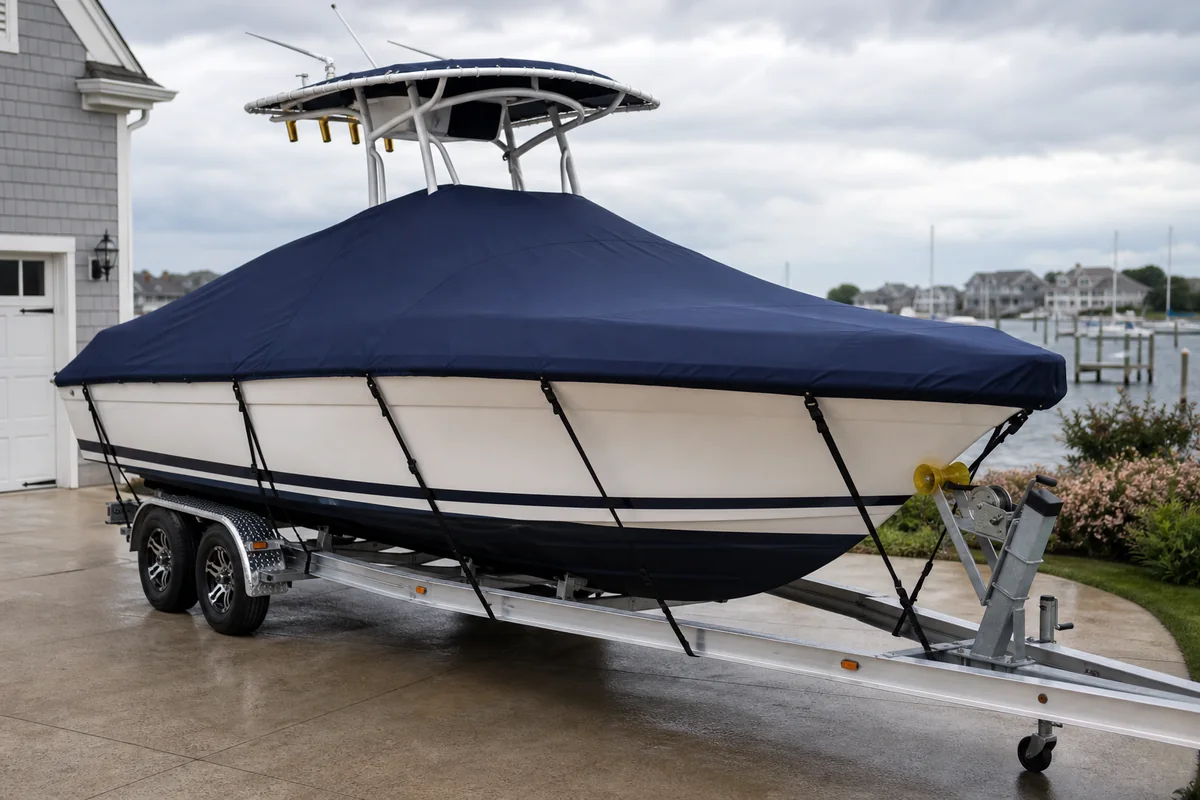
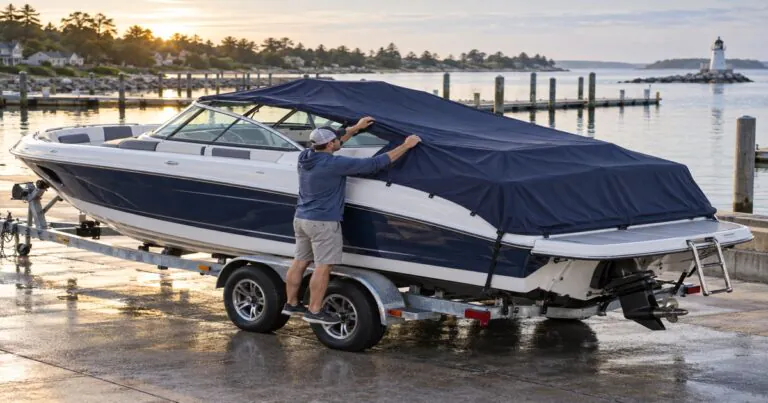
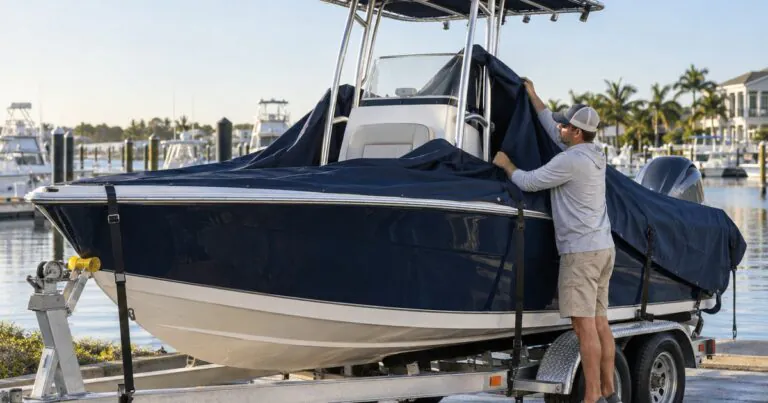
Boat cover straps do more than keep fabric from looking tidy. On a trailerable boat, the strap path decides how well the cover stays seated, how much the fabric can flap in wind, and whether tension is spread evenly instead of concentrated on one weak point.
This guide focuses on practical strap routing, tie-down tension, buckle checks, and trailering inspection. It is written for US boat owners who use a fitted trailerable cover, including Safeboatz Storm Series owners, but the checks also apply to many properly fitted marine covers.
Quick answer: how should boat cover straps be routed?
Boat cover tie-down straps should pull the cover down and slightly inward toward stable trailer contact points, with even tension on both sides of the hull. The best strap path is short, straight, and free of twists. Avoid routing straps across sharp edges, hot components, loose trailer parts, or positions where road vibration can saw the strap against metal.
For trailering, do not rely on one tight strap to solve a loose cover. A secure setup comes from cover fit first, then even strap tension, then a final walkaround. If the cover already balloons or shifts at driveway speed, tightening one buckle harder can stretch fabric instead of solving the root cause. Start with the fit checks in the boat cover installation guide before pulling harder on the straps.
Why strap routing matters on a trailerable boat cover
A fitted cover is shaped to sit over the rub rail, windshield, console, bow, and stern in a specific position. Straps are there to hold that shape under motion. When the routing is uneven, the cover can shift toward one side, lift at the bow, or create a loose pocket that catches wind.
Good routing also protects the hardware. A strap that runs cleanly to the trailer frame works differently from a strap hooked to a moving cable, a thin fender bracket, or a point that can flex under load. The goal is not maximum force. The goal is controlled, repeatable tension that keeps the cover seated without grinding fabric or hardware.
- For storage: straps keep the cover from shifting and reduce loose fabric that can slap in wind.
- For trailering: straps help manage air pressure, road vibration, and lift at the cover edge.
- For rain: straps should support a clean cover shape, not pull low spots into the fabric.
- For long-term care: even tension reduces stress around seams, buckles, and reinforced points.
Start with fit before you tighten the straps
Straps cannot rescue a cover that is the wrong size. If the cover is too loose, extra strap tension may create diagonal wrinkles and pressure points. If it is too small, the straps may pull hard against seams, corners, or the rub rail before the cover is fully seated.
Before adjusting tie-down straps, confirm the cover is centered, the bow and stern are seated, the console or windshield area is aligned, and the fabric reaches the intended edge line. If you are unsure about size, revisit the boat measurement guide and check length, beam, and console height before assuming the strap system is the problem.
Safeboatz Storm Series covers are built around a ratchet-secured trailerable design. For current cover options, start with the Storm Series overview, the 17–19 ft Storm Series cover, or the 20–22 ft Storm Series cover.
A practical strap-routing sequence
Use the same sequence each time you install the cover. Repetition is what makes problems obvious: a twisted strap, a missing buckle lock, a loose stern corner, or a trailer contact point that has started to rub.
- Center the cover first. Set the cover in its intended position before any strap is fully tightened.
- Connect the middle straps lightly. Light tension in the center helps hold alignment while you work forward and aft.
- Work side to side. Alternate port and starboard so the cover does not creep toward one side.
- Keep strap paths straight. Remove twists before applying final tension. A twisted strap is harder to inspect and can wear unevenly.
- Use stable trailer points. Route to solid frame points where possible, not to loose accessories or thin brackets.
- Finish with the bow and stern. These areas often show wind-entry gaps first, especially before trailering.
- Do a full walkaround. Look for loose pockets, strap rub, buckle angle, and fabric caught under hardware.
How tight should boat cover tie-down straps be?
Boat cover tie-down straps should be snug enough to remove slack and keep the cover seated, but not so tight that they distort the cover shape, crush trim, or pull hard wrinkles into the fabric. If a strap leaves the cover edge visibly warped, back off and inspect the cover position before tightening again.
A useful field check: after final tension, press the fabric near each strap point. It should feel controlled, not drum-tight. The cover should not flap freely, but it should still follow the designed shape of the boat. If the center of the cover is sagging, add or adjust support rather than over-tightening side straps. The support pole guide explains how to reduce pooling without stretching the cover.
Trailering checks before you leave the driveway
Road wind finds small mistakes quickly. Before trailering with a cover, inspect every strap, buckle, cover edge, and wind-entry area. A five-minute check in the driveway is easier than stopping on the shoulder because the cover started lifting at speed.
- Confirm each buckle is closed and pointed so vibration will not loosen it.
- Make sure no loose strap tail can whip against gelcoat, trailer paint, lights, or wheels.
- Look for bow gaps where air can enter under the cover.
- Check stern corners and transom areas for loose fabric.
- Verify straps are not rubbing against sharp trailer edges.
- After the first few miles, stop safely and re-check tension before highway driving.
If your main issue is wind lift or fabric movement on the road, read the dedicated guide on boat cover flapping while trailering. Strap routing is one part of the solution, but bow fit, cover edge position, and air entry matter just as much.
Common strap mistakes to avoid
Most strap problems come from small habits that repeat over time. These are the mistakes worth checking first when a cover looks loose, noisy, or uneven.
- One side tighter than the other. This can pull the whole cover off center and expose one rub rail edge.
- Twisted straps. Twists make straps harder to tension and easier to wear.
- Loose strap tails. Unsecured tails can slap the hull, trailer, or cover during road movement.
- Over-tightening around a low spot. This can make pooling worse by dragging fabric downward.
- Routing over sharp metal. Even small abrasion points can damage webbing over repeated trips.
- Skipping the re-check. New installations and long drives deserve a short stop-and-check after initial movement.
Ratchet straps vs quick-release straps
Different strap systems solve different problems. Quick-release straps can make routine storage faster when the cover is already fitted correctly. Ratchet-secured systems give more controlled tension for a trailerable setup, especially when the cover must stay seated through road vibration and changing wind angles.
The key is to use the system as designed. A ratchet should tension the perimeter or strap path evenly, not force a poor fit into place. A quick-release strap should lock cleanly and stay flat, not dangle or twist. For deeper tension and hardware guidance, see the weather-safe ratchet boat cover guide.
Storage setup: straps, water, and ventilation
For storage, straps should hold the cover in place while the support shape manages water. Do not use side straps to pull the entire cover downward if the middle is sagging. That can create a basin that collects rain. Support, slope, and ventilation work together.
A clean storage setup has three traits: the cover is centered, the straps are evenly snug, and water has a path to shed instead of pooling. If moisture control is part of the problem, pair good strap setup with ventilation and routine inspection. The boat cover vents guide covers how airflow helps reduce trapped moisture under a cover.
Inspection checklist for boat cover straps
Use this checklist before storage, before trailering, and after heavy wind or rain.
- Cover centered over bow, cockpit, console, and stern.
- Every strap flat, untwisted, and routed to a stable point.
- No strap rubbing against sharp trailer hardware.
- No loose strap tails near wheels, lights, hull sides, or the road.
- Buckles closed, aligned, and free of grit or corrosion.
- Cover edge seated evenly around the boat.
- No low fabric pockets that can hold rainwater.
- No fabric flapping during a low-speed test.
- After the first miles of trailering, tension re-checked safely.
When straps are not the real problem
If you keep tightening straps and the cover still looks wrong, the issue may be elsewhere. Common causes include a size mismatch, the cover being rotated or shifted, a missing support point, trapped hardware under the cover edge, or too much wind entry at the bow.
It can also be a fabric and construction question. Heavier marine fabrics, reinforced edges, and a precise cut can make strap tension more predictable, but fabric weight alone is not the whole answer. For material tradeoffs, read the 900D vs 1200D boat cover guide.
FAQ: boat cover straps
Are boat cover straps supposed to be very tight?
No. Boat cover straps should be snug and even, not forced as tight as possible. Excessive tension can distort the cover, stress seams, and create pressure points. If the cover still moves when straps are evenly snug, inspect fit, bow gaps, and support before tightening harder.
Can I trailer with a boat cover if the straps are secure?
Only use a cover for trailering if the cover is designed for trailerable use and installed according to its instructions. Secure straps are necessary, but they are not the only requirement. Cover fit, air-entry gaps, buckle security, and a safe first-mile re-check all matter.
Where should boat cover straps attach on a trailer?
Use stable trailer frame points where the strap can run straight, stay clear of sharp edges, and avoid moving parts. Avoid thin brackets, loose accessories, lights, wheels, and any point that can flex or abrade the strap during road vibration.
Why does my cover still flap after I tightened the straps?
Flapping usually means there is still loose fabric, wind entering under the edge, uneven tension, or a fit issue. Tightening one strap harder may not solve it. Re-center the cover, even out side-to-side tension, check bow and stern gaps, and inspect the cover shape at low speed before trailering farther.
Should I replace straps if they look worn?
Yes. Replace any strap or buckle that is cut, frayed, UV-weakened, cracked, badly corroded, or no longer holds tension. A worn strap can fail when wind or vibration increases, and it can also damage the cover or hull as it moves.
Final takeaway
Boat cover straps work best when they support a cover that already fits. Center the cover, route straps cleanly to stable trailer points, tension both sides evenly, secure loose tails, and re-check after initial movement. That simple routine helps reduce flapping, protects fabric, and gives your cover a better chance of staying seated during storage and trailering.
If you are upgrading from a loose universal cover to a fitted trailerable system, start with the Safeboatz Storm Series and choose the current size range that matches your boat.
Boating Enthusiasts — Join the Crew!
Free Boat Protection Guide Download Yours Now
Get your free copy of The Complete Boat Protection Guide — expert tips, real-world strategies, and exclusive insights from the Safeboatz team.