

Rodent Damage Boat Storage: Stop Pests This Spring

Spring Rodent Damage Under Boat Covers: Stop Storage Pests Before Launch
Introduction
Stop rodent damage under boat covers this spring 2026 by understanding the unprecedented pest pressure boat owners are facing right now.
As boat owners across northern and Midwest regions begin spring commissioning in March 2026, rodent damage is emerging as the second most common storage-related discovery after mold.
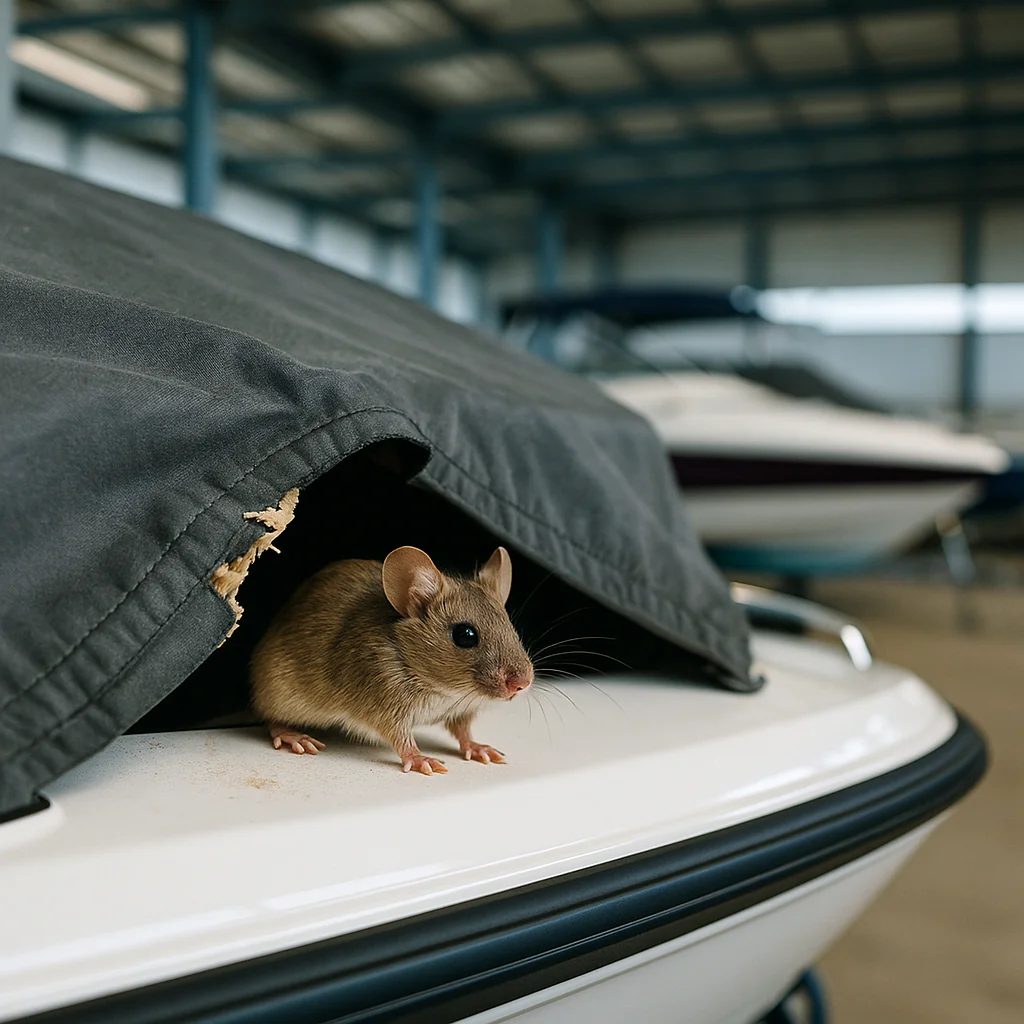
From chewed wiring harnesses to shredded upholstery and contaminated cabins, mice and rats that nested under winter covers are causing thousands in repair costs.
This outline addresses how rodents infiltrate stored boats, why spring 2026 shows elevated pest pressure, the specific damage patterns owners are discovering right now, and proven prevention strategies using properly engineered covers with tight hems, secure fastening systems, and sealed ventilation that block pest entry for next season.
Why Spring 2026 Shows Elevated Rodent Damage in Boat Storage
Spring 2026 shows elevated rodent damage in boat storage due to a perfect storm of weather patterns, rodent population cycles, and seasonal timing factors converging this March.
March 2026 pest control data reveals rodent infestations are the #2 spring commissioning discovery, with forum threads and social media exploding with damage reports as owners remove winter covers.
The winter 2026 pest forecast data shows increased rodent populations due to mild early winter followed by harsh January-February cold that drove animals into protected storage areas.
Seasonal transition timing creates the perfect discovery period—spring warming cycles trigger rodent dispersal from winter nests exactly when boat owners begin commissioning work, creating peak discovery period in early-to-mid March.
National Weather Service regional data confirms temperature fluctuations between 20°F nights and 45°F days create ideal conditions for rodents seeking stable shelter under boat covers.
Outdoor and uninsulated storage facilities offer zero pest barriers, making boats with loose-fitting covers or gap-prone designs prime targets for nesting rodents seeking insulation and protection.
The storage environment matters tremendously—17-22ft recreational boats face highest risk due to typical storage in unconditioned spaces like backyards, open lots, and pole barns rather than climate-controlled indoor facilities used for larger vessels.
Geographic concentration shows clear patterns: Great Lakes region, Upper Midwest, and Northern states report highest incidence rates where extended winter storage periods from October through April provide 6+ months for rodent colonization.
The economic impact is staggering—average rodent damage repair costs range $800-$3,500 depending on wiring damage extent, upholstery replacement needs, and sanitation requirements for contaminated interiors.
Key factors driving spring 2026 rodent damage include:
- Mild November-December 2025 weather allowing rodent populations to thrive and reproduce
- Harsh January-February 2026 cold snaps forcing animals to seek protected shelter urgently
- Temperature cycling creating moisture and condensation under covers that attracts pests
- Extended storage seasons in northern climates providing maximum colonization time
- Inadequate cover sealing systems on most aftermarket and OEM covers
- Owner assumptions that simply covering a boat provides adequate protection
Rodent damage under boat covers doesn’t happen randomly—it results from predictable weather patterns, pest behavior, and cover design failures that boat owners can address with proper prevention strategies.
Common Rodent Damage Patterns Discovered During Spring Commissioning
Rodent damage during spring commissioning reveals itself in predictable patterns that boat owners discover year after year when removing winter covers.
The most expensive category of rodent damage involves electrical system destruction, where mice and rats chew through wiring harnesses, gnaw battery cables, and destroy instrument panel connections.
Rewiring costs for electrical system damage typically range from $1,200 to $2,800, making this the single most financially devastating consequence of winter rodent infestations.
Upholstery and fabric destruction ranks as the second most common rodent damage pattern, with shredded vinyl seats, torn Bimini tops, chewed canvas, and foam cushion excavation creating nesting material throughout the boat interior.
Complete replacement of damaged upholstery often becomes necessary because rodent urine contamination permeates foam cushioning beyond cleaning capabilities.
Insulation removal represents another widespread rodent damage pattern as these animals strip hull insulation, soundproofing material, and engine compartment padding to build elaborate nests in hidden cavities behind dashboards and under seats.
BoatUS spring commissioning guidance identifies rodent droppings, urine stains, and contaminated storage compartments as common discoveries requiring professional sanitation services.
For comprehensive protection strategies, Safeboatz’s free boat protection guide provides practical solutions for preventing rodent damage during storage periods.
Engine compartment infiltration creates serious operational safety concerns when rodents pack nesting material around engine blocks, chew fuel lines, damage air filter housings, and gnaw rubber hoses.
A compromised fuel line discovered during spring commissioning can prevent launching entirely until complete fuel system inspection confirms no additional rodent damage exists.
Food and supply contamination occurs when any provisions left aboard—emergency snacks, beverage containers, or cleaning supplies—become rodent attractants leading to widespread interior contamination.
Even small food particles forgotten in storage compartments draw rodents who then establish permanent residence throughout the winter months.
Active r/boating forum discussions document real March 2026 cases where owners discovered entire families of mice living in cabin spaces, requiring fumigation before the boat could be safely used.
These forum reports consistently show that rodent damage during winter storage exceeds what owners anticipate, with nesting activity concentrated in the warmest, most protected areas of the boat.
How Rodents Access Boats Under Winter Covers
Rodents access boats under winter covers through surprisingly small entry points that boat owners frequently overlook when securing vessels for storage.
Gap exploitation represents the primary access method, where loose-fitting covers with inadequate hem tension create entry points at bow, stern, and gunwale areas where fabric drapes away from hull surfaces.
Even a gap measuring just one inch provides sufficient space for mice to squeeze underneath covers and establish residence inside the protected boat interior.
The climbing ability of rodents makes vertical access remarkably easy, as mice can scale vertical surfaces and walk inverted along horizontal edges.
Any fabric touching the ground or trailer frame provides a rodent highway directly to the boat, with animals following cover surfaces upward to find entry gaps.
Gnawing entry points develop when rodents encounter thin 300D-600D polyester fabrics that tear easily under persistent rodent teeth.
These animals create custom entry holes in covers that appear intact from a distance, with damage often concentrated on surfaces facing prevailing winds where fabric stress creates vulnerable points.
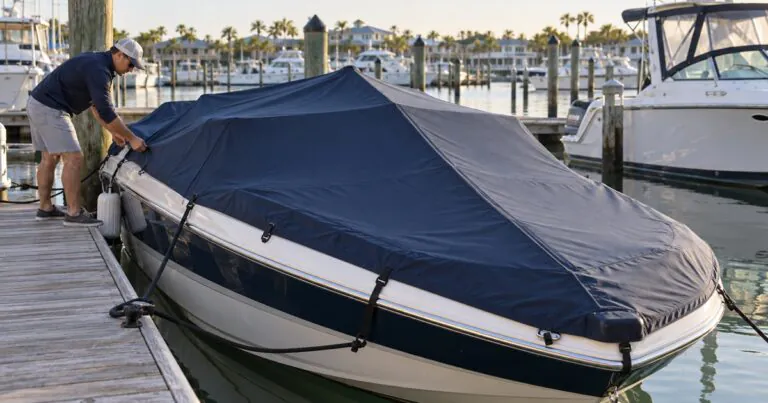
Strong elastic hem systems prevent rodent entry by maintaining continuous contact between cover edge and hull, eliminating the gaps rodents exploit to crawl underneath winter protection.
Poor ventilation design in standard boat covers creates direct rodent access when vent openings lack protective baffles or screening.
Boat owners assume vents are necessary for moisture control without realizing these openings provide unobstructed pathways for rodents seeking winter shelter.
Unsecured fastening systems represent a progressive failure point as covers held with bungee cords, rope ties, or simple drawstrings loosen over winter months from wind stress.
What begins as a properly secured cover in November becomes increasingly loose by February, creating gap formation that invites rodent entry during the coldest months when animals actively seek protected spaces.
Advanced rodent control research shows March represents the peak dispersal period when animals actively seek new territories, increasing pressure on any vulnerable boat storage setup.
This seasonal timing explains why spring commissioning reveals extensive rodent damage even in boats that appeared secure during earlier winter inspections.
Trailer and support frame pathways create sheltered tunnels when covers extend to ground level or drape onto trailer frames.
Rodents follow these protected pathways directly to hull access points, using the cover itself as both protection from predators and a guide to potential nesting sites inside the stored boat.
Engineering Solutions That Prevent Rodent Entry
Engineering solutions that prevent rodent entry begin with 900D marine-grade polyester construction that creates a physical barrier rodents cannot penetrate through gnawing or tearing.
Heavy-duty fabric resists the persistent chewing behavior that allows mice and squirrels to create entry holes in thin budget covers made from 300D or 600D materials.
Durable 900D material specifications demonstrate 3x tear resistance compared to standard fabrics, providing the structural integrity needed to block rodent penetration through the fabric body itself.
Steel ratchet fastening systems maintain continuous tension adjustment that keeps fabric pulled tight against the hull throughout winter storage periods.
This sustained pressure prevents gap formation as weather conditions change, temperature fluctuations occur, and snow loads shift the cover position.
Ratchet tension systems deliver 40-60 pounds of sustained pressure that holds cover edges firmly against hull surfaces, effectively blocking the crawl-under access points that rodents exploit when covers loosen.
Traditional drawstring or bungee systems lose tension over time, creating the exact vulnerabilities that invite pest intrusion.
Reinforced elastic hem design provides the perimeter security that separates effective covers from vulnerable installations.
Double-stitched continuous elastic maintains wrap-under contact along the entire gunwale perimeter, eliminating spot gaps where fabric separates from the hull.
These separation points become primary entry routes for rodents seeking winter shelter inside boats.
The elastic hem works in conjunction with ratchet systems to create redundant security—even if one fastening point loosens, the continuous elastic maintains contact.
Proper sizing and measurement eliminate the excess fabric draping that creates rodent pathways and climbing surfaces leading to potential entry points.
Custom-fit covers engineered to specific boat dimensions prevent the loose material that sags between support points and touches the ground or trailer frame.
Accurate measurement protocols ensure covers fit the hull profile precisely, preventing loose fabric areas that create gap vulnerabilities rodents exploit during their persistent exploration for entry routes.
A cover that’s 12 inches too long creates ground contact zones that essentially build a rodent highway leading directly to the boat.
Sealed ventilation architecture represents advanced engineering that balances moisture management with pest exclusion.
Engineered vent systems with internal baffles provide necessary moisture escape while preventing direct rodent access through vent openings.
Simple mesh vents—common on budget covers—function as open invitations for mice, squirrels, and other small animals.
Baffle-style ventilation creates airflow paths that incorporate direction changes and spacing rodents cannot navigate, maintaining air circulation without compromising security.
Integrated Pest Prevention in Complete Winter Storage Setup
Integrated pest prevention in complete winter storage setup positions cover selection as the primary defense layer that eliminates 90% of rodent access routes when properly implemented.
Engineered tight-fitting covers with secure fastening systems outperform loose budget covers with simple drawstring closures by creating barriers rodents cannot easily bypass.
Comprehensive winter storage systems integrate pest prevention directly into the overall protection strategy, addressing rodent barriers alongside moisture control, UV protection, and snow load management.
Ventilation management requires balancing moisture escape with pest security through strategic design choices.
Covers equipped with sealed baffle-style vents prevent condensation buildup while maintaining secure construction that rodents cannot penetrate.
Simple mesh openings—while effective for airflow—create direct entry routes that compromise the entire protective system.
Smart ventilation design principles demonstrate how engineered airflow systems achieve both objectives without compromise, using internal architecture that blocks pests while channeling moisture out.
This engineering approach costs more initially but prevents the damage scenarios that make budget ventilation expensive in the long run.
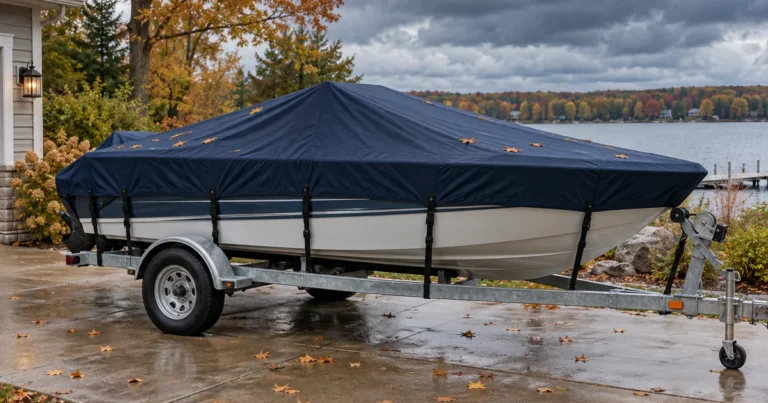
Ground clearance strategy focuses on installing covers that terminate above ground level and trailer frame structures.
Preventing fabric contact with ground surfaces eliminates the sheltered rodent pathways that develop when covers drape to ground level.
These contact zones create protected routes where rodents travel along the fabric searching for entry points, eventually finding gaps at fastening locations or worn areas.
Maintaining 6-8 inches of clearance between cover hem and ground removes this exploration pathway entirely.
Interior deterrents function as backup protection rather than primary defense systems.
While proper covers provide the essential barrier, strategic placement of natural deterrents adds secondary protection layers for comprehensive security.
Peppermint oil-soaked cotton balls placed in cabin areas, engine compartments, and storage lockers create scent barriers rodents avoid.
Ultrasonic devices generate frequencies uncomfortable for rodents while remaining inaudible to humans, though effectiveness varies by species and environment.
These interior methods work best when rodents cannot easily access the boat—they reinforce perimeter security rather than replacing it.
Pre-storage cleaning eliminates attractants that draw rodents toward boats in the first place.
Removing all food sources, organic debris, and potential nesting materials from the boat interior before covering reduces the motivation for pests to seek entry.
Forgotten snacks, beverage spills, fishing bait residue, and even life jacket foam become attractive resources for rodents establishing winter colonies.
Thorough cleaning combined with secure covering creates an environment that offers nothing worth the effort of entry attempts.
Monitoring and inspection protocols enable early detection before minor pest activity escalates to extensive colonization.
Mid-winter checks every 4-6 weeks verify cover tension remains adequate, identify any weather damage to fastening systems, and allow inspection for signs of pest activity.
Fresh droppings, chewing evidence, or disturbed interior items signal immediate need for additional deterrent measures.
Early intervention prevents the population establishment that leads to severe damage by season’s end.
Taking Action Now: Planning Next Season’s Protection
Taking action now means learning from 2026 rodent damage discoveries that boat owners are making during current spring commissioning activities.
Documenting entry points, identifying cover failures, and analyzing how pests accessed the interior informs the prevention strategy for next winter storage season.
Photographs of chewed areas, notes about which fastening systems failed, and assessments of where covers separated from hulls create the blueprint for improved protection.
This damage documentation transforms costly repairs into valuable information that prevents recurrence.
Cover upgrade timeline matters significantly for securing properly engineered protection before storage season begins.
Ordering premium covers during summer months—June through August—allows access to full manufacturer inventory and custom sizing consultations before the fall storage rush.
Waiting until October means limited size availability, rushed measurements, and potential compromises on specifications.
Planning ahead provides time for accurate measurement, manufacturer communication, and proper fitting before first snow arrives.
Investment justification becomes clear when comparing prevention costs against damage repair expenses.
Spending $400-$800 on premium 900D covers with steel ratchets and reinforced hems prevents the $1,500-$3,500 average rodent damage repair costs that boat owners face after unprotected winter storage.
The cover investment pays for itself in a single season by eliminating upholstery replacement, wiring repair, insulation removal, and sanitation services.
Beyond direct repair costs, proper covers preserve resale value by preventing the contamination and damage history that decrease boat marketability.
MK2 engineering features represent the specific design elements to prioritize when selecting pest-resistant covers.
Continuous elastic hems, steel ratchet fastening systems, and sealed ventilation architecture distinguish engineered solutions from basic covers.
These features work together synergistically—hem elasticity maintains contact, ratchets sustain tension, and sealed vents prevent the last remaining entry routes.
Covers lacking any of these elements leave vulnerability gaps that persistent rodents eventually exploit.
Measurement accuracy determines whether even premium covers deliver their engineered protection capabilities.
Improper sizing creates the gap vulnerabilities that rodents exploit, making professional measurement or detailed manufacturer guidelines essential for effective protection.
Length measurements affect ground clearance, beam measurements determine side tension, and height specifications control top fabric tautness.
Each dimension impacts rodent access potential—errors in any measurement compromise the entire protective system.
Complete system approach combines engineered covers with complementary protection strategies for maximum effectiveness.
Proper storage site selection favors elevated locations away from dense rodent habitat like woodpiles, grain storage, and overgrown vegetation.
Ground clearance setup using properly sized support poles maintains fabric elevation above surfaces where rodents travel.
Interior deterrent strategies including peppermint barriers and ultrasonic devices add backup protection layers.
This integrated approach addresses pest prevention from multiple angles rather than relying on covers alone.
Regional considerations affect the urgency and importance of pest-resistant cover investment across different storage locations.
Northern and Midwest boat owners face highest rodent pressure due to extended storage seasons lasting 5-7 months compared to 2-3 months in southern regions.
Extended exposure periods multiply opportunities for rodents to find entry points and establish colonies.
Boat owners in Minnesota, Wisconsin, Michigan, and similar climates experience the most severe damage patterns, making premium cover investment particularly critical for these markets.
Next-winter preparation checklist provides the timeline for implementing comprehensive rodent prevention before storage season arrives.
Secure proper covers by September to ensure delivery and fitting time before storage begins.
Complete pre-storage cleaning and interior deterrent placement during October when boats come off water.
Perform mid-winter tension checks in December and February to maintain cover security throughout storage period.
Following this schedule transforms rodent prevention from reactive damage control to proactive protection that preserves boat condition and value.
Conclusion
Spring 2026 rodent damage discoveries are forcing boat owners to recognize that loose-fitting budget covers create the gap vulnerabilities mice and rats exploit during winter storage. The chewed wiring, destroyed upholstery, and contaminated interiors being uncovered during March commissioning work represent preventable damage costing thousands in repairs. Properly engineered covers featuring 900D tear-resistant fabric, steel ratchet fastening systems, reinforced elastic hems, and sealed ventilation design eliminate the access points rodents use to infiltrate stored boats. By investing in premium pest-resistant protection now and implementing complete storage strategies before next winter, boat owners can avoid joining the forums full of damage stories and instead enjoy worry-free spring launches.
FAQ
Can rodents chew through boat cover fabric to gain entry?
Yes—thin 300D-600D polyester fabrics common in budget covers tear easily under rodent gnawing, allowing animals to create custom entry holes. Heavy-duty 900D marine-grade polyester resists chewing and provides 3x greater tear strength, preventing fabric penetration as an access route.
What’s the most common way mice get under boat covers?
Gap exploitation at hem edges where loose fabric separates from the hull due to inadequate elastic tension or poor fitting. Rodents crawl under these lifted edges rather than chewing through fabric, making tight-fitting covers with reinforced elastic hems and ratchet tension the most effective prevention method.
Will rodent repellent products alone protect my stored boat?
No—repellents (mothballs, peppermint oil, ultrasonic devices) provide only supplementary protection and lose effectiveness over 6-month storage periods. Primary defense must be physical exclusion through properly engineered tight-fitting covers that eliminate entry access, with repellents serving as backup deterrents for any small gaps.
When should I order a pest-resistant boat cover for next winter?
Summer months (June-August) offer best availability, custom sizing consultation time, and opportunity to receive and test-fit covers before fall storage season. Waiting until September-October often results in limited inventory, sizing compromises, and rushed installation without proper adjustment.
Do I need professional pest control for boat storage areas?
For outdoor residential storage (backyard, driveway), professional perimeter treatment in October before covering boats can reduce rodent pressure around storage sites. For commercial facilities or pole barns, coordinate with facility management on integrated pest management programs that combine site treatments with individual boat cover protection.
How do I know if my current cover is vulnerable to rodent entry?
Check for: (1) loose fabric at bow/stern when cover is installed, (2) gaps between hem and hull where you can insert your hand, (3) fabric draped on ground or trailer frame, (4) simple drawstring or bungee closure instead of ratchet system, (5) thin fabric under 600D weight, (6) open mesh vents without protective baffles. Any of these indicate rodent vulnerability requiring cover upgrade.
Boating Enthusiasts — Join the Crew!
Free Boat Protection Guide Download Yours Now
Get your free copy of The Complete Boat Protection Guide — expert tips, real-world strategies, and exclusive insights from the Safeboatz team.

SafeBOT