 SafeBOT

Waterproof Boat Cover Guide: Fit, Fabric & Care
Practical waterproof boat cover guide for US boat owners: water-shedding fit, seams, support, ventilation, trailering, winter storage, care, and Storm Series fit checks.

Waterproof Boat Cover Guide: What “Waterproof” Really Means
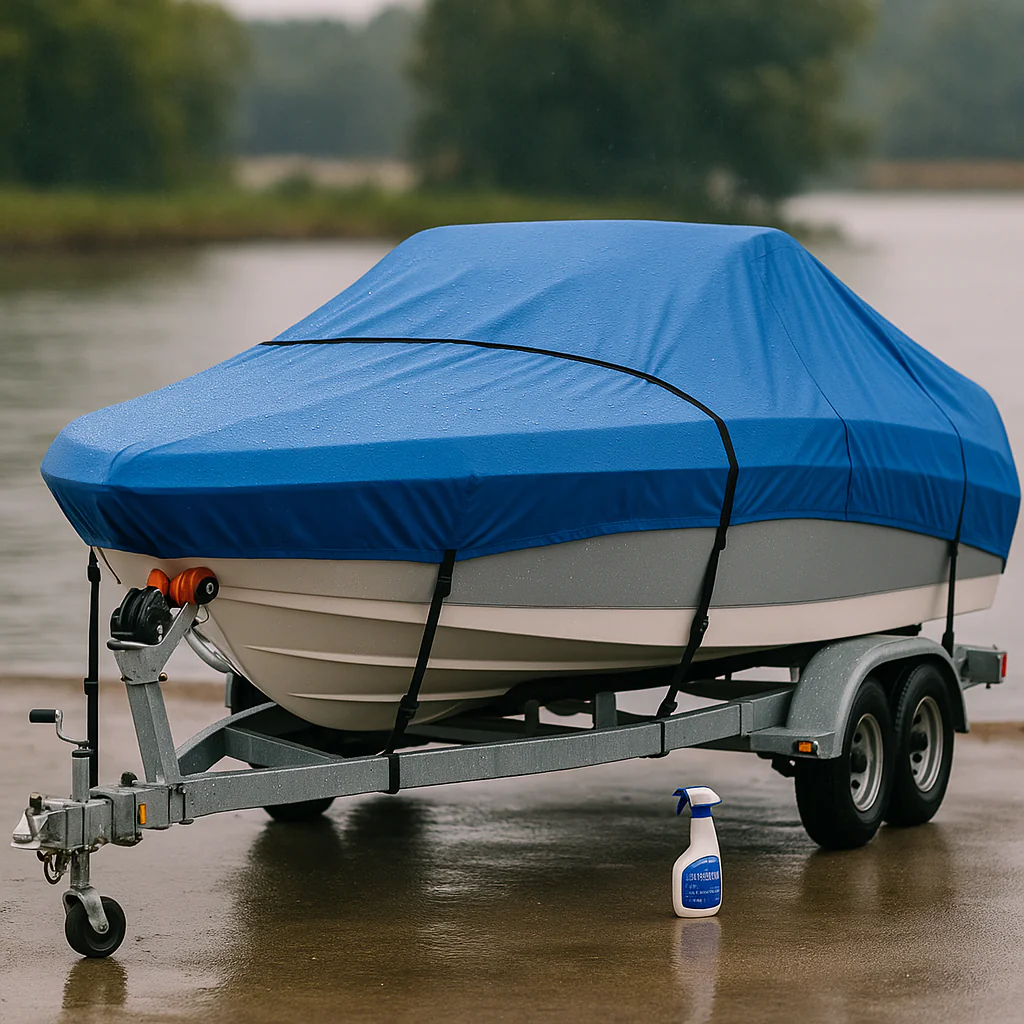
Many boat owners search for a waterproof boat cover because they want the boat to stay dry, clean, and ready for the next trip. That goal is reasonable, but the word “waterproof” can create the wrong buying shortcut. A cover can have strong water resistance and still fail in use if it sags, traps humidity, rubs on hardware, or is installed with uneven tension.
Think of waterproofing as a system: fabric, seams, slope, ventilation, fit, support, and inspection all work together. For a driveway boat, marina slip, or trailerable setup, water-shedding performance is usually more useful than a single marketing label.
Waterproof vs Water-Resistant vs Water-Shedding
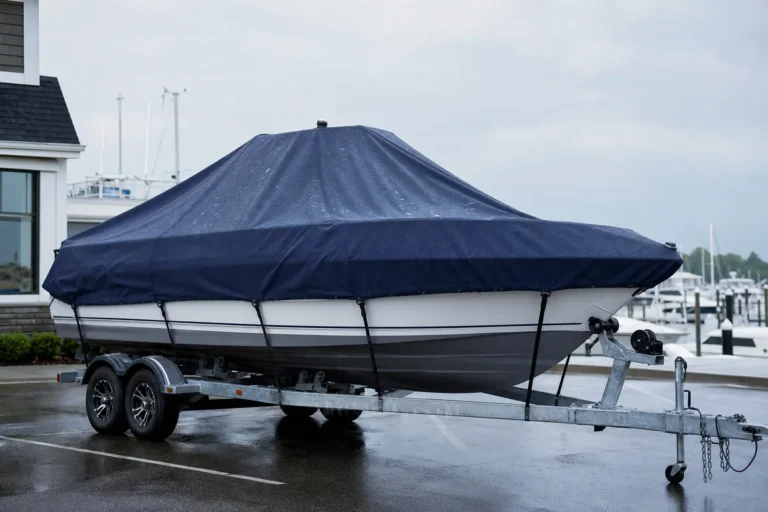
Waterproof usually suggests very strong resistance to water passing through the fabric. Water-resistant means the material can shed ordinary rain but may not tolerate standing water or pressure. Water-shedding describes the complete cover setup: rain lands on the fabric, moves down the slope, and drains away instead of collecting in pockets.
For real storage, water-shedding is the practical goal. A cover that lets rain run off quickly usually protects better than a stiff cover that collects water in the cockpit area.
The Six Checks That Matter Most
1. Fabric weight and abrasion resistance
Heavier marine fabrics often tolerate rubbing, sun exposure, and repeated installation better than thin economy covers. Fabric weight does not replace fit, but it gives the system a stronger starting point.
2. Coating and water-repellent finish
Many covers rely on a treatment that helps water bead and move off the surface. Harsh cleaners, long sun exposure, and dirty storage can reduce that performance over time.
3. Seam and corner construction
Stitching lines, corners, strap points, and reinforced panels deserve close inspection. If water appears inside, check seams and low spots before assuming the entire fabric is failing.
4. Slope and support
Support poles or a frame help create the angle that rain needs to move off the cover. A flat pocket over the cockpit can hold a surprising amount of water and strain seams.
If pooling is the main issue, start with the boat cover support pole guide. It explains how to set support height, avoid pressure points, and check the setup after the first rain.
5. Measured fit
A loose cover can flap and pool. A tight cover can pull against hardware and seams. Measure centerline length, beam, console height, rails, trolling motor, and outboard position before choosing.
6. Strap tension
Straps should hold the cover evenly, not distort it. Recheck tension after the first rain, after towing, and during long storage periods.
Quick Decision Framework
Use a simple sequence before buying. First, confirm the boat dimensions and hardware clearance. Second, decide whether the cover will be used for storage only or for trailering. Third, check whether the cockpit shape needs support poles or a frame. Fourth, plan ventilation so moisture is not trapped under a tight cover. Finally, inspect seams, straps, and reinforced corners because those are the areas that often show wear before the main fabric does.
This framework prevents a common mistake: choosing the cover with the strongest waterproof claim while ignoring the setup that actually keeps rain moving off the boat.
Ventilation Still Matters Under a Water-Shedding Cover
Rain is not the only moisture source. Damp carpet, wet gear, bilge moisture, and temperature swings can create condensation under the cover. If air cannot move, odor and mildew risk increase even when rain is not leaking through.
Before storage, remove wet gear, open compartments where appropriate, dry the cockpit, and make sure vents are not blocked by sagging fabric. For a deeper checklist, use the boat cover ventilation guide.
How to Measure Before Buying
Do not choose by boat length alone. Measure centerline length from bow tip to stern, beam at the widest point, console or windshield height, rails, electronics, trolling motor position, and whether the outboard is covered or left outside the cover. A few inches can determine whether the hem sits correctly.
Use the Safeboatz measuring guide before comparing sizes. If your boat sits between two fit ranges, check beam and hardware clearance before sizing up or down.
Winter, Snow, and Long Storage
Winter storage adds time and weight. Snow, freezing rain, and repeated freeze-thaw cycles can punish unsupported fabric. A water-shedding cover should be set with enough slope for runoff and enough access for mid-season inspection.
- Remove leaves before they hold moisture against the fabric.
- Inspect after the first major storm, not only at the end of winter.
- Keep sharp hardware padded so frozen fabric does not rub through.
- Use the snow-load boat cover guide for support and inspection planning.
Trailering With a Waterproof Boat Cover
Waterproof language does not automatically mean the cover is road-ready. Trailering adds wind pressure, vibration, strap movement, and rubbing at hardware points. If you tow with the cover installed, confirm that the cover is intended for trailering and inspect the setup after a short test drive.
For towing-focused checks, read the trailerable boat cover guide and verify strap routing before highway use.
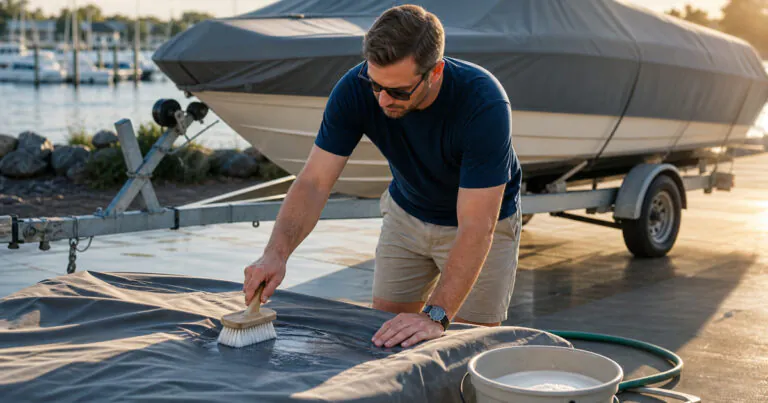
Care Routine That Preserves Water Shedding
- Clean with mild soap and water unless the cover instructions say otherwise.
- Let the cover dry before folding or bagging it.
- Remove debris before it traps moisture on the surface.
- Inspect seams, vents, corners, and straps after storms.
- Avoid harsh chemicals that can damage coatings.
- Reapply compatible water-repellent treatment only when the manufacturer allows it.
Safeboatz Storm Series Context
Safeboatz Storm Series covers are active premium trailerable options for 17–19 ft and 20–22 ft boats that match the measured fit range. They are relevant when you want a stronger cover system than a loose tarp, but the same measurement and support rules still apply.
FAQ: Waterproof Boat Covers
Is waterproof always better?
Not by itself. Water resistance matters, but fit, support, seams, ventilation, and care determine real-world performance.
Why is my cover wet underneath?
Condensation or trapped moisture can occur even when rain is not leaking through. Dry the boat before storage and maintain airflow.
Can water pooling damage a cover?
Pooling adds weight and stress. Support poles, slope, and routine inspection reduce that risk.
Should I use a tarp instead?
A tarp can be useful for temporary coverage, but it often lacks tailored fit, venting, and strap control. For storage or trailering, a fitted cover is usually a better system.
Final Take
When to Repair or Replace
Small issues such as loose dirt, mild loss of water beading, or a minor strap adjustment may only need cleaning, retensioning, or compatible treatment. Larger issues deserve replacement consideration: repeated pooling in the same place, torn seams, brittle fabric, broken strap hardware, or rub holes around rails and windshield corners. If the cover no longer holds shape after support and tension are corrected, it is no longer working as a system.
A photo log helps. Take pictures after installation and after storms so you can see whether sagging, rubbing, or seam strain is getting worse over time.
Final Take
A waterproof boat cover should be judged as a complete protection setup, not a label. Choose by measured fit, water-shedding shape, seam quality, ventilation, support, trailering needs, and care habits.
Helpful next step: download the free Safeboatz Boat Protection Guide before choosing your next cover.
Related waterproofing and care resources
Waterproof protection depends on fabric, fit, slope and maintenance. Pair this guide with Safeboatz resources on breathable vs waterproof covers, boat cover ventilation, heavy-duty cover materials, and winter trailered-boat storage.
For neutral weather and maintenance context, see NOAA/National Weather Service marine weather resources and the BoatUS expert advice archive.
Boating Enthusiasts — Join the Crew!
Free Boat Protection Guide Download Yours Now
Get your free copy of The Complete Boat Protection Guide — expert tips, real-world strategies, and exclusive insights from the Safeboatz team.