 SafeBOT

Ratchet Boat Cover Guide: Install, Tension & Maintain
Detailed ratchet boat cover guide for measuring, strap routing, tension, trailering checks, storage support, ventilation, maintenance, and common installation mistakes.

Ratchet Boat Cover Guide: Install, Tension & Maintain
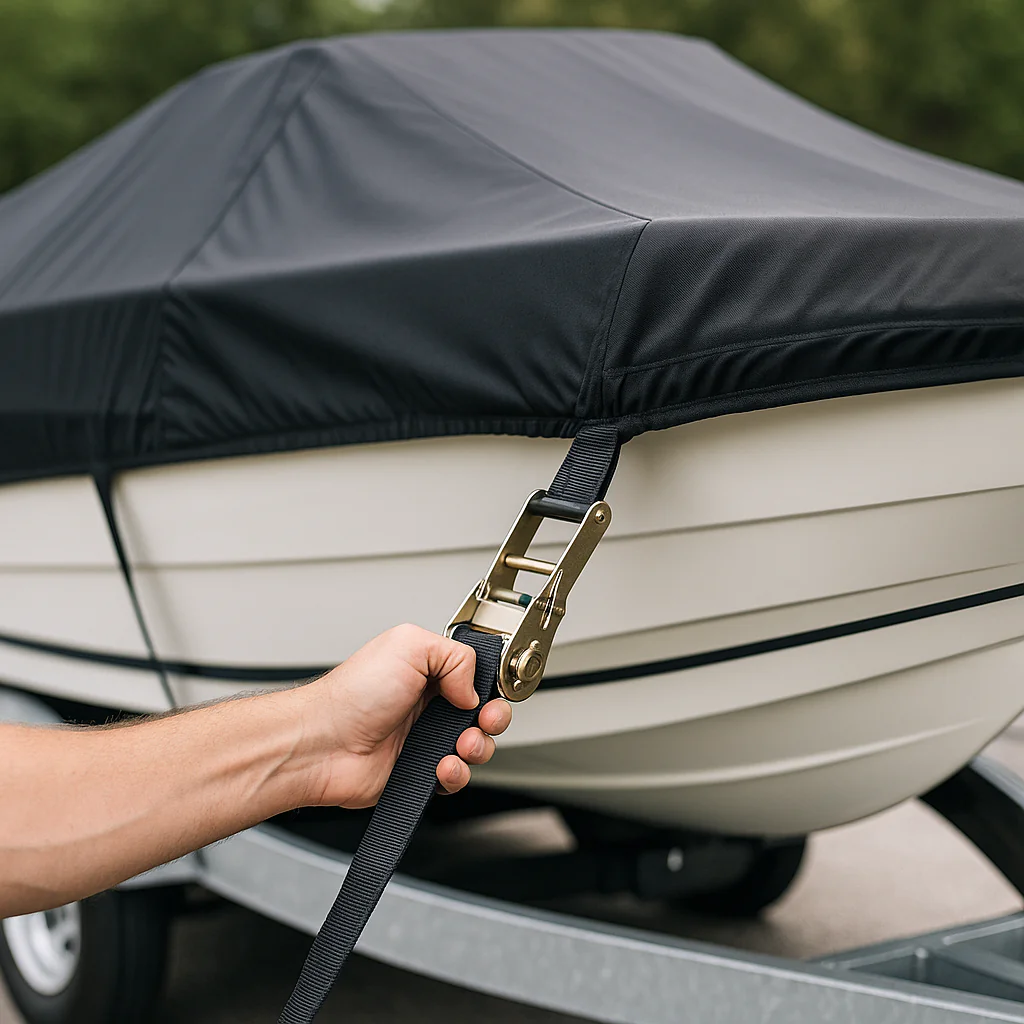
A ratchet boat cover helps you apply repeatable tension around a trailerable boat cover. That matters because loose fabric can flap, rub, pool water, and open gaps around the hull. The goal is not maximum tightness. The goal is a smooth, supported fit that protects the boat without overloading seams, straps, or hardware.
This guide explains when a ratchet system makes sense, how to install it, how tight it should be, what to inspect before storage or trailering, and how to maintain the hardware over time.
When a Ratchet Cover Makes Sense
Ratchet systems are most useful when the boat is stored outdoors, moved on a trailer, or covered often enough that repeatable setup matters. They are also helpful when the cover needs to sit close to the hull and resist lifted edges.
- Trailering: helps reduce loose fabric when the cover is intended for road use.
- Outdoor storage: keeps the cover seated around the hull through weather changes.
- Seasonal storage: makes it easier to retension after storms or freeze-thaw cycles.
- Frequent use: faster and more consistent than knots and improvised rope systems.
Measure Before Tensioning
A ratchet cannot fix a cover that is the wrong size. Measure overall length, beam, console height, windshield height, rails, outboard position, and accessories. Compare those numbers with the cover’s fit range before tightening anything.
If you are unsure, start with the boat cover measuring guide. For product fit, compare the Safeboatz Storm Series 17–19 ft and 20–22 ft options only if your measurements match the listed range.
Installation Step by Step
- Clean the boat and remove sharp debris that could rub the fabric.
- Drape the cover evenly from bow to stern.
- Seat the hem around the hull before tightening.
- Align vents, support poles, and reinforced panels.
- Route straps so they do not run across sharp trailer edges.
- Tighten in small increments from side to side.
- Secure loose strap tails before storage or towing.
How Tight Should a Ratchet Cover Be?
The cover should be smooth and stable, not distorted. If one seam, corner, or strap point carries most of the load, loosen the cover and correct the routing. Over-tightening can damage seams, pull grommets, or cause fabric to wear against hardware.
For trailering, do a short test drive and stop to inspect movement. Customer reviews may describe highway use, but use them as owner experiences, not a replacement for your own fit check, weather judgement, and cover instructions.
Strap Routing Checks
- Keep straps away from sharp trailer brackets, fenders, and unfinished metal.
- Avoid twists that concentrate load on a narrow edge.
- Do not pull one side tight while the other side is still loose.
- Use the cover’s intended attachment points instead of inventing new ones.
- Keep loose strap tails secured so they cannot whip during towing.
Ratchet Straps vs Rope Ratchets
Rope ratchets can work on lighter systems, but wider straps often spread load better on trailerable covers. The best choice is the one designed for the cover. Avoid adding random tension points unless the manufacturer supports it, because extra force in the wrong place can shorten cover life.
Storm Series Ratchet Cover Options
If you want a ratchet-based setup rather than a basic strap cover, compare the active Safeboatz Storm Series pages for 17–19 ft boats and 20–22 ft boats. Match the size to measured length, beam, and hardware clearance before choosing.
Storage Support and Ventilation
A ratchet system controls movement, but it does not solve moisture by itself. Long storage still needs airflow and support. Use poles or a frame where water could pool, and make sure vents are not blocked by sagging fabric.
Related guides: boat cover ventilation, snow load support, and waterproof boat cover selection.
Trailering Inspection Before You Leave
Before towing, walk around the boat and look for lifted edges, strap twists, fabric touching sharp hardware, and loose tails. After the first few miles, stop safely and check again. Road wind can reveal movement that was not obvious in the driveway.
If the cover shifts, do not simply crank the ratchet harder. Re-seat the cover, correct the strap path, and check whether a support pole or pad is missing.
Troubleshooting Tension Problems
If the cover keeps loosening, inspect the ratchet, strap path, and attachment points before adding more force. A twisted strap, dirty ratchet, worn buckle, or sharp trailer contact can make the system lose tension. If the cover pulls harder on one corner than the others, remove tension and reset the cover from the centerline outward.
If water still pools after the cover is smooth, the issue is usually support, not ratchet force. Add or adjust support poles according to the cover instructions so the fabric has a clean slope.
Maintenance Checklist
- Inspect straps, ratchets, buckles, stitching, and reinforced corners before each use.
- Rinse salt, road grit, and dust from the hardware.
- Dry the cover fully before folding or bagging it.
- Repair small tears before they spread.
- Replace frayed straps instead of tying temporary knots.
- Photograph strap routing before seasonal removal.
Common Mistakes
- Buying by length only and ignoring beam.
- Over-tightening until seams distort.
- Routing straps over sharp metal.
- Leaving support poles out during winter storage.
- Assuming every cover with a ratchet is safe for trailering.
- Leaving damp gear under a tightly sealed cover for weeks.
FAQ: Ratchet Boat Covers
Should a ratchet cover be extremely tight?
No. It should be smooth and stable, but not so tight that seams, corners, or strap points distort.
Can a ratchet boat cover prevent pooling?
It can reduce slack, but support poles or a frame are still needed where the cover can sag.
Can I use aftermarket ratchets?
Only if they match the cover design and do not overload seams or grommets. Manufacturer hardware is usually safer.
How often should I retension the cover?
Check after the first installation, after strong wind or rain, during long storage, and before towing.
Final Take
When to Stop and Refit
Stop tightening and refit the cover if seams begin to distort, grommets lean under load, straps pull across sharp edges, or the fabric rides above the intended hull line. These are signs that the cover is misaligned, the boat is outside the fit range, or a support point is missing. More ratchet force will usually make the problem worse.
For seasonal storage, mark the correct strap positions with photos. That makes it easier to reinstall consistently and notice when hardware or fabric has changed.
Final Take
A ratchet boat cover is a tension system, not a shortcut. It works best when the cover fits, the straps are routed cleanly, the fabric is supported, and the setup is checked after movement or storms.
If you need a simple prep list, use the free Safeboatz Boat Protection Guide before your next storage season.
Related ratchet and trailering resources
Ratchet tension works best when the cover is measured correctly and supported by the right tie-down strategy. Continue with the Safeboatz ratchet cover benefits guide, trailerable cover guide, wind-proof strap guide, and boat measuring checklist.
For neutral road-safety context, see NHTSA trailering and towing guidance and U.S. Coast Guard boating safety resources.
Boating Enthusiasts — Join the Crew!
Free Boat Protection Guide Download Yours Now
Get your free copy of The Complete Boat Protection Guide — expert tips, real-world strategies, and exclusive insights from the Safeboatz team.