 SafeBOT

900D vs 1200D Boat Cover: Fabric, Fit & Trailering Guide
A practical 900D vs 1200D boat cover guide for US boat owners comparing denier, fabric weight, waterproofing, trailering, storage, fit, support, and Storm Series sizing.

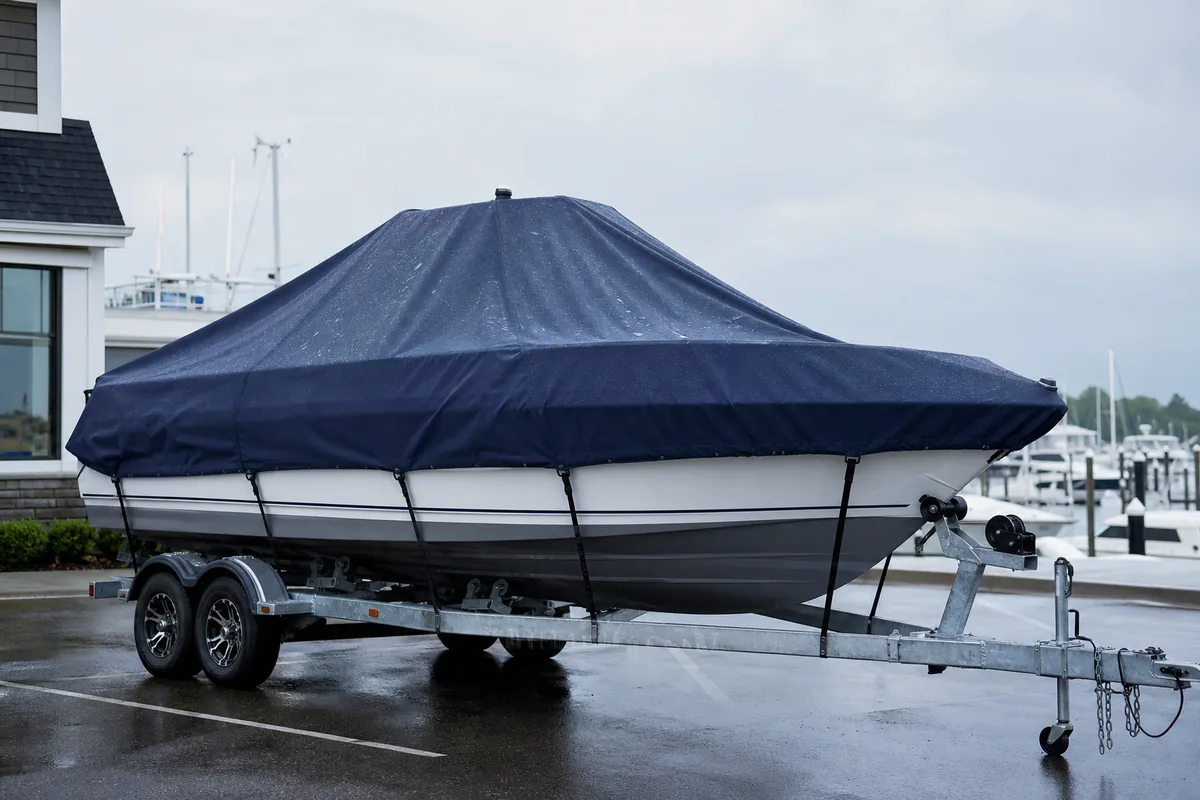
If you are comparing a 900D vs 1200D boat cover, do not make the decision on denier alone. A 1200D fabric usually uses heavier threads than 900D, but real cover performance also depends on coating quality, seam construction, fit, support, ventilation, strap tension, and how often the cover is used for trailering.
For most trailerable boat owners, 900D marine-grade polyester is a strong practical fabric when the cover fits tightly and sheds water properly. A 1200D cover can make sense for owners who want a heavier fabric for harsh outdoor storage, but it may also be bulkier to handle and harder to dry or store.
This guide keeps the choice practical: what denier means, where 900D is enough, when 1200D is worth considering, and what to check before choosing a cover for a 17–19 ft or 20–22 ft trailerable boat.
Quick answer: 900D vs 1200D boat cover
Choose a 900D boat cover when you want a durable, easier-to-handle fabric for regular outdoor storage, trailering checks, and seasonal protection. Consider a 1200D boat cover when your priority is heavier fabric weight for harsher long-term exposure, and you are comfortable with extra bulk, storage space, and handling effort.
The safest buying rule is simple: a well-fitted 900D cover with proper tension, slope, support, and ventilation will usually protect better than a loose 1200D cover that traps water or flaps in the wind.
What does the D mean in boat cover fabric?
The “D” stands for denier, a textile measurement tied to the thickness and weight of individual yarns. In plain boating terms, higher denier often points to heavier threads and a tougher fabric base. That is why you see cover fabrics described as 300D, 600D, 900D, or 1200D.
Denier is useful, but it is not the whole story. A cover can use heavy fabric and still fail early if the stitching, coating, fit, or tie-down system is weak. UV exposure, sharp hardware, water pooling, wind movement, and storage habits can all shorten cover life.
For broader boating maintenance context, BoatUS keeps a useful expert advice archive. For winter-weather storage planning, the National Weather Service also maintains practical winter safety guidance that helps owners think through snow, ice, wind, and inspection routines.
900D boat covers: where they make sense
A 900D polyester boat cover is a strong fit for many owners because it balances durability with handling. It can be heavy enough for outdoor protection while still being realistic for one person or two people to install, tension, remove, dry, and fold.
- Best fit: trailerable boats, driveway storage, marina-lot storage, moderate winter storage, and owners who remove and reinstall the cover regularly.
- Main advantage: good balance of strength, weight, water shedding, and day-to-day usability.
- Main risk: assuming fabric weight alone prevents pooling, mildew, rubbing, or wind lift.
Safeboatz Storm Series trailerable covers use marine-grade 900D polyester with a PU coating, reinforced seams, and a ratchet-based tie-down system. If you are comparing fabric weights because you own a trailerable motorboat, start with the current Storm Series 17–19 ft cover or the Storm Series 20–22 ft cover, then confirm your measurements.
1200D boat covers: when heavier fabric can help
A 1200D boat cover can be worth considering when the owner wants a heavier fabric base for long outdoor storage, strong sun, more frequent abrasion risk, or rougher handling. The tradeoff is that the cover may be heavier, bulkier, slower to dry, and less convenient to fold or carry.
That does not make 1200D automatically better for every boat. A cover that is too bulky for the owner to tension correctly can become a problem. Loose fabric moves. Moving fabric rubs. Low spots collect water. A heavier cover still needs slope, support, and airflow.
If your boat sits outside for long periods in harsh weather, 1200D may be part of the shortlist. If you trailer often and want a cover you can manage without fighting it every time, 900D can be the more practical choice.
Comparison table: 900D vs 1200D boat cover
| Factor | 900D boat cover | 1200D boat cover |
|---|---|---|
| Fabric weight | Heavy-duty, but usually easier to handle | Heavier fabric base, often bulkier |
| Best use | Outdoor storage, trailering checks, seasonal protection | Longer outdoor storage and harsher exposure |
| Handling | More manageable for regular install/removal | Can be harder to lift, dry, fold, and store |
| Durability signal | Strong fabric when paired with good coating and seams | Stronger fabric signal, but still depends on construction |
| Water pooling | Needs support and slope | Still needs support and slope |
| Trailering | Works best with secure straps, ratchets, and pre-trip checks | Can work, but bulk and fit matter as much as denier |
Denier is not the same as waterproofing
A higher denier number does not automatically mean the cover is more waterproof. Water resistance comes from the fabric, coating, seams, slope, and installation together. A 900D cover with a quality PU coating and good support can shed rain well. A 1200D cover can still leak or stretch if water sits in a low spot for days.
Look at these items before treating any fabric as waterproof:
- Does the cover create enough slope for rain to run off?
- Are seams reinforced or sealed in high-stress areas?
- Can air move under the cover to reduce trapped moisture?
- Are the straps tight enough to reduce flapping without distorting the fabric?
- Are sharp cleats, windshield edges, or rails protected from rubbing the fabric?
If water management is the main concern, read the Safeboatz waterproof boat cover guide and the support pole guide for stopping pooling before choosing only by fabric number.
Fit and tension matter more than fabric weight
A fabric upgrade will not fix a cover that is the wrong size. If the cover is too loose, wind can get underneath it while trailering or during storage. If it is too tight around hardware, it can rub, stress seams, or create pressure points.
Before comparing 900D and 1200D, measure the boat correctly:
- Measure centerline length from bow tip to stern, excluding the trailer.
- Measure beam at the widest point.
- Note windshield, console, rail, trolling motor, swim platform, and outboard positions.
- Decide whether the boat will be stored, trailered, or both with the cover on.
- Check whether support poles or vents are needed to keep the cover from sagging.
The Safeboatz boat measuring checklist walks through the fit details that prevent most cover mistakes.
Trailering: what to check before you tow
Trailering changes the fabric decision because wind pressure tests the whole system. The cover needs enough fabric strength, but it also needs secure tie-down points, steady strap tension, and a shape that does not catch air.
Use this pre-trip check before towing with any boat cover:
- Confirm the bow, windshield, console, and stern are seated under the cover.
- Tighten straps evenly so one side does not pull the cover off center.
- Look for gaps where highway air can enter.
- Pad or adjust around rub points before they become holes.
- Stop after the first short drive and recheck tension.
If your main concern is wind lift, pair this article with the Safeboatz guide to stopping boat cover flapping while trailering and the ratchet boat cover guide.
Storage: winter, sun, and moisture checks
For storage, the fabric choice should match the climate and inspection routine. Direct sun can break down fabric and stitching over time. Snow and rain can load the cover if low spots form. Humidity can create condensation under a cover that has no airflow.
A heavier cover may help with abrasion and fabric strength, but it does not remove the need for routine checks. During long storage, inspect after heavy rain, strong wind, snow, or big temperature swings. The winter boat cover guide and the boat cover ventilation guide cover those seasonal details in more depth.
Which fabric should a 17–19 ft or 20–22 ft owner choose?
For the boat sizes Safeboatz currently serves, the practical first step is fit. A 17–19 ft boat needs the right centerline length, beam, windshield/console clearance, and strap layout. A 20–22 ft boat adds more fabric span, so support and tension become even more important.
If your boat falls into those ranges and you want a trailerable cover with a manageable heavy-duty fabric, compare the current Storm Series pages:
If your boat is outside those sizes, use this guide as a fabric and fit checklist rather than a product match. Measure first, then choose the cover category that fits your actual boat.
FAQ: 900D vs 1200D boat covers
Is 1200D always better than 900D for a boat cover?
No. 1200D usually signals a heavier fabric, but a well-fitted 900D cover with good coating, seams, support, and strap tension can outperform a loose or poorly supported 1200D cover.
Is 900D good enough for outdoor boat storage?
Yes, 900D marine-grade polyester can be a strong outdoor storage fabric when the cover sheds water, has ventilation, and is inspected after storms. The installation matters as much as the fabric number.
Does 1200D mean waterproof?
No. Denier describes fabric yarn weight, not waterproofing by itself. Water resistance depends on coating, seams, slope, pooling control, and how the cover is installed.
Which is easier to install, 900D or 1200D?
900D is usually easier to handle because it tends to be less bulky than 1200D. That can matter if you install and remove the cover often or store it in a small space.
Should I choose fabric weight before measuring my boat?
No. Measure centerline length, beam, hardware clearance, and storage use first. The best fabric choice still needs the correct fit.
Bottom line
The 900D vs 1200D boat cover decision is really a tradeoff between strength, handling, and fit. Choose 900D when you want heavy-duty protection that remains practical to install and tension. Consider 1200D if your storage conditions justify a heavier cover and you are comfortable with the extra handling.
Either way, do not let the denier number distract from the checks that keep a boat protected: correct measurements, even tension, support for rain runoff, airflow under the cover, and regular inspection after weather.
Need help narrowing the next step? Download the free boat protection guide, compare the Safeboatz trailerable cover collection, or start with the Storm Series size page that matches your boat.
Boating Enthusiasts — Join the Crew!
Free Boat Protection Guide Download Yours Now
Get your free copy of The Complete Boat Protection Guide — expert tips, real-world strategies, and exclusive insights from the Safeboatz team.