 SafeBOT

Breathable vs Waterproof Boat Covers: Moisture & Fit Guide
Breathable vs Waterproof Boat Covers: Moisture & Fit Guide Boat owners often ask whether a cover should be breathable or waterproof. The practical answer i

Breathable vs Waterproof Boat Covers: Moisture & Fit Guide
Boat owners often ask whether a cover should be breathable or waterproof. The practical answer is that a good storage setup needs both water shedding and moisture management. A cover should reduce rain, debris, and UV exposure, but it also needs enough slope and airflow to avoid trapping damp air around upholstery, wiring, electronics, and hardware.
This guide replaces simple “waterproof wins” thinking with a balanced framework: climate, storage duration, ventilation, fabric condition, fit, support, and inspection routine. No cover is maintenance-free, and no label can overcome poor measurement or pooling water.
Quick Answer: Which Cover Type Is Best?
For most outdoor storage, choose a cover that sheds rain well, fits tightly enough to reduce flapping, includes ventilation or allows airflow, and can be supported so water runs off. Highly water-resistant fabric can be helpful, but a sealed, unsupported cover can trap condensation and odors. Breathability helps moisture escape, but it does not replace slope, cleaning, and inspections.
What “Waterproof” Usually Means in Real Use
Listings and labels use “waterproof” in different ways. Some refer to a coating, some to a fabric test, and some to a marketing claim. Real-world performance also depends on seams, stitching, vents, support poles, fit, abrasion, age, and how long water sits on the fabric.
Read product descriptions carefully and avoid assuming that one word solves every storage problem. If water pools in a low area, even a strong coating can be stressed. If seams sit under standing water, leakage risk rises. If the cover touches sharp hardware, abrasion can create weak points.
What Breathability Actually Helps With
Breathability means the covered space has a better chance to release moisture. That moisture can come from rain, damp carpet, wet gear, bilge water, humidity, temperature changes, or a boat that was covered before it dried. Ventilation helps reduce stale air, mildew odor, and condensation risk, but it works best with a dry boat and a cover that is not sealed flat against every surface.
For a deeper setup guide, see the boat cover ventilation guide. The key idea is simple: keep outside water moving off the cover while allowing inside moisture a path out.
Decision Framework by Storage Situation
Short-term rain protection
If the boat is clean, dry, and covered for a short period, water shedding and secure fit may matter most. Still, leave vents open and avoid storing damp towels, life jackets, or carpeted gear inside.
Long outdoor storage
Prioritize support, slope, ventilation, abrasion padding, and periodic inspection. A breathable, well-supported cover often performs better than a heavy cover left flat over the cockpit.
Trailering
Trailering adds wind and vibration. Use a cover intended for trailering, balance strap tension, and inspect after a short drive. Breathability is still useful, but secure fit and low fabric movement become critical.
Indoor or covered storage
Indoor storage may need more dust protection than rain resistance, but moisture can still be present if the boat is put away damp. A lighter breathable cover may be appropriate when the storage location is dry and secure.
Installation Checklist to Reduce Moisture Problems
- Dry the cockpit, seats, carpet, bilge, and compartments before covering.
- Remove damp gear, food, paper, leaves, and soft nesting material.
- Measure the boat with the Safeboatz measuring guide so the cover is not oversized or overstretched.
- Add support poles or bows to create slope from bow to stern and side to side.
- Keep vents open and avoid blocking them with folded fabric or gear.
- Pad windshield corners, cleats, rails, trolling motor brackets, and other rub points.
- Recheck after the first rain for pooling, leakage, fabric movement, and odors.
Common Failure Patterns
Pooling water
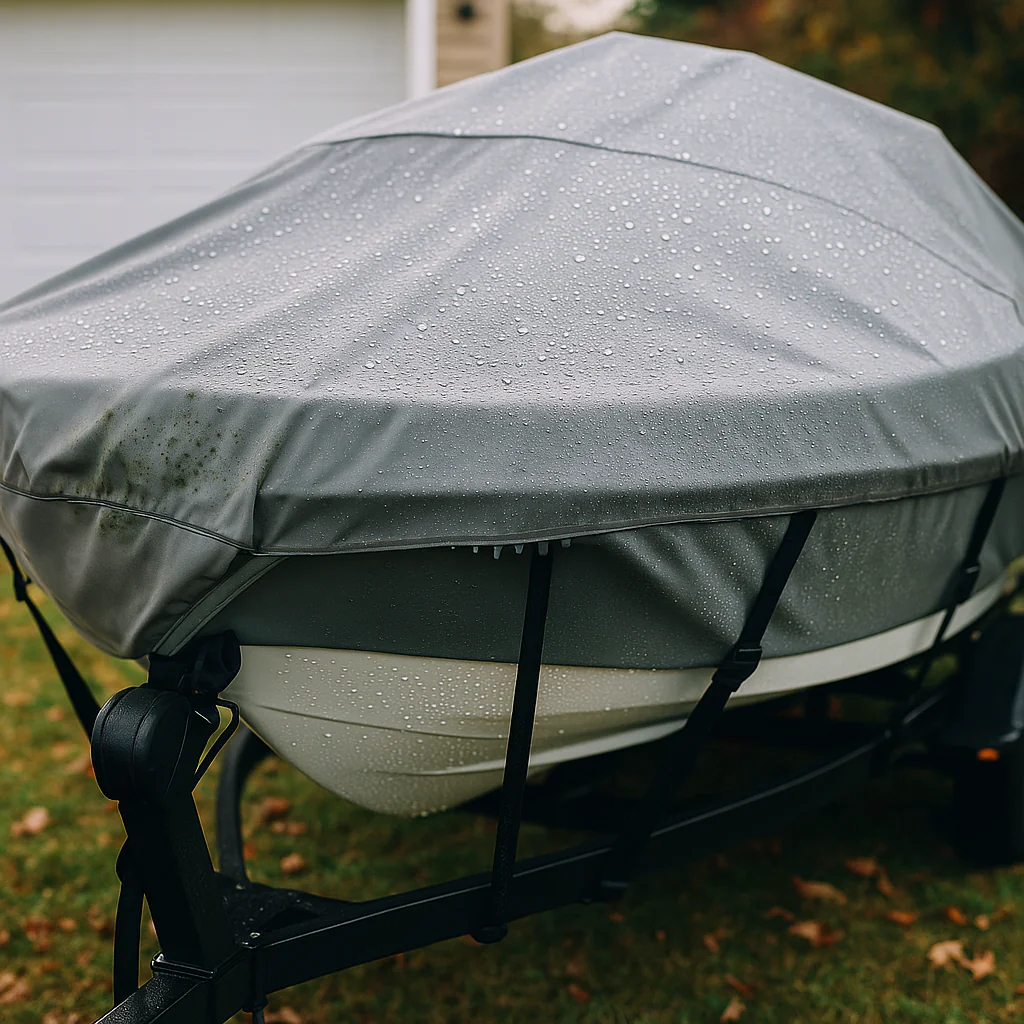
Pooling is usually a support problem, not a reason to pull straps harder. Reset poles or bows to create runoff before adding tension.
Trapped damp gear
Wet towels, life jackets, carpet, and bilge moisture can create odor under any cover. Dry and remove gear before long storage.
Abrasion at hardware
Wind and movement can rub fabric against corners and fittings. Pad those areas and check for wear marks before they become holes.
Loose fit
An oversized cover can flap, collect water, and shift in storms. An undersized cover can stress seams. Accurate measurement is the best prevention.
Simple Inspection Schedule
Use a light inspection rhythm instead of waiting until the end of storage. Check the cover after the first rain, after strong wind, before freezing weather when applicable, and before putting the boat back in service. Look for low pockets, wet carpet, mildew odor, loose straps, blocked vents, rub marks, and debris sitting against the fabric.
If you find moisture, correct the source before tightening the cover again. Dry the affected area, remove wet gear, improve slope, open ventilation paths, and pad any contact point that has started to wear. Documenting these small corrections with photos also helps you remember what worked from one season to the next.
Buying Checklist
- Confirm length, beam, and boat style rather than buying by model name alone.
- Look for clear photos of vents, seams, straps, hem, and reinforcement points.
- Check whether the cover is meant for storage, trailering, or both.
- Read care instructions so you know how to clean and dry the fabric.
- Review return terms before installing the cover outdoors.
Where Safeboatz Fits
Safeboatz focuses on measured fit, trailerable stability, ventilation, and owner checklists rather than absolute claims. If your boat matches the current range, compare the 17–19 ft Storm Series cover or the 20–22 ft Storm Series cover. For a non-product checklist, download the free Safeboatz Boat Protection Guide.
FAQ
Can a cover be both water-resistant and breathable?
Yes. Many covers aim to shed rain while allowing some airflow or vapor movement. The balance depends on fabric, coating, vents, seams, and installation.
Is a waterproof label enough for winter storage?
No. Winter or long storage also needs slope, support, ventilation, dry gear, pest prevention, and periodic inspection.
How do I know if moisture is trapped?
Look for mildew odor, condensation, damp upholstery, fogged compartments, corrosion, or water sitting under the cover. Inspect soon after rain and during weather changes.
Do vents matter if the cover is water-resistant?
Yes. Vents help moisture escape and reduce stale air. They do not replace drying the boat or creating slope, but they are an important part of the system.
Related moisture-control resources
Breathability is part of a larger storage system. Use this guide with Safeboatz articles on boat cover ventilation, smart ventilation features, and winter boat cover storage. If rodents or damp storage are concerns, also read the rodent damage prevention guide.
For neutral background, see the EPA mold resources and National Weather Service winter safety guidance.
Boating Enthusiasts — Join the Crew!
Free Boat Protection Guide Download Yours Now
Get your free copy of The Complete Boat Protection Guide — expert tips, real-world strategies, and exclusive insights from the Safeboatz team.