 SafeBOT

20 ft Boat Cover: Fit, Trailering & Storm Series Checks
A practical 20 ft boat cover guide for US boat owners covering measurements, beam, clearance, trailering checks, support, waterproofing, and Storm Series 20-22 ft fit.

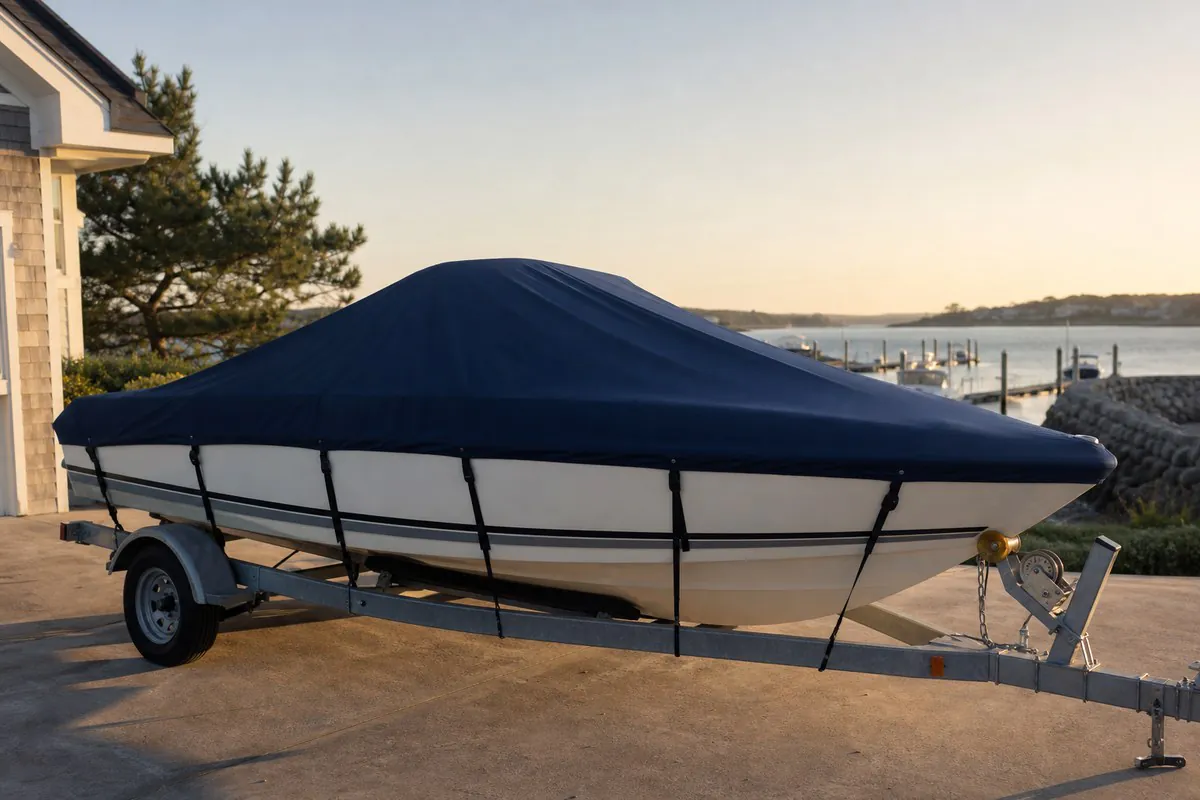
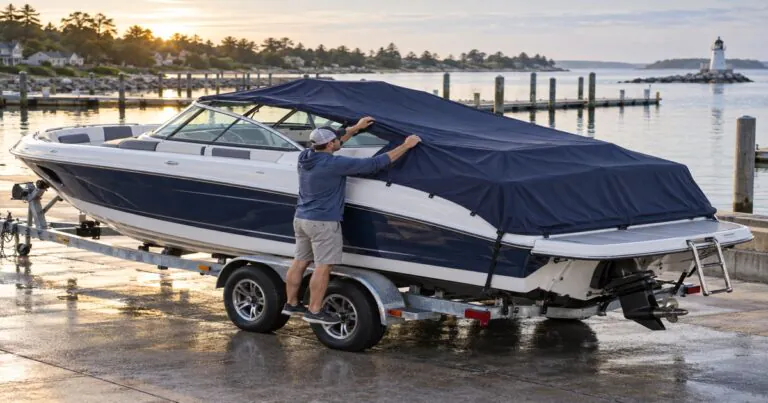
A 20 ft boat cover has to do more than match the number on the registration or brochure. The cover has to clear the bow, windshield, console height, swim platform, stern shape, trailer position, and the spots where wind can get under the hem during towing.
This guide is for US boat owners comparing a 20 foot boat cover for trailering, driveway storage, marina storage, or seasonal layup. It focuses on practical fit checks before you buy, with a soft path to the current Safeboatz Storm Series 20-22 ft cover when that range matches your boat.
Quick answer
For most 20 ft trailerable boats, start by measuring bow-to-stern length and beam, then check the highest fixed point before choosing a cover range. If your boat lands near 20 ft and has normal trailerable proportions, a 20-22 ft cover range may be the safer fit than forcing a shorter cover over the windshield, console, or stern hardware. The cover should sit evenly, tighten without strain, shed water, and leave no loose wind pockets at highway speed.
Why 20 ft boat cover fit is easy to get wrong
Twenty feet sounds specific, but boats in that range vary a lot. A 20 ft bowrider, a deck boat, a center-console layout, and a fishing boat may all need different clearance even when the hull length looks similar on paper.
The two fit problems are usually opposite. A cover that is too short pulls hard at the bow or transom and strains the fabric. A cover that is too loose sags, flaps, and collects water. The right cover range gives you enough room for the boat’s shape without leaving fabric loose around the sides.
- Nominal boat length does not always include platforms, brackets, or swim steps.
- Beam matters because a wide 20 ft boat can use more fabric than a narrow one.
- Tall windshields and consoles change how the cover slopes.
- Trailered boats need tighter control around wind-entry points.
- Storage covers still need support so rain does not pool in the cockpit area.
How to measure for a 20 ft boat cover
Measure the boat the way the cover has to fit, not just the way the boat is listed for sale. Use a tape measure and write down the actual length, beam, and clearance notes before choosing a size.
1. Measure centerline length
Measure from the bow tip to the farthest practical stern point the cover must pass over. If a swim platform, motor bracket, transom detail, or rear rail affects the cover, include that in your decision. If the part can be removed or folded, note that too.
2. Measure beam at the widest point
Beam is the widest part of the boat. A cover that fits a narrow 20 ft hull may sit too high or too tight on a wider deck boat. If your beam is near the upper end of a cover’s range, pay close attention to cockpit height and side coverage.
3. Check height and hard points
Windshields, towers, folded bimini frames, trolling motors, rails, cleats, and consoles all change the way fabric sits. Pad sharp points, fold down what you can, and avoid using strap tension to force the cover over a shape it was not meant to clear.
When a 20-22 ft cover range makes sense
If your measured length is close to 20 ft, a 20-22 ft cover range can give the cover enough room to sit over the boat’s actual shape. That is especially true when the boat has a taller windshield, wider beam, or rear details that make a short cover fight for every inch.
The current Safeboatz live 20-22 ft option is the Storm Series 20-22 ft trailerable boat cover. It is the Safeboatz size range to check for larger trailerable boats in this class. If your boat is smaller or measures under the range after checking length and beam, compare the Storm Series 17-19 ft trailerable boat cover instead.
If you are still choosing between size ranges, use the product pages as a fit check, not a shortcut. The right answer depends on your actual hull length, beam, windshield or console height, and how the boat will be stored or towed.
Trailering checks for a 20 ft boat cover
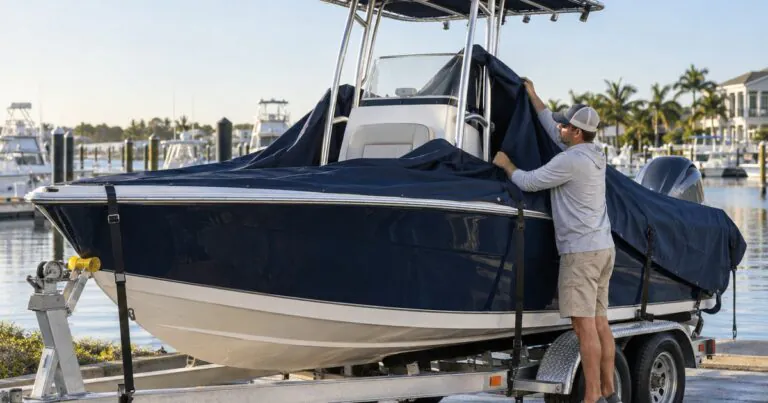
A cover that looks fine in the driveway can behave differently at road speed. Air tries to enter under the bow, around the windshield, along the sides, and near the stern. Once the cover starts lifting, straps and seams take more load.
- Center the cover before tightening any strap.
- Tighten in stages, alternating side to side.
- Keep straps away from tires, sharp trailer edges, hot parts, and moving components.
- Check that the hem sits low enough to reduce wind lift without rubbing the trailer.
- Stop after a short drive and inspect tension again.
For a deeper wind-control checklist, read Boat cover flapping while trailering: how to stop wind lift. If you are comparing fastening systems, see ratchet straps vs magnetic latches for boat covers.
Storage checks: water, airflow, and support
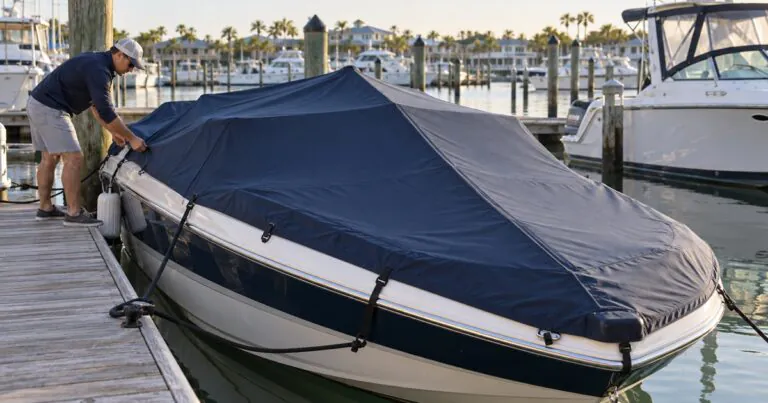
For storage, the cover’s job shifts from road wind to weather and moisture control. The cover should shed rain, avoid deep low spots, and still allow some airflow under the fabric.
On a 20 ft boat, the cockpit area can create a broad flat span. If that span is unsupported, rain can collect and pull the fabric down. Add safe support under the low area and keep the slope gentle enough for water to run off.
- Store the boat clean and dry when possible.
- Remove loose gear that can press into the fabric.
- Pad sharp hardware if it cannot be removed or folded.
- Use a support pole or safe support system where the cover creates a low spot.
- Check vents and airflow paths before leaving the boat for weeks.
Related guides: Boat cover support pole guide, Breathable vs waterproof boat covers, and the waterproof boat cover guide.
Fabric and denier: what matters for a 20 ft cover
Fabric weight matters, but it is not the only decision. Denier tells you about yarn thickness, not the whole cover system. Fit, seam construction, strap layout, support, and care decide whether the cover stays put and sheds water over time.
If you are comparing materials, start with the fabric guide instead of guessing from one number. Safeboatz has a dedicated guide on 900D marine-grade polyester boat covers and a newer comparison of 900D vs 1200D boat cover fabric.
Common mistakes before buying a 20 ft boat cover
- Buying from model length only. Measure the boat and account for shape.
- Ignoring beam. A wide 20 ft boat can outgrow a cover that fits a narrow hull.
- Forgetting the stern. Platforms, brackets, and rear hardware can change the fit.
- Using straps to fix a poor size choice. Straps hold a fitted cover; they should not stretch a wrong cover into place.
- Leaving the cover unsupported. A flat cockpit span can collect water if the cover has no slope.
- Skipping the first tow inspection. Covers settle once road wind hits them.
20 ft boat cover checklist before you buy
- Measured centerline length from bow to the practical stern coverage point.
- Measured beam at the widest point.
- Noted windshield, console, rail, motor, and platform clearance.
- Confirmed whether the boat will be trailered with the cover on.
- Checked how the cover will be supported during rain or winter storage.
- Compared the 20-22 ft range only after checking the actual measurements.
- Planned a short road-check stop after the first tow.
FAQ
What size cover do I need for a 20 ft boat?
Measure the actual centerline length and beam first. If your boat measures close to 20 ft and has normal trailerable proportions, a 20-22 ft cover range may be a better fit than a shorter cover, especially if the boat has a windshield, console, or stern hardware that adds clearance.
Is a 20-22 ft boat cover too large for a 20 ft boat?
Not necessarily. It depends on measured length, beam, and boat shape. A 20 ft boat with wider beam or tall hardware may need the room. A narrow, low-profile boat may not. Check fit before tightening straps hard.
Can I trailer with a 20 ft boat cover on?
Only if the cover is designed and fitted for trailering, the straps are routed safely, and the cover does not flap or lift. After the first short drive, stop and inspect the hem, straps, buckles, and rub points.
Should a 20 ft boat cover be waterproof or breathable?
It should shed rain while still managing moisture under the cover. A cover that blocks water but traps damp air can create storage problems. Support, slope, and ventilation matter as much as fabric claims.
How do I stop water from pooling on a 20 ft boat cover?
Center the cover, balance strap tension, and add safe support under low cockpit areas so rain has a path to run off. Do not solve pooling by overtightening one strap or pulling hard on one corner.
Boating Enthusiasts — Join the Crew!
Free Boat Protection Guide Download Yours Now
Get your free copy of The Complete Boat Protection Guide — expert tips, real-world strategies, and exclusive insights from the Safeboatz team.