 SafeBOT

Bass Boat Covers 17–19 ft: Fit, Trailering & Care Guide
A practical 17–19 ft bass boat cover guide covering measurements, beam, console height, trolling motor clearance, fabric, straps, trailering, storage, and care.

Bass Boat Covers 17–19 ft: Fit, Trailering & Care Guide
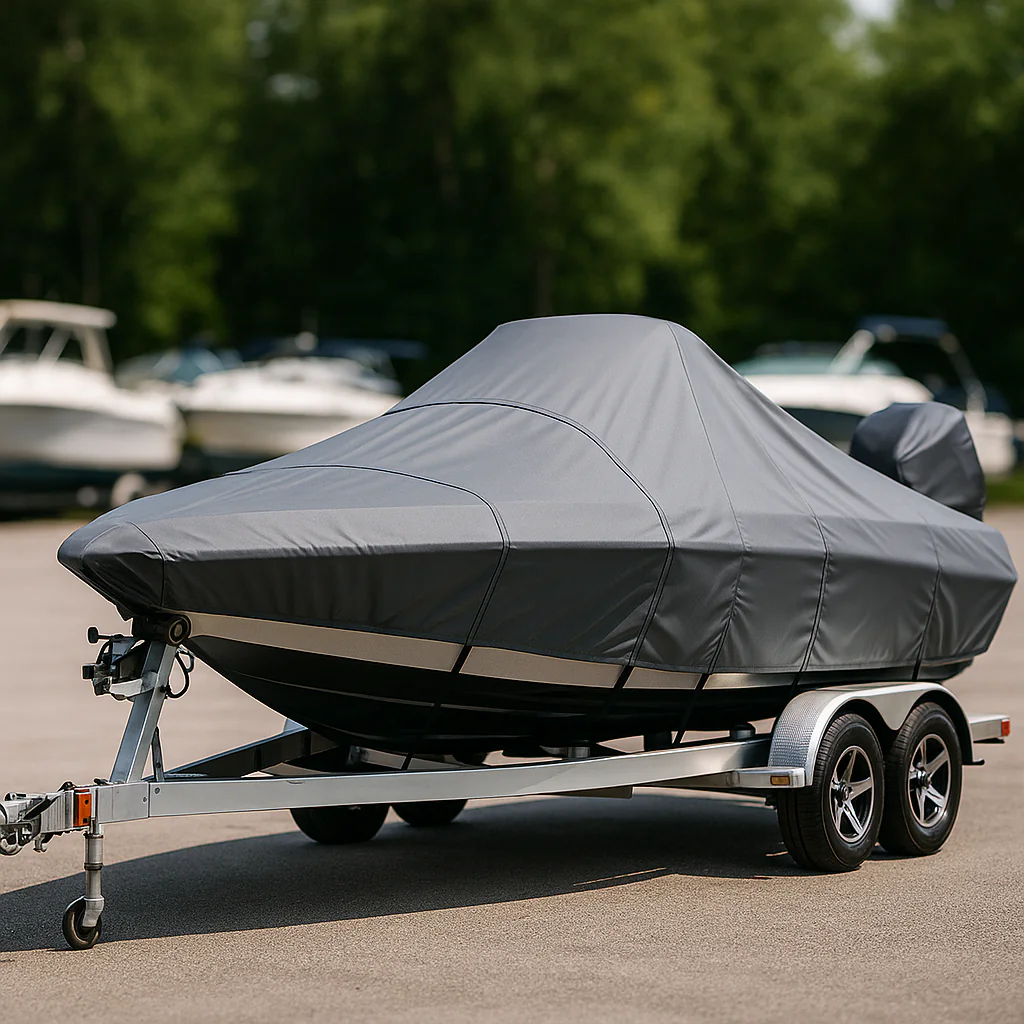
A 17–19 ft bass boat cover should do more than match the length printed on a product page. Bass boats have low profiles, wide beams, trolling motors, consoles, outboards, pedestal seats, and deck hardware that all affect how a cover fits. A cover that is too loose can flap, rub, and pool water. A cover that is too tight can stress seams and hardware.
This guide explains how to choose, install, and care for a 17–19 ft bass boat cover for storage or trailering without relying on vague “universal fit” claims.
Start With the Measurements That Actually Matter
Length matters, but it is only the starting point. Measure the full boat length from the bow tip to the transom, then measure beam at the widest point. Also note the highest fixed points on the boat.
- Overall length: bow tip to transom, including fixed platforms if the cover must cover them.
- Beam: widest point across the hull, not just cockpit width.
- Console and windshield height: important for center-console or side-console layouts.
- Trolling motor position: bow-mounted motors can create high-contact points.
- Outboard position: decide whether the cover includes or stops before the motor.
- Pedestal seats and accessories: remove or lower what you can before covering.
For a step-by-step process, use the Safeboatz measuring guide before ordering.
Why Bass Boats Are Easy to Misfit
Bass boats often sit low but wide. That shape can fool buyers into choosing a cover by length alone. A 17 ft bass boat with a wide beam may need more cover width than a narrow 18 ft utility boat. Raised electronics, trolling motors, windshield angles, and rear deck hardware can also create pressure points.
If a cover bridges over hardware instead of following the boat’s profile, water can collect. If it rubs tightly over a sharp edge, fabric can wear faster. A good fit should sit evenly, allow support where needed, and create a clean path for water to drain away.
Universal, Semi-Custom, or Trailerable?
A universal cover can work for light indoor or short-term protection. For outdoor storage or trailering, a tighter semi-custom or trailerable fit is usually more practical. The right choice depends on how the boat will be used.
- Indoor storage: lighter fabric and simpler straps may be enough.
- Outdoor seasonal storage: prioritize drainage, UV resistance, ventilation, and support poles.
- Trailering: prioritize tight fit, reinforced straps, secure buckles, and low flap.
- Winter storage: prioritize support, moisture control, and periodic inspection.
If your boat is in the 17–19 ft range and you want a more secure trailering-oriented option, compare the Safeboatz 17–19 ft trailerable cover.
Fabric and Construction Checks
Do not judge a bass boat cover only by “waterproof” language. Look at fabric weight, coating quality, stitching, vents, strap hardware, and reinforced stress points. A heavier fabric can help with abrasion, but fit and support still matter.
- Marine-grade polyester or similar fabric suited to your climate.
- Reinforced seams and corners where tension concentrates.
- Strong strap attachment points, not just stitched-on light webbing.
- Ventilation for longer storage periods.
- Support-pole compatibility to reduce water pooling.
- Smooth underside or padding at high-contact points.
For material background, see the Safeboatz guide to 900D marine-grade polyester boat covers.
Trailering Setup: What to Check Before Driving
Trailering puts different stress on a cover than storage. Wind pressure, road vibration, strap movement, and repeated tension changes can expose a poor fit quickly.
- Center the cover before tightening any straps.
- Align bow, windshield/console area, and stern before final tension.
- Route straps away from sharp edges and hot components.
- Tighten gradually and evenly from front to back.
- Check that fabric cannot balloon heavily.
- Stop after a short drive and re-check strap tension.
If the cover shifts during the first short drive, reset it instead of simply overtightening. See the ratchet boat cover guide for tensioning details.
Storage Setup for Rain, Sun, and Winter
For storage, the goal is to shed water, reduce UV exposure, limit dirt and debris, and avoid trapping moisture. A cover that blocks rain but traps damp air can still create mildew or odor problems.
- Use support poles or a frame to prevent low spots.
- Vent the cover for long-term storage.
- Remove leaves and debris before they hold moisture.
- Inspect after storms if the boat is outdoors.
- Dry the interior before covering for the season.
The boat cover ventilation guide and waterproof boat cover guide explain how drainage and airflow work together.
Common Fit Mistakes on 17–19 ft Bass Boats
- Buying by length only and ignoring beam.
- Leaving pedestal seats up under a low-profile cover.
- Ignoring bow-mounted trolling motor height.
- Choosing a storage cover for highway trailering.
- Allowing straps to rub gelcoat or sharp trailer parts.
- Skipping a short-drive tension check after installation.
- Folding and storing the cover while still damp.
Care and Maintenance
Rinse dirt, pollen, and salt residue when needed. Let the cover dry fully before storage. Inspect seams, straps, buckles, vents, and abrasion points at the start and end of each season. Small repairs are easier than replacing a cover after a tear spreads.
Do not use harsh cleaners unless the manufacturer allows them. Avoid dragging the cover across gravel or rough trailer parts. Store it dry and loosely folded in a place where rodents cannot nest in it.
Where Safeboatz Fits
Safeboatz Storm Series covers are built for tighter trailerable protection in common boat-size ranges. If your bass boat falls in the 17–19 ft range, review the 17–19 ft trailerable boat cover. If you are not sure about measurements, download the free boat protection guide before choosing.
FAQ
Is a 17–19 ft bass boat cover the same as a universal boat cover?
Not always. Some universal covers list a 17–19 ft range, but bass boat beam, console height, trolling motor position, and outboard clearance can still make the fit poor.
Should a bass boat cover include the outboard motor?
It depends on the cover design. Some covers include motor coverage, while others stop at the transom. Follow the manufacturer’s sizing instructions and make sure the motor position does not create a stress point.
Can I trailer with a storage cover?
Only if the cover is rated and secured for trailering. A light storage cover may flap, shift, or tear when exposed to road wind and vibration.
How tight should a bass boat cover be?
It should be firm enough to reduce flap and shed water, but not so tight that seams, straps, or hardware are overloaded. Even tension matters more than maximum tension.
How do I prevent water pooling on a bass boat cover?
Use proper support poles or framing, center the cover, maintain even strap tension, and make sure the cover creates drainage angles instead of flat low spots.
Final Take
For a 17–19 ft bass boat, the best cover is the one that matches the boat’s real shape, not just its length. Measure beam and profile, account for accessories, choose fabric and hardware based on storage or trailering, and inspect the fit before leaving the boat outside for weeks.
Related bass boat cover resources
Bass boat cover fit depends on length, beam, deck hardware, trailering tension, and storage conditions. Continue with the Safeboatz bass boat cover guide, 17 ft cover checklist, strap and wind-control guide, and cover ventilation guide.
For neutral boating and weather context, see NOAA/National Weather Service marine weather resources and U.S. Coast Guard boating safety resources.
Boating Enthusiasts — Join the Crew!
Free Boat Protection Guide Download Yours Now
Get your free copy of The Complete Boat Protection Guide — expert tips, real-world strategies, and exclusive insights from the Safeboatz team.