

Heavy Duty Boat Cover Guide: Choose, Fit & Maintain

Heavy Duty Boat Cover: Choose Right, Fit & Maintain
heavy duty boat cover should be the first upgrade you buy if you store, trailer, or moor your boat outdoors. In this guide you’ll learn what a heavy duty boat cover actually protects against, how to measure for an exact fit boat covers solution, and practical steps to install and maintain a cover so it lasts season after season. If you need help measuring before you buy, check this measuring guide and consult local forecasts from the National Weather Service to match material to exposure.
Why a heavy duty boat cover matters
A heavy duty boat cover has a clear purpose: reduce degradation from UV, stop water intrusion, resist wind abrasion, and carry snow load without failing. When you choose between a heavy duty and a standard cover, think of the cover as an insurance policy for finish, electronics, upholstery, and structural fittings. In high-UV regions the right cover slows fading and brittle gelcoat; in snow country it prevents sagging and ice damage; in saltwater slips it reduces corrosion by shedding spray and salt.
Protection goals — UV, water, wind, snow, and abrasion
Start by listing protection goals: block UV, manage water, prevent wind wear, carry snow, and reduce salt abrasion. A true heavy duty boat cover combines a robust fabric face with strengthened seams and purpose-built vents to meet these goals. Use a cover whose specs list UV treatment, a waterproof coating or laminate, and reinforced tie points. For salt exposure, rinse the cover periodically; for high-wind areas, focus on secure attachment points and anti-chafe patches. A practical checklist for priorities follows:
- UV resistance: look for long-lasting UV treatment
- Water control: laminated for waterproof or coated breathable for moisture management
- Wind security: reinforced grommets and transom straps
When to choose heavy duty vs standard covers
Choose a heavy duty boat cover when your exposure level is medium to high: trailering frequently, year-round outdoor storage, exposed marina slips, or northern winters. Standard covers are fine for protected, short-term storage or indoor slips. Use this quick decision checklist: evaluate exposure (low/medium/high), travel frequency, and storage type. For example, a 20–24′ center console left outdoors in Wisconsin needs a travel-rated, reinforced cover; a small pontoon in a Florida slip benefits from UV-focused, breathable protection.
Common materials and what they actually protect against
Fabric choice determines performance. Heavy duty boat cover fabrics fall into categories: high-denier coated polyester for abrasion and tear resistance, laminated polyethylene for near-total waterproofing, and breathable coated fabrics for moisture control. Each has trade-offs: laminated poly blocks water but traps humidity; breathable coated fabrics let moisture escape but may be less abrasion-resistant. Match material to conditions and remember that good construction multiplies any fabric’s benefits.
Real-world use cases (trailering, long-term storage, marina slip)
Examples help: Scenario A, a trailered bass boat used year-round, requires a travel-rated heavy duty boat cover with reinforced transom straps and vents. Scenario B, a sailboat in a marina, needs UV-resistant deck and cockpit protection plus breathable vents to avoid mildew. Scenario C, a stored cruiser in northern winter, benefits from support bows and laminated rain channels to prevent pooling. These real situations show why one cover type doesn’t fit all.
- Quick decision checklist: exposure, travel, storage, budget
- Example scenarios: trailered bass boat, sailboat slip, winter storage cruiser
- Common mistakes: buying by brand alone, confusing waterproof with breathable
How to choose the right heavy duty boat cover
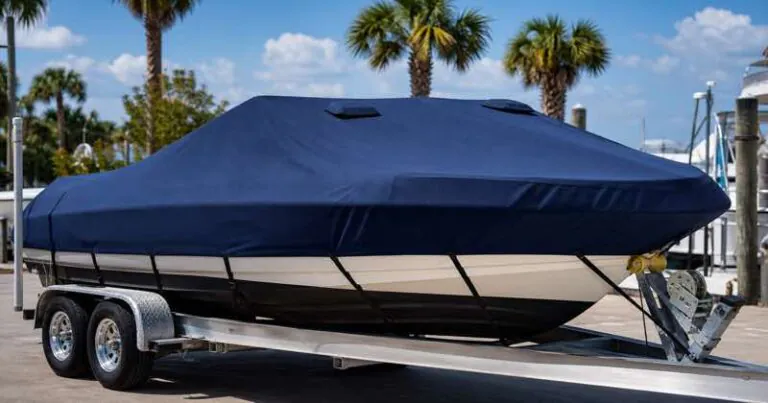
Choosing the right heavy duty boat cover starts with accurate measurements and ends with confirming hardware and warranty. Measure overall length, beam at the widest point, and maximum height including windshield or tower. Allow for fabric shrinkage and any accessories like biminis. Match each measurement to manufacturer sizing charts. If you want a nearly exact fit boat covers result, a custom or model-based cover will outperform one-size-fits-most designs.
Measuring your boat and choosing fit: custom vs universal
Measure LOA, beam, and highest point. Use a straight tape for LOA and a second tape for beam. If you plan to trailer, measure clearance from hull to trailer hardware. Universal covers are cheaper but may leave gaps at rails or over bulkheads; custom or model-specific covers provide the tight fit that prevents flapping and pooling. Before purchase, confirm return policy and the manufacturer’s fitting notes.
- Measure LOA, beam, height
- Allow for accessories and shrinkage
- Choose custom if precision matters
Fabric comparison: 1200D polyester, laminated polyethylene, mesh, and coated fabrics
Material trade-offs are critical. 1200D polyester offers abrasion resistance and tear strength, useful for trailerable boats. Laminated polyethylene is highly waterproof; it’s great where total water exclusion is needed but can trap moisture. Coated breathable fabrics strike a balance and reduce internal condensation. Use material callouts like 1200D, 12×14 mesh, and UV-treated when comparing products.
Key construction features: seams, reinforced corners, grommets, vents
Construction matters as much as fabric. Insist on double-stitched seams, reinforced corners, grommets spaced for strap distribution, and dedicated vents to manage humidity. Also check for UV-stable thread and chafe patches where straps cross rails. These details extend service life dramatically.
Ratings and specs to check: denier, waterproof rating, UV treatment, warranty
Scan specs for denier value, waterproof coatings or laminate, and explicit UV lifetime claims. Warranty length is a strong indicator of manufacturer confidence; register your purchase and keep photos to simplify potential claims. For more winter-specific guidance, consult the Boat Covers 20-22ft article for model-based fit examples.
- Pre-purchase checklist: accurate measurements, intended use, color choice
- Spec callouts: 1200D, 12×14 mesh, reinforced corners
- Common mistakes: ignoring grommet spacing, overvaluing lowest price
Installing and securing for storage and trailering
Installation goals differ for storage versus trailer travel. For storage you want minimal flapping and no water pooling; for trailering the focus is highway safety and anti-chafe protection. A properly installed heavy duty boat cover reduces wear and keeps the boat clean. Use supports for snow, route straps to avoid sharp edges, and perform a short test drive after tensioning.
Step-by-step installation for storage (boats on stands and slips)
Storage installation starts with a clean, dry boat. Drape the cover aligned to bow and stern, secure bow and stern straps, then mid-ship cinches. Install vents and support bars to avoid pooling. For trailers stored outside, add transom and keel straps to keep the cover tight. Follow these steps exactly:
- Clean and dry the boat surface
- Drape and align cover, secure bow and stern
- Add mid-ship tie-downs and support bars
Step-by-step installation for trailering and highway travel
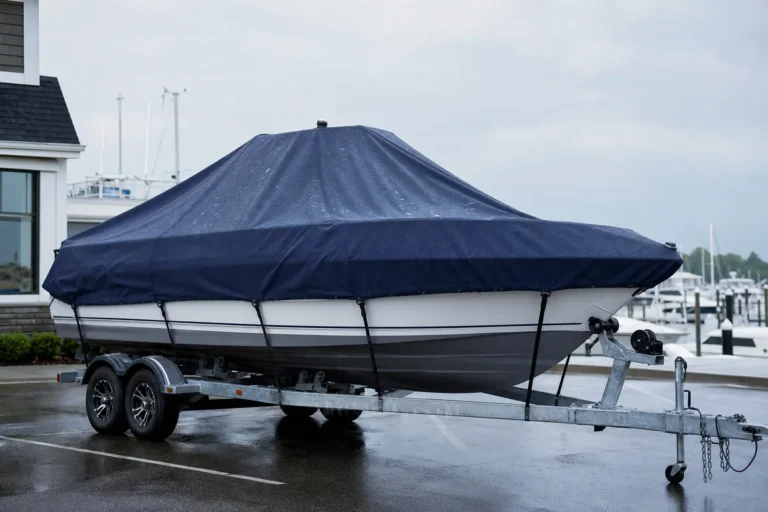
For trailering use a travel-rated kit or reinforcement. Tighten stern and transom straps securely but avoid over-tension. Route straps to bypass winch and trailer mechanisms. Use anti-chafe sleeves where straps cross rails or trailer parts. After setup, do a short test drive and re-check tension and grommets.
Hardware and strap systems: best practices and anti-chafe solutions
Choose cam buckles for easy release, ratchets for higher tension on long trips, and quick-release buckles for frequent access. Add sacrificial polyethylene underlay at sharp corners and use chafe sleeves where straps meet metal. Keep spare grommets and a small strap kit in the trailer for on-the-road fixes.
How to protect against snow/sag and wind damage (supports, tie points)
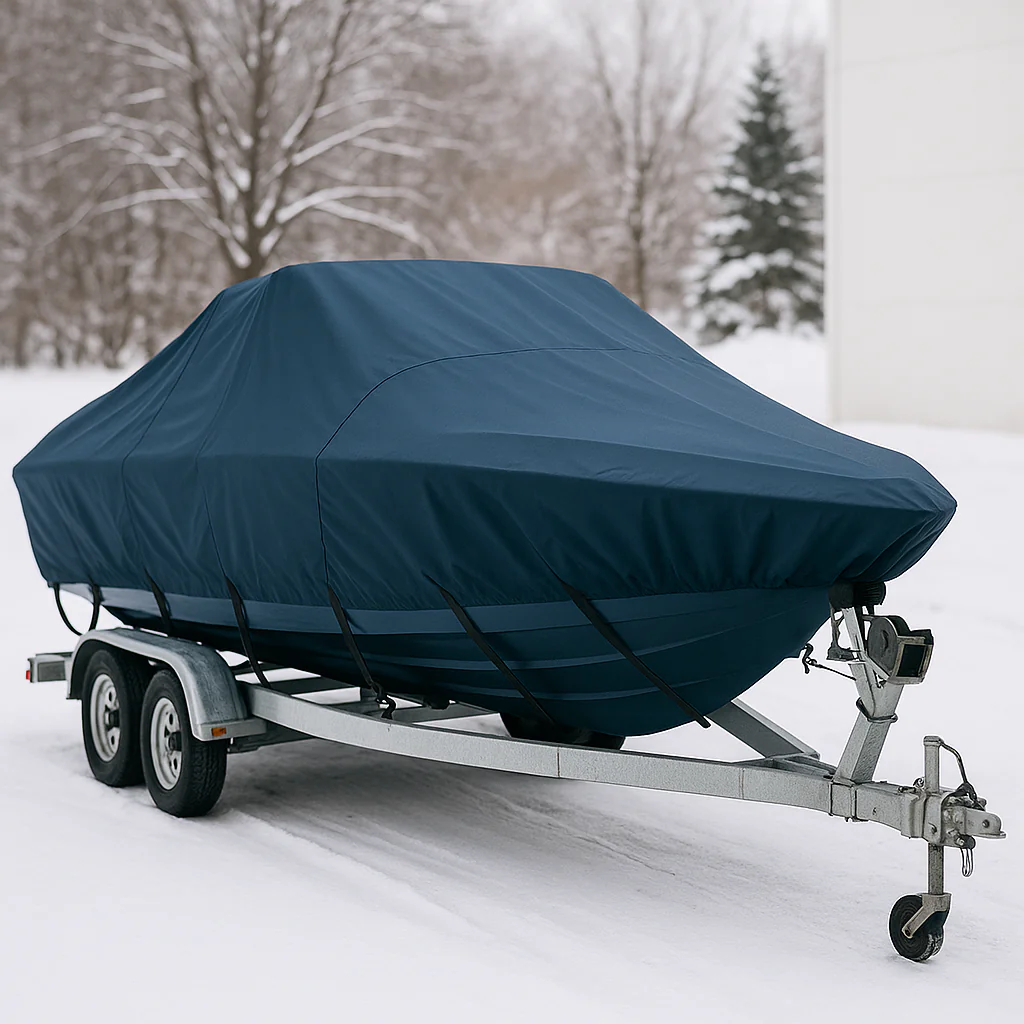
Prevent snow sag with inflatable tubes, PVC support bows, or rigid crossbars. Ensure you have multiple tie points so loads distribute across grommets rather than stressing a single seam. In windy areas, add extra midship cinches and anchor points to prevent flapping that abrades fabric.
- Hardware checklist: cam buckles, ratchets, anti-chafe sleeves
- Pro tips: mark strap routing with colored tape, perform test drive
Pro advice: inspect straps, grommets, and seam lines annually; small issues are easier and cheaper to fix early.
Care, repair, and lifespan — maximize return on investment
Care extends the life of a heavy duty boat cover dramatically. Rinse salt, remove debris, and always air-dry before folding. Use recommended cleaners and avoid bleach or harsh solvents. Keep a repair kit on hand: fabric-specific adhesive patches, UV-resistant seam sealer, spare grommets, and marine-grade thread. Document repairs and keep purchase receipts to preserve warranty coverage.
Cleaning, drying, and winterizing the cover
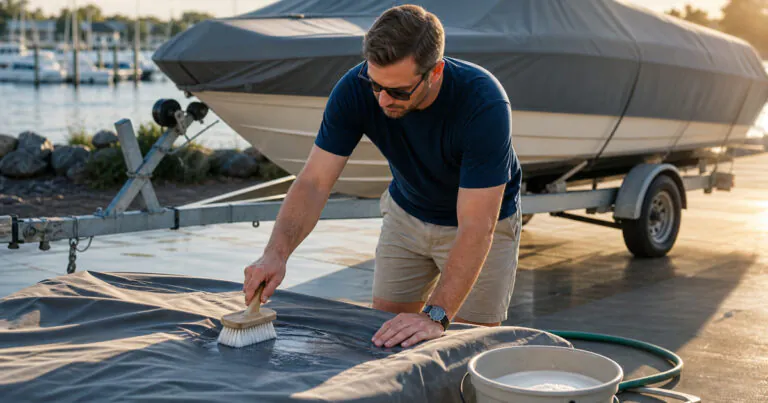
Clean with mild soap and a soft brush, rinse thoroughly, and hang to fully dry. For winter storage, add support bows and route straps to prevent pooling. Folding should be loose to avoid creases that trap moisture. Proper cleaning reduces mildew risk and maintains coatings.
Small repairs and patching techniques that last
Tackle small tears immediately. For a 6″ tear on a high-denier fabric, clean the area, apply an internal patch with marine adhesive, stitch the perimeter with UV-stable thread, and seal with seam sealer. Small repairs save the cover and delay costly replacements.
When to replace — ROI, diminishing protection, and warranty claims
Replace when more than one seam fails, fabric has >30% worn areas, or repairs become frequent. Consider warranty periods: longer warranties often reflect better materials and construction. Keep photos and proof of maintenance to support any claim under warranty; also review the manufacturer’s warranty details before purchase.
Storing the cover off-season and prolonging fabric life
Store in a cool, dry place in a breathable bag. Avoid folding a damp cover and do not store near solvents or heat sources. Periodic re-treatment with UV fabric protectants can extend lifespan in harsh climates.
- Cleaning checklist: mild soap, soft brush, rinse, air dry
- Repair kit: patches, seam sealer, spare grommets
- Storage steps: clean dry, fold loosely, store cool
Key takeaway: small repairs now protect your ROI later — treat the cover like any other piece of marine safety gear.
Conclusion
Choosing and caring for a heavy duty boat cover reduces maintenance, prevents damage, and saves money over time. Final decision steps: measure carefully, match material to exposure, verify travel capability, and register warranty information. For waterproof details and material choices consult resources on waterproof covers and regional climate data from NOAA. If you use straps and hardware, follow safety guidance from the CPSC and test your setup with a short drive before every long trip; also review model-specific trailerable options when buying. Measure, choose, install, and maintain — and your cover will protect your boat for seasons to come.
Frequently Asked Questions
What is the best thickness boat cover?
The best thickness is generally between 900D and 1200D for year-round outdoor protection because it balances weight, durability, and weather resistance. If you store your boat outdoors in harsh climates or expect heavy abrasion, choose a thicker cover; if you trail your boat frequently or store indoors, a lighter cover will be easier to handle. Look at fabric type, coatings, seam construction, and vents in addition to denier rating to judge performance. Practically, measure your boat for a snug fit, add straps to prevent flapping, and clean the cover periodically to extend its life.
What does 1200D mean on a boat cover?
1200D means the fabric is rated at 1200 denier, indicating a heavier yarn and typically greater abrasion resistance and longevity. It doesn’t directly measure thickness but tells you the fiber weight: higher D values normally translate to stronger, more durable fabric. A 1200D cover often includes stronger coatings, reinforced seams, and better waterproofing and UV resistance, making it suitable for long-term outdoor storage or harsher environments. For practical use, pair a 1200D cover with proper tie-downs and vents to prevent moisture buildup and flapping that can cause wear.
What is the difference between 600D and 1200D boat cover?
The difference is primarily fabric weight and durability: 1200D is heavier and more resistant to abrasion, punctures, and UV than 600D. A 600D cover is lighter, easier to install, and often less expensive, making it a good choice for indoor storage or occasional use. In contrast, 1200D suits year-round outdoor storage, rough trailers, or coastal exposure. You’ll also notice differences in coatings, seam strength, and expected lifespan. Practically, choose 600D for ease of handling and lighter climates, and 1200D when you need maximum protection and can manage the extra weight and bulk.
What is a 900D boat cover?
A 900D boat cover is a mid-weight protective cover made from fabric rated at 900 denier, offering a balance of strength and manageability. It provides better durability and UV protection than lighter options like 600D while remaining easier to handle than 1200D, making it a versatile choice for many owners. You’ll find 900D covers work well for year-round storage in moderate climates or for owners who want reliable protection without the bulk of heavy-duty materials. For best results, ensure proper fit, use straps and vents, and maintain the cover to prevent mildew and wear.
Boating Enthusiasts — Join the Crew!
Free Boat Protection Guide Download Yours Now
Get your free copy of The Complete Boat Protection Guide — expert tips, real-world strategies, and exclusive insights from the Safeboatz team.

SafeBOT