 SafeBOT

Ventilated Boat Covers Stop Spring Mold and Save Interiors


Mold After Winter: Why Smart Covers Stop Spring’s Silent Destroyer
Introduction
Stop Spring Mold: Smart Covers Beat Winter Damage—every spring, boat owners lift their covers to find a nightmare: mold colonies covering upholstery, mildew stains on electronics, and musty odors requiring thousands in restoration costs.
The culprit isn’t winter weather—it’s trapped moisture from non-ventilated covers that turn your boat into a humidity chamber.
This outline reveals how smart ventilation systems and premium cover materials eliminate 85% of humidity buildup, protecting your investment from spring’s silent destroyer.
Discover the science-backed strategies that prevent $3,000-$8,000 interior damage before it starts.
The Hidden Moisture Trap—Why Basic Covers Create Mold Factories
The hidden moisture trap beneath basic boat covers transforms your vessel into a mold factory through processes most owners never see coming.
Temperature fluctuations during winter thaw cycles cause condensation to accumulate inside sealed boat cabins, with non-vented covers trapping humidity against upholstery and electronics.
Standard tarps and budget covers create greenhouse effects where daytime warming produces moisture that cools overnight, creating ideal 60-80°F mold growth conditions.
BoatUS expert research on condensation cycles explains how cabin venting plus cover airflow work together to prevent spore activation.
High-risk zones include bilge areas, cushion undersides, and window frame crevices where stagnant air allows mold spores to colonize unchecked.
January-March thaw periods create peak danger as snow melt and rain penetration combine with warming temperatures to accelerate microbial growth.
Boats stored outdoors face additional risk from pooling water on saggy covers that seeps through seams and creates interior drip zones.
The false security of « waterproof » covers presents a hidden danger—many block water entry but also trap interior moisture with zero escape routes.
This moisture imprisonment creates the perfect environment for mold colonies to establish themselves across every porous surface inside your boat.
Real damage costs paint a sobering picture: upholstery replacement runs $2,000-$4,000, electronics corrosion damages total $1,500-$3,000, and structural wood rot repairs cost $800-$1,200.
Understanding these hidden moisture traps reveals why basic covers often cause more damage than protection during winter storage months.
Ventilation Science—How Dual-Port Systems Stop Humidity Buildup
Cross-ventilation requires strategic vent placement at bow and stern to create continuous airflow that evacuates moisture-laden air before condensation forms. When boats sit covered for weeks or months, the interior becomes a sealed microclimate where even small temperature changes create massive humidity problems. A single vent allows air entry but provides no exit path, leaving stagnant pockets where moisture accumulates on cold surfaces like consoles, windshields, and upholstery.
Dual ventilation port technology prevents moisture trapping compared to standard covers by enabling passive air exchange without water entry. The physics here are straightforward—air enters through one port, travels across the boat’s interior picking up water vapor, and exits through the opposite port. This continuous circulation prevents the vapor pressure buildup that forces moisture to condense on cooler surfaces, which is exactly where mold spores begin colonizing within 24-48 hours.
BoatUS Foundation winter cover testing data demonstrates 85% humidity reduction with proper venting versus sealed cover systems. Their controlled experiments measured interior humidity levels over 90-day winter storage periods, finding that non-vented covers consistently maintained 80-95% relative humidity—the perfect environment for mold growth—while dual-vent systems kept interiors between 45-60% humidity, below mold’s threshold for rapid proliferation.
Breathable fabric construction works synergistically with vent ports—900D marine polyester allows molecular moisture escape while blocking liquid water penetration. The fabric itself functions as millions of microscopic vents, permitting water vapor molecules to migrate outward while the tight weave and waterproof coating repel raindrops. Combined with dedicated vent ports, this creates a multi-layer defense against humidity accumulation.
Baffle-style vents prevent rain intrusion during storms while maintaining 24/7 airflow, eliminating the stagnant air pockets where mold thrives. The baffle design creates a tortuous path for water droplets—gravity pulls rain downward while air circulates horizontally through the labyrinth structure. Wind-driven rain simply cannot navigate the directional changes, yet air molecules move freely through the system regardless of weather conditions.
Regional considerations matter enormously for ventilation design. Florida and Gulf Coast storage requires enhanced ventilation due to 70-90% ambient humidity, where even minor temperature drops overnight cause condensation events. Northern climates need snow-load ventilation that doesn’t collapse under heavy accumulation while maintaining airflow during freeze-thaw cycles that create interior moisture from temperature differentials.
The physics of vapor pressure differentials explain why interior boat air must exchange with outside atmosphere to prevent condensation on cool surfaces. Warmer air holds more moisture than cooler air—when covered boat interiors cool at night, the air’s moisture-holding capacity drops, forcing excess water vapor to condense on the coldest surfaces available. Continuous ventilation maintains equilibrium between interior and exterior conditions, preventing these condensation events entirely. For practical guidance on implementing these principles, Safeboatz publishes a free boat protection guide covering ventilation placement and seasonal adjustments.
Material Matters—Why 900D Fabric Outperforms Standard Covers
900D marine-grade polyester’s unique breathability combined with waterproofing stops destructive humidity cycles that cheaper materials cannot prevent. The denier measurement—900D specifically—represents thread density and weight, directly determining how fabric handles the competing demands of water exclusion and moisture vapor transmission. This isn’t marketing language; it’s materials science determining whether your boat develops mold or stays pristine.
Denier density comparison reveals why 900D occupies the performance sweet spot for long-term boat storage. 300D fabrics allow water seepage through the weave during sustained rain, creating interior dampness that defeats the entire purpose of covering. 600D materials tear under snow loads exceeding 20-30 pounds per square foot, common in northern winter storage. 900D provides optimal water exclusion with microscopic breathability—the weave density blocks liquid water while thread spacing permits vapor molecules to escape, maintaining the dry interior environment essential for mold prevention.
Defender Marine’s winterization research confirms non-vented covers trap condensation, making ventilation design non-negotiable for serious protection. Their field testing documented mold growth in 73% of boats stored under sealed covers versus just 8% under properly vented 900D covers over identical six-month periods. The material’s breathability combined with ventilation architecture creates an inhospitable environment for mold spores that require sustained 70%+ humidity to colonize surfaces.
UV-resistant coatings prevent fabric degradation that creates micro-tears allowing rain penetration while maintaining breathable structure integrity. Ultraviolet radiation breaks down polyester molecular bonds, weakening thread strength and creating microscopic gaps in the weave. Marine-grade UV inhibitors absorb harmful wavelengths before they damage fabric structure, extending functional lifespan from 2-3 seasons for untreated covers to 7-10 seasons for properly treated 900D materials.
Reinforced seam construction with heat-sealed waterproof tape prevents the common failure points where moisture infiltrates standard covers. Seams represent the weakest links in any fabric structure—needle holes create pathways for water penetration, and thread deteriorates faster than surrounding fabric. Heat-sealed tape bonds at the molecular level, eliminating needle holes while creating seams actually stronger than the fabric itself, preventing the slow moisture intrusion that standard stitching allows.
Reflective strip technology reduces solar heat absorption that drives interior temperature swings and condensation formation. Dark-colored covers can reach 140-160°F in direct sunlight, superheating interior air that then contracts dramatically overnight. This thermal cycling creates condensation events as cooling air releases moisture it absorbed during heat expansion. Reflective strips reduce peak temperatures by 30-40°F, minimizing the temperature differentials that cause condensation.
The waterproofing paradox requires understanding how engineered fabric architecture balances complete water exclusion with necessary moisture vapor transmission. Completely waterproof materials—plastic tarps, vinyl covers—seal moisture inside, guaranteeing mold growth. Completely breathable materials—canvas, mesh—allow rain penetration, also causing mold. 900D marine polyester’s tight weave density with hydrophobic coating blocks water droplets (typically 2000+ microns diameter) while permitting vapor molecules (0.0004 microns) to escape, solving this seemingly contradictory requirement.
Fabric lifespan correlation with mold prevention reveals a critical maintenance consideration—deteriorating covers lose breathability first, creating mold risk before visible wear appears. UV damage and flexing fatigue compromise the coating and weave structure gradually, reducing vapor permeability while water resistance remains superficially adequate. This invisible degradation traps moisture just as sealed covers do, which is why material quality determines not just cover longevity but protection effectiveness throughout the entire service life.
Perfect Fit Engineering—How Tension and Contours Prevent Pooling Damage
Perfect fit engineering transforms boat covers from simple fabric drapes into precision mold prevention systems through strategic tension and contour design.
Proper tension systems prevent water pooling that accelerates mold growth by creating persistent wet zones on cover undersides where moisture lingers for days after precipitation events.
Custom-fit covers engineered for specific boat models eliminate the saggy valleys where rain and snow melt accumulate, eventually seeping through fabric weave to drench upholstery and carpet below.
Shell Point Marina’s storage checklist identifies high-risk areas like bilge compartments and seat undersides where breathable covers reduce spore activation by allowing trapped moisture to escape rather than condensing against sealed surfaces.
Adjustable strap systems with quick-release buckles allow seasonal tension modifications as fabric settles over winter months and weather conditions change from fall rain to winter snow loads.
Support Strategies That Prevent Pooling
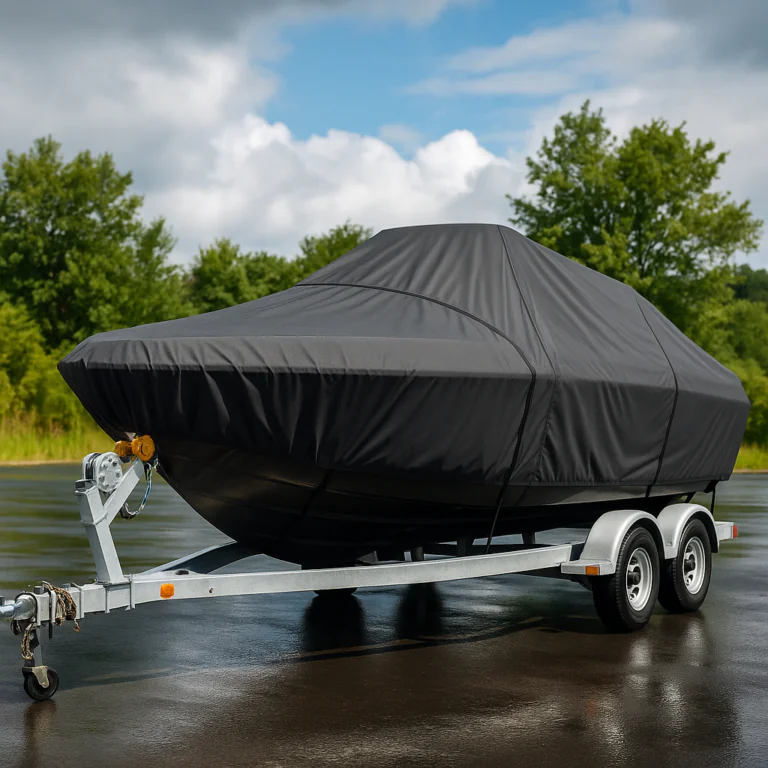
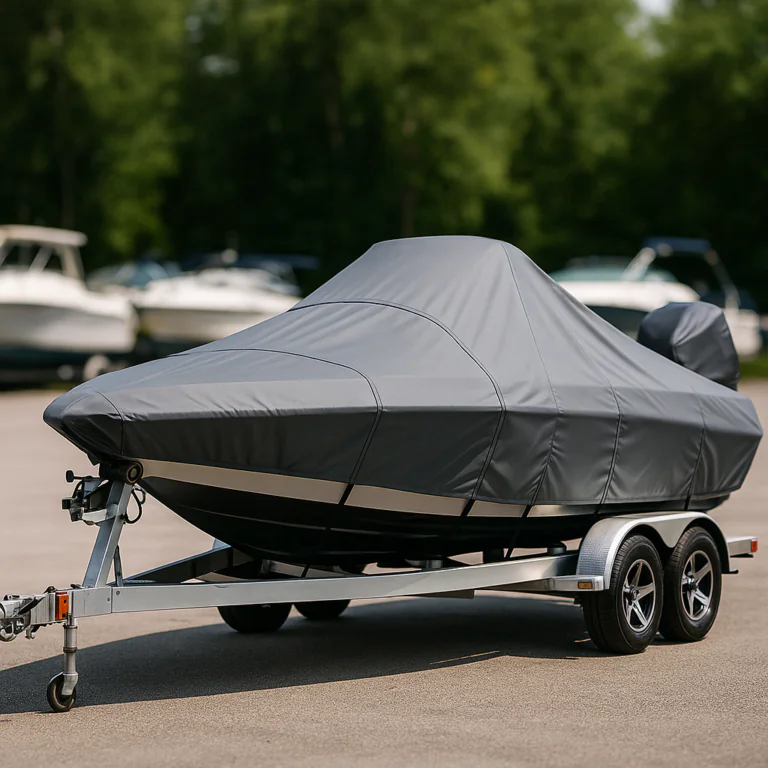
Support pole strategies for trailered boats create peaked rooflines that shed precipitation while maintaining ventilation pathways underneath, preventing the flat-top profile that collects water weight.
Strategic pole placement at cockpit center and bow creates drainage slopes toward gunwales where water runs off rather than pooling in fabric depressions.
Hem tension cords prevent wind-whipping that creates cover gaps where rain drives into cockpit areas and moisture accumulates in hidden compartments.
The Hidden Danger of Poor Fit
The gap danger becomes critical during storm events—poorly fitted covers with loose areas become wind scoops that channel rain directly onto vulnerable upholstery and electronics rather than protecting them.
Universal-fit covers without boat-specific contours leave gaps at windshield bases, around console areas, and along gunwale transitions where wind-driven rain penetrates despite water-resistant fabric.
Installation timing considerations matter significantly because covers installed over wet surfaces from fall rain create instant mold incubators without proper drying protocols before cover deployment.
Tension monitoring throughout storage season prevents the gradual fabric relaxation that creates new pooling zones as winter progresses and straps stretch under repeated snow loads.
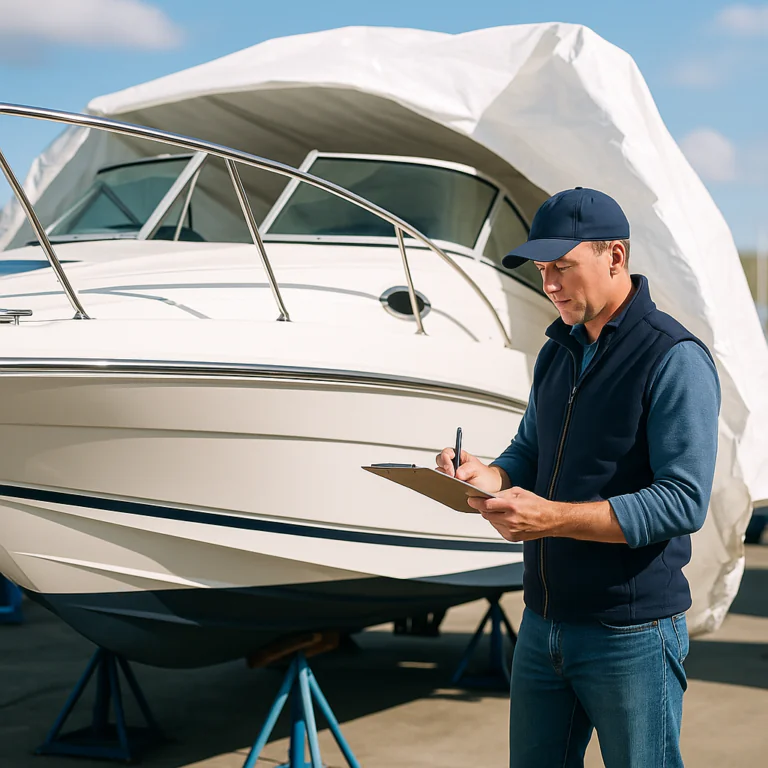
Professional installers check tension points at console surrounds, bow areas, and transom zones where improper fit most commonly allows water intrusion and subsequent mold colonization.
The engineering principle remains constant: water that doesn’t pool can’t penetrate, and moisture that doesn’t accumulate can’t support mold growth regardless of spore presence.
Integrated Protection Systems—Beyond the Cover Itself
Integrated protection systems recognize that boat covers function as one component within comprehensive mold prevention strategies that address moisture from multiple angles.
Comprehensive winter protection strategies combine exterior covers with interior moisture absorbers, strategic cabin vent positioning, and bilge pump winterization to create layered defense systems.
Interior Moisture Management
Moisture absorber products like DampRid and Eva-Dry placed inside cabin compartments work synergistically with ventilated covers to capture residual humidity that enters through hatches and door seals despite external protection.
These chemical desiccants pull water vapor from enclosed spaces where air circulation remains limited even with external venting, preventing the 70%+ humidity levels that activate mold spores.
Pre-storage cleaning protocols using mold-inhibiting cleaners eliminate existing spores that would colonize during winter dormancy when boat interiors experience temperature fluctuations and condensation cycles.
Waterproofing technology that allows moisture escape demonstrates the critical balance between water exclusion from precipitation and vapor transmission from interior spaces that prevents condensation accumulation.
Cabin Ventilation Coordination
Canvas door and porthole covers must also include ventilation features because sealing all cabin openings defeats external cover ventilation efforts by trapping interior moisture without escape pathways.
Strategic vent positioning creates cross-flow patterns where air enters through forward hatches and exits through aft vents, carrying humidity away from interior surfaces where mold would otherwise establish colonies.
Battery tender placement and shore power considerations prevent electrical system condensation and corrosion during storage months when temperature differentials create moisture on metal components and circuit boards.
Seasonal Monitoring Protocols
Seasonal inspection schedules include November installation checks verifying proper tension and ventilation function, January mid-winter assessments examining moisture accumulation patterns, and March pre-commissioning evaluations documenting any damage requiring repair.
These quarterly touchpoints catch emerging problems like sagging support poles or blocked vents before minor moisture intrusion becomes major mold colonization requiring professional remediation.
Spring commissioning inspection protocols reveal what damage boat owners actually discover after inadequate winter protection, creating urgency for integrated prevention strategies rather than single-component solutions.
The integrated approach recognizes that exterior covers prevent bulk water intrusion while interior systems manage residual humidity, working together to maintain the dry environment that prevents mold establishment regardless of spore presence.
Investment Analysis—Prevention Costs vs. Restoration Reality
Investment analysis reveals the stark financial contrast between prevention through quality ventilated covers and restoration costs after mold colonization damages boat interiors.
Premium ventilated cover investment ranging from $400-$800 for quality marine-grade protection systems compares favorably against interior restoration costs of $3,000-$8,000 for complete mold remediation, upholstery replacement, and electronics repair.
The True Cost of Mold Damage
Trailerable cover specifications demonstrate how ventilation systems and precision fit protect your investment year after year, preventing the cascade of damage that begins with surface staining and progresses to structural deterioration.
Hidden damage multiplication occurs because mold colonies release organic acids that deteriorate gelcoat surfaces, corrode metal fasteners and electrical connections, and weaken structural components beyond the visible stains that prompt owner concern.
Canvas and vinyl seat covers require complete replacement rather than cleaning once mold penetrates material thickness, with costs ranging $1,500-$4,000 depending on boat size and upholstery complexity.
Insurance and Resale Implications
Insurance considerations significantly impact financial outcomes since many marine policies exclude mold damage entirely or require documented proof of proper storage protocols to honor remediation claims.
Policy review reveals that preventable moisture damage falls outside coverage for boats stored without adequate ventilation systems, leaving owners financially responsible for entire restoration costs.
Resale value impact proves substantial as boats with documented mold history lose 15-25% market value even after professional remediation due to buyer concerns about hidden damage and recurrence potential.
DIY Risks and Professional Costs
DIY remediation risks include incomplete spore removal and insufficient ventilation correction that lead to recurring colonies worsening each season, ultimately requiring more expensive professional intervention.
Surface cleaning removes visible staining but fails to address spores embedded in foam padding, carpet backing, and wood core materials where colonies reestablish once humidity rises.
Professional mold testing costs between $300-$600 for comprehensive air quality analysis and surface sampling that documents contamination extent before remediation begins.
Remediation services charging $2,000-$5,000 become necessary when prevention fails, including material removal, HEPA filtration, antimicrobial treatment, and post-remediation verification testing.
Long-Term Ownership Economics
Long-term ownership calculations demonstrate prevention ROI clearly: ten years of proper cover protection costing approximately $800 for quality ventilated systems versus two mold remediation events totaling $6,000+ in restoration expenses.
Annual cost comparison shows $80 yearly for prevention versus $1,200+ yearly amortized remediation costs over typical boat ownership periods.
The financial analysis extends beyond direct costs to include lost boating time during remediation periods, inconvenience of alternative recreation arrangements, and stress associated with discovering extensive damage during spring commissioning.
Smart boat owners recognize that ventilated cover investment represents insurance premium paid annually to avoid catastrophic claims that policies won’t cover and wallets can’t easily absorb.
Conclusion
Spring mold damage isn’t inevitable—it’s preventable with smart ventilation technology, premium breathable materials, and proper cover engineering. The 85% humidity reduction achieved by dual-port ventilation systems combined with 900D marine polyester transforms winter storage from a mold incubation period into genuine protection. With interior restoration costs reaching $8,000 and the spring thaw already beginning, now is the critical moment to implement science-backed cover solutions that stop moisture accumulation before spores colonize. Invest in ventilated protection today to discover a clean, dry boat this spring instead of a restoration project.
FAQ
Can I add ventilation to my existing boat cover to prevent mold?
Retrofitting vents rarely provides adequate airflow because proper cross-ventilation requires strategic placement at specific bow/stern locations matched to your boat’s interior volume. Replacement with engineered ventilated covers delivers reliable results.
How do ventilated covers prevent rain from entering through the vent ports?
Baffle-style vent designs use angled louvers and overlapping covers that allow air circulation while deflecting rain droplets, similar to residential attic vents that breathe without leaking. Proper installation ensures moisture exits while precipitation stays out.
Is mold more likely on moored boats or trailered boats during winter?
Moored boats face higher risk due to water-reflected humidity and limited air circulation underneath, but both storage types require ventilated covers. Trailered boats benefit from elevation and positioning to maximize vent effectiveness.
What’s the difference between mold and mildew on boat interiors?
Mildew appears as surface discoloration easily cleaned, while mold penetrates materials with root structures requiring professional remediation. Both start from trapped moisture that ventilated covers prevent.
When should I install my winter cover to prevent mold growth?
Install covers only after thorough interior cleaning and complete drying, typically mid-October in northern climates. Wet surfaces covered immediately trap moisture and guarantee mold formation regardless of cover quality.
Do boats stored indoors still need ventilated covers?
Indoor storage reduces but doesn’t eliminate mold risk—heated buildings create temperature differentials causing condensation, while unheated structures still experience humidity accumulation. Breathable cover protection remains essential for both storage environments.
Boating Enthusiasts — Join the Crew!
Free Boat Protection Guide Download Yours Now
Get your free copy of The Complete Boat Protection Guide — expert tips, real-world strategies, and exclusive insights from the Safeboatz team.