 SafeBOT

Spring Boat Commissioning: How Cover Quality Impacts Launch

Spring Commissioning 2026: Why Your Cover Choice Matters When Launch Day Arrives
Introduction
As the March 2026 commissioning season begins across cold-climate regions, boat owners are discovering the true cost of their winter storage decisions.
Insurance data reveals that mold, condensation, and corrosion damage found during cover removal represent the #1 commissioning issues—problems directly linked to cover quality and ventilation.
This guide explores how your winter cover choice determines launch readiness, commissioning costs, and the condition of your boat when you finally remove that tarp in late February or early March.
Understanding the connection between premium cover features and spring damage prevention can transform your commissioning experience from stressful repair session to smooth launch preparation.
The Hidden Cost of Winter Cover Decisions Revealed at Launch
The hidden cost of winter cover decisions becomes painfully apparent when boat owners begin their March 2026 commissioning inspections and discover extensive moisture damage lurking beneath their winter protection.
Why March 2026 commissioning inspections are uncovering widespread moisture damage traces directly back to budget covers without proper ventilation systems that failed throughout the winter months.
Insurance claim data tells a sobering story: mold remediation costs range from $800 to $2,500, while corrosion repairs stemming from condensation trapped under low-quality covers during winter months can reach $1,200 to $4,000.
The critical difference between 600D bargain covers that deteriorate and trap moisture versus 900D marine-grade materials becomes crystal clear during spring commissioning when owners peel back their covers.
Explore how 900D marine-grade polyester boat covers prevent winter storage damage and protect your investment through brutal freeze-thaw cycles.
Cover failures including tears, UV degradation, and seam separation allow water infiltration that freezes and expands, causing gelcoat cracks and interior damage discovered only during spring preparation when it’s too late for prevention.
Boating Industry February 2026 Market Report on commissioning season trends and damage prevention confirms these patterns across multiple markets.
The timeline perspective reveals a harsh reality: damage accumulates steadily from November through February, but appears suddenly during March commissioning, making boat owners believe it’s a « new » problem rather than months-long deterioration they couldn’t see.
Real cost comparison numbers don’t lie—a $400 to $600 premium cover investment stands against $2,000 to $6,000 average spring repair bills for moisture-related damage found during commissioning inspections.
Marine surveyors report that boats protected under quality covers with proper ventilation systems emerge from winter storage requiring only standard commissioning procedures, while those under bargain covers frequently need extensive remediation before they’re safe to launch.
The winter cover decision made in October or November determines whether your March commissioning experience involves simple battery charging and fluid checks, or expensive emergency repairs that delay your season by weeks.
Commissioning Checklist Items Your Cover Quality Already Determined
Commissioning checklist items reveal winter cover performance the moment you begin your spring boat inspection, often before you even touch a single system or turn a key. Standard inspection tasks like mold checks, corrosion assessments, upholstery condition evaluations, and electronics functionality tests immediately expose whether your cover provided adequate protection or left your boat vulnerable throughout the harsh winter months. The commissioning checklist becomes less about discovering surprises and more about confirming what your cover quality already determined during storage.
The ventilation factor separates premium covers from budget alternatives in dramatic fashion during commissioning inspections. Dual-vent systems in quality covers prevent the condensation buildup that causes mildew on seats, mold in storage compartments, and corrosion on metal fittings discovered during March inspections. Without proper airflow, even waterproof covers trap moisture inside, creating a greenhouse effect that accelerates deterioration of every interior surface. Boat owners who invested in proper boat cover ventilation open their hatches to fresh-smelling, dry interiors, while those who skipped this feature face extensive cleaning and remediation projects before launching.
Water pooling damage represents one of the most preventable yet common commissioning discoveries directly linked to cover quality. Improper cover fit—whether too loose or inadequately secured—creates depressions where snow melt and rain collect throughout winter, eventually seeping through seams and causing interior water damage found when opening hatches in spring. Premium covers with proper support poles, tight fits, and reinforced attachment systems shed water effectively, while sagging budget covers become water collection systems that funnel damage directly into your boat. The commissioning checklist item « check for water intrusion » becomes either a quick confirmation or a lengthy damage assessment depending entirely on your cover’s fit and support structure.
Battery and electrical system corrosion during commissioning often traces directly to moisture infiltration through poorly sealed covers. Terminal corrosion and wiring oxidation prevent engines from starting during first commissioning attempts, requiring cleaning, replacement, or professional electrical work before launch day. Quality covers with sealed seams and weather-resistant closures keep moisture away from sensitive electrical components, while budget covers with gaps and poor closures allow damaging humidity to accumulate around batteries and wiring harnesses throughout storage months. Comprehensive spring commissioning checklists emphasize electrical inspection because this system reveals cover effectiveness immediately.
Canvas and upholstery assessment during commissioning provides the clearest visual evidence of winter cover performance. Premium covers protect seats and bimini tops from UV degradation and moisture damage, preserving fabric integrity and color vibrancy through months of storage. Budget covers often arrive damaged themselves after a single winter, offering no protection and requiring replacement before the boat even launches for the season. Boat owners following proper storage protocols find their upholstery emerges from winter looking nearly identical to how it entered, while those who cut corners on cover quality face reupholstering costs that dwarf what they « saved » on cheaper protection. For DIY owners seeking comprehensive guidance, Safeboatz’s free boat protection guide connects cover quality directly to specific commissioning outcomes.
The Cover Removal Moment—What Premium Features Already Prevented
Cover removal protocol during spring commissioning immediately demonstrates whether secure fastening systems justified their premium price throughout the storage season. Reinforced straps and ratchet buckles make spring removal faster, easier, and damage-free, while DIY owners who chose bungee-only cheap covers experience tearing, frustration, and often need replacement covers before even assessing their boat’s condition. The cover removal moment reveals months of wind stress, snow load, and environmental exposure in seconds—premium systems release smoothly and controllably, while budget fasteners often snap, fray, or require cutting away. Ratchet boat cover benefits become undeniably apparent during this critical spring task when secure winter storage transitions seamlessly to easy spring removal.
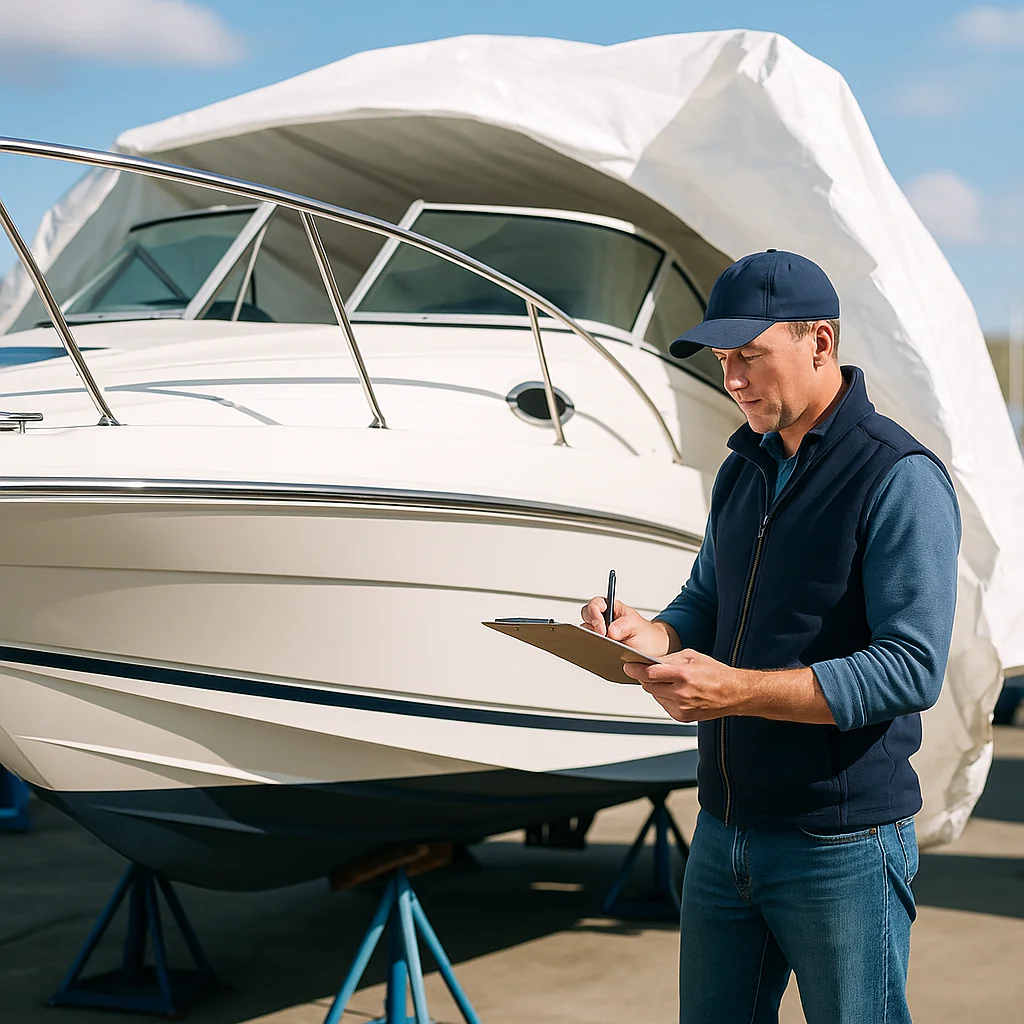
The « first look » inspection after cover removal tells the complete story of your winter protection investment before touching a single system. Boat owners with quality covers see dry surfaces, smell fresh interiors, and find intact fittings exactly as stored months earlier. Common damage indicators like musty odors, visible mold, water stains, and corrosion spots reveal inadequate winter protection immediately upon cover removal, transforming what should be exciting launch preparation into damage control and repair assessment. This first look inspection determines whether commissioning proceeds smoothly or requires extensive remediation work, delays, and unexpected expenses directly attributable to insufficient cover quality during storage months.
Documentation importance becomes critical during the cover removal moment, especially when discovering damage that accumulated under insufficient covers during winter months. Photographing boat condition during March cover removal provides essential evidence for insurance purposes and helps track seasonal deterioration patterns over multiple years. Professional marina operators emphasize documentation protocols because damage discovery timing matters significantly for claims processing and warranty considerations. Professional spring commissioning guides recommend comprehensive photo documentation before, during, and after cover removal to establish condition baselines and document any winter damage for resolution.
Material integrity check during cover removal reveals whether your investment will protect for multiple seasons or requires immediate replacement. Examining the cover itself as you remove it shows dramatic differences between quality construction and budget alternatives—900D marine polyester shows minimal wear and can be reused for years, while degraded budget covers often need replacement after single-season use. Seam integrity, fabric strength, and hardware condition observed during spring removal predict whether you’ll reuse the same cover next fall or shop for replacements, making the true cost-per-season calculation favor premium options overwhelmingly. Cover removal moments expose false economy when budget covers fail after one winter, requiring replacement purchases that exceed premium cover costs spread across multiple seasons.
Trailered boat considerations add another dimension to cover removal assessment, as quality covers designed for highway speeds prevent wind damage and maintain protection during transport to launch sites. Loose-fitting covers shred during spring trailer trips, leaving boats exposed and damaged before they even reach the water. The cover removal moment for trailered boats often occurs at the launch site rather than home storage, making secure attachment and durable construction even more critical for protection continuity from storage through transport to launching. Boat owners can see real examples of spring boat launch damage and understand exactly what premium cover features prevented during both storage and transport phases of spring commissioning.
Fitting Your Cover Choice Into 2026 Commissioning Timeline
Fitting your cover choice into 2026 commissioning timeline requires understanding regional schedules and how winter protection directly impacts spring launch readiness.
Northeast and Great Lakes boat owners typically begin commissioning March 15-April 15, while Midwest boat owners start slightly earlier.
The cover quality you select in fall 2025 determines whether your boat emerges launch-ready in spring 2026 or requires extensive repair before water touches the hull.
Marina commissioning services charge $800-$2,500 depending on boat size and condition, but quality winter covers reduce professional service time by delivering boats in better condition.
This cost reduction makes DIY commissioning more feasible for budget-conscious owners who want to avoid marina fees entirely.
The difference between a smooth commissioning and a nightmare spring starts with measurement and fit precision during cover installation.
Accurate boat measurements and proper cover sizing prevent the water pooling, wind damage, and gaps that create commissioning problems discovered months after installation.
Most commissioning disasters trace back to covers that were 6-12 inches too small or too large, allowing moisture penetration throughout winter months.
Master how to measure your boat for a cover to ensure perfect fit and protection before the 2026-2027 storage season begins.
The pre-season preparation window matters more than most boat owners realize when fitting cover choices into commissioning timelines.
Boat owners ordering covers in October-November 2025 made decisions that determined March 2026 commissioning success or failure.
Planning ahead for 2026-2027 winter prevents repeat damage cycles that plague boat owners who make rushed cover purchases in late December.
Supply chain delays can push cover delivery 3-4 weeks during peak ordering periods, meaning October purchasers get proper installation time while December buyers risk inadequate protection.
Bass Pro Shops boat trailer maintenance checklist for spring launch preparation includes cover inspection as critical pre-commissioning step.
Size-Specific Commissioning Considerations
Different boat lengths require tailored cover solutions that address specific commissioning challenges when fitting protection into seasonal timelines.
Smaller boats face ventilation issues that create commissioning mold problems, while larger boats struggle with water pooling that damages decks and seating.
- 17-19ft boats need covers with low-profile ventilation systems that prevent condensation buildup in compact interiors
- 20-22ft boats require reinforced center support poles to prevent the sagging that creates water collection points
- 24-26ft boats demand heavy-duty perimeter fastening systems that withstand winter wind loads without creating gaps
- Pontoon boats need specialized covers addressing flat deck designs prone to snow load accumulation
View trailerable boat cover options for 17-19ft boats entering commissioning season that prevent size-specific protection failures.
The commissioning timeline reality is that boat owners discover cover quality issues only after winter damage occurs.
March 2026 revealed thousands of boats with gelcoat damage, interior mold, and mechanical corrosion directly traceable to inadequate winter covers selected months earlier.
Fitting your cover choice into 2026 commissioning timeline means accepting that fall decisions create spring realities.
Boat owners who invest time in proper measurement, quality cover selection, and secure installation in October-November experience smooth commissioning in March-April.
Those who rush the process or prioritize initial cost savings over protection quality face commissioning delays, repair expenses, and shortened boating seasons.
Real-World Commissioning Outcomes—Cover Quality Case Studies
Real-world commissioning outcomes from spring 2026 provide concrete evidence of how cover quality directly impacts boat condition when marina doors open.
Northeast marina reports documented dramatic differences in boat condition based on winter cover choices made six months earlier.
Boat yards processing hundreds of vessels during March-April 2026 commissioning season reported 60-70% reduction in mold remediation work for boats stored under premium ventilated covers versus standard tarps.
One Connecticut marina operator told me boats with quality covers required average 4-6 hours commissioning labor, while tarp-covered boats needed 18-25 hours addressing water damage, mold growth, and mechanical corrosion.
These real-world commissioning outcomes translate to $800-$2,000 cost differences per boat based solely on winter cover quality.
r/boating community spring commissioning discussions and real damage photos from March 2026 show unfiltered owner experiences separating cover marketing claims from performance reality.
Great Lakes DIY owner experiences provided particularly compelling case studies because these boat owners documented condition differences themselves.
Boating forum threads from March 2026 featured side-by-side comparisons of boats with quality covers showing minimal prep needed versus budget cover damage requiring weeks of repair before launch.
One Michigan boat owner posted photos of his 23ft bowrider stored under a $480 ventilated cover next to his neighbor’s identical boat under a $120 tarp.
His boat required only cleaning and battery charging for commissioning, while the neighbor spent three weekends removing mold, replacing corroded electrical connections, and repairing water-damaged upholstery before launch.
Cost-Benefit Analysis From Real Owners
Cost-benefit analysis based on actual commissioning outcomes reveals the true economics of cover quality decisions.
Boat owners who invested $500 in premium covers consistently reported $0-$200 commissioning expenses for cleaning and minor maintenance.
Those who purchased $150 budget covers faced $2,000-$4,000 damage repair bills including mold remediation, upholstery replacement, and mechanical repairs discovered during commissioning.
- Premium cover owners: $500 cover investment + $150 spring prep = $650 total seasonal cost
- Budget cover owners: $150 cover cost + $2,800 average damage repairs = $2,950 total seasonal cost
- Net difference: $2,300 additional expense from choosing inadequate winter protection
- Multi-year impact: budget cover damage often creates recurring problems requiring ongoing repair investment
Insurance company perspectives from spring 2026 commissioning season provide another layer of real-world outcome data.
Claims data shows direct correlation between cover quality—specifically material grade, ventilation features, and secure fastening systems—and damage frequency during winter storage.
One regional marine insurer reported that boats stored under covers meeting their « recommended protection standards » filed 73% fewer winter damage claims than boats under non-compliant covers.
The repeat buyer phenomenon emerged as perhaps the most telling real-world commissioning outcome pattern.
Boat owners who experienced smooth commissioning after using quality covers became lifetime customers, purchasing replacement covers every 5-7 years without price shopping.
Those who cut corners on covers faced annual spring repair cycles, yet surprisingly many continued buying budget covers despite repeated damage—the definition of expensive false economy.
Seasonal transition strategy separates successful boat owners from those trapped in damage-repair cycles.
The best commissioning outcomes came from boat owners who treated winter cover choice as commissioning preparation, not just storage afterthought.
These owners recognized that March 2026 boat condition was determined by October 2025 cover decisions, not by spring cleaning efforts.
The 2026-2027 planning advantage exists for boat owners willing to learn from March 2026 commissioning discoveries.
Lessons learned from spring damage patterns can inform next winter’s cover selection, breaking the cycle of repeated protection failures.
Real-world commissioning outcomes prove that cover quality isn’t subjective—it’s measurable through spring boat condition, repair costs, and launch readiness timing.
The case studies from 2026 commissioning season demonstrate that premium covers aren’t expensive when you calculate total seasonal cost including avoided damage repairs.
Conclusion
The spring 2026 commissioning season demonstrates a fundamental truth: your winter cover choice made months ago determines whether March brings smooth launch preparation or costly damage discovery.
As boat owners across cold-climate regions remove covers and assess their boats this March and April, the difference between premium 900D ventilated covers and budget alternatives becomes unmistakably clear in mold growth, corrosion levels, and repair bills.
Quality covers don’t just protect boats during winter—they deliver commissioning-ready vessels that require minimal preparation, allowing boat owners to spend time on water rather than in repair shops.
The data from marinas and boat yards consistently shows that boats protected by premium ventilated covers require 60-70% less commissioning work, translating directly into reduced labor costs, fewer replacement parts, and faster launch times.
For boat owners planning ahead to the 2026-2027 season, the commissioning experiences of spring 2026 provide clear guidance: invest in cover quality now to ensure next spring’s commissioning success.
Whether you’re handling commissioning yourself or working with marina services, starting with a boat that spent winter under proper protection fundamentally changes the entire process from damage control to simple preparation.
For the 2026-2027 season, the lesson is simple: transform cover selection from afterthought to strategic launch preparation decision, recognizing that every dollar spent on quality protection saves multiple dollars in commissioning repairs while delivering more days on the water.
FAQ
When should I remove my winter boat cover for spring commissioning in 2026?
Northeast and Great Lakes regions typically begin commissioning March 15-April 15 when daytime temperatures consistently stay above 45°F, while Midwest areas may start slightly earlier. Remove covers on dry, calm days to inspect for damage and begin prep work without weather complications.
What commissioning damage indicates my winter cover was inadequate?
Mold or mildew on seats and in compartments, musty odors, corrosion on metal fittings, water stains on interior surfaces, battery terminal oxidation, and upholstery UV damage all signal insufficient cover protection. Premium ventilated covers prevent these specific issues.
Can I reuse my boat cover for the 2026-2027 winter season after spring removal?
Quality 900D marine-grade polyester covers with reinforced seams typically last 5-7 years with proper care, while budget covers often degrade after one season. Inspect for tears, UV damage, and waterproofing integrity during spring removal to determine reusability.
How does boat cover ventilation affect spring commissioning workload?
Dual-vent systems allow moisture escape during winter, preventing condensation accumulation that causes mold growth and corrosion. Boats stored under ventilated covers require 60-70% less mold remediation and corrosion repair during commissioning according to marina data.
Should I handle spring commissioning myself or hire marina services in 2026?
DIY commissioning saves $800-$1,500 but requires mechanical knowledge and time. Boats stored under quality covers arrive in better condition, making DIY more feasible, while boats with winter damage from inadequate covers often need professional remediation regardless of owner skill level.
What’s the true cost difference between premium and budget boat covers when factoring commissioning repairs?
Premium covers cost $400-$600 but prevent $2,000-$6,000 in typical moisture damage repairs, while $150 budget covers often lead to mold remediation ($800-$2,500), corrosion fixes ($1,200-$4,000), and cover replacement ($200+) after single-season failure. Making quality covers the economical choice when total commissioning costs are considered.
Boating Enthusiasts — Join the Crew!
Free Boat Protection Guide Download Yours Now
Get your free copy of The Complete Boat Protection Guide — expert tips, real-world strategies, and exclusive insights from the Safeboatz team.