 SafeBOT

Best Boat Cover for Winter: Ultimate Guide and Picks

Best Boat Cover for Winter: Ultimate Guide and Picks
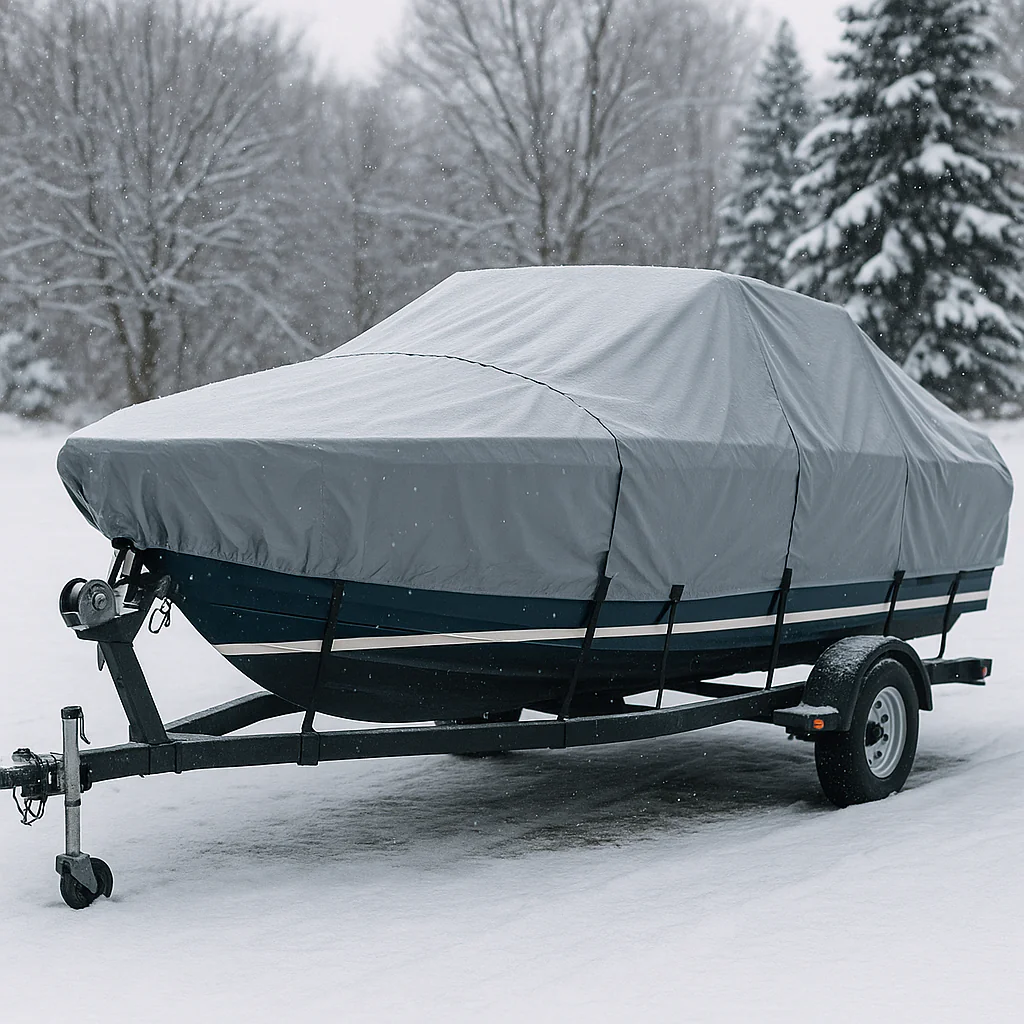
best boat cover for winter should be your first consideration when temperatures drop, snow starts, and storms roll through—this guide explains why and how to choose the right solution for your boat. In this article you’ll learn practical measurement steps, material trade-offs, fit and ventilation essentials, and clear installation routines so you avoid common winter storage mistakes. You’ll also find examples for sailboats, powerboats, trailered craft, and indoor storage scenarios, plus links to official weather and safety guidance to help you plan.
Why winter boat covers matter
Winter brings unique risks and choosing the best boat cover for winter protects paint, electronics, upholstery, and the structural components that are costly to repair. Snow and ice apply weight and freeze-thaw cycles that damage seams and gel coat. Rain and standing water cause mold, mildew, and trapped moisture. UV exposure in winter sun still fades finishes and weakens fabrics over time. Consider local climate, wind exposure, and whether you’ll store indoors or outdoors before buying a cover.
Protect against snow, ice, rain, and UV
Heavy duty winter boat covers are engineered to shed snow and block water while resisting UV degradation. Look for fabrics with a robust waterproof coating, reinforced seams, and a design that encourages runoff. A quality cover reduces the chance of pooled water and the abrasion caused by flapping fabric during windstorms. For regional planning, check current forecasts and historical trends via NOAA weather resources to size your protection to local winter severity.
Extend boat life and resale value
Consistent protection from the elements preserves gel coat, cabinetry, and electronics. A well-chosen cover lowers the risk of mold, reduces repainting needs, and keeps mechanical systems drier through freezing months. When it’s time to sell, a boat with intact surfaces and less interior moisture damage shows better and commands higher offers. Use a checklist: measure your boat, choose fabric with adequate waterproof and UV properties, and verify hardware and warranty before purchase.
Common winter storage risks and climate considerations
Decide if your storage is indoor, covered, or exposed. Indoor storage reduces the need for ultra-heavy fabrics but still benefits from ventilation to prevent condensation. For exposed sites, prioritize wind resistance and snow load shedding. To understand regional hazards and make an informed choice, consult official boating safety advice from USCG resources.
- Checklist: assess local winter conditions, choose indoor vs outdoor storage, measure accurately, pick fabric with UV and waterproof ratings
- Quick tip: plan mounting points and slope before you buy
- Common error: skipping ventilation
How to choose the best boat cover for winter
Selecting the best boat cover for winter is a balance of fit, material, and ventilation. A tight fit stops flapping and rubbing; the right fabric prevents water ingress while allowing trapped moisture to escape; vents and drainage provide condensation control. Consider warranty length and accessory quality—good grommets, buckles, and straps reduce replacement cycles and real-world hassles.
Get the right size: measurement steps
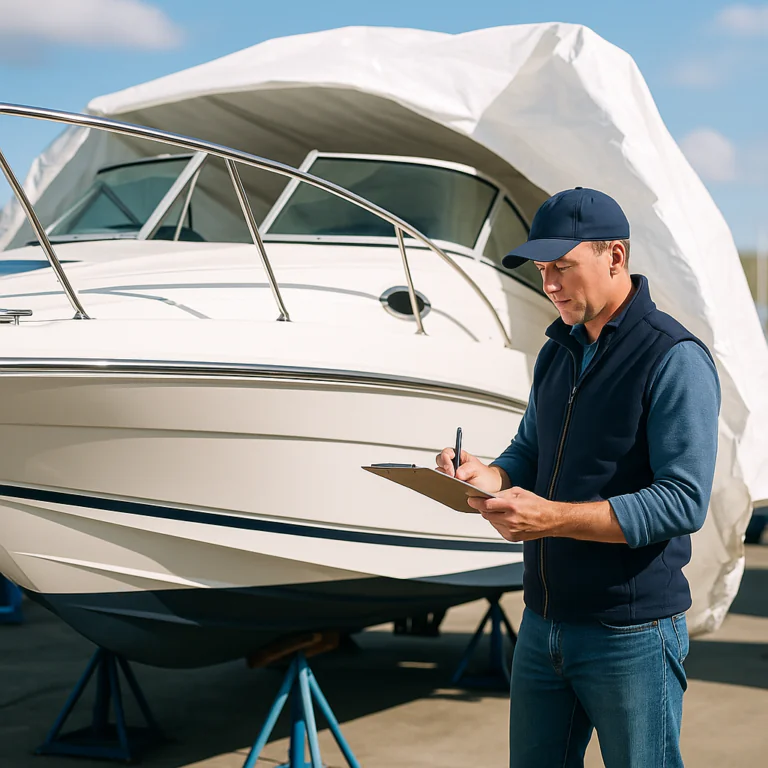
Accurate dimensions are essential. Measure overall length from bow tip to transom, beam width at the widest point, and height including any T-tops or antennas. If you trailer regularly, measure with the trailer tongue and any frame additions in place. For detailed instructions and diagrams, review the measuring guide at measuring guide. Use an inch tape that locks and record three measurements for redundancy.
- Record overall length from bow to stern.
- Measure beam at the widest point and height at the highest fixture.
- Note locations of antennas, outriggers, and other protrusions.
Material options and durability
Materials range from lightweight breathable fabrics to heavy-duty PVC-coated textiles. Heavy Duty Waterproof Boat Cover fabrics are typically polyester with a PU or PVC coating. Breathable options reduce condensation but may not be fully waterproof in wind-driven rain. Compare tensile strength, denier rating, seam construction, and UV inhibitors. For many owners, a marine-grade 900D polyester with reinforced seams is the sweet spot for winter use.
- Polyester laminates: good UV resistance and durability
- PVC-coated textiles: excellent waterproofing, heavier
- Breathable fabrics: reduce condensation but may need a tighter fit
Fit, ventilation, and drainage features
Fit is about preventing sag and ensuring water runs off, not just covering. Look for heavy elastic hems, ratchet straps, and support bows for centers of large decks. Ventilation should include two vents on opposite sides to create airflow; duplex vents are preferred. Drainage features like tailored peaks encourage runoff. Avoid covers that trap water in pockets—test for slope and drainage before closing up for winter.
Accessories, hardware, and warranties
Good hardware makes daily use tolerable. Expect reinforced grommets, corrosion-resistant buckles, and straps that resist UV brittleness. Extended warranties indicate manufacturer confidence and lower long-term costs. Before you buy, compare warranty terms and consider spare parts or reinforcement kits for high-wear areas. For broader cover selection advice, see the general boat covers guide.
- Check warranty length and exclusions.
- Confirm hardware materials and replaceability.
Types of winter covers and ideal use cases
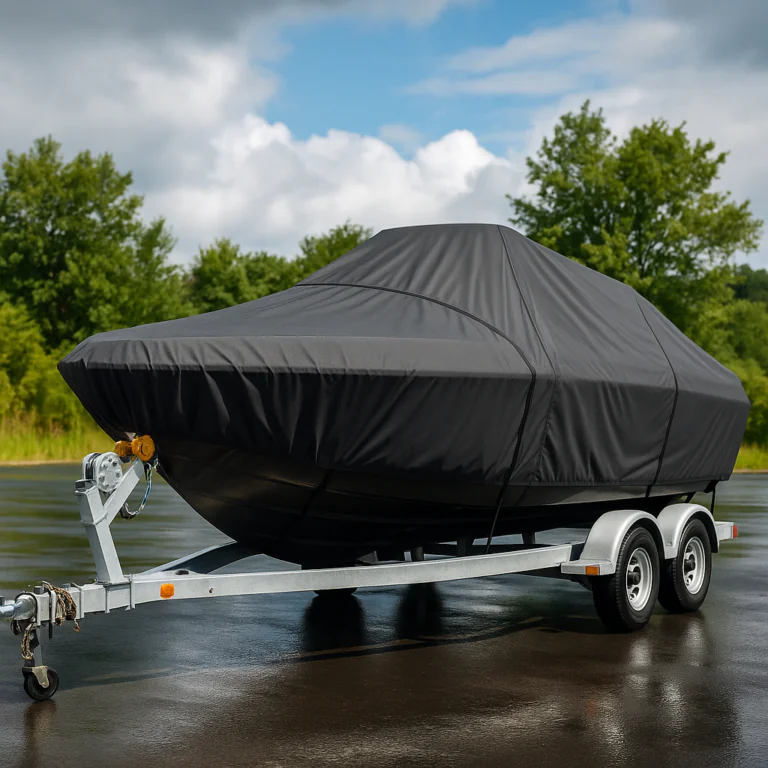
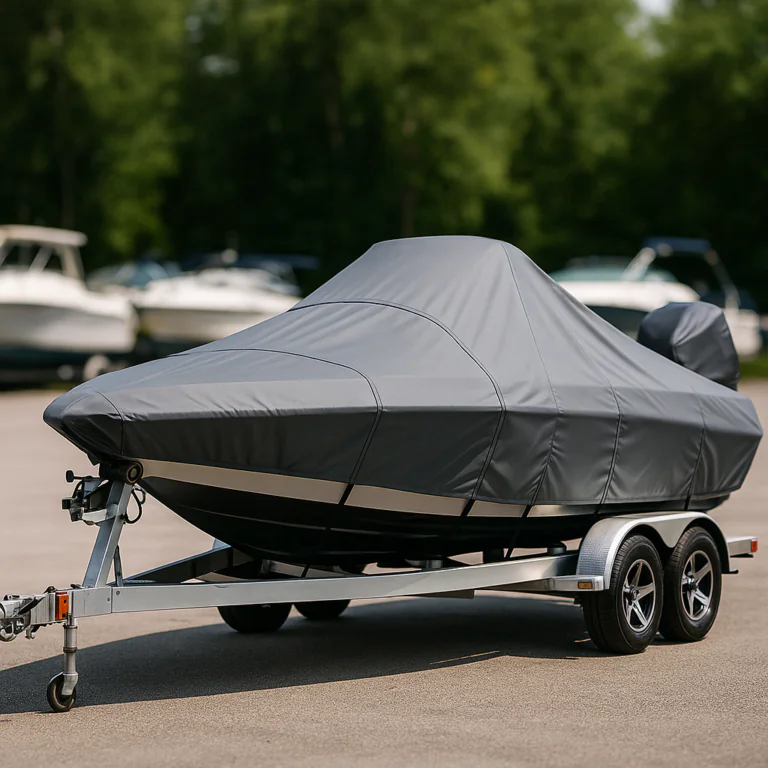
There are three common approaches: custom-made, semi-custom, and universal covers. Each has trade-offs between cost, fit, and protection. Match the type to your budget, storage method, and how extreme your winter weather gets. For trailered boats exposed to road and winter storms, choose a cover rated for travel and heavy snow shedding.
Custom-made vs semi-custom vs universal
Custom-made covers deliver the best fit and highest protection because they follow hull contours, deck fittings, and cabin shapes precisely. They cost more but reduce water pooling and rubbing. Semi-custom covers provide a compromise—adjustable panels or removable inserts let you adapt to common hull shapes with less tailoring. Universal covers are cheapest but often require creative rigging to avoid sagging and chafing. For trailered winter storage specifics, check the trailer-focused recommendations at trailerable winter covers.
Boat type-specific vs general covers
Sailboats need extra clearance for masts and rigging—look for covers that integrate venting and tie points without compressing canvas. Open cockpit powerboats may do well with a cockpit-specific cover plus a lighter overall cover. Enclosed cabin cruisers often benefit most from custom or semi-custom tops that conform to cabins to prevent water accumulation around windows and hatches.
Weather-specific considerations (snow, rain, wind)
Snow-prone areas need steep slopes and support bows to prevent heavy loads. Rain-heavy regions benefit from highly waterproof coatings and sealed seams. Windy coasts require secure tie-down systems and ratchet adjustments to prevent flapping. Evaluate climate factors and create a decision matrix: budget, boat type, storage exposure, and maintenance willingness.
- Snow load: support bows and steeper slope
- Rain: sealed seams and waterproof coatings
- Wind: ratchets and reinforced straps
Installation, maintenance, and storage best practices
Installation is where choices meet reality. A good cover installed poorly will fail quickly. Prep, proper tension, and ventilation management extend life of both cover and boat. Regular inspections catch small tears and loose hardware before they become big problems.
Pre-cover prep and cleaning
Clean and fully dry the boat before covering. Remove debris, salt buildup, and any standing water. Treat leather or vinyl with appropriate protectants and store loose cushions or electronics indoors. Skipping this step traps contaminants and accelerates rot or staining under the cover.
Installation steps and securing the cover
Follow a consistent routine. Position the cover, align vents and panels, then tension straps progressively from front to back. Use an installation checklist and double-check tie-downs after the first storm. For long-distance trailering or highway transit, ratchet systems provide consistent tension and reduce flapping.
- Clean and dry all surfaces before covering.
- Place cover and secure front, then rear, then sides.
- Adjust ratchets or straps to remove slack without over-tightening.
Ventilation, drainage, and condensation management
Two vents on opposite sides create cross-flow that prevents stagnant moisture. Place vents high and low to promote convection. Avoid sealing vents unless the boat is indoors and humidity is controlled. Use vapor-permeable materials where possible and maintain a gentle slope to direct runoff away from seams and openings.
Maintenance under cover and replacement guidelines
Inspect covers monthly for tears, broken grommets, and loose straps. Clean covers according to manufacturer instructions and repair small rips promptly. Replace covers when UV damage creates brittle fabric or when multiple repairs exceed 20% of the cover area. Keep spare straps and a small repair kit in your storage locker.
- Maintenance routine: inspect vents, seams, and supports monthly
- Repair tips: use marine-grade patch kits for small tears
- Replacement cue: brittle fabric, faded color, or failing hardware
Expert tip: « A snug, ventilated cover with reinforced tie points outperforms a heavier but poorly fitted tarp every winter. » — Marine storage specialist
Conclusion
Choosing the best boat cover for winter boils down to correct sizing, the right material, and smart ventilation. Start with accurate measurements, weigh the pros and cons of custom versus universal fits, and prioritize support for snow and drainage for you climate. Before you finalize your purchase, compare warranties and hardware, and consult resources like BoatUS guidance for maintenance tips. Take action: measure carefully, test-fit the cover, and set a maintenance schedule so your boat comes out of winter ready for the season.
For more detailed product options, fabric comparisons, and testing protocols, review the manufacturer resources and measuring guides linked above and consider keeping a storage log to track inspections and repairs each winter.
Frequently Asked Questions
What is the best material to cover a boat for winter?
The best material for a winter boat cover is a heavy-duty marine-grade canvas or a high-quality synthetic, designed for cold, wet weather. Look for breathable fabric that resists cracking and stays flexible in cold temps, with good moisture resistance. For outdoor storage in snow, choose a cover designed to shed snow load rather than sagging. A fitted, semi-custom cover with reinforced seams will last longer than a generic tarp. Also plan for ventilation and deck clearance: use a frame or bows so air circulates and melted water drains away. Avoid cheap plastic tarps that trap moisture and rot quickly.
Is it okay to leave gas in a boat over winter?
Not generally recommended to leave gasoline in a boat over winter. Gasoline can oxidize, gum up the carburetor or fuel injectors, and moisture can cause varnish and corrosion. To protect your engine, top off the tank to minimize air, add a fuel stabilizer, and run the engine for several minutes so stabilized fuel circulates. If you won’t use the boat for months, you can drain the tank or siphon fuel into approved containers. If you must keep some fuel, store it in a sealed container away from heat and sun and check lines for leaks in spring. Always follow your engine manual and local regulations.
Is a boat cover enough for winter?
A boat cover helps, but it’s not enough for winter storage. A fitted cover will protect from snow, rain, and sun, but moisture can still become trapped under it if you don’t vent properly. Use a cover made from breathable fabric and add a simple frame or bows to promote ventilation and drainage. Clear off daily snow, and keep interior dry with a dehumidifier or desiccants. For longer storage, pair the cover with indoor storage or a portable garage. Don’t rely on a cover alone; combine protection, airflow, and moisture control to prevent mold and hull damage.
Test Your Winter Protection Knowledge
You just learned the essentials of winter boat protection—but how prepared is YOUR boat right now?
Take our 2-minute Winter Readiness Quiz to discover:
- If your current cover setup will survive the season
- The #1 mistake you might be making (most boat owners miss this)
- Your personalized winter protection score
Plus: get a custom recommendation based on your boat type and storage situation.
Boating Enthusiasts — Join the Crew!
Free Boat Protection Guide Download Yours Now
Get your free copy of The Complete Boat Protection Guide — expert tips, real-world strategies, and exclusive insights from the Safeboatz team.