 SafeBOT

Bass Boat Cover Guide: How to Choose & Maintain Properly


Bass Boat Cover: The Ultimate Guide to Safe, Secure Fits
bass boat cover is the single most important accessory you can buy to protect your investment, and this guide helps you choose, install, and maintain the right one. In this article you’ll learn why a bass boat cover matters, how to measure for a precise fit, the trade-offs between universal and custom options, and real-world care tips that extend service life. Expect checklists, step-by-step instructions, and practical examples so you can pick a cover that stands up to sun, rain, and highway speeds. You’ll also find links to official weather guidance and manufacturer warranty pages to verify claims and plan seasonal care — including a quick measuring reference like the measuring guide and a pointer to local marine forecasts from NOAA.
Why a Bass Boat Cover Matters
A bass boat cover protects your hull, electronics, and finishes from weather and road wear. When you store on a trailer or leave a boat docked, the top exposure area is the most vulnerable. A good cover stops rain, snow, and road spray. It also cuts UV damage, which slowly oxidizes gel coat and fades color.
Weather protection
Use a waterproof or high-quality water-resistant bass boat cover to keep water out of cockpits and compartments. Without one, pooled water freezes, then expands, damaging gel coat and hardware. Example: a trailered boat left uncovered after a storm had wheel-well corrosion and a saturated carpet. By contrast, a breathable, trailer-ready cover shed water and prevented that damage. Check the local marine forecast at National Weather Service before long hauls and winter storage.
UV sun protection
Sun light slowly breaks down resins and upholstery. A UV-rated bass boat cover protects the gel coat and dash surfaces. Look for fabrics with high UV resistance and a protective coating. A matte exterior finish with a UV stabilizer reduces heat buildup and keeps electronics from early failure.
Trailer-ready convenience and longevity
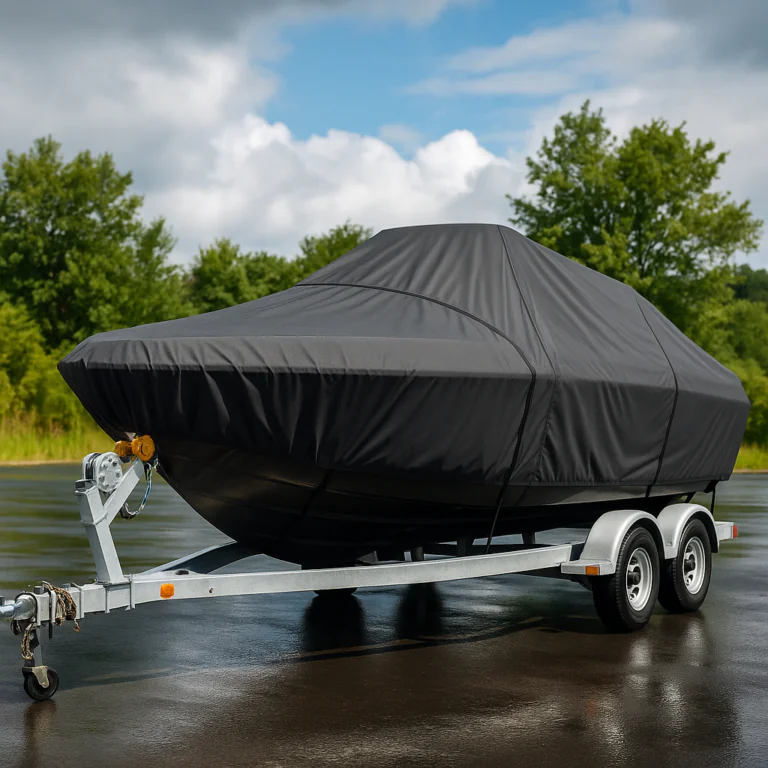
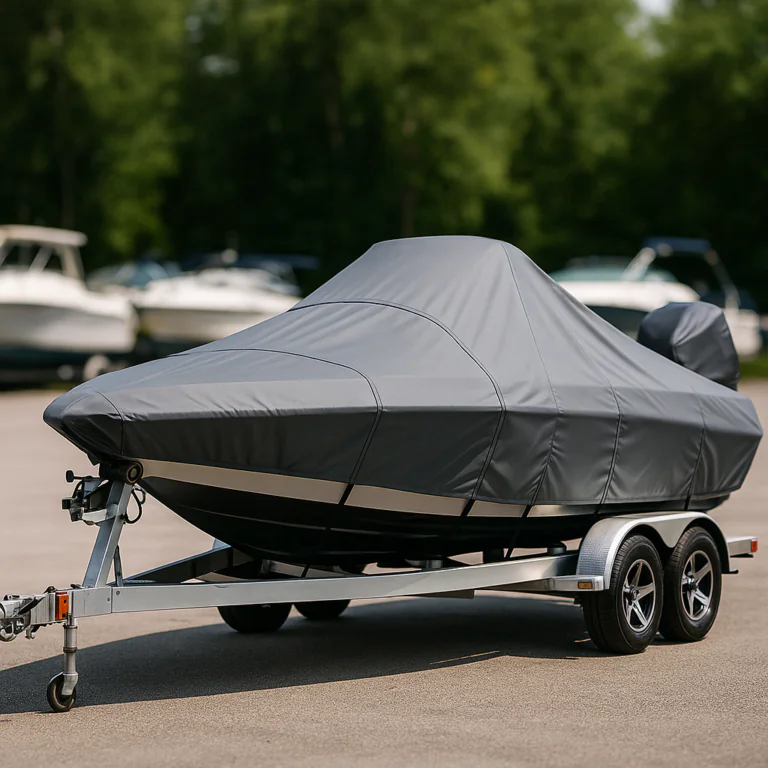
Trailering adds wind stress and abrasion. Choose a cover engineered for trailering with reinforced tie points and a ratchet system. A secure, well-fitting cover minimizes flapping and abrasion. Over time, this reduces fading, prevents seam failure, and protects resale value.
- Quick-start checklist: clean deck, secure loose gear, check vents, apply cover.
- Seasonal checklist: inspect for UV cracking, test seals, store in shade if possible.
- Common mistake: using a plastic tarp instead of a breathable cover.
Choosing the Right Bass Boat Cover
Selecting the right bass boat cover starts with fit and fabric. You can save money with a universal cover, but a proper fit matters more if you want wind-proof, waterproof protection. Consider where you store, how you trail, and whether you have a trolling motor or other high-mounted gear that needs clearance.
Cover types and fit (universal, semi-custom, custom-fit)
Universal covers are budget-friendly. They work for storage, but they often sag and pool water. Semi-custom covers offer better contouring and common cut-outs for consoles and motor shapes. Custom-fit covers are tailored to your exact hull, console, and accessories. If you plan to tow regularly or face heavy storms, opt for a custom-fit bass boat cover.
Materials and performance (marine-grade fabrics, waterproof vs water-resistant, breathability, UV resistance)
Material choice defines long-term value. Marine-grade 900D polyester with PU coating gives a strong waterproof barrier while resisting UV and abrasion. Water-resistant fabrics keep light rain out but can trap moisture. Breathable membranes let trapped humidity escape and reduce mildew. When comparing specs, prioritize waterproof, UV resistance, and breathability in that order for wet, humid climates.
Sizing and features (length, beam, motor/trolling motor, trailer ties, vents)
Measure length, beam, and engine height before buying. Account for a mounted trolling motor and any raised electronics. Look for reinforced straps, dual vents, and reflective strips for safety. A good cover will list compatible beam and motor clearances in its product specs. If you need a reliable mid-range option, see model references at trailerable options for examples of feature sets.
- Feature checklist: reinforced seams, ratchet straps, vents, UV coating.
- Fit checklist: length ±3 in, beam clearance, motor height allowance.
- Decision tree: small budget → universal; moderate use → semi-custom; heavy trailering → custom.
Installation, Care, and Longevity
Installation and maintenance decide how long your bass boat cover lasts. Proper tension, ventilation, and seasonal cleaning keep fabric flexible and seams intact. Follow a step-by-step install and an annual care plan to avoid premature failure.
Quick install steps for trailerable covers
- Position cover over bow and unroll aft, aligning centerline.
- Secure bow and stern tie points first; fasten ratchets evenly.
- Attach side straps, checking for equal tension to avoid water pockets.
- Confirm vents are open and no gear rubs against fabric.
Use a ratcheting system to get a snug fit without overstretching. Over-tightening can stress seams; under-tightening allows wind flutter. A correct strap pattern prevents chafing and water pooling.
Ventilation and mildew prevention
Ventilation is a top priority. Vents placed where warm air accumulates let moisture escape. In humid regions, use continuous vents plus a breathable fabric layer. For long-term storage, remove cushions and store them separately to reduce trapped humidity. A simple vent check before storage cuts mold risk dramatically.
Pro tip: open vents during warm, dry days to purge trapped humidity. This reduces mildew growth and fabric degradation.
Cleaning, storage, and preventative maintenance
Clean covers with mild soap and fresh water. Avoid bleach unless recommended. Rinse thoroughly and air dry completely before folding and storing. Store in a dry, cool place out of direct sun. Inspect seams and hardware annually; replace worn straps to avoid failures during towing.
- Cleaning steps: rinse, mild soap, soft brush, rinse again, air dry.
- Storage steps: dry, fold loosely, store elevated to avoid pests.
Value, Warranties, and Buying Tips
A smart purchase balances upfront cost with lifespan and protection. A cheap cover may save money now, but failing seams or UV breakdown can cost far more. Consider cost-per-year and warranty coverage when comparing options. Always document purchase and inspect warranty terms before you buy.
Price ranges, ROI, and cost-per-year
Typical price tiers: budget universal, mid-range semi-custom, premium custom. Estimate lifespan: budget 1–2 seasons, mid-range 3–5 seasons, premium 5+ seasons with care. Divide cost by expected years to get cost-per-year. A premium bass boat cover that costs more up front can cost less per year when it protects resale value and avoids repair bills.
Warranty terms and coverage
Warranties vary. Look for clear terms on materials, workmanship, and exclusions. Note any required care steps to keep the warranty valid. For manufacturer specifics and registration steps, check the warranty details. Document your serial number and proof of purchase when you buy so claims are easier to process.
How to compare brands and make a smart purchase
When comparing, rate fabric gram weight, seam construction, vent placement, and strap hardware. Ask whether the cover includes reinforced stress points for trailer tie-downs. Check return policies and read owner reviews for wind and snow performance. For a real-world example, compare a cost-per-year breakdown between a budget tarp and a reinforced 900D cover — the reinforced option often delivers lower cost-per-year after two seasons of heavy use.
- List priorities: fit, fabric, venting, warranty.
- Match features to usage: trailering frequency, climate exposure, storage method.
Purchase checklist: measure twice, confirm motor clearance, verify warranty, and keep a photo record of serial numbers.
Conclusion
Choosing the right bass boat cover protects your hull, electronics, and resale value. Measure carefully, match fabric performance to your climate, and prefer breathable, UV-rated materials if you store outdoors. Regular cleaning, proper ventilation, and correct strap tension extend cover life. Before you finalize a purchase, compare the feature checklist above, confirm warranty coverage, and review local weather guidance from trusted sources such as U.S. Coast Guard Boating Safety. When you follow these steps, you’ll avoid common mistakes like buying the cheapest fabric or leaving the boat uncovered and will enjoy many seasons of protected boating. For example, measure using our model reference, then store your cover per manufacturer recommendations and register warranty information at product page for added peace of mind.
Quick takeaways: measure accurately, choose breathable waterproof materials, prioritize reinforced tie points, and maintain vents. Your boat’s finish and systems will thank you with fewer repairs and a higher resale value.
Frequently Asked Questions
How much does it cost to wrap a 20 bass boat?
Costs vary widely for wrapping a 20′ bass boat and depend mainly on the scope of work, materials, and labor. Factors that affect price include the type of film (cast versus calendared vinyl wrap), whether you wrap the full hull or just graphics, surface prep required, and the complexity of the design. For realistic planning, get multiple itemized quotes from installers, ask about warranty and prep steps, and compare the difference between a professional install and a DIY kit. Expect the job to take several days to a week, and remember that thorough prep work and experienced labor will preserve the finish and save you money over time.
What is the alternative to carpet on a bass boat?
The most practical alternatives to carpet on a bass boat are marine-grade vinyl flooring and closed-cell foam decking, which offer durability and easy maintenance. Closed-cell foam decking provides soft underfoot comfort, excellent grip when wet, and good sound dampening, while marine-grade vinyl (with a non-skid texture) is rugged, easy to hose off, and resists mildew. Installation methods include marine adhesive for sheet materials or peel-and-stick tiles for simpler projects. Consider factors like UV resistance, traction, and drainage when choosing materials. For installation, test a small area first, and use felt-backed edges or seam tape to avoid sharp wear points and preserve your boat’s resale value with reliable traction and long-lasting durability.
How to store a bass boat outside?
To store a bass boat outside, protect it with a well-fitted, breathable cover, elevate it properly on its trailer, and take steps to control moisture and security. Start by thoroughly cleaning and drying the boat, drain bilges, and remove valuables and electronics. Use a breathable, UV-resistant cover and leave ventilation gaps or use a moisture barrier to prevent trapped condensation. Elevate the boat on the trailer with jack stands or blocks, chock the wheels, and use a coupler lock or wheel clamp for security. Either remove the battery or connect a small battery maintainer, stabilize fuel if stored long-term, and inspect periodically for water pooling or animal activity to keep your boat safe through the season.
Boating Enthusiasts — Join the Crew!
Free Boat Protection Guide Download Yours Now
Get your free copy of The Complete Boat Protection Guide — expert tips, real-world strategies, and exclusive insights from the Safeboatz team.