 SafeBOT

Boat Cover Support Pole Guide: Stop Pooling Without Stretching Your Cover
A practical boat cover support pole guide for preventing water pooling, choosing support height, protecting fabric, keeping vents open, and checking Storm Series fit before storage or trailering.

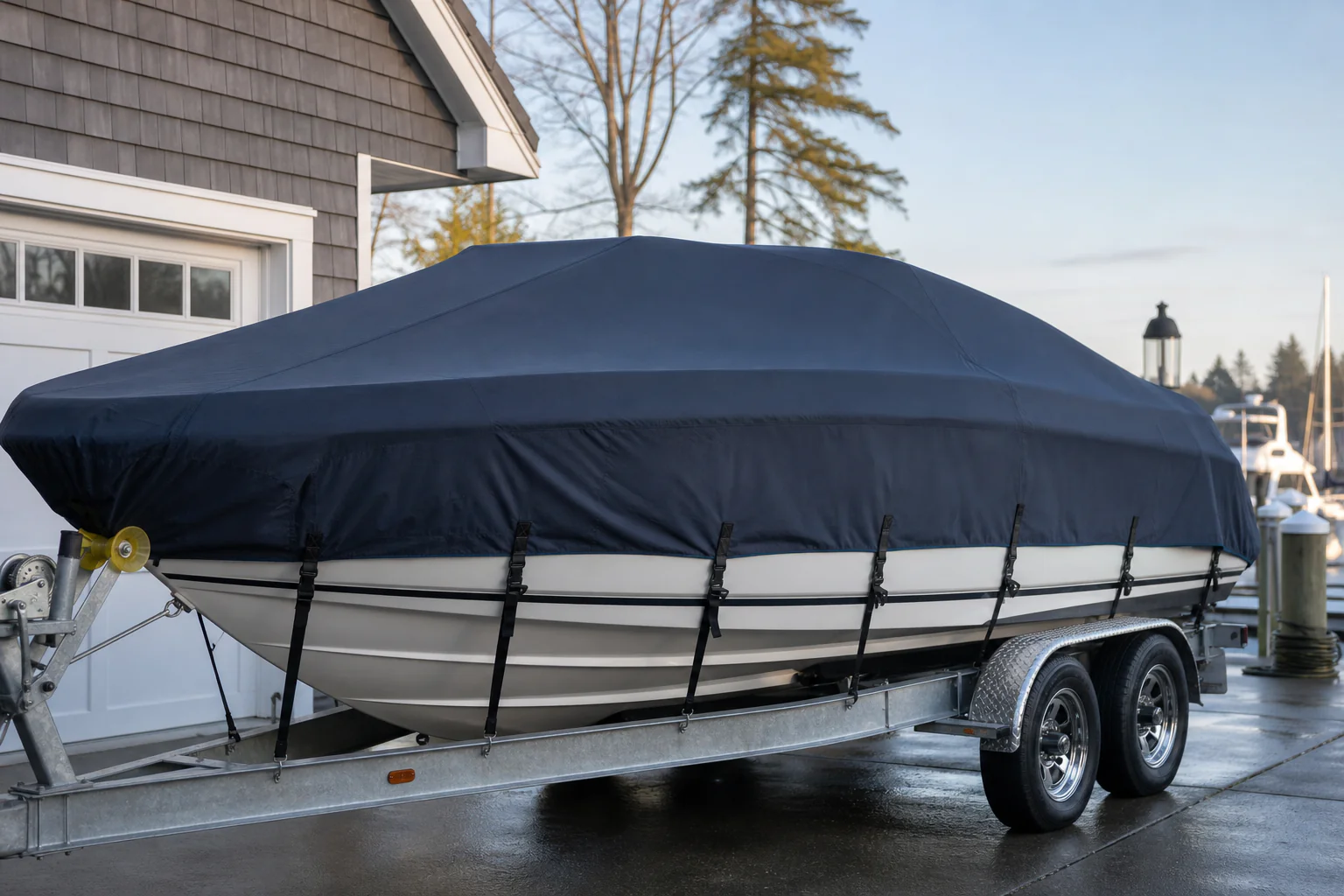
A boat cover support pole is a small detail with a big job: it helps the cover shed rain instead of letting water sit in a low pocket. The right support setup can reduce pooling, lower fabric stress, and make storage inspections easier. The wrong setup can push too hard into the fabric, block vents, or create a tall ridge that catches wind.
This guide is for boat owners who store a trailerable boat outside, under a carport, in a marina lot, or beside the house. It explains when a support pole helps, how high to set the center ridge, what to check before rain, and how support works with a fitted cover such as the Safeboatz Storm Series.
Quick answer: when should you use a boat cover support pole?
Use a boat cover support pole when the cover has a flat span that can hold rainwater. The goal is not to make the cover drum-tight. The goal is to create a smooth slope from the center of the boat toward the edges so water runs off before it becomes a heavy puddle.
A support pole is most useful on open-bow boats, bass boats, center consoles, and cockpit areas where the cover stretches across a wide opening. It is less useful if the cover already sits over a naturally high windshield or console and drains cleanly without sagging.
Why pooling water is hard on a boat cover
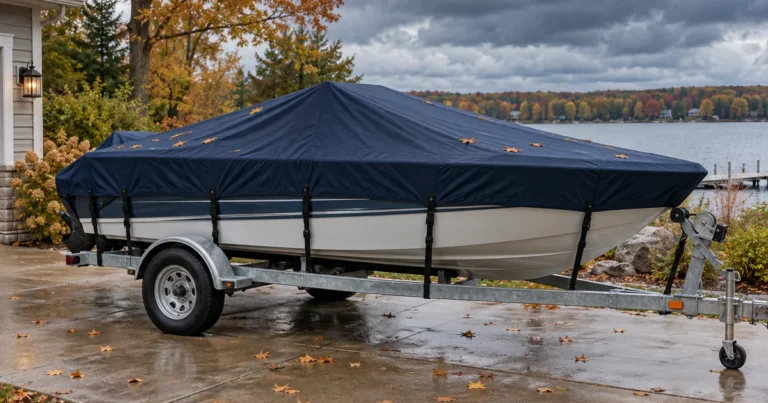
Water pooling starts slowly. A few inches of rain collects in one low spot, the fabric stretches downward, then the next rain finds the same pocket faster. Over time, that low area can stress seams, rub coating, and put extra pull on straps and tie-down points.
The issue is not only weight. A puddle also changes how the cover moves in wind. Instead of a clean slope, the cover now has a sagging basin and tight edges. That uneven shape can flap, slap against hardware, or trap moisture underneath.
If snow or freezing rain is possible, pooling deserves even more attention. The National Weather Service winter safety guidance is a good reminder that wet, frozen loads can build quickly in bad weather. A boat cover is not a roof, so it should be set up to shed water before the weather turns.
Support pole vs. cover tension: they solve different problems
Cover tension keeps the fabric seated around the hull. A support pole shapes the span above the cockpit so water has somewhere to go. You usually need both, but they should not fight each other.
- Tension controls movement. Straps, hems, and ratchets help reduce loose fabric and wind lift.
- Support controls slope. A pole, ridge, or support system raises the middle area so rain runs off.
- Inspection controls damage. After the first rain, check whether the cover drained or formed a pocket.
If you tighten the cover to fix a deep low spot, you can overstress the edge before the center ever drains properly. Add or adjust support first, then tension the cover in stages.
How to set the support height
The best support height creates a visible slope without a sharp peak. Think of it as a gentle tent shape, not a spike. The fabric should lift enough to drain, but it should not look stretched around the pole cap.
- Start with the boat on level ground if possible.
- Place the support under the largest flat span, usually the cockpit or open bow area.
- Raise the pole until the fabric slopes toward both sides.
- Check that the pole cap is broad, smooth, and seated under reinforced fabric if the cover has a marked support point.
- Tension straps gradually, moving around the boat instead of pulling one side hard first.
- After the first rain, inspect the cover before assuming the setup is finished.
If the support leaves a sharp point, lower it. If water still collects around the pole, move the support or add a second support point where the cover allows it. Do not force a pole under a fragile spot, a vent, a seam edge, or a thin unsupported fabric area.
Where a support pole should not go
A support pole should never press into a vent, zipper, buckle, seam intersection, windshield edge, navigation light, cleat, or sharp fitting. Those contact points can rub through the cover faster than rain can.
Also avoid placing the support where it closes off airflow. If the cover has ventilation ports, keep them open and unobstructed. Pooling prevention should not create a moisture problem underneath.
Support setup for trailering vs. storage
Storage and trailering are different use cases. For stationary storage, a support pole can be part of the everyday setup if it drains water cleanly and does not rub. For highway trailering, follow the cover manufacturer’s trailering instructions and remove any loose internal support that could shift, collapse, or create pressure points at speed.
Before towing, focus on cover fit, strap routing, ratchet tension, and loose fabric. The Safeboatz boat cover installation guide walks through pre-trip checks for centering the cover, tightening in stages, and inspecting straps around the trailer.
How support works with Storm Series covers
The Safeboatz Storm Series is built for serious trailerable boat protection, with ratchet-secured fit and current size paths for 17–19 ft and 20–22 ft boats. Support still matters because every boat layout is different. A windshield, console, trolling motor, bow rail, or open cockpit can change the way water moves across the cover.
If you are shopping for a cover, start with the correct size path: Storm Series 17–19 ft trailerable boat cover or Storm Series 20–22 ft trailerable boat cover. For a broader overview, see the Storm Series cover page.
After sizing, treat support as a setup check. Put the cover on the boat, tension it correctly, then look for flat spans. If water could sit there, add the right support approach for storage and inspect it after rain.
Rain test: the fastest way to find low spots
You do not need a storm to test the setup. A garden hose can show whether water runs off or collects. Use light water, not a high-pressure stream, and watch the cover from the side.
- If water runs off both sides, the support height is close.
- If water gathers next to the pole, the slope may be too steep or too localized.
- If water gathers away from the pole, the support point may be in the wrong place.
- If the fabric pulls tight around one edge, loosen and retension evenly.
Do the same check after the first real rain. Covers settle. Straps shift. A setup that looked good dry can still need a small adjustment.
Moisture and ventilation still matter
A dry-looking cover can still trap damp air underneath if ventilation is blocked. Keep vents open, remove wet gear before storage, and avoid sealing the boat so tightly that condensation has nowhere to go.
Support helps water leave the outside surface. Ventilation helps moisture leave the inside space. For more detail, read the Safeboatz guide to smart ventilation in boat covers.
Boat cover support pole checklist
- The cover is centered before straps are fully tightened.
- The support creates a smooth slope, not a sharp peak.
- The pole cap is broad, smooth, and not pressing into a seam or vent.
- Water drains to the sides during a light hose test.
- Vents remain open and clear.
- Straps are snug but not overpulled.
- No buckle, strap, or fabric edge rubs against a sharp fitting.
- The setup is rechecked after the first rain, freeze, or windy day.
Common mistakes to avoid
Setting the pole too high
A tall peak can overstretch fabric and create new wind exposure. Lower the pole until the fabric has a clean slope without a hard point.
Trying to fix pooling with straps only
Straps can remove loose fabric around the edges, but they cannot always lift a flat span in the middle of the boat. Add support before over-tensioning.
Blocking vents
Ventilation is part of cover care. If a pole, ridge, or strap blocks a vent, moisture can stay under the cover even if rain drains off the outside.
Leaving the setup unchecked all season
Outdoor storage changes with weather. Inspect after heavy rain, freeze-thaw cycles, and windy days. Small corrections early are easier than dealing with a stretched pocket later.
FAQ
Do all boat covers need a support pole?
No. A boat cover needs support when it has a flat span that can hold water. If the cover already drains cleanly over the windshield, console, or deck shape, a pole may not be necessary.
Can a boat cover support pole damage the fabric?
Yes, if it is too high, too narrow, placed under a seam, or allowed to rub. Use a broad smooth cap, avoid vents and seams, and inspect the contact area after the first rain.
Should I leave the support pole in while trailering?
For highway trailering, follow the cover manufacturer’s instructions. Loose internal supports can shift at speed, so trailering checks should focus on fit, straps, ratchets, and loose fabric unless the support system is specifically designed for towing.
How tight should the cover be around the support pole?
The cover should be smooth enough to shed water, not stretched hard around a sharp peak. If the pole creates a pointed tent shape, lower it or move it to a better support position.
What if water still pools after adding a pole?
Move the support point, adjust strap tension evenly, or add a second approved support point if the cover and boat layout allow it. Do not keep tightening straps to force a flat span to lift.
Bottom line
A boat cover support pole is worth using when it creates a clean drain path without stressing the fabric. Start with correct cover fit, add support where flat spans can pool, keep vents open, and inspect after real weather.
If your current cover keeps collecting water, check the support setup first. If the fit is also loose or hard to tension, compare the current Safeboatz Storm Series options for 17–19 ft and 20–22 ft trailerable boats. For a broader maintenance plan, download the free boat protection guide.
Boating Enthusiasts — Join the Crew!
Free Boat Protection Guide Download Yours Now
Get your free copy of The Complete Boat Protection Guide — expert tips, real-world strategies, and exclusive insights from the Safeboatz team.