 SafeBOT

Center Console Boat Cover: Fit, Trailering & Storage Checks
A practical center console boat cover guide for US boat owners: measure length and beam, check console height, protect hardware, reduce pooling, tension straps, and confirm trailering fit before buying.

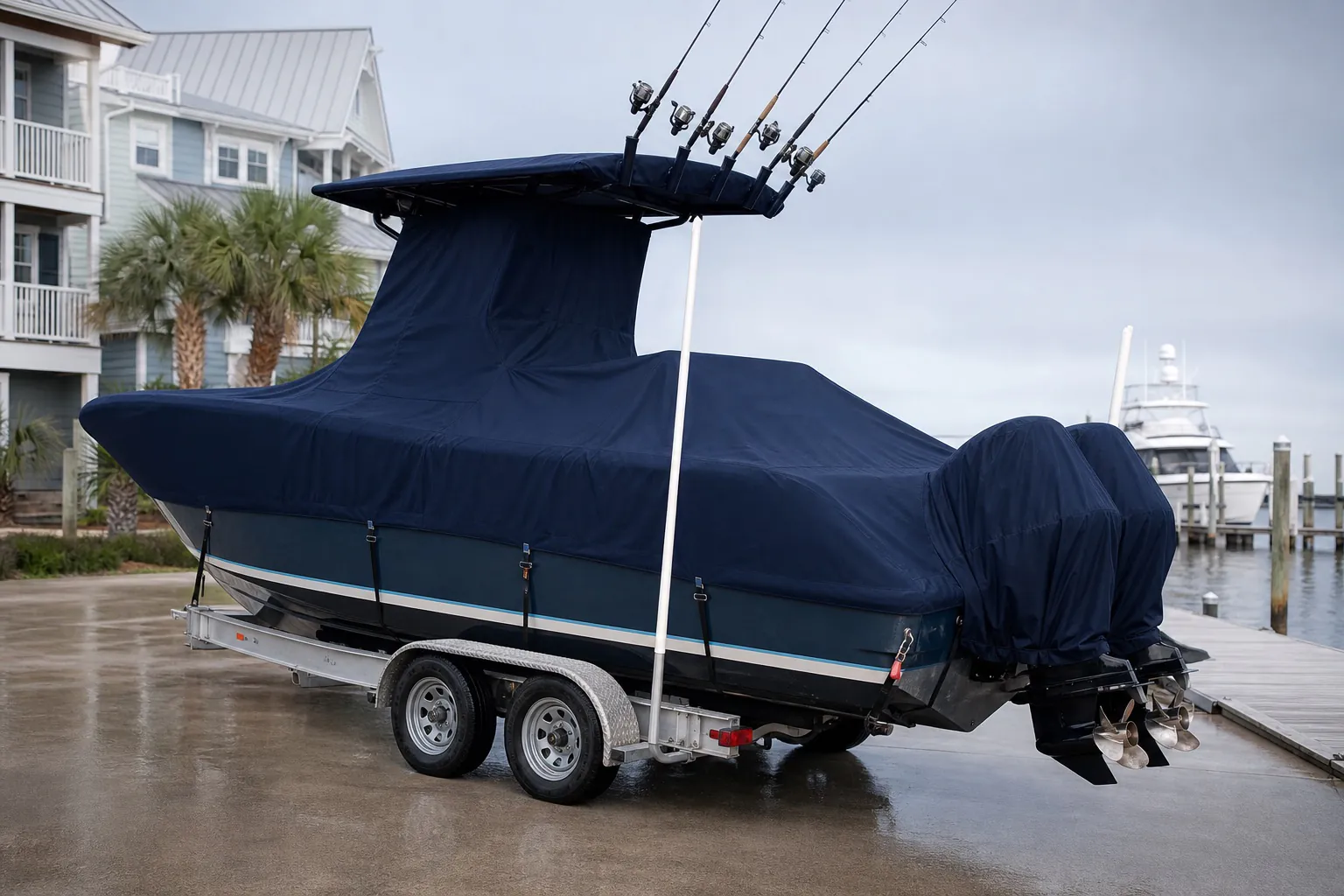
A center console boat cover has to do more than match the boat length. The console height, windshield, leaning post, rail layout, outboard clearance, and trailer tie-down points all affect whether the cover sits cleanly or turns into loose fabric in the wind.
If you are shopping for a cover, start with the boat’s centerline length and beam, then check the highest fixed point around the console. A cover that is long enough but too flat over the console can pull tight in the wrong place, leave gaps at the gunwale, or create low pockets where rainwater collects.
Quick answer: what makes a center console boat cover fit well?
A center console boat cover fits well when it covers the full bow-to-stern length, clears the console and windshield without overstretching, sits below the rub rail or gunwale evenly, and can be tensioned without pulling buckles or straps against hardware. For trailerable use, the strap layout also matters because loose fabric can flap at highway speed.
Measure the boat before you compare covers
Use the same measuring habit you would use for any fitted or semi-custom boat cover: measure the centerline length from bow tip to stern, then measure the beam at the widest point. Do not rely only on a model name, especially if the boat has a bow pulpit, swim platform, trolling motor, jack plate, or aftermarket rail changes.
- Centerline length: bow to stern, excluding loose accessories unless the cover must go over them.
- Beam: the widest point across the boat.
- Console height: deck to the highest fixed point that the cover must clear.
- Outboard area: decide whether you need motor coverage, a separate motor hood cover, or clearance behind the stern.
- Trailer contact points: note where straps can pass without touching tires, lights, sharp brackets, or moving parts.
If you need a fuller measuring walkthrough, use the Safeboatz guide on how to measure a boat for a cover before comparing size ranges.
Console height is the common fit problem
Many center console covers fail because the cover has to climb over the console, windshield, grab rail, or leaning post. When the top panel is pulled too tight over that height, the sides can lift. That can expose rub rail areas, leave the stern loose, or make the cover harder to tension evenly.
Before buying, compare your console height with the cover’s intended boat profile. If the cover description only gives length and beam, treat the console as a separate fit check rather than assuming it will clear every layout.
Storage fit vs trailering fit
A cover that is acceptable for driveway storage is not automatically ready for trailering. Storage fit focuses on water shedding, UV exposure, ventilation, and keeping debris out. Trailering fit adds wind pressure, strap security, buckle placement, and fabric movement while the boat is on the road.
- For storage, look for an even drape, support under low spots, and enough airflow to reduce trapped moisture.
- For trailering, check that the cover can be tightened in stages and that the straps do not rub against hardware or trailer parts.
- Before every tow, walk around the boat and look for loose corners, twisted straps, and fabric that can catch wind.
BoatUS also recommends a pre-road trailering check before heading out. Their trailering checklist is a useful reminder to inspect the full trailer setup, not only the cover.
Where the Safeboatz Storm Series fits
The Safeboatz Storm Series is built around trailerable boat cover use, with ratchet-secured tensioning for owners who care about road checks and outdoor storage. It is not a promise that every center console layout fits. The right starting point is your measured length, beam, console height, and cover path around the stern.
- For boats in the smaller range, compare measurements with the Storm Series 17-19 ft trailerable boat cover.
- For larger trailerable boats, compare measurements with the Storm Series 20-22 ft trailerable boat cover.
- If strap security is your main concern, read the Safeboatz guide to ratchet boat cover benefits.
Center console cover buying checklist
- Measure centerline length and beam yourself, even if you know the model year.
- Check console height, windshield shape, rails, leaning post, and rod holders.
- Confirm whether the cover is intended for storage only or trailerable use.
- Look for a tensioning system that can be adjusted evenly from bow to stern.
- Plan cover support so rain does not sit in a low pocket behind the console.
- Check that buckles and straps will not rub gelcoat, rails, tires, trailer lights, or the outboard.
- After installation, retighten after the fabric settles instead of over-pulling in one pass.
For step-by-step setup habits, use the Safeboatz boat cover installation guide before your next storage day or tow.
FAQ
Do center console boats need a special cover?
Often, yes. A center console boat cover needs enough height and shape to clear the console, windshield, rails, and leaning post without pulling the sides up. Length and beam alone are not enough for a confident fit.
Can I trailer a center console boat with the cover on?
Only use a cover for trailering if the cover is designed for trailerable use and can be tensioned securely. Before towing, check straps, loose fabric, buckle placement, and clearance around trailer tires, lights, and hardware.
How do I stop water from pooling behind the console?
Use cover support to create slope, then tension the cover evenly after it settles. Pooling usually happens when the fabric has a low pocket, the cover is off-center, or the console creates a high point with a flat area behind it.
What size cover should I buy for a center console boat?
Start with measured centerline length and beam, then check console height and stern layout. If your boat sits between size ranges, compare the cover’s fit guidance and the areas that need clearance instead of choosing only by boat length.
Should the cover go over the outboard motor?
That depends on the cover design and your storage goal. Some owners use a separate motor cover so the main boat cover can sit cleanly around the stern. Do not force a main cover over the outboard if it changes the fit or creates loose fabric.
Next step: measure your boat, check the console height, then compare your numbers with the Safeboatz Storm Series 17-19 ft or 20-22 ft cover pages before you buy.
Boating Enthusiasts — Join the Crew!
Free Boat Protection Guide Download Yours Now
Get your free copy of The Complete Boat Protection Guide — expert tips, real-world strategies, and exclusive insights from the Safeboatz team.