

SafeBOT
Welcome aboard! I’m SafeBOT, your virtual assistant.
How can I help you today?
SafeBOT is typing...

Boat Tarp Guide: Choose, Fit & Maintain Covers – Winter Tips

Boat Tarp Buying & Care Guide: Best Fit, Materials, Tips

boat tarp owners need straightforward advice the moment they shop, measure, or install a cover. This guide walks you through how to pick a boat tarp that fits, lasts, and protects in your climate while avoiding common errors. Start with our measuring guide for accurate dimensions and check local forecasts from the National Weather Service before choosing material. You’ll learn material pros and cons, sizing rules, installation patterns for trailers and docks, repair steps to extend life, and buying trade-offs so you spend wisely. Keep one printed checklist and one stored photo set of your boat for quick custom orders or repairs. Throughout this article the simple phrase boat tarp appears often because repeating the key idea helps you focus on fit, material, and maintenance as a system.

How to choose the right boat tarp (materials & weights)

Picking the right boat tarp starts with matching material to use and climate. Consider three simple user profiles: short-term day-use, long-term outdoor storage, and sheltered indoor storage. For daily lake use a lighter waterproof poly tarp may suffice; for winter storage you’ll want a heavy laminated option. Here are the common materials and what they mean for you.

Tarp materials explained: polyethylene, vinyl, canvas, polyester

Polyethylene (PE) comes in woven and laminated forms. Woven PE is lightweight and low-cost; laminated PE adds a waterproof layer and heavier weight for long-term outdoor exposure. Vinyl (PVC) is highly waterproof and abrasion-resistant but often non-breathable. Canvas blends (cotton treated with waterproofing) breathe better and can reduce mildew under covered storage, but they weigh more and require maintenance. Solution-dyed polyester (marine-grade) balances UV resistance and breathability and often carries longer warranties. Choose laminated PE for raw winter exposure, vinyl for harsh abrasion and constant splash, canvas for covered indoor racks, and marine polyester for sun-drenched climates.

Weight, denier, mesh counts and what they mean (light → heavy duty)

Specs like mil, denier, mesh counts, and ounces per square yard describe performance. Mil measures thickness for coatings; higher mil means tougher puncture resistance. Denier relates to yarn thickness in polyester—higher denier means more tear resistance. Mesh counts (8×8 vs 12×14) apply to woven tarps; denser mesh holds together better in wind. Heavier tarps resist abrasion and UV but weigh more to handle. A pro tip: pick a slightly heavier tarp than the minimum if your location sees wind, salt spray, or snow.

Weather resistance: UV, mildew, waterproof vs breathable

Look for UV stabilization and mildew inhibitors on product labels. Waterproof coatings can trap moisture; breathable options or venting are required for long-term covered storage to prevent mold. Seam construction matters: heat-welded or sealed seams keep water out better than sewn seams, but sewn seams with tape can be durable if maintained. For saltwater exposure, prioritize corrosion-resistant hardware and coatings designed to resist salt degradation.

Specialty tarps: mesh shade, windstorm, marine-grade laminated

Specialty choices include mesh shade for sun protection with airflow, windstorm fabrics engineered for high-wind tensile strength, and marine-grade laminated tarps for full waterproofing and heavy abrasion resistance. Match specialty features to the environment: mesh for hot, humid climates to reduce heat buildup; laminated for snowy northern winters to block moisture and wind. Example: a 12×14 mesh laminated PE is ideal for uncovered winter stack storage; solution-dyed polyester excels in high-UV coastal zones.

  • Checklist: intended use, climate, storage type, budget
  • Quick pick: laminated PE for outdoor winter, polyester for UV, canvas for covered racks
  • Pro tip: overspec by one grade in windy/snowy areas

Measuring & sizing: get the correct fit for your boat

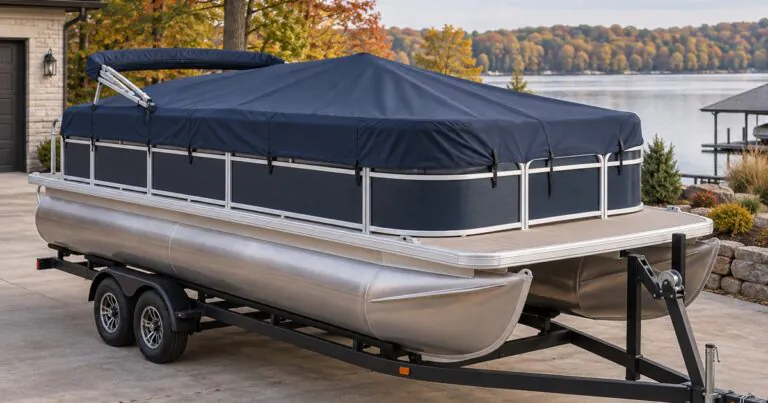
Accurate measuring avoids wasted returns and poorly performing covers. A well-measured boat tarp fits with tension points in the right places and leaves room for straps, vents, and accessories. Use a helper, a good tape, and the simple checklist below. Measure overall length, beam (widest point), transom height, bow height, and any protrusions like swim platforms or bow pulpit. For pontoons measure outermost pontoons and deck overhang. Add allowances for tie-downs and drape based on storage type.

Quick measurement cheat-sheet for common boat types (V-hull, bass, pontoon)

For a V-hull, measure LOA from bow tip to transom, then add 12–24″ for a snug drape or 2–3 ft for full coverage including motor. For a bass boat include a tall console or tower height in the bow measurement and add clearance for the motor tilt. For pontoon boats measure across the outer tube edges plus any overhang from ladders or platforms. Photograph bow and stern and note attachment points to help custom orders.

Trailered vs stored-in-water vs on-dock: sizing rules

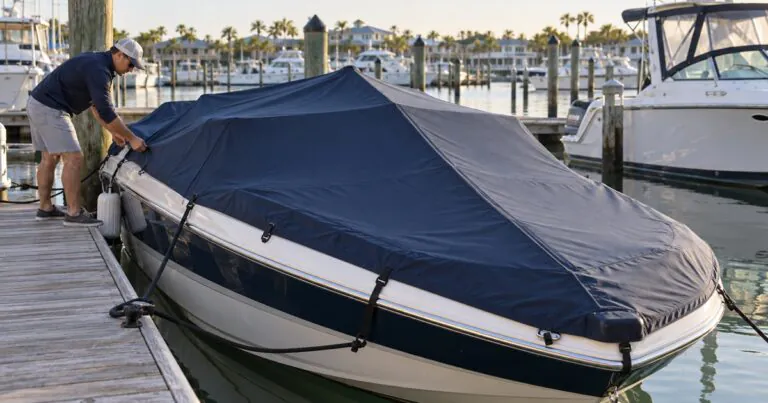
Trailered boats need extra length for trailer winch and straps—add 1–2 ft on each side for strap routing. Boats stored on-water require tighter grommet placement and vents; allow less drape if you worry about water pooling. Docked boats often use support cradles or bows that create high points; measure heights from waterline to highest fixed point and factor in support bow clearance when ordering a cover.

Off-the-shelf sizes vs custom-made: pros and cons

Off-the-shelf tarps are economical and quick but rarely match all attachment points. Custom covers cost more but deliver reinforced grommets at the right spots, tailored vents, and better tensioning. When ordering custom, send photos and mark winch, cleat, and trailer points. A common mistake is ordering by hull length only—always measure accessories too.

  1. Measure LOA, beam, and heights with helper.
  2. Add allowances: straps +1–2 ft, full drape +2–3 ft.

Installation & securing methods (trailers, winter storage, dock)

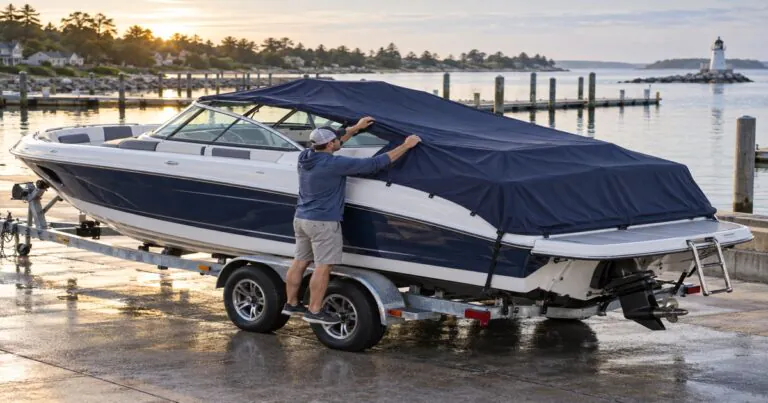
How you secure a boat tarp determines longevity. Proper grommet spacing, strap types, and tension sequences prevent flap, abrasion, and water pooling. Use stainless grommets, wide UV-rated straps, and soft-edge protectors where straps contact gelcoat. Avoid using bungee cords as the primary secure method in high wind; they can fail and tear fabric. Follow a tension sequence: start midship, then bow and stern, and finish with side straps to create a smooth, pitched surface.

Securing hardware: grommets, straps, ratchets, winch lines, bungee best practices

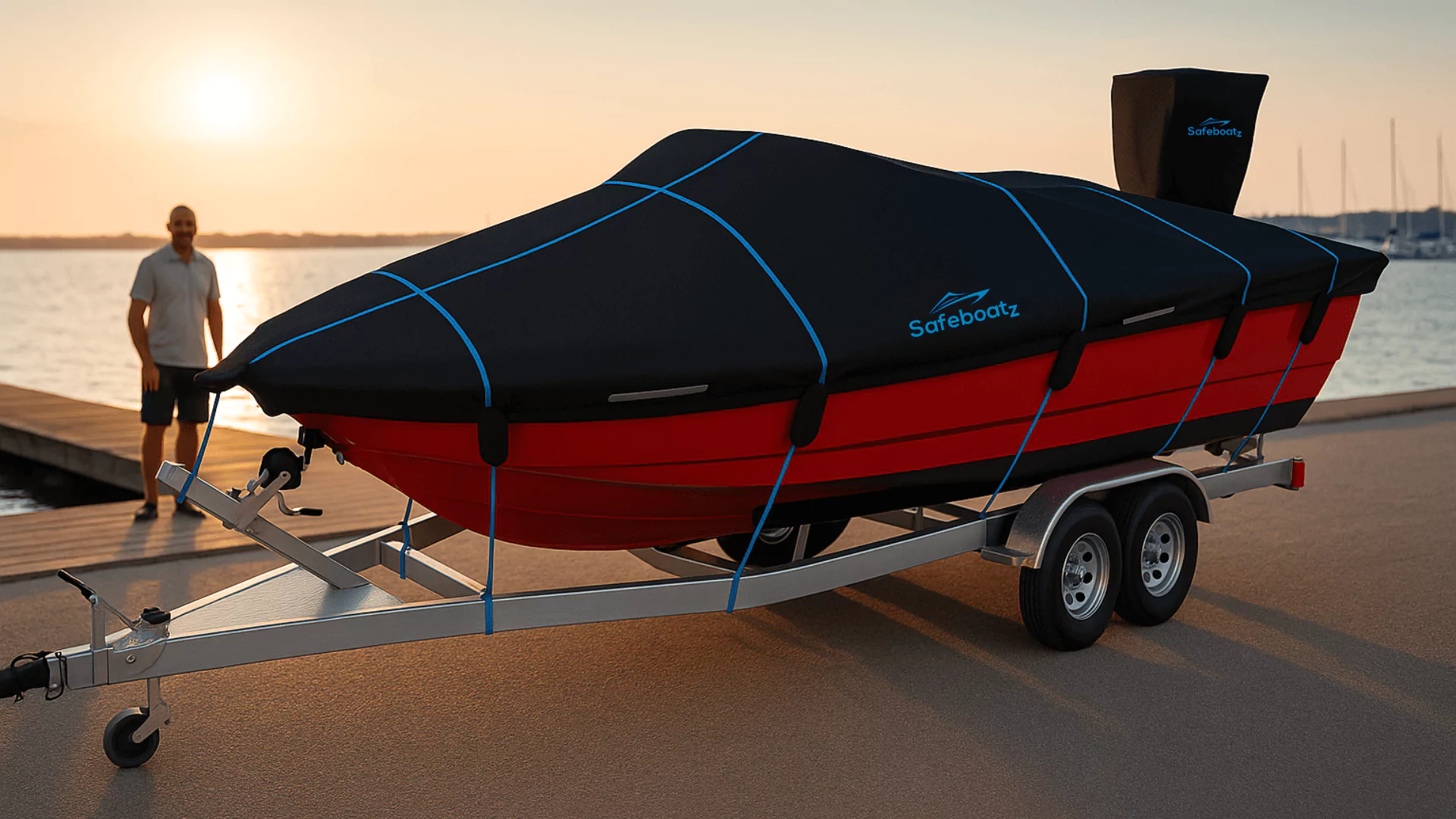
Choose wide straps with cam buckles or ratchets for repeated highway use. Ratchet systems deliver repeatable tension and reduce flutter. Use chafe guards and soft padding at contact points. For small, short trips a snug elastic hem may work, but for trailers at speed use heavy ratchets and check every 10 miles. When using winch lines attach to reinforced grommets and route away from sharp edges.

Support structures and snow/sag prevention (frames, bows, cradles)

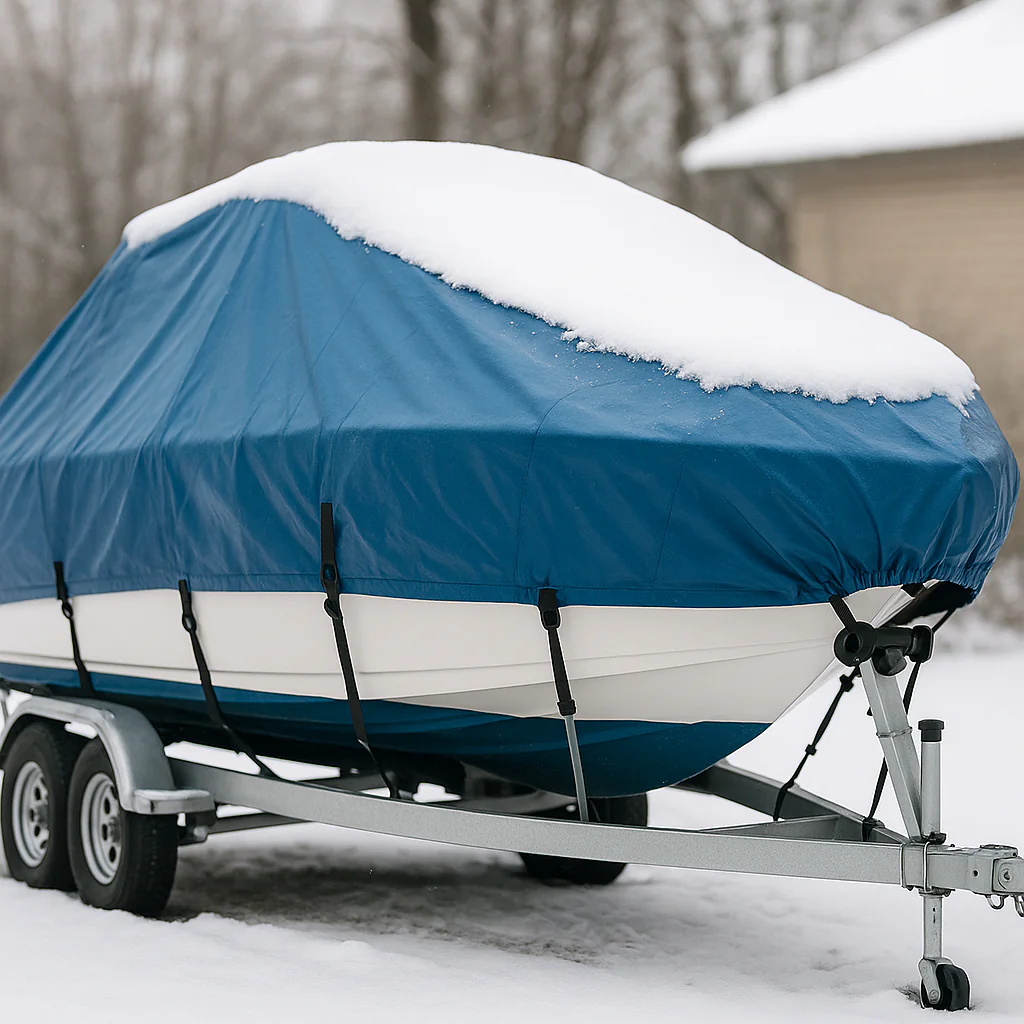
Prevent sagging by installing support bows, center poles, or a cradle system. Lightweight DIY frames using PVC or conduit work for short-term but upgrade to metal bows for heavier snow. Pitch the tarp front-to-back to shed water. For heavy snow loads add multiple transverse bows and a central ridge support to distribute weight away from the fabric and grommets.

Step-by-step setups: short-term cover, long-term winter cover, storm prep

Short-term (lake day): center tarp, secure midship grommets, tension stern and bow, tuck loose ends. Long-term (winter): add support bows, install vents, tension sequentially starting at center, add edge protectors, and secure to trailer or dock points. Storm prep: double-check straps, add backup tie-downs, and remove loose accessories that catch wind. A final check: walk around to ensure no sagging pockets where water can collect.

  1. Center and anchor midship grommets first.
  2. Add supports, then tension bow, stern, and sides.
Expert tip: « A slightly tighter tarp with proper venting beats a loose waterproof tarp every time—tension and airflow prevent both abrasion and mildew. »

Maintenance, repair & storage to extend tarp life

Maintenance keeps a boat tarp working season after season. Rinse saltwater off after each trip, wash with mild soap monthly, and always dry completely before folding. Inspect grommets and seams for corrosion or fraying. Small repairs today prevent large tears tomorrow. Use manufacturer patch kits for laminated PE and vinyl; sew and seal canvas with appropriate thread and sealant.

Cleaning & drying routines to prevent mildew and UV damage

Use a soft brush and mild detergent; avoid solvents that strip coatings. Rinse thoroughly and air-dry fully in the shade to protect UV treatments. For mildew, use a diluted vinegar solution or a mildew cleaner recommended for marine fabrics. Store a tarp dry and labeled to avoid mixing sizes and ensure easy retrieval in spring.

Patching and repair: materials, kits, step-by-step fixes

For laminated PE: clean around the tear, roughen the surface slightly, apply adhesive patch or heat-welded patch per kit instructions, press firmly and cure. For vinyl: vinyl patch kits or heat-weld work well. For canvas: stitch with marine thread and apply seam sealer. Avoid household duct tape for long-term fixes; it fails under UV and cold.

Off-season storage for tarps and covers (folding, labeling, repair before storing)

Fold loosely, place in a breathable bag, label with boat name and size, and keep off direct sunlight. Store away from rodents and chemicals. Before storing, repair minor damage and replace worn straps so cover is ready next season.

  • Monthly: rinse and inspect
  • Pre-storage: repair, dry, label
  • Season start: tension check and re-seal if needed

Buying decisions: comparisons, costs, and ROI

Decide between basic poly tarps, heavy-duty marine covers, and custom-fitted covers by comparing lifecycle cost, protection level, and convenience. A cheap tarp may save you $50 upfront but tear in a season. A mid-range marine cover with vents and reinforced straps costs more but saves on interior repairs and replacement frequency. Consider accessories like vents, reinforced corners, and storage bags as investments that increase ROI.

Tarp vs dedicated boat cover vs custom cover: when to choose each

Use a tarp for short-term or emergency cover. Choose a dedicated marine cover for regular trailering and mooring. Invest in custom covers when you need precise grommet placement, vents, and tailored support. Custom pays off for long seasons in harsh climates because it reduces damage risk to gelcoat and electronics.

Budget, mid-range, premium — what you get for the price

Budget tarps: light weight, minimal features, short lifespan. Mid-range: better denier, welded seams, some vents. Premium: 900D or similar marine polyester, reinforced straps, multi-point vents, and warranties. Calculate total cost of ownership: purchase price + repairs + replacement frequency versus potential cost of boat damage avoided.

Accessories and upgrades worth the cost (vents, support poles, reinforced straps)

Vents prevent mold; support poles prevent sag and ice dams; reinforced straps and ratchet systems keep tension at highway speeds. These accessories lengthen tarp life and protect boat value. Before purchase, confirm warranty terms and what actions void coverage.

  • Compare price bands and expected life
  • Check warranties and exclusions
  • Prioritize vents and support bows

Safety, environmental & legal considerations

Safety: never block bilge vents, battery switches, or fuel access. Include vents to avoid trapped fumes. Environmental: dispose responsibly—check local recycling for polyethylene or vinyl. Choose higher-quality materials and maintain them to reduce microplastic shedding. Legal: secure tarps to avoid debris on highways and comply with overhang rules when towing.

Boating safety considerations when covering a boat (ventilation, access, visibility)

Install vents to maintain airflow and prevent dangerous fumes. Keep at least one quick-access port for emergency access. Use reflective strips or bright tag points to enhance visibility at night or in low light when stored near traffic.

Environmental tips: disposing/recycling old tarps and minimizing microplastic runoff

Contact local waste management or a marine recycling center for plastic disposal. Reuse worn tarps as drop cloths or yard covers where feasible. Proper maintenance reduces shedding; replace failing tarps early rather than letting degraded fabric flake into the environment. For more environmental guidance, consult NOAA Sea Grant.

Trailer and road-legal tips for transporting covered boats

Secure tarps with certified straps and ratchets, check grommet integrity, and add flags for long overhangs. Confirm your state DOT rules for overhang and tie-downs before towing to avoid fines and unsafe loads. For warranty specifics related to hardware and coverage check warranty details.

  • Safety checklist before covering: vents, batteries, fuel valves
  • Environmental action list: recycle or repurpose old tarps
  • Towing checklist: ratchets, flags, DOT compliance

Conclusion

Choosing and caring for a boat tarp boils down to three priorities: correct material for your climate, accurate measurement for proper fit, and a consistent maintenance routine. Use the six-item action list: measure accurately, pick material by climate, add vents, install support bows, secure with proper straps, and store dry and labeled. For weather planning and safety checks, consult the National Weather Service and follow local environmental disposal guidance. When in doubt, invest a bit more in materials and hardware—you’ll save time and protect your boat investment down the road. For environmental and regulatory questions see EPA guidance.

Frequently Asked Questions

What is the best tarp for a boat?

The best tarp for a boat is a marine-grade, UV-resistant cover constructed from heavy-duty polyester or polyethylene that matches your boat’s size and storage conditions. You should look for a tarp with reinforced grommets, taped seams, and a snug fit to prevent flapping in wind; consider a breathable design or vent panels to reduce trapped moisture and mildew. For practical use, measure beam and height, add a few inches for shrinkage, and use soft straps or cam buckle tie-downs to avoid scratching the gelcoat. If you store outdoors, add support poles under the tarp so water and snow run off instead of pooling on the cover.

Is it okay to cover a boat with a tarp?

Yes, it is okay to cover a boat with a tarp if you follow proper steps to prevent damage from moisture, abrasion, and pests. You should clean and dry the boat before covering, use a tarp or cover with breathability or vents, and secure it with secure fastening points to avoid chafing; avoid tying directly to fittings that could dent or scratch. Make a tented shape with supports so water sheds and check the cover periodically to clear debris, tighten straps, and inspect for trapped condensation. For long-term storage, consider a fitted cover or shrink-wrap alternative to limit wind movement and abrasion.

What does 600D mean on a boat cover?

600D means the fabric has a Denier rating of 600, describing the thickness of the yarn used in the material; in plain terms, it’s a mid-weight, durable fabric choice for covers. You should know that 600D Denier polyester offers a good balance of toughness and flexibility for many boating conditions, but overall performance also depends on the weave, coatings like polyurethane or PVC, and seam construction. For practical decisions, choose 600D if you want a resilient cover that resists abrasion and is manageable to handle, but opt for higher denier or additional coatings if you face extreme UV, salt spray, or rough storage environments.

Boating Enthusiasts — Join the Crew!

Free Boat Protection Guide Download Yours Now

Get your free copy of The Complete Boat Protection Guide — expert tips, real-world strategies, and exclusive insights from the Safeboatz team.

Get My Free Guide
Safeboatz Team
Safeboatz Team
Articles: 31
🎁

Wait! Don't Leave Empty-Handed!

Get your FREE Boat Protection Guide with expert tips to keep your boat protected all year round.