 SafeBOT

Reflective Strips on Boat Covers: Visibility, Safety & Care
A complete guide to reflective strips on boat covers: where they help, what they cannot do, placement, maintenance, trailering checks, storage visibility, and fit considerations.


Why Reflective Strips Matter on a Boat Cover
Reflective strips on a boat cover are a small feature, but they can make a covered boat easier to notice in low light. They are not a substitute for navigation lights, trailer lights, storage security, or safe towing habits. Their purpose is simpler: when light hits the cover, reflective sections help mark the boat’s outline, tie-down points, or corners around driveways, storage yards, docks, and trailer stops.
That visibility can matter when a boat is parked near vehicles, gates, marina traffic, snowbanks, or other equipment. It can also help you inspect the cover before sunrise or after dark, especially if you need to check straps, pooling, or edge tension.
Where Reflective Strips Help Most
- Driveway storage: makes the covered boat easier to see when cars back out or people walk nearby.
- Marina rows: helps mark the cover edge in areas with limited lighting.
- Trailer stops: makes strap checks easier during early or late travel.
- Winter storage: helps identify edges when snow, tarps, or other stored equipment reduce contrast.
- Shared storage yards: can reduce the chance that someone bumps into the boat or trailer in low light.
Reflective material works only when light reaches it. If the strip is covered by dirt, road film, salt, folds, or pooled water, visibility drops quickly.
What Reflective Strips Cannot Do
Reflective strips do not make a cover road-safe by themselves. They do not replace trailer lighting, legal reflectors, safe parking, good straps, or a cover that is actually designed for trailering. They also do not fix poor fit. A loose cover with reflective tape can still flap, rub, and collect water.
Think of reflective details as a useful secondary feature. Fit, fabric, strap tension, support, and ventilation remain more important for actual boat protection.
Best Placement on a Boat Cover
Useful reflective placement usually includes areas where someone needs to identify the boat’s outline or find tie-down points:
- near the bow where the cover begins;
- along side edges where people walk or straps attach;
- near stern corners and trailer access points;
- near strap zones that are checked in low light.
Placement should not create weak points. Reflective material should be stitched or bonded in a way that does not peel, snag, or distort the fabric when the cover is tensioned.
Adding Reflective Tape to an Existing Cover
If you add aftermarket reflective tape, test a small area first. Some adhesives do not bond well to coated or textured marine fabrics, especially when the cover is dirty, weathered, or treated with water-repellent coatings. Clean and dry the area before applying anything, and avoid adding tape where the fabric folds sharply or rubs against hardware.
Do not add reflective tape over seams, vents, or high-tension areas unless the product is designed for that use. A poorly placed strip can peel and collect dirt, or it can create a stiff patch that wears differently from the rest of the cover.
Maintenance Checklist
- Wipe reflective areas with mild soap and water during seasonal checks.
- Inspect for peeling, cracking, lifting edges, or abrasion.
- Check whether cover folds hide the reflective material.
- Keep support poles and straps adjusted so strips do not sit under pooled water.
- Replace damaged tape before trailering or long-term storage.
- After towing, check for road film or salt that may reduce reflectivity.
Reflective Details and Trailering
If you tow with a cover installed, the main question is whether the cover itself is designed and fitted for trailering. Reflective strips can help you inspect the cover at fuel stops, but they do not secure the cover. Check straps, corners, windshield contact points, and any fabric that could move against hardware.
For broader trailering guidance, read the trailerable boat cover guide. If you are comparing active Safeboatz covers, check the Storm Series 17–19 ft cover and Storm Series 20–22 ft cover against your measurements.
FAQ: Reflective Strips on Boat Covers
Are reflective strips required?
Requirements depend on where and how the boat is stored or transported. Reflective strips are best treated as a visibility feature, not a legal lighting system.
Do reflective strips make trailering safer?
They can help visibility during checks, but safe trailering depends on trailer lights, legal reflectors, secure straps, proper fit, and safe driving.
Can I clean reflective strips with harsh chemicals?
Avoid harsh cleaners unless the manufacturer says otherwise. Mild soap and water are usually safer for both fabric and reflective material.
Final Take
Reflective strips are useful when a covered boat needs to be seen around driveways, yards, docks, storage rows, or trailer stops. They are not the main protection system. A good boat cover still depends on measured fit, strong tie-downs, water-shedding support, ventilation, and regular inspection.
For the full storage checklist, start with the free Safeboatz Boat Protection Guide.
Related visibility and trailering resources
Reflective details only help when the cover also fits securely. Pair this guide with the Safeboatz boat measuring checklist, the trailerable cover guide, and the strap and wind-control guide. If you are comparing current Safeboatz sizes, review the 17–19 ft trailerable cover and 20–22 ft trailerable cover.
For neutral safety context, see the NHTSA trailering and towing guidance and the U.S. Coast Guard boating safety resources.
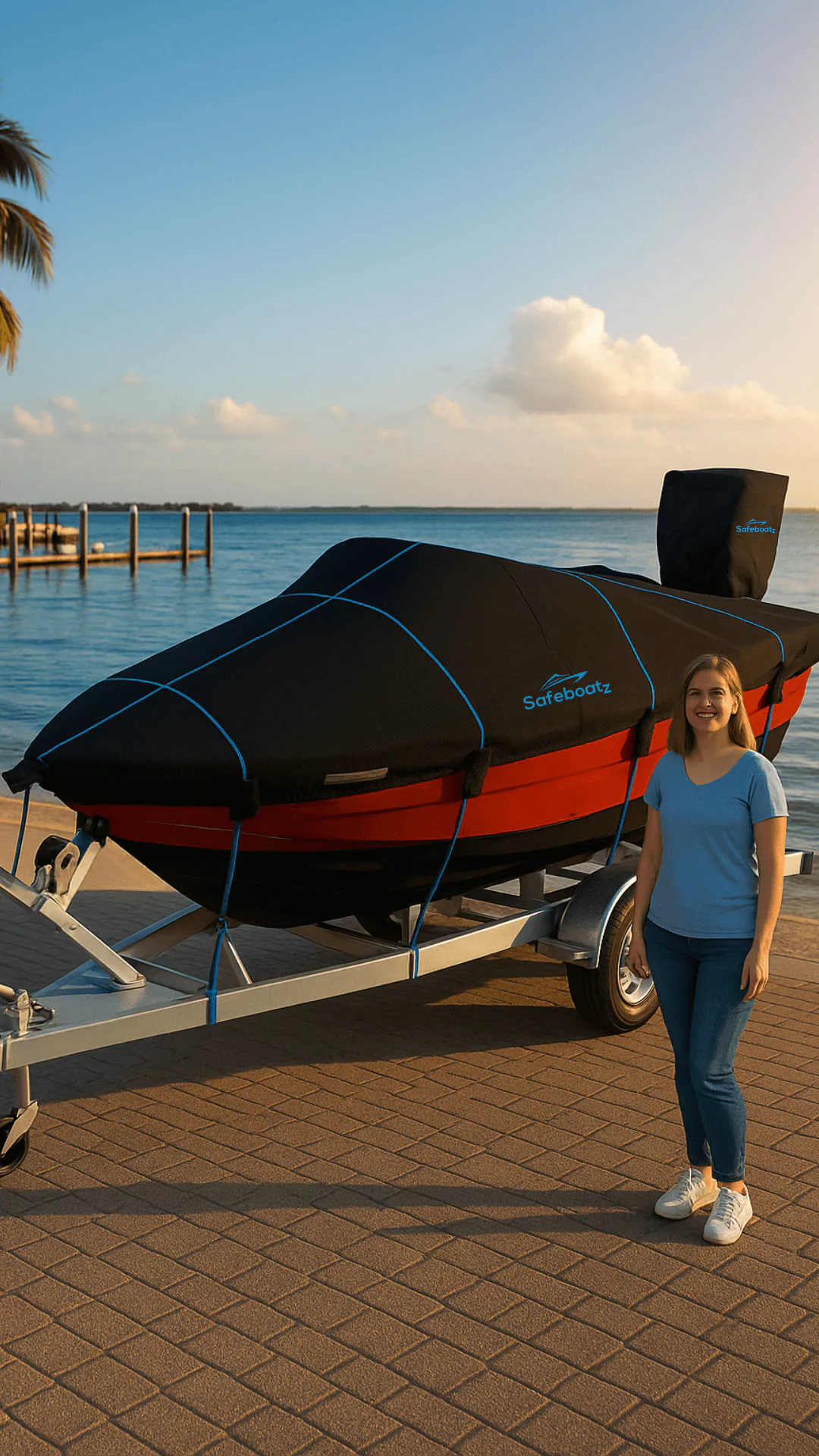
Trailerable Boat Cover 17-19ft
Fits 17–19ft boats – 102” beam. Heavy-duty 900D fabric, waterproof & UV-resistant. Reinforced for trailering. Built to protect, wherever you go.
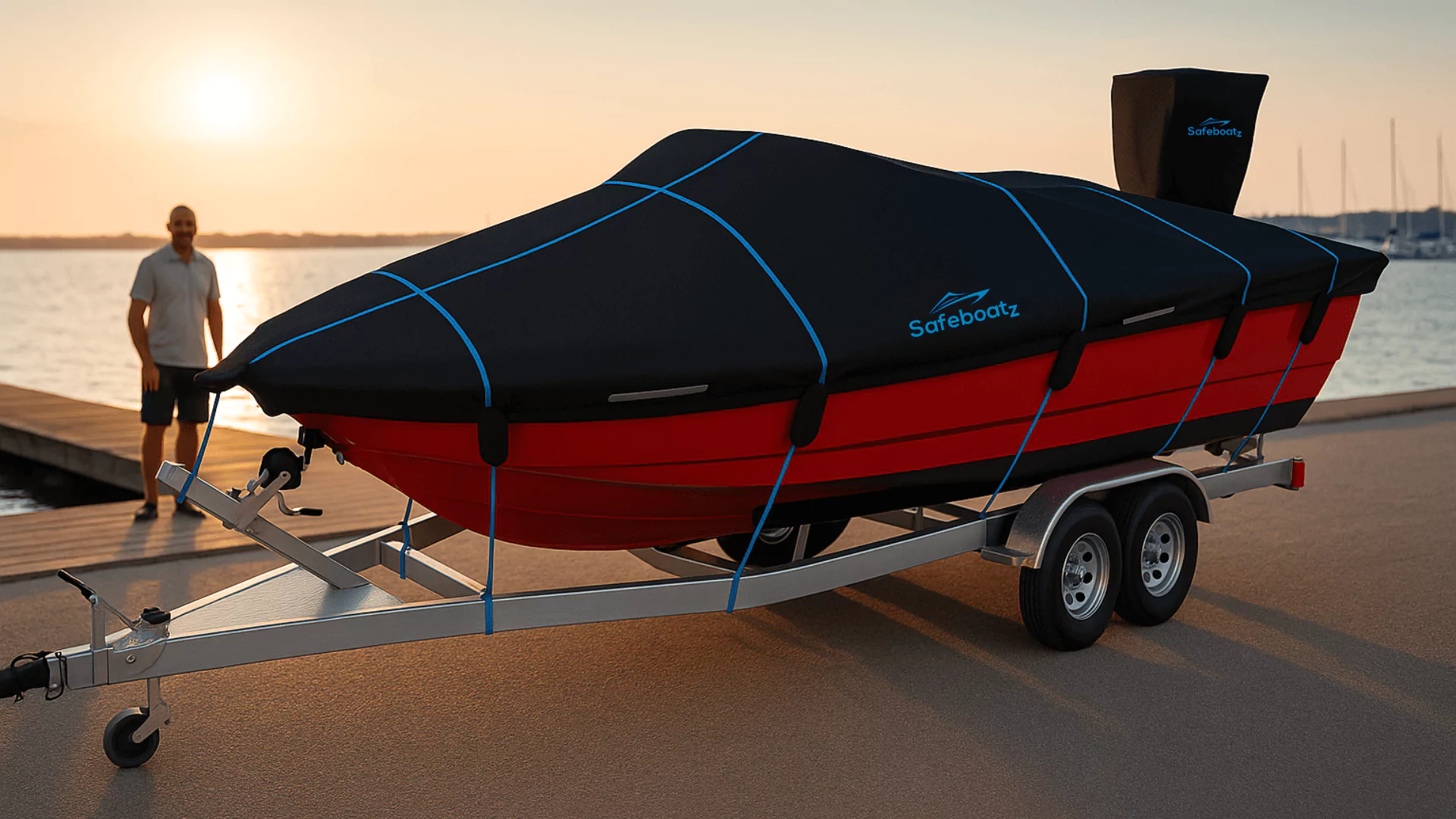
Trailerable Boat Cover 20-22ft
Fits 20–22ft boats – 106” beam. Heavy-duty 900D marine fabric, waterproof & UV-resistant. Secure fit for trailering and winter storage.