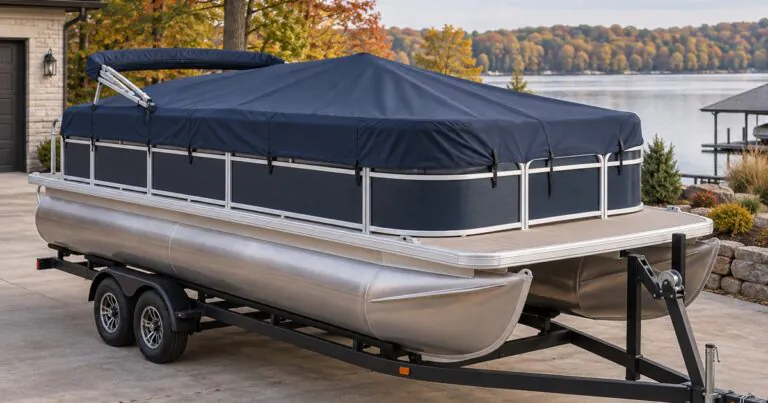
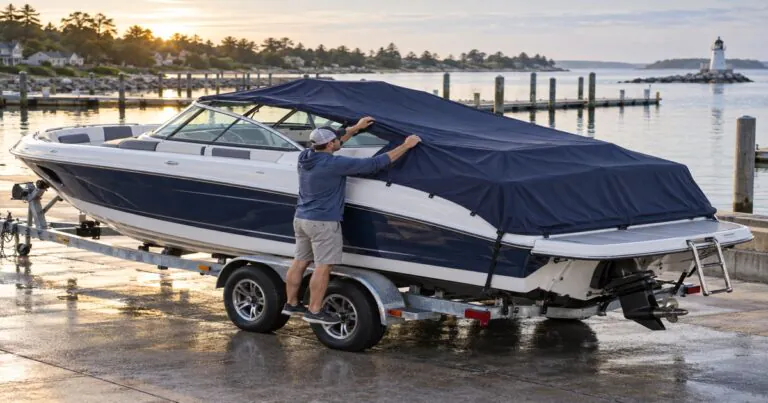
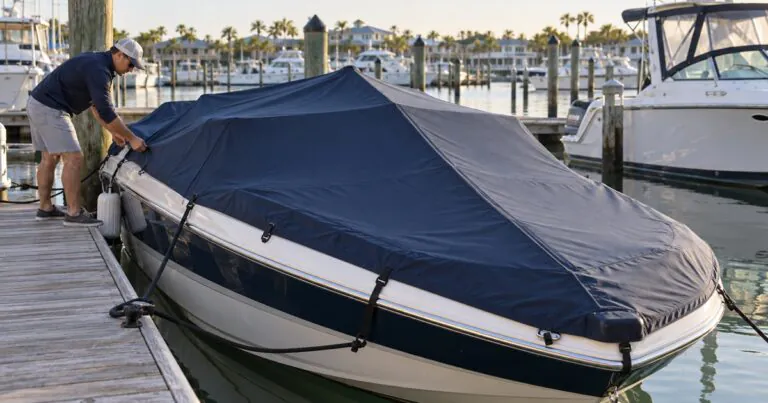
 SafeBOT

Boat Cover Support Straps: Ridge Lines, Poles & Replacement Ideas
Boat cover support straps help create slope and reduce pooling. Learn support straps vs tie-downs, ridge-line setups, support poles, replacement checks, and storage tips.

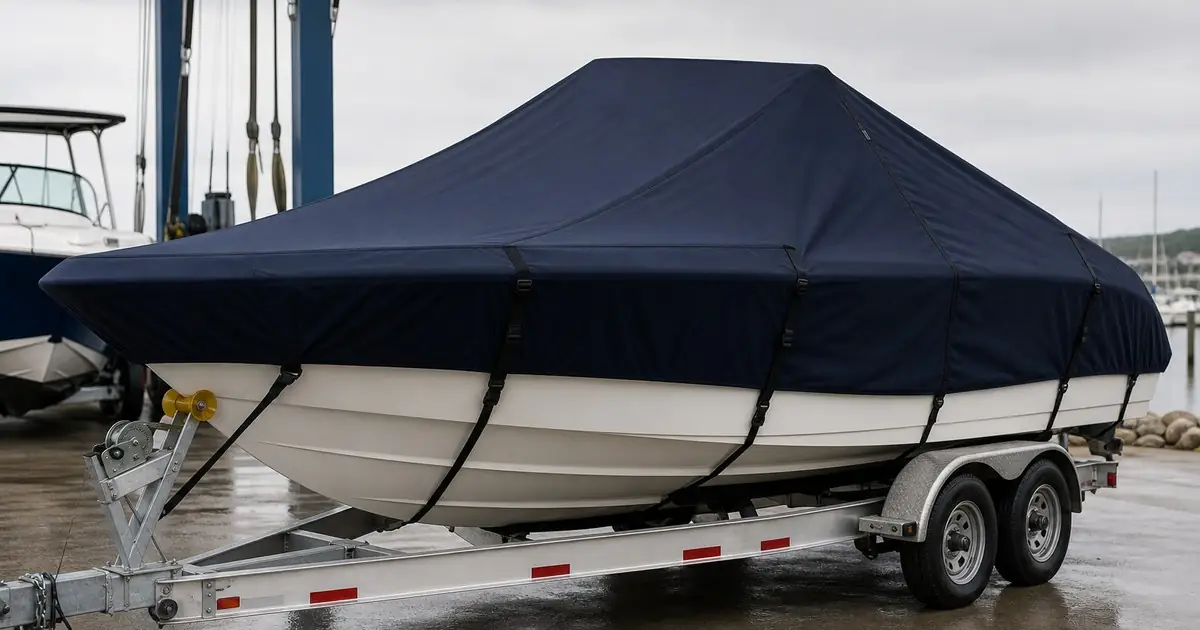
Boat cover support straps are storage helpers, not a replacement for a well-fitted cover or proper trailer tie-downs. Their job is simple: lift low sections of fabric, create slope, and help rainwater or melting snow run off before it turns into a heavy puddle.
If you are shopping for replacement support straps, comparing a ridge-line setup, or wondering whether a pole-and-strap kit will fix pooling, start with the problem you are trying to solve. A support system can improve drainage, but it cannot correct the wrong cover size, a loose perimeter, sharp hardware, or a cover that is being used outside its design limits.
Quick answer: what do boat cover support straps do?
Boat cover support straps help create a raised ridge under or over the cover so water drains instead of sitting in the fabric. They are most useful during storage, especially across open cockpit spans, bow seating areas, and flat deck sections. They are different from tie-down straps, which secure the cover to the boat or trailer.
For a trailerable setup, think of support straps as one layer in the system: the cover fit shapes the fabric, the perimeter or ratchet tension keeps the hem controlled, tie-downs reduce lifting and flapping, and poles or ridge supports add height where gravity would otherwise pull the cover down.
Support straps vs. tie-down straps vs. ratchet systems
These terms get mixed together because they all involve webbing, buckles, and tension. They are not doing the same job.
- Support straps lift the cover and help form a crown or ridge so water can run off.
- Tie-down straps connect the cover to trailer or hull points to control movement, especially during transport.
- Ratchet perimeter systems tighten the cover around the boat’s rub rail or hull line for a more secure fit.
- Support poles, bows, and frames add vertical height when straps alone cannot hold the fabric high enough.
If your cover is flapping on the highway, start with trailer-rated fit and tie-down guidance. If your cover is sagging in storage, start with support height and drainage. The fix is different.
When boat cover support straps are actually useful
Support straps are useful when the cover has to span a wide, open area with little structure underneath it. Common examples include a center-console cockpit, bowrider seating, a flat aft deck, or a windshield-to-transom span that creates a shallow bowl.
They are especially helpful when the boat sits outdoors for days or weeks at a time. Rain, wet leaves, and freeze-thaw cycles add weight quickly. A shallow puddle can become a sagging pocket, and that pocket can stretch fabric, stress seams, or pull the cover into contact with rails and fittings.
Support straps work best when they create a clear path for runoff. A strap that simply pulls sideways may remove one wrinkle while creating a new low point. The goal is not maximum tension. The goal is a clean slope.
Ridge-line setups: the cleanest support idea for many boats
A ridge line is a raised center path that gives the cover a tent-like shape. Depending on the boat, that ridge can be created by a pole, a strap line, a bow, or a combination of support points. The important detail is the angle: water should have somewhere to go.
On a center-console boat, the console often provides some natural height, but the areas forward and aft of it may still sag. On a bowrider, open seating can create a wide unsupported basin. On a small runabout, one adjustable pole may be enough, but longer cockpit spans often need more than one lift point.
Before adding more straps, look at where water actually collects after rain. The low point tells you more than the product label. If the puddle is near the bow, you need height forward. If it is behind the windshield, you may need a pole or bow that lifts the middle, not just a tighter rear strap.
Support poles: when straps alone are not enough
A support pole adds vertical lift. That makes it useful when the cover is too flat for straps to create drainage by themselves. Adjustable poles are common because they let you tune the height, but the pole base and cap matter: a narrow or sharp contact point can press into the cover and create wear.
Use support poles carefully around vinyl, canvas, coated polyester, and seams. The pole should lift the cover without punching a hard point into the fabric. If the pole cap is small, add a safer cap or support plate designed for cover use. Do not improvise with anything sharp, brittle, or likely to shift in wind.
If you are troubleshooting water pooling specifically, the dedicated Safeboatz guide on boat cover support poles and pooling is the best next read.
Replacement support straps: what to inspect first
Replacement straps are worth considering when webbing is frayed, buckles are cracked, adjustment hardware slips, or UV exposure has made the strap stiff and unreliable. But do not replace straps blindly if the real issue is poor cover fit.
- Webbing condition: look for fraying, cuts, permanent stretch, mildew staining, and brittle edges.
- Buckles and adjusters: check for cracked plastic, corrosion, slipping, and sharp edges.
- Anchor points: make sure the strap pulls in a useful direction and does not rub gelcoat, rails, windshield frames, or hardware.
- Cover contact: inspect where the strap or pole touches the fabric after wind or rain.
- Drainage result: after the first rain, check whether the low point actually moved or disappeared.
If the strap looks fine but the cover still forms a puddle, adding height usually matters more than adding tension. More tension can even make the wrong pressure point worse.
DIY ridge-line ideas: useful, but keep them gentle
Some boat owners create a temporary ridge line with webbing, soft rope, or a removable support frame. That can work for storage, but the setup should be gentle on the boat and the cover. Avoid thin cord that can dig into fabric. Avoid sharp hardware. Avoid tying anything in a way that pulls the cover sideways across gelcoat or rails.
The safest DIY approach is usually a broad, smooth support path with padded contact points and enough height to drain water without overloading one seam. If a setup looks clever but creates one hard point under the cover, it may trade a pooling problem for a chafing problem.
For rubbing concerns, use the Safeboatz guide on boat cover chafing and gelcoat rub marks before adding new support points.
Storage setup checklist
- Install the cover evenly before adding support tension.
- Create the highest point first: pole, bow, frame, or ridge support.
- Adjust support straps until runoff has a clear path.
- Secure the perimeter so wind cannot lift the cover edge.
- Pad sharp rails, cleats, windshield corners, and hardware.
- Check the setup after the first storm, not at the end of the season.
For winter or longer storage, support matters more because small drainage problems have more time to become heavy, fabric-stressing problems. If the boat is stored where snow or ice can accumulate, inspect the cover more often and follow the cover manufacturer’s limits.
Can you tow with support straps installed?
Only if the cover maker allows it and the setup is stable at road speed. Support straps are usually storage aids first. Trailer tie-downs, perimeter tension, and a trailerable cover design handle the forces that matter on the road.
If the support hardware can shift, loosen, bounce, or rub under wind load, remove or reconfigure it before towing. For trailering tension, read the Safeboatz boat cover straps tie-down guide and the guide to ratchet boat cover benefits.
How this connects to Storm Series fit
A support system works better when the cover already fits the boat correctly. If the cover is oversized, undersized, or loose around the perimeter, support straps may hide the symptom without solving the cause. Fit still comes first.
Safeboatz Storm Series covers are positioned as premium trailerable covers for current product pages, including the 17–19 ft Storm Series cover and the 20–22 ft Storm Series cover. If you are not sure which size range applies, use the free Boat Protection Guide before making a cover decision.
FAQ
Are boat cover support straps the same as tie-down straps?
No. Support straps help lift the cover and create slope. Tie-down straps secure the cover to the boat or trailer and help control movement.
Do support straps stop all water pooling?
Not always. If the cover spans a large flat area, you may need a support pole, bow, or frame to add enough height. Straps help, but they cannot overcome every shape issue.
What is the best replacement strap material?
Use marine-suitable webbing and hardware that match the original system’s width, load path, and adjustment style. Avoid narrow cord, sharp hooks, or hardware that can cut into the cover.
Should a support pole go under the highest point of the cover?
Usually, yes. A pole should create a useful high point so water drains away from the center. Make sure the cap is broad and smooth enough to protect the fabric.
Can I use support straps while trailering?
Only if the cover manufacturer allows it and the support system cannot shift or rub at road speed. For towing, the cover’s trailerable design, tie-down straps, and perimeter tension are the primary controls.
Bottom line
Boat cover support straps are worth using when they create a clean slope and reduce pooling without adding hard pressure points. Start with fit, add height where the cover sags, protect contact areas, and recheck the setup after real weather. If you are choosing a cover or troubleshooting water pooling, pair this guide with the Safeboatz support-pole, tie-down, and measuring guides before buying replacement parts.
Boating Enthusiasts — Join the Crew!
Free Boat Protection Guide Download Yours Now
Get your free copy of The Complete Boat Protection Guide — expert tips, real-world strategies, and exclusive insights from the Safeboatz team.