 SafeBOT

Boat Cover Installation Guide: Fit, Straps & Trailering Checks
A practical Storm Series boat cover installation guide covering fit checks, bow-to-stern setup, ratchet strap tension, water pooling, ventilation, trailering checks, and Safeboatz cover sizing.

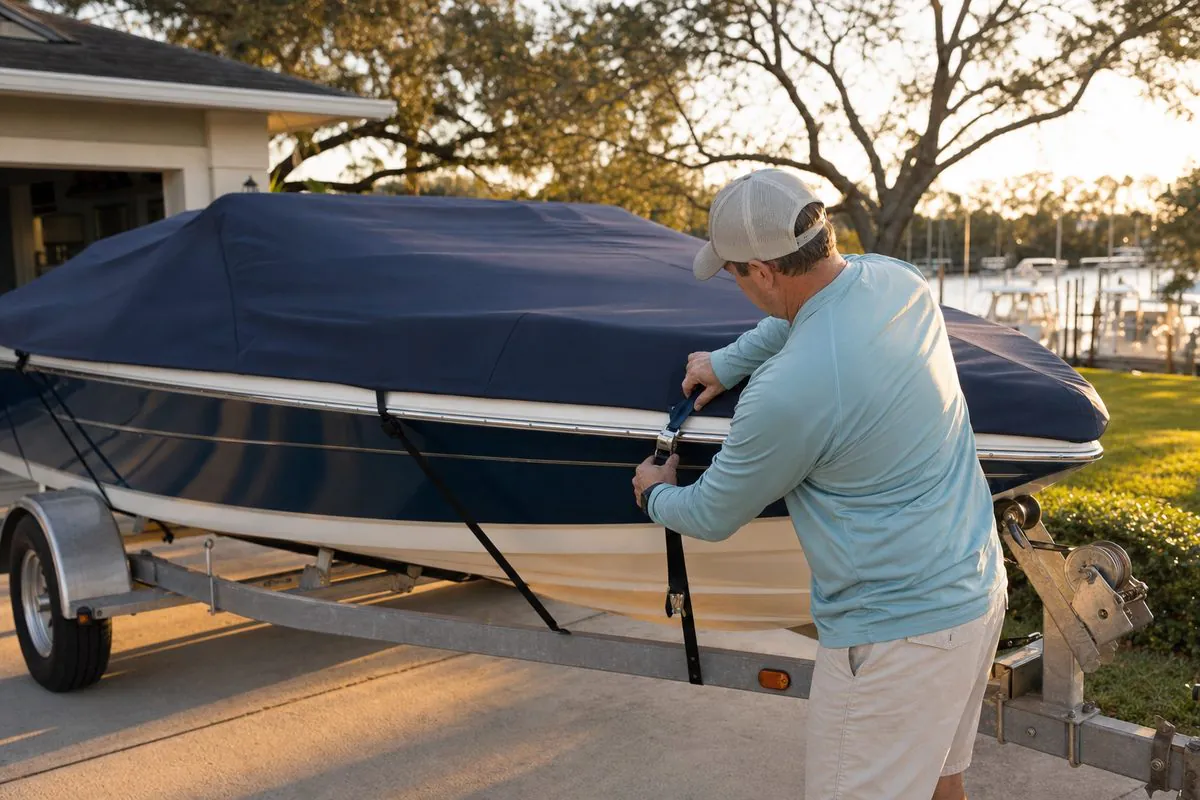
Installing a boat cover is not complicated, but the small details matter. A cover that is centered, supported, and tightened evenly sheds water better and moves less in the wind. A rushed install can flap against the hull, rub at the windshield, or collect water in the middle after the first storm.
This guide is written for trailerable boats, including runabouts, fishing boats, bowriders, and similar boats stored at home, near a marina, or on a trailer. Use it before the first install, after a long tow, or any time you are putting the boat away for more than a few days.
Quick answer
Start with a clean, dry boat. Center the cover at the bow, pull it back toward the stern, check that the hem sits evenly on both sides, then tighten the straps in stages from the middle outward. The goal is snug, not stretched. Add support under low spots so rain can run off, and keep ventilation paths open so moisture does not sit under the cover.
Before you put the cover on
A cover works best when the boat is already clean and dry. Grit under the fabric can rub against gelcoat when the wind moves the cover. Moisture trapped under the cover can also make mildew more likely, especially if the boat sits for weeks.
- Rinse off salt, dust, leaves, and pollen.
- Let upholstery and carpet dry before long storage.
- Remove loose gear from the cockpit.
- Fold down antennas or anything sharp when possible.
- Pad fixed hardware that could press into the fabric.
If the boat is wet and you need to cover it briefly, remove the cover again as soon as conditions allow and let the boat air out. A cover can block rain, but it should not become a sealed wet bag.
Check the fit before tightening anything
A lot of installation problems start with size. If the cover is too short, it will pull at the bow or transom. If it is too large, it may sag, catch wind, or pool water.
For length, measure from the bow to the farthest practical point at the stern, including extensions that affect cover fit. For width, measure the beam at the widest point. If the boat has a tall windshield, trolling motor, raised rails, or a swim platform, account for that shape before assuming the nominal boat length is enough.
This guide focuses on the current Safeboatz Storm Series covers. The two live Storm Series product pages use ratchet-secured designs, so the fit and strap guidance below applies to the covers currently linked from this article:
- Storm Series 17-19 ft trailerable boat cover for compact fishing boats, runabouts, and similar layouts that need a ratchet-secured cover.
- Storm Series 20-22 ft trailerable boat cover for larger bowriders, deck boats, and center-console-style boats in that range. The 20-22 ft cover is Storm Series only.
Fit tip: if you are between sizes, check the full boat length, beam, windshield height, and any rear platform before choosing. A slightly generous fit is usually easier to manage than a cover that cannot sit over the highest points of the boat.
Put the cover on from bow to stern
Lay the cover out first so you know which end is the bow. The bow end is usually narrower and more tapered. Place that section over the bow, then pull the cover toward the stern in short steps rather than dragging the whole cover across hardware.
- Center the bow section.
- Pull the cover over the windshield or console area.
- Check that the fabric is not caught on cleats or rails.
- Pull the stern section down evenly.
- Step back and compare both sides before fastening the straps.
The hem should sit at a similar height on port and starboard. If one side hangs much lower, do not fix it with strap tension. Re-center the cover first. Straps are for holding the cover in place, not for correcting a crooked install.
Tighten straps in stages
Once the cover is centered, attach the straps and tighten gradually. Start near the middle of the boat, then move toward the bow and stern. Alternate sides as you go. That pattern keeps the cover from walking to one side.
The right tension is firm but not extreme. You want the fabric to stay seated without pulling hard at one attachment point. If the cover looks strained at a seam, buckle, or corner, back off and redistribute the tension.
For trailering, strap routing matters even more. Keep straps clear of tires, sharp trailer edges, hot components, and moving parts. After a short drive, stop and inspect the cover again. Fabric and straps can settle once the boat starts moving.
For a deeper look at strap systems and wind movement, see our guide to ratchet boat cover benefits and the comparison of ratchet straps vs magnetic latches.
Prevent water pooling
Rain should run off the cover instead of sitting in a low pocket. Even a strong fabric can struggle if gallons of water collect in one place.
- No deep low spots: water should have a clear path to run off.
- No sharp pressure points: pad or remove hardware that pushes into fabric.
- No loose corners: wind should not be able to lift the cover easily.
- Enough slope: a support pole can help during longer storage.
- Enough airflow: ventilation matters as much as water resistance.
If you are trying to decide between waterproof protection and breathability, read Breathable vs waterproof boat covers. That article explains why water resistance and airflow need to work together.
Leave room for airflow
A tight cover does not have to be an airtight cover. Airflow helps reduce condensation, mildew smell, and damp upholstery. This matters most during humid weather, long storage periods, and spring temperature swings.
Check that vents are not blocked by folded fabric, storage poles, or added tarps. If the boat is stored outside, avoid putting a second tarp directly over the boat cover unless you have a specific reason and can still keep air moving. A tarp can trap moisture and increase rubbing if the wind gets under it.
For seasonal storage, our waterproof boat cover guide covers the tradeoff between shedding rain and avoiding moisture buildup under the cover.
Common installation mistakes
- Tightening one side first: this pulls the whole cover off center.
- Leaving the boat wet: trapped moisture can create mildew problems.
- Letting straps twist: twisted straps can loosen and wear faster.
- Pulling against sharp hardware: pad or lower anything that presses into the fabric.
- Ignoring low spots: water pooling adds weight and stress.
- Using tension to fix the wrong size: if the cover does not fit, straps will not solve it.
- Forgetting to recheck after towing: road wind changes the load on the cover.
If wind damage is your main concern, also read Wind-damaged boat covers: how to reduce storm failure risk.
After installation: quick inspection checklist
- The cover is centered.
- The bow and stern are fully seated.
- Straps are attached and not twisted.
- Buckles are not rubbing directly on finished surfaces.
- Vents have airflow.
- The cover does not touch sharp hardware.
- Rain has a path to run off.
- Trailer lights, tires, and moving parts are not obstructed if the boat will be towed.
For long storage, inspect the cover again after the first heavy rain or windy day. If you catch a low spot or loose strap early, you avoid most of the damage that happens later.
FAQ
How tight should a boat cover be?
A boat cover should be snug enough that it does not flap, but not so tight that seams, straps, or attachment points look strained. If the cover is pulling hard in one place, loosen it and balance the tension across the boat.
Can one person install a trailerable boat cover?
Yes, in most cases. Start at the bow, pull the cover back in sections, then tighten straps gradually from the middle outward. A second person helps on larger boats or windy days, but the process should not require force.
Should I cover a wet boat?
Only briefly if you have no better option. For storage, the boat should be dry before the cover goes on. If you cover it wet, remove the cover later and air the boat out.
Why does my cover collect water?
Water usually pools when the cover has a flat low section. Re-center the cover, adjust tension, and add safe support under the low area so rain can run off.
Is this guide for trailering or storage?
Both, but trailering needs extra checks. Make sure every strap is secure, clear of tires and moving parts, and still tight after a short drive.
Boating Enthusiasts — Join the Crew!
Free Boat Protection Guide Download Yours Now
Get your free copy of The Complete Boat Protection Guide — expert tips, real-world strategies, and exclusive insights from the Safeboatz team.