 SafeBOT

Ratchet Straps vs Magnetic Latches for Boat Covers
A complete comparison of ratchet straps vs magnetic latches for boat covers, including trailering, storage, fit, tension, inspection, and Safeboatz Storm Series context.

Ratchet Straps vs Magnetic Latches for Boat Covers
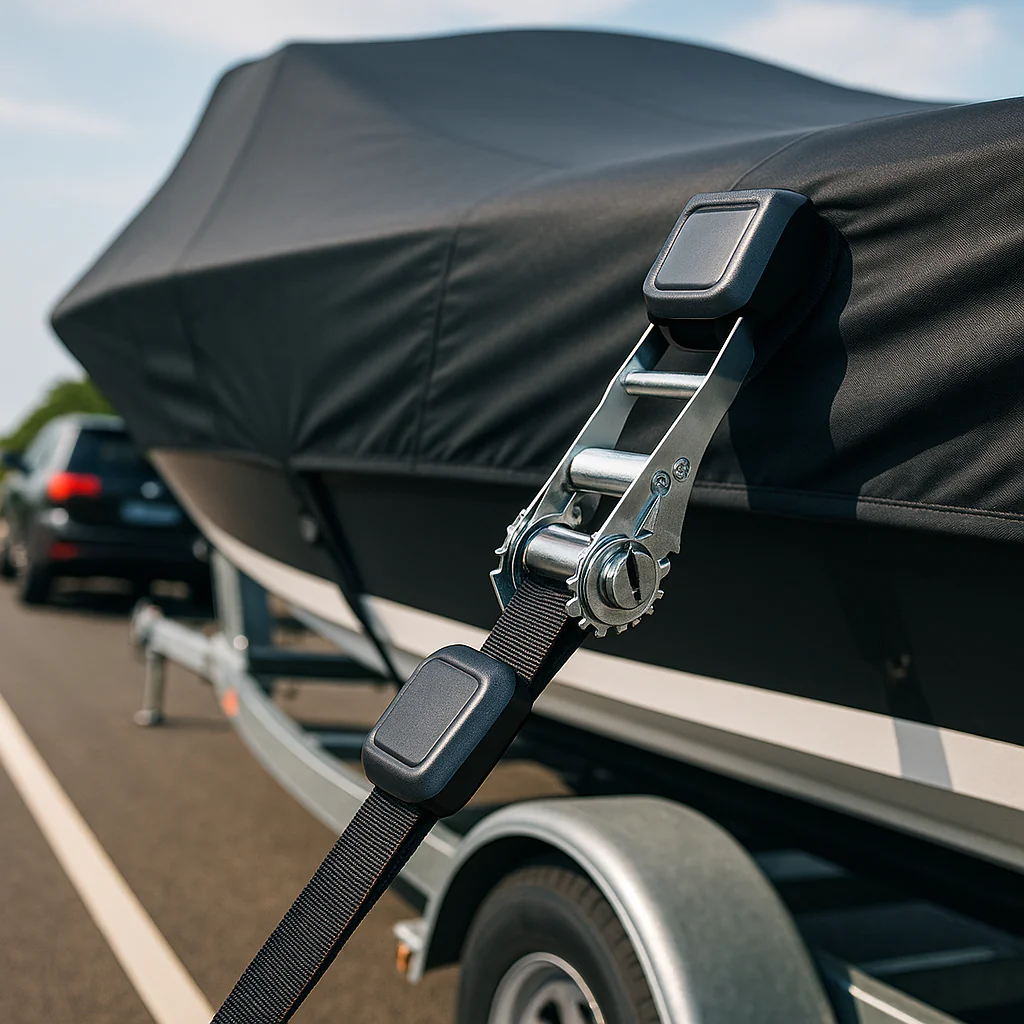
Ratchet straps and magnetic latches are not interchangeable solutions. Both can help secure a cover, but they are designed around different priorities. Magnetic latches favor speed and convenience. Ratchet straps favor adjustable tension, repeatability, and control.
That difference matters most when a cover is used outdoors, during storage, or on a trailer. A boat cover does not only need to attach. It needs to stay positioned over a hull shape that may include rails, windshields, consoles, trolling motors, cleats, and uneven seating areas.
The Short Answer
If the cover is used in a protected indoor space and convenience is the main goal, magnetic or quick-latch systems may be enough. If the cover is used outdoors, in changing weather, or while trailering, ratchet tension is usually the more practical system because it can be adjusted, checked, and retensioned.
The goal is not to make dramatic speed claims. The goal is a stable cover that reduces loose fabric, helps water run off, and gives the owner a clear pre-trip inspection routine.
Where Magnetic Latches Can Make Sense
Magnetic latches can be useful for light-duty coverage, short-term storage, or sheltered situations where the cover is not exposed to strong wind or highway transport. They can also be convenient for owners who remove and reinstall a cover frequently.
Their main advantage is simplicity. A latch snaps into place quickly and may be easier for one person to handle. For a garage-kept boat, a cockpit dust cover, or a light cover under a carport, that convenience can be enough.
The limitation is adjustment. A magnetic latch works best when the attachment points line up cleanly. If the boat has accessories, unusual beam width, a tall windshield, a raised trolling motor, or uneven corners, convenience does not always equal fit.
Why Ratchet Systems Work Better for Trailering
A ratchet system gives the owner mechanical tension. That is useful because a trailerable cover faces movement, vibration, wind pressure, turning, stops, and repeated load changes. The cover may settle during the first miles of a trip, and a ratchet system gives you a practical way to retension it.
Ratchets also help distribute tension around the cover instead of relying on a few fixed attachment points. When combined with support poles, reinforced hems, and correctly routed tie-down straps, they help reduce loose fabric and water pockets.
For more detail, see the Safeboatz ratchet boat cover guide.
Fit Matters More Than the Fastener Alone
A ratchet system cannot fix a cover that is the wrong size. A magnetic latch cannot make a poorly shaped cover fit the boat. Before comparing fasteners, measure the boat and confirm the cover range.
- Measure centerline length from bow to stern coverage point.
- Measure beam at the widest point.
- Account for windshield, console, rails, motor position, and accessories.
- Decide whether the cover is for storage only or trailer use.
- Check whether support poles are needed to prevent pooling.
If you are unsure, start with the boat cover measuring guide before choosing a fastening system.
Pre-Trip Checklist for Ratchet Covers
Before towing with any cover installed, inspect it carefully. A good checklist is more important than assuming the system is safe because of a product label.
- Walk around the boat and look for loose fabric at the bow, windshield, sides, and transom.
- Check that straps are not rubbing against sharp hardware, painted edges, or trailer parts.
- Confirm support poles are seated and not pushing fabric into a stress point.
- Retension the ratchets after the cover settles.
- Stop and inspect if the cover starts flapping aggressively or shifting.
Storage Use: Ratchet vs Magnetic
For storage, the comparison is slightly different. A magnetic latch may be acceptable when the boat is indoors and the cover is mostly protecting against dust. Outdoor storage adds rain, UV exposure, temperature swings, and wind, so tension and support become more important.
A ratchet system can help keep the perimeter controlled, but it should not be overtightened. Over-tension can stress seams or pull fabric into awkward angles. The correct setup is snug, even, supported, and easy to inspect.
Safeboatz Storm Series Fit Context
Safeboatz Storm Series covers are built around controlled tension and trailerable use. If you are comparing systems because you want a cover for outdoor storage or towing, compare the active Storm Series sizes:
Use the product size guidance and your own measurements before buying. A good fastening system works best when the cover size is already appropriate.
Final Take
Magnetic latches are about convenience. Ratchet straps are about adjustable tension. For sheltered, light-duty coverage, convenience may be enough. For trailering, outdoor storage, and changing weather, a ratchet system gives most owners a better way to control the cover and inspect it before use.
Need a simple pre-storage and pre-trailering checklist? Download the free Safeboatz Boat Protection Guide.
FAQ
Are magnetic boat cover latches bad?
No. They can be useful for sheltered or light-duty situations. The concern is that they usually provide less adjustment than a ratchet system.
Are ratchet boat covers harder to install?
They take a little more setup the first time, but the adjustment is useful when fit, trailering, and outdoor storage matter.
Can I trailer with a magnetic-latch cover?
Only if the cover manufacturer specifically supports that use and the cover fits securely. If there is any loose fabric or shifting, do not tow with it installed.
Can I overtighten a ratchet boat cover?
Yes. The cover should be snug and stable, not stretched to the point that seams, corners, or hardware points are under unnecessary stress.
Related fastening and trailering resources
Fastener choice should match how you store and move the boat. Compare this guide with Safeboatz articles on ratchet boat covers, wind-control straps, and trailerable boat cover setup. If fit is uncertain, start with the measurement checklist.
For non-product trailering context, see NHTSA trailering and towing guidance and U.S. Coast Guard boating safety resources.
Boating Enthusiasts — Join the Crew!
Free Boat Protection Guide Download Yours Now
Get your free copy of The Complete Boat Protection Guide — expert tips, real-world strategies, and exclusive insights from the Safeboatz team.