

17ft Boat Cover Buying Guide 2026: Fit, Fabric & Care

17ft boat cover Buying Guide: Fit, Fabric & Care 2026
17ft boat cover is the single most important accessory you can buy to protect your hull, and this guide shows how to choose, measure, install, and care for the right cover in 2026. Whether you tow every weekend or leave your boat on a trailer for months, the right cover balances fit, material, and ventilation so you avoid mold, UV damage, and snow-load failures. This article covers cover types, exact measuring steps, denier and coating choices, installation best practices, maintenance routines, and a one-page buying checklist. Review the manufacturer’s specs, try a dry-fit, and consult weather authorities like NOAA before leaving your boat outside for extended storage.
How to choose the right 17ft boat cover
Start by deciding the primary use-case for the cover: trailering, long-term outdoor storage, mooring, or a shrink-fit custom solution. Each cover type has trade-offs in cost, fit, and longevity. A universal trailerable cover is inexpensive and portable; a shrink-fit custom cover costs more but fits like a second skin and protects better from wind-driven debris. Use the decision flow: where will you store, will you trailer often, and how severe is your local climate? If you frequently tow, prioritize durable straps and anti-flutter ratchets. If you store in snow, pick a steep-slope design with strong tie points and support poles.
Cover types: trailerable, storage, mooring, shrink-fit (custom)
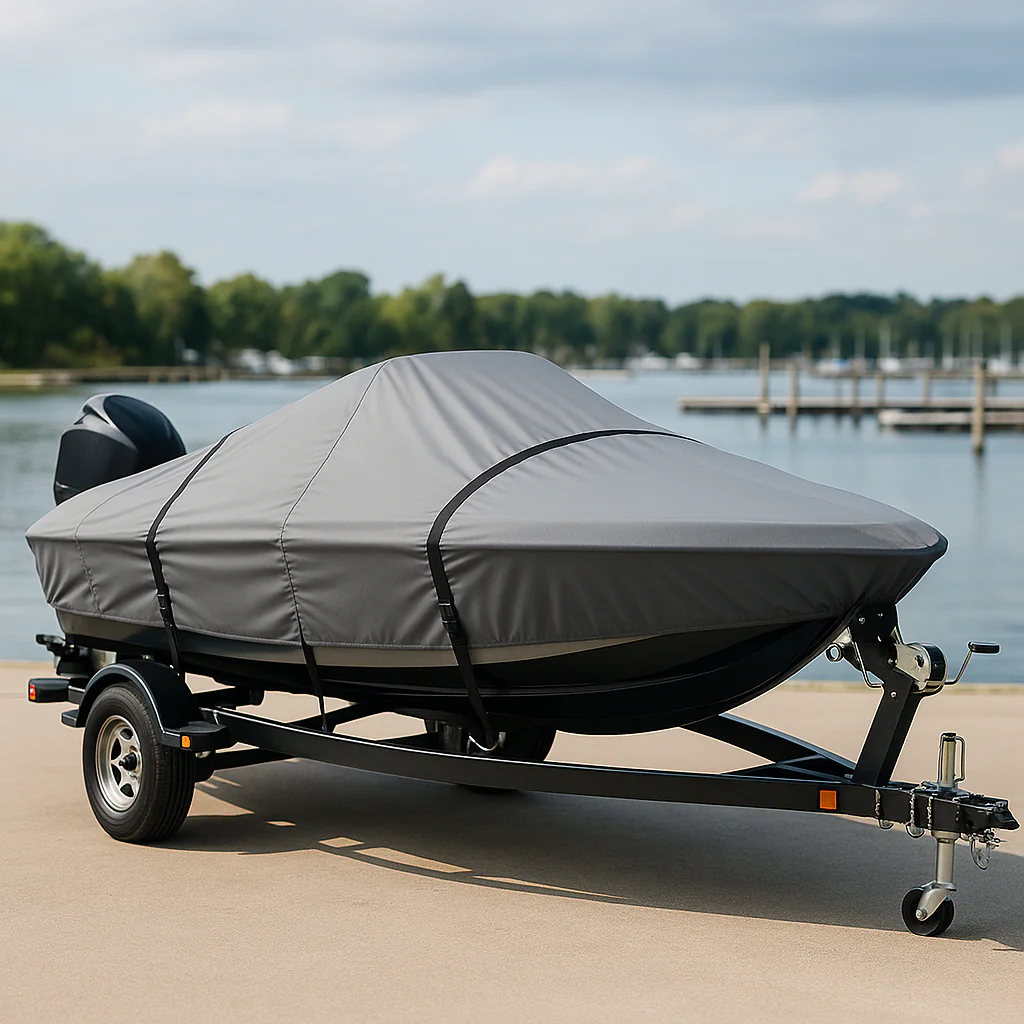
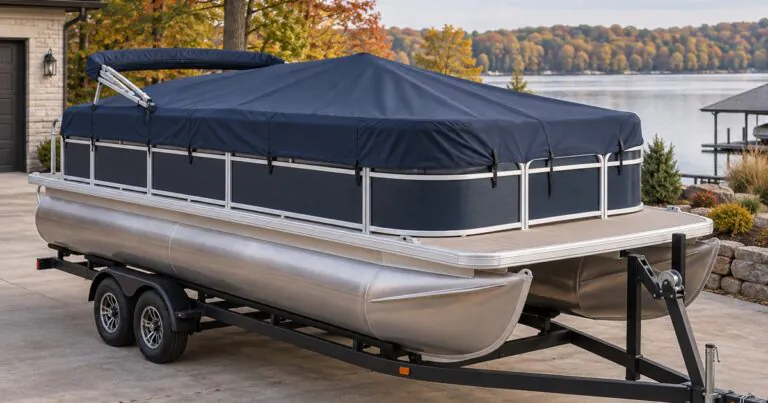
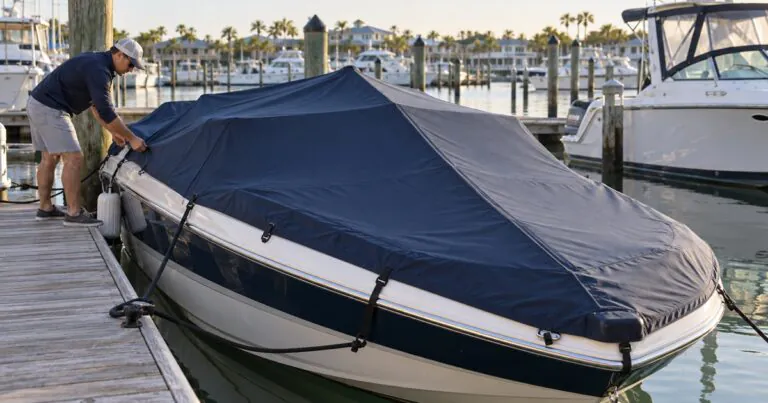
Trailerable covers are engineered for highway speeds with reinforced seams, ratchets, and multiple straps. Storage/outdoor covers emphasize UV resistance and mildew control with vents and breathable fabrics. Mooring covers focus on waterproofing and quick-release attachments for frequent boarding. Shrink-fit or custom covers offer the best fit for unique hulls and sensitive gelcoat areas. Typical cost ranges: universal $50–$250, 600D–1200D $150–$600, custom $400+. A practical rule: invest where your exposure and use demand longevity, not just the lowest price.
Universal vs custom: pros, cons, and real cost examples
Universal covers win on price and convenience. They fit many hulls but can leave gaps or stress seams when forced onto atypical beams. Custom covers cost more yet eliminate flapping, reduce abrasion points, and reduce water pooling. Example scenarios: a bass-boat owner who trailers weekly may prefer a high-quality 600D trailerable universal with extra buckles; a lakeside owner facing heavy snow should consider a 1200D custom with support poles. When estimating true cost, factor in replacement frequency—cheap covers may fail in one season while a better cover lasts several years.
Key features to prioritize (denier, coating, vents, straps)
Look for adequate denier, taped seams, double-coated fabric, and reinforced tie points. Choose breathable vents to avoid condensation; avoid non-breathable fully sealed covers for humid climates. Prioritize reinforced straps, stainless hardware, and tension panels that distribute load. A short shopping checklist: measured length and beam, denier for your climate, sealed seams, vents, and strong buckles.
- Measure first: length, beam, height
- Material choice: denier and coating
- Securing system: straps, ratchets, reinforced grommets
Measuring & matching: get a perfect fit for 17ft boats
Accurate measurements are where most buyers go wrong. Measure hull length from bow tip to stern (exclude trailer tongue), beam at the widest point, and highest fixed point like a windshield or motor in the up position. Record whether the motor is installed and whether it’s trimmed up or down. Use those numbers to compare with manufacturer charts rather than trusting labels like « fits 17–19ft. » A slim bass boat and a wide bowrider both labeled 17ft need very different cover widths and heights.
Exact measurements to take (length, beam, bow shape, motor)
Step-by-step measuring: 1) Remove any accessories that change length or note them. 2) Measure overall hull length on the hull, not trailer. 3) Measure beam at the widest point including rub rails. 4) Measure windshield and highest fixed point. Also note bow shape — sharp points, rounded bows, or wide flared bows change how much extra material you need at the front. Save these fields in a printable template to reuse for future purchases.
- Remove accessories and note additions
- Measure from bow tip to stern (hull only)
- Measure beam and highest point
How to read cover size charts and match to hull types (bass, bowrider, V-hull)
Manufacturers often list a nominal length range; always check the actual cover dimensions (length x width x height). For a bass boat with a narrow beam, pick a cover with smaller WB but correct length. For a bowrider, allow extra width for windshields and rails. Example: a 17ft hull with a 96″ beam should look for cover WB ≥ 110″ to clear rails and trailer hardware. When in doubt, choose a slightly larger size with adjustable straps over a too-tight fit that stresses seams.
Sample measurement scenarios with recommended cover sizes
Scenario A: Weekend trailering bass boat — 17ft hull, 88″ beam, low windshield. Recommend a trailerable cover with 246″ length equivalent and narrow width, 600D fabric, and extra buckle straps. Scenario B: Year-round outdoor bowrider — 17.5ft hull, 102″ beam, tall arch. Recommend a cover with larger WB, high crown, 1200D fabric, and support poles for snow shedding. Keep a printed measurement template in your glovebox for quick re-ordering.
- Bass boat example: narrow beam, trailerable focus
- Bowrider example: wider beam, storage focus
Materials, denier ratings & weather protection explained
Denier measures fiber thickness: higher denier generally equals greater abrasion resistance and lifespan but greater weight. Common marine choices: 210D for light use, 600D for typical marine-grade covers, and 1200D or higher for heavy-duty or commercial use. Coatings matter: PU (polyurethane) coatings offer decent waterproofing with breathability; PVC tends to be fully waterproof but less breathable and heavier. Look for double-coating and taped seams for long-term waterproof performance.
Denier comparison: 210D vs 600D vs 1200D vs 1200D+ (use cases)
210D covers are light and affordable for indoor or low-exposure storage. 600D is the sweet spot for many boaters—good durability, manageable weight, and reasonable breathability. 1200D or higher is ideal for snow-prone areas and commercial marinas. Use-case examples: a sheltered marina with cover overhead can use 210D; a weekend trailer boater should choose 600D; a lakeside owner facing heavy winters should invest in 1200D.
Breathability, coatings (PU, PVC), waterproof vs water-resistant
Breathable fabrics with water-repellent coatings reduce condensation and mold; fully waterproof PVC traps moisture if vents are absent. Always prefer a breathable design with vents or mesh panels in humid climates. Look for mildew treatments and UV inhibitors—these extend fabric life by reducing sun damage and mold growth.
UV protection, mildew resistance, and seasonal suitability
Sun-focused climates need UV-stable dyes and coatings—choose fabrics labeled with UV inhibitors. Humid regions require vents and mildew-resistant finishes. For winter use, prioritize slope design, reinforced tie points, and support poles. A durable cover with proper ventilation makes seasonal transitions safer and reduces the need for frequent replacements.
- 210D: light-duty, indoor
- 600D: common marine use
- 1200D: heavy-duty, snowy climates
Installation, securing, and trailering best practices
Proper installation prevents chafing and pooling. Start with a dry-fit to locate straps and vents. Secure bow and stern first, then midship straps. Use a minimum of four straps for a 17ft trailerable cover; six or more is better for highway towing. Anti-chafe sleeves, foam pads, and stainless hardware preserve fabric and reduce noise. Check local towing rules and monitor weather alerts from NWS forecasts before long trips.
Step-by-step install for trailerable 17ft covers
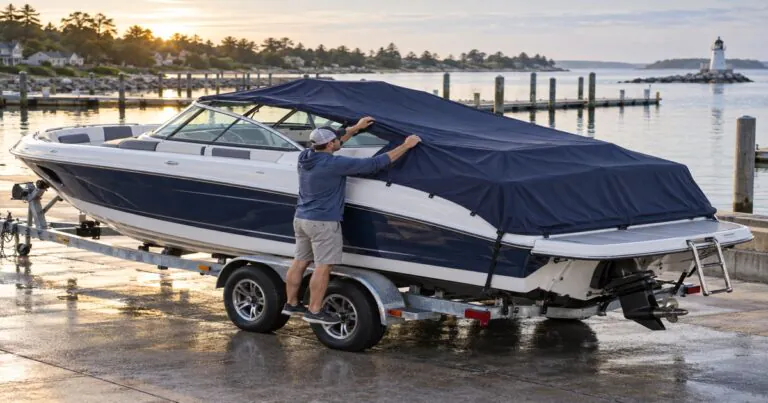
1) Dry-fit the cover over the bow and ensure vents align. 2) Pull the material back over the beam and stern, keeping straps accessible. 3) Fasten bow and stern straps, then midship straps. 4) Tighten ratchets just enough to remove slack—avoid over-tightening. 5) Check grommets and cinch points for movement. This sequence minimizes fabric abrasion and ensures proper drainage paths.
- Dry-fit and align vents
- Fasten bow/stern then midship straps
- Tension without over-tightening
Strap layout, tie-downs, and anti-chafe solutions
Recommended strap layout: bow, stern, two midship; add two cross or crisscross straps for highway speeds. Use marine-grade ratchet straps or stainless buckles—rope or garden twine can slip and damage fabric. Protect straps with foam sleeves where they contact rails and use reinforced grommet plates on the cover to spread load.
Safety, legal and storm-prep considerations when trailering or storing
Secure covers so lights and license plates remain visible and covers cannot detach at speed. For storm prep, lower the cover slope, add secondary tie-downs, and remove any pooling immediately after heavy rain. Check local regulations about load visibility and always inspect straps and fasteners before travel.
Expert tip: Always perform a quick strap and vent check after the first 10 miles of towing to catch shift before it becomes damage.
Maintenance, repairs and long-term storage tips
Regular maintenance extends cover life. Clean with mild marine soap—no bleach—and dry completely before storage to prevent mildew. Keep a repair kit with fabric patches, seam sealer, spare straps, and UV tape. Inspect seams each season and reseal or replace if waterproofing fails. When storing, use a breathable bag and store in a cool, dry spot away from direct sunlight.
Cleaning, drying and mildew prevention (products and timings)
Cleaning routine: remove debris, hose down, wash with mild soap and soft brush, rinse, and air-dry fully. Frequency: after heavy use, at season end, and mid-season in humid climates. Use mildew-resistant sprays only if recommended by the manufacturer to avoid removing protective coatings.
Field repairs, patch kits, and when to replace vs repair
Small tears and punctures are repairable with adhesive patches and seam sealer if caught early. Replace a cover when multiple repairs accumulate, fabric thins, or seams continually leak. Keep a small repair kit onboard for quick fixes and patch within 48 hours to prevent enlargement.
Winter storage checklist and snow-load prevention
Before winter: inspect and repair, dry completely, add support poles to prevent pooling, and use extra straps for wind security. For heavy snow, clear accumulations promptly and avoid flat crowns that collect water. A well-prepared cover prevents both cosmetic and structural hull damage.
Key takeaway: Dry storage and good ventilation reduce mold and prolong fabric life more than any single material upgrade.
Buying checklist, common mistakes, and decision matrix
Use this quick checklist before purchase: accurate measurements, intended use-case, denier and coating, vents, straps count, seam construction, and warranty terms. Ask sellers for actual dimensions and seam sealing methods. Avoid buying solely by “boat length” or picking waterproof non-breathable covers in humid areas. The decision matrix simplifies the choice: low budget + indoor → 210D; moderate + outdoor → 600D; harsh weather → 1200D or custom.
Quick pre-purchase checklist (measure, material, use-case, warranty)
- Measure hull length and beam
- Select denier by climate
- Confirm vents and straps
- Ask about seam sealing and returns
Top 7 mistakes buyers make and how to avoid them
Common errors: measuring trailer length, ignoring motor height, buying non-breathable waterproof covers for humid climates, assuming heavier is always better, skimping on straps, overlooking seam construction, and not checking return policies. Fixes: measure hull, verify heights, choose breathable designs for humid areas, and prioritize reinforced seams and a reasonable warranty.
Conclusion
Start with three immediate actions: measure your hull now and save the template, match material to your climate, and decide custom vs universal based on usage. A 17ft boat cover chosen with care protects cosmetics and structure, reduces maintenance bills, and keeps your boat ready for the season. For official weather planning and storm guidance consult NOAA Sea Grant and keep your measuring notes handy for future purchases; when you’re ready to compare trailerable options see the trailerable 17–19ft cover and consult our measuring guide and waterproof covers page for more details before you buy.
Actionable takeaway: measure accurately, choose material for your climate, and secure the cover properly—the right choices now save costly repairs later. For seasonal protection tips review the winter cover guide and consult local forecasts before leaving your boat unattended.
Frequently Asked Questions
Is shrink wrap or tarp better for boats?
Shrink wrap is generally better for long-term, full-coverage protection, while a tarp can be better for short-term, budget, or ventilated needs. Shrink wrap creates a tight, weatherproof shell that keeps out wind, snow, and most rain, but it can trap condensation unless you add vents or ventilation systems; professional application is often recommended. A tarp or breathable cover is cheaper, easier to reuse, and can be set up to avoid pooling if you use supports, but it offers less protection from heavy snow or prolonged storms. For winter storage choose shrink wrap; for day-to-day protection choose a well-fitted tarp or cover.
Is it okay to leave a boat uncovered in the rain?
No, it’s generally not advisable to leave a boat uncovered in the rain because you risk water pooling, interior damage, and mold growth. If you must leave it, make sure cockpit drains and scuppers are clear and that loose canvases are secured to prevent flapping that wears seams. Water can penetrate lockers and harm electronics, so check seals and battery connections afterward; pump out any standing water from the bilge and dry upholstery quickly. For routine rainy conditions use a fitted cover or create a raised tarp shelter to promote drainage and reduce the chance of mildew and electrical damage.
Why are boat covers so expensive?
Boat covers are expensive because they use durable materials, precise patterning, and reinforced hardware that raise production costs. Manufacturers typically use marine-grade fabrics with UV-resistant coatings and heavy-duty seams to resist UV degradation and salt, and they often cut custom patterns so the cover fits tightly; those steps require more labor and quality control. Shipping bulky items and including warranty support also add to the price. To lower your cost, consider a universal cover, buy off-season, or repair and maintain the cover you have to extend its life—proper care often saves you more than choosing the cheapest option up front.
Boating Enthusiasts — Join the Crew!
Free Boat Protection Guide Download Yours Now
Get your free copy of The Complete Boat Protection Guide — expert tips, real-world strategies, and exclusive insights from the Safeboatz team.

SafeBOT