 SafeBOT

Ratchet Boat Cover Benefits: why tension matters when trailering
Ratchet boat cover guide for trailering: how ratchet straps reduce flapping, control hem tension, prevent pooling, and what to inspect before highway use.

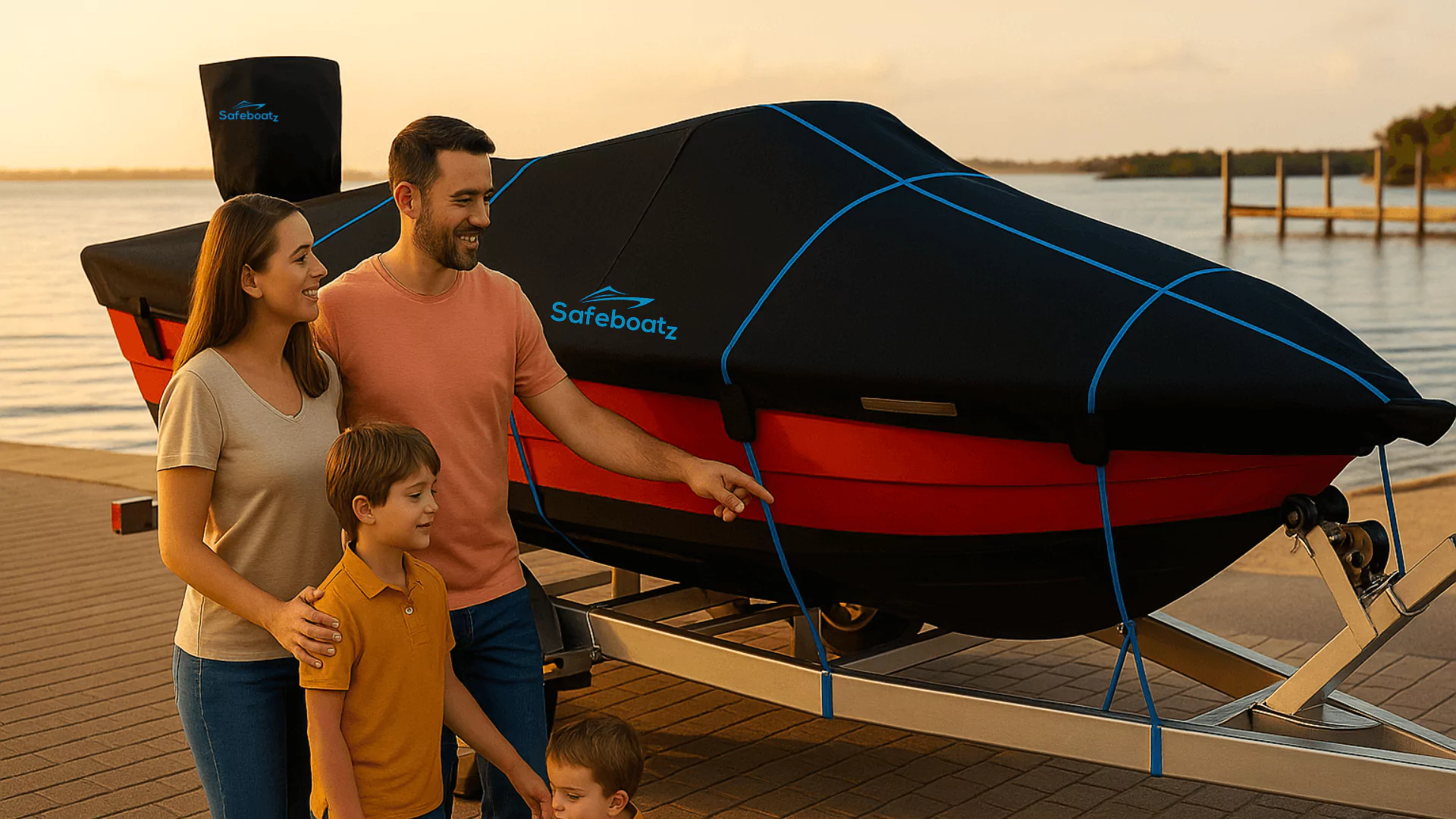
If you trailer, store, or simply protect your boat outdoors, you’ve likely wrestled with loose straps, fluttering hems, and water pooling. That’s where The Benefits of a Boat Cover with Ratchets really show up. A ratchet boat cover tightens evenly around the hull, takes seconds to dial in, and is easier to keep stable during road checks. Compared with drawstrings, basic clips, or elastic hems, a steel ratchet delivers consistent tension you can feel — and hear, because the annoying flap‑flap in your side mirror goes away.
This article explains when a ratchet system is worth choosing, how to check fit before trailering, and what to inspect before each trip. It also compares common fastening systems and shows how fabric, support poles, and strap layout work together to protect the boat without over-promising what any cover can do.
Boat Covers 101: Types, Uses, and When to Go Trailerable
A boat cover shields gelcoat, vinyl, carpet, and electronics from UV, rain, dust, and bird droppings. But not all covers are designed the same.
Universal vs. Semi‑Custom vs. Custom
- Universal covers fit many hulls. They’re budget‑friendly and ideal for storage.
- Semi‑custom covers match groups of hull shapes (e.g., bassboat or V‑hull). They balance price and fit — a great pick for most owners.
- Custom covers are patterned for a specific boat model/year. They fit like a glove but cost more and can be overkill if you change boats.
Trailerable Boat Cover Essentials
A trailerable boat cover must resist wind lift, flutter, and highway spray. Look for:
- A ratchet system that cinches the hem evenly.
- Reinforcement at stress points (windshield corners, trolling motor, cleats).
- Strap systems (e.g., 13‑point strap system) that triangulate load.
- Support poles to prevent pooling.
- Rust‑proof S‑hooks and hardware that won’t corrode.
Common Boat Styles: V‑Hull, Bass, Pontoon, Fish & Ski
Fit patterns vary. A V‑hull needs bow reinforcement and keel alignment; a bass boat needs trolling‑motor and console allowances; pontoons have rail and ladder considerations; fish & ski often need higher windscreen clearance and bow seats accounted for.
The Benefits of a Boat Cover with Ratchets (At a Glance)
A quick snapshot of why the ratchet wins:
Tighter Fit, Less Flapping
Ratchets apply even, controllable tension around the perimeter. You avoid the “hot spots” and slack zones that cause flutter, abrasion, and seam stress.
Safer Trailering and Highway Stability
On the road, wind tries to billow a cover like a sail. A ratchet seat‑belts the hem under the rub rail, can help reduce lift and keep seams aligned when the cover is installed correctly.
Faster Setup, Easier Adjustments
Steel ratchets offer real mechanical advantage. Put the cover on, snug the straps, and a few clicks help dial in the right tension. Adjust on the fly if weather changes.
Why Steel Ratchets Beat Straps, Clips, and Drawcords
Mechanical Advantage & Micro‑Adjust
A ratchet multiplies your hand force. That means precise micro‑adjustments without over‑tightening, so the fabric lasts longer and the fit stays consistent.
Marine‑Grade Stainless & Corrosion Resistance
Quality covers use marine‑grade stainless components on the ratchet assembly. Unlike plastic buckles, stainless hardware resists UV degradation and salt‑spray corrosion, critical for coastal trailering and long winters.
Durability vs. Plastic Buckles
Plastic clips can creep, crack, or slip under cyclic loads. Steel ratchets maintain tension, resist impact, and handle thousands of tighten‑release cycles — the kind of real‑world abuse boats see.
Material Matters: Why Marine‑Grade 900D Polyester Is the Sweet Spot
600D vs. 900D vs. “Heavier Is Better?” (Not Always)
Many shoppers chase denier numbers — 1200D! 1600D! Here’s the truth: 900D marine‑grade polyester hits the sweet spot between tear strength, manageable weight, dry‑time, and breathability. Going heavier often adds bulk, slows drying, and can trap moisture — which encourages mildew. For a trailerable boat cover, 900D is robust enough for road use while still easy to handle solo.
Coatings, UV Inhibitors & Hydro‑Resistance
Look beyond denier. Waterproof performance comes from high‑quality PU/PVC coatings, seam construction, and UV inhibitors. A well‑engineered 900D with taped or double‑stitched seams and a water‑shedding finish outperforms a heavier, poorly finished fabric.
Breathability, Dry‑Time & Mildew Prevention
Covers must breathe and dry fast. A super‑heavy canvas or over‑built synthetic can hold moisture. 900D dries quicker, limiting mold growth. Pair it with support poles to prevent pooling and you’ll keep decks and upholstery healthier.
Bottom line: for most owners, more than 900D isn’t useful. It adds weight and costs without meaningful gains on the road or in storage.
Fitment Guide: 17–19ft and 20–22ft Sizes (Plus Popular Models)
Whether you need boat covers 17–19ft, a boat cover 19ft, or step up to 20–22ft, sizing is straightforward: measure overall length (LOA) and beam at the widest point.
Bayliner, Tracker, Bass Tracker 175, Pro 170 & More
For Bayliner, Tracker, Bass Tracker, and similar fishing or runabout layouts, start with the hull length and beam, then check whether the cover has enough allowance for consoles, trolling motors, bow rails, ladders, and fish-finder mounts. A semi-custom cover can work well, but only if the size range and hull style match your actual boat.
17’–19’ V‑Hull, Semi‑V, Flat Bottom—What to Know
For v hull boat covers 17–19ft or waterproof boat covers 17–19ft, check the beam spec. Semi‑V and flat‑bottom skiffs may use the same length but require different girth. Phrases like “17’ boat cover,” “17 boat cover heavy duty,” and “17’+ semi‑V flat bottom boat cover” point to this variation — choose a pattern matched to your hull type.
19ft & 20–22ft Fish & Ski, Pontoon, and Bass Boats
Common requests include 19 foot boat cover, 19 foot bass boat tarp, 19’ boat cover with pole, 19 foot fish and ski boat cover ratchet strap, and upgrades to 20–22ft. Make sure your cover includes pole(s) and a ratchet to manage the extra surface area on larger decks and consoles.
Trailering Confidence: Highway Tests You’ll Actually Feel
13‑Point Strap Systems, Poles & Rust‑Proof S‑Hooks
A 13‑point strap system secures tension across the hull, so loads are shared instead of stressing one seam. Rust‑proof S‑hooks keep tie‑downs reliable in wet or salty conditions. Support poles stop puddling that can sag fabric and add “ballooning” risk on the road.
Wind‑Lift Control, Bow & Stern Security
Proper tension from your ratchet cuts wind‑lift at the bow and stern. Combine with bow/stern lines and you’ll see steadier mirrors, quieter rides, and less cover movement — a big win for trailerable boat cover users.
Storage Use: Winter Tarps vs. True Waterproof Boat Covers
Off‑Season: Shrink Wrap vs. Premium Boat Cover
Shrink wrap is great for one‑time winter storage, but it’s single‑use and not breathable. A premium boat cover you can use year‑round offers better value and is friendlier to the planet.
Boat Tarps for Winter Storage—Pros & Cons
Boat tarps for winter storage can protect from snow and debris, but generic tarps aren’t shaped for hulls and can flap or chafe. A waterproof boat cover with ratchets, poles, and reinforcements fits better, sheds snow, and protects gelcoat and rub rails.
Buying Checklist: How to Pick a Premium Ratchet Boat Cover
Sizing, Fit, and Model Compatibility
- Match length categories: boat covers 17–19ft or 20–22ft.
- Check beam width and hull type (V‑hull, bass, pontoon, semi‑V, flat bottom).
- Look for model notes: bayliner boat covers, fishing boat covers 17–19ft, polyester boat cover patterns for bass rigs, canvas boat cover options if you prefer traditional hand‑feel.
Fabric Specs, Seams, Reinforcements
- Marine‑grade 900D polyester with UV/waterproof treatment.
- Double‑stitched or taped seams at rub points (trolling motor, cleats).
- Reinforced corners, bow panel, and motor cowling area.
Warranty, Support & Replacement Parts
- A practical warranty (e.g., 2‑year warranty on fabric/hardware) shows confidence.
- Ready access to replacement straps, ratchet hardware, and poles is key.
- Some premium makers (including brands like Safeboatz) offer safeboatz premium boat cover lines such as safeboatz 17–19 ft. boat cover or premium bass boat cover 16–18 ft with a 13‑point strap system, UV & waterproof protection, and rust‑proof S‑hooks — exactly what trailerers need without excess bulk.
Shopping on marketplaces? Many users search boat covers Amazon. That’s fine, but use this checklist to verify materials, hardware, and a true ratchet boat cover design before you click “buy.”
Care & Maintenance: Make It Last
Cleaning, Drying & Mold Prevention
- Rinse salt and grit after trips.
- Mild soap, soft brush, and thorough rinse; avoid harsh solvents.
- Dry fully before storage to prevent mildew.
- Store off the ground and away from sharp edges.
Ratchet Inspection & Lubrication
- Inspect teeth, pawl, and mounting points every few trips.
- A light application of marine‑safe lube on the ratchet mechanism keeps it smooth.
- Check straps for fray; replace before long hauls.
Trailer‑Day Routine (5‑Minute Checklist)
- Clear deck hardware that could poke the cover.
- Install support pole(s).
- Fit cover, connect straps, then ratchet the hem evenly.
- Tug‑test bow and stern; no flutter points.
- After 10–15 minutes of driving, recheck tension.
FAQs: Trailerable & Waterproof Boat Covers
1) Is a ratchet system really better than a drawstring?
Yes. A steel ratchet delivers consistent, even tension and resists slipping, which reduces flutter, abrasion, and water pooling — especially important for trailerable boat cover use.
2) Do I need heavier than 900D?
For most owners, 900D marine‑grade polyester is the sweet spot. Heavier fabrics add weight, slow drying, and can trap moisture without providing a meaningful increase in real‑world protection.
3) Will a ratchet boat cover scratch my hull?
Not if used correctly. The hem cinches under the rub rail. Pair it with reinforced panels at contact points and keep the hull clean before covering.
4) What about a 19ft model — any special tips?
When shopping for a boat cover 19ft or 19 foot boat cover, confirm beam width and hull type. Consider a 19’ boat cover with pole to prevent pooling and a strong ratchet strap perimeter for highway use.
5) Can I use the same cover for storage and trailering?
Yes — if it’s designed as a trailerable boat cover with a ratchet system, proper straps, and reinforcements. It will perform for both daily protection and winter storage.
6) Are “waterproof boat covers” really waterproof?
Quality covers use coated fabrics and sealed seams. They’re water‑resistant to waterproof in real use. The bigger issue is preventing pooling (use poles) and allowing dry‑out airflow.
7) Which sizes do 17–19ft covers actually fit?
They typically fit boat covers 17–19ft categories: 17’ boat cover, 18 ft boat cover waterproof heavy duty, boat covers 17–19ft with room for accessories. Always check beam and hull style.
8) Any guidance for older or unique boats?
Yes. For older boats, measure instead of relying only on model names. Check overall length, beam, console height, rails, trolling motor position, and any aftermarket accessories. If your boat has unusual hardware, choose a cover with enough allowance and inspect contact points after the first fit.
Final Take: Choose Tension, Fit, and Breathability
A ratchet boat cover is useful because it lets you control tension around the hull instead of relying on loose drawstrings or scattered clips. For trailering, that tighter perimeter can reduce flapping, help the cover stay seated, and make pre-trip checks faster.
Before you buy, confirm three things: the cover matches your boat length and beam, the fabric balances water resistance with ventilation, and the strap/ratchet hardware is easy to inspect before every trip.
Need help choosing the right size? Start with the free boat protection guide, then compare the 17–19 ft trailerable cover and 20–22 ft trailerable cover.
Helpful external resource
For broader boating safety and maintenance education, BoatUS publishes practical owner resources at boatus.com.
Related trailering and cover-tension resources
Ratchet tension works best when fit, strap layout, and ventilation are considered together. Continue with Safeboatz guides on ratchet cover installation, trailerable cover setup, wind-resistant strap checks, and measuring a boat for a cover.
For neutral towing and boating-safety context, review NHTSA trailering and towing guidance and U.S. Coast Guard boating safety resources.
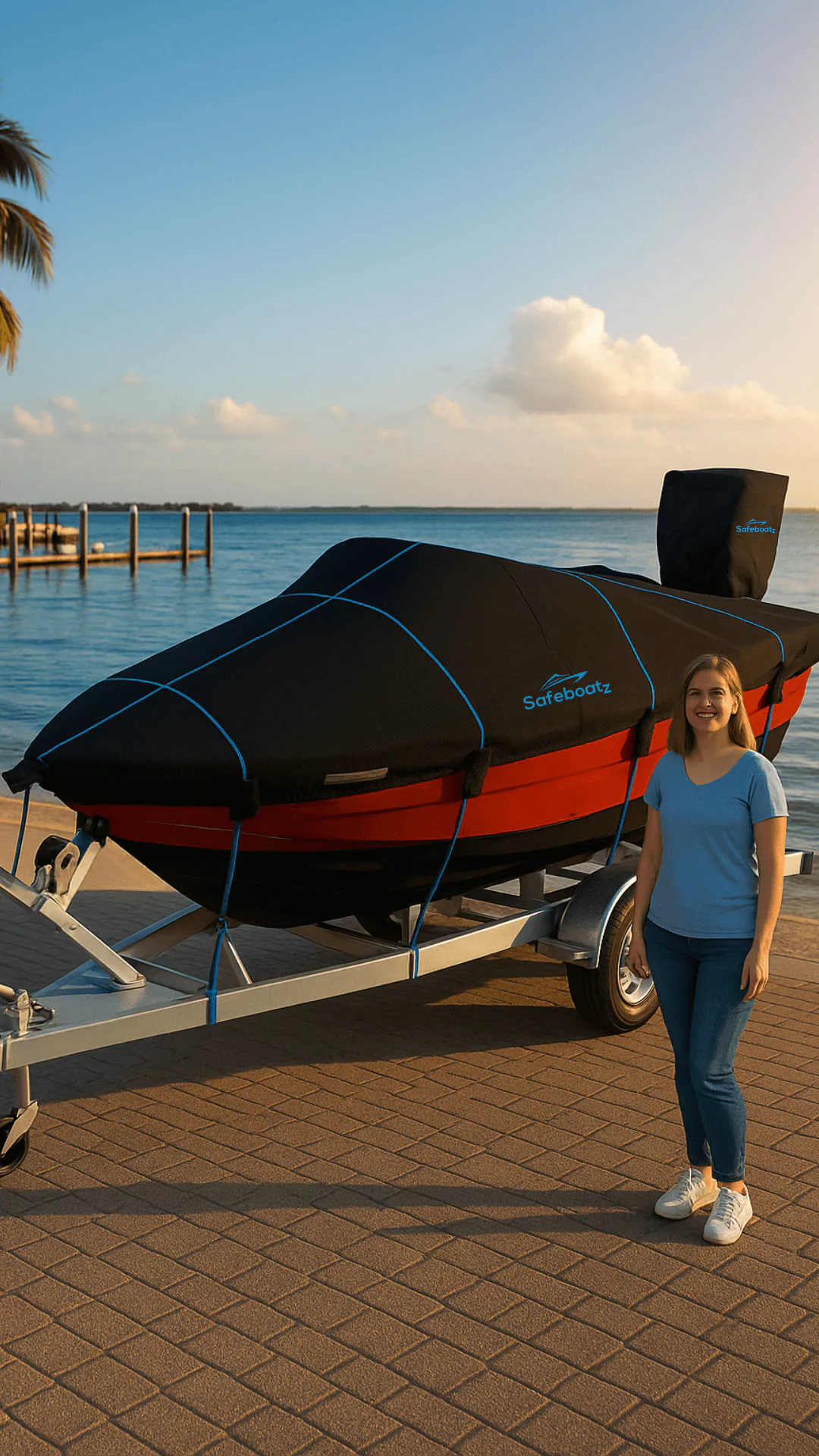
Trailerable Boat Cover 17-19ft
Fits 17–19ft boats – 102” beam. Heavy-duty 900D fabric, waterproof & UV-resistant. Reinforced for trailering. Built to protect, wherever you go.
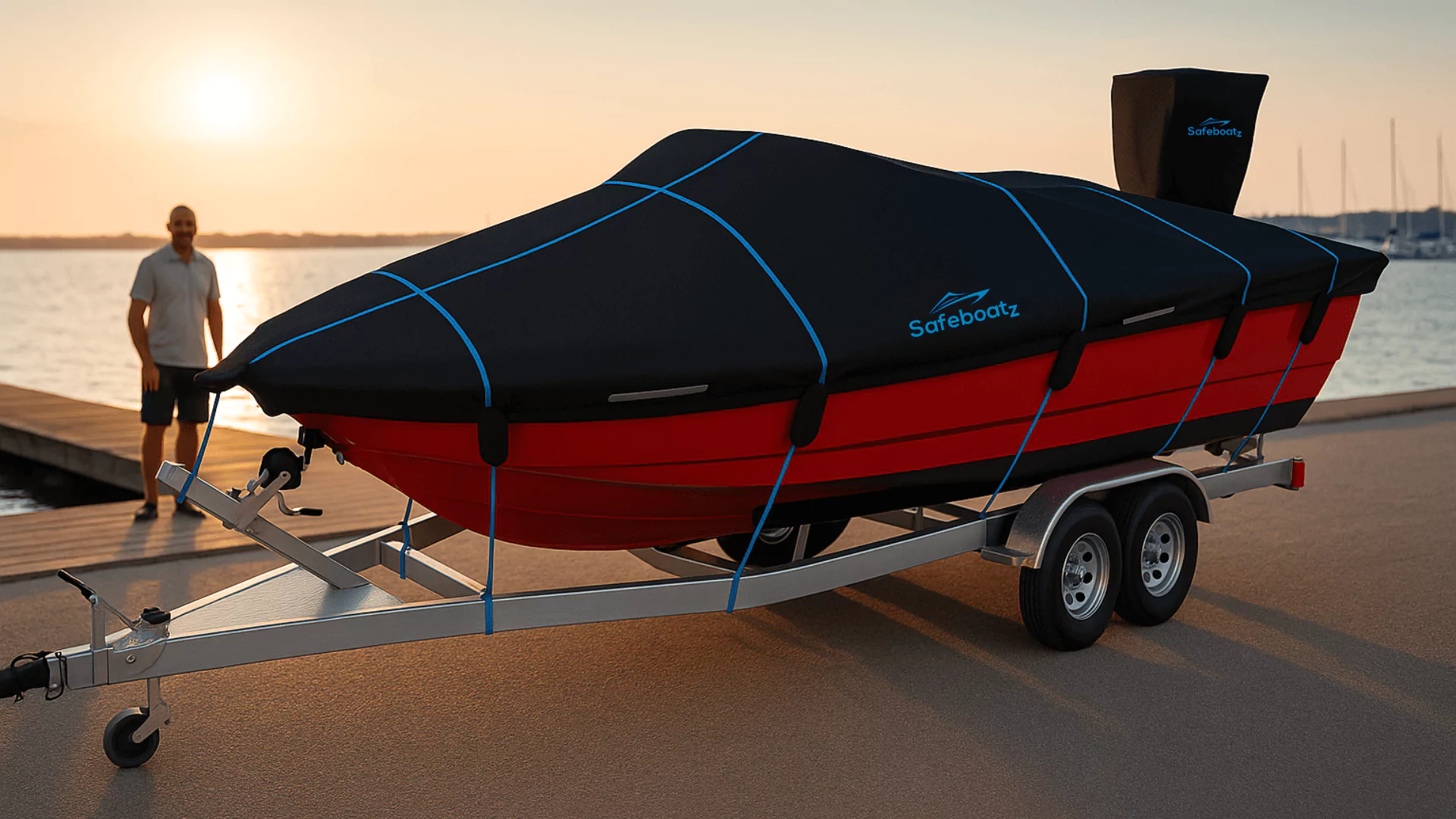
Trailerable Boat Cover 20-22ft
Fits 20–22ft boats – 106” beam. Heavy-duty 900D marine fabric, waterproof & UV-resistant. Secure fit for trailering and winter storage.