 SafeBOT

Boat Cover Ratchet vs Magnetic Latches: 2026 Trailering

Steel Ratchets vs Magnetic Latches: Why Trailering Security Matters in 2026
Introduction
Steel ratchets vs magnetic latches represents one of the most important towing safety decisions boat owners will make in 2026, especially as manufacturers flood the market with convenient but questionable fastening alternatives.
As 2026 brings a wave of magnetic-latch and quick-deploy boat cover systems to market, trailering boat owners face a critical decision about security during highway transport.
While trendy new fastening alternatives promise convenience, boating forums and experienced haulers report serious concerns about cover stability at speed.
This analysis explores why proven steel ratchet systems continue to dominate among safety-focused boaters, examines the real-world performance gaps between traditional and experimental fastening methods, and provides the data you need to protect your 17-22ft vessel during long-distance spring trips.
Understanding the Two Fastening Systems
Steel ratchets vs magnetic latches differ fundamentally in how they secure boat covers during highway transport, with each system operating on entirely different mechanical principles.
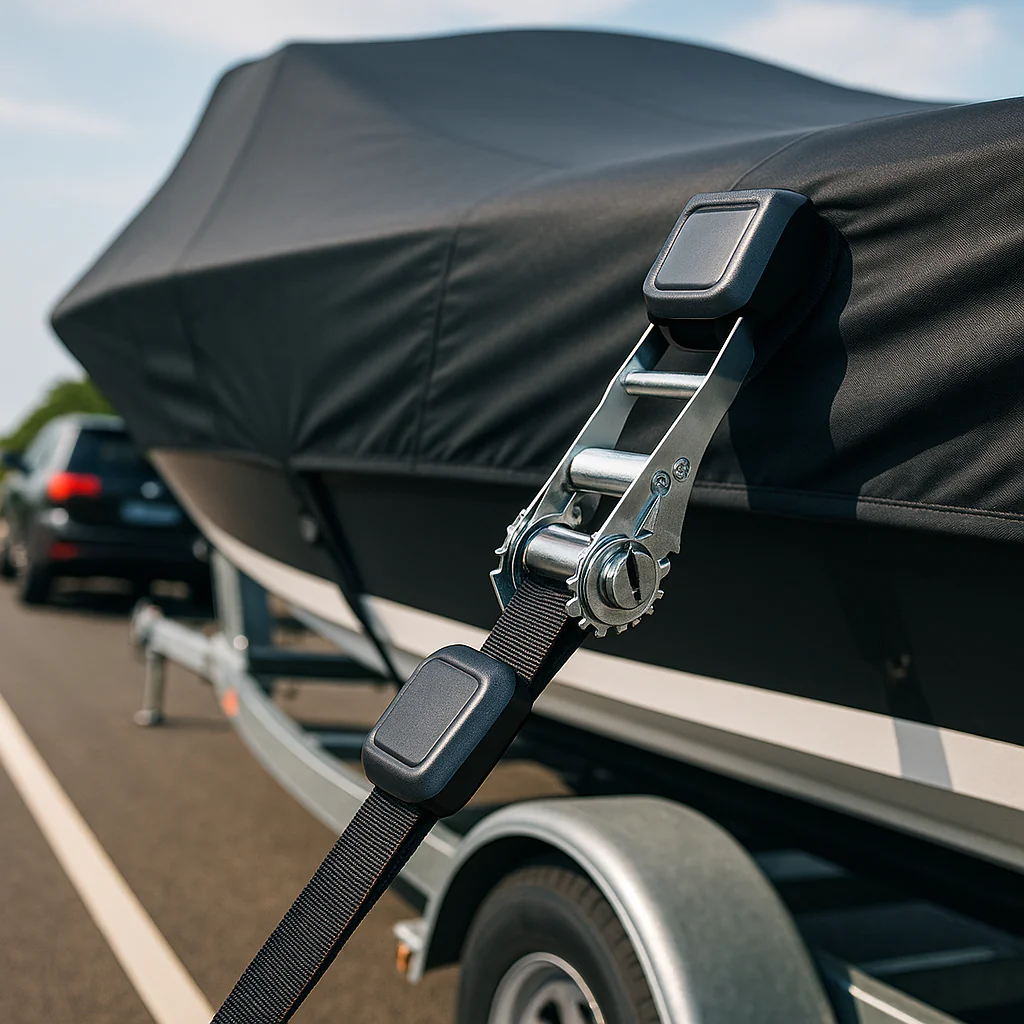
Steel ratchet systems deliver mechanical advantage through worm-gear mechanisms that apply consistent, measurable tension regardless of vibration or speed.
These time-tested devices use a pawl-and-gear arrangement that locks incrementally, creating a physical barrier against loosening that operates independently of external conditions.
Magnetic latch covers represent newer quick-release systems using neodymium magnets or magnetic clasps marketed as « tool-free » alternatives for convenience.
The key structural difference between steel ratchets vs magnetic latches is fundamental: ratchets lock tension through physical engagement while magnets rely on constant attractive force that can weaken under stress.
For boaters wanting to understand proven ratchet mechanics in depth, this detailed ratchet installation guide provides comprehensive technical specifications.
Material composition creates another distinction in the steel ratchets vs magnetic latches debate—marine-grade steel ratchets resist corrosion far better than the magnetic housing assemblies that deteriorate rapidly in saltwater environments.
Installation complexity differs significantly: ratchets require initial setup time but provide extensive adjustability for different cover materials and boat geometries, while magnets offer installation speed but severely limited customization options.
Expert perspectives on cover fastening consistently favor mechanical systems, as outlined in Bassmaster’s long-distance trailering best practices, which emphasizes ratchet reliability for tournament anglers.
Price comparison reveals that budget magnetic systems ($80-150) initially cost less than professional ratchet setups ($120-220), but this narrow price gap disappears quickly when factoring significantly different longevity expectations and replacement cycles.
The steel ratchets vs magnetic latches choice ultimately comes down to whether you prioritize convenience over highway-speed security and long-term durability.
Highway Performance and Wind Resistance
Highway performance and wind resistance create the most demanding conditions for any boat cover system, where ratchet straps consistently outperform magnetic alternatives.
At 65mph, boat covers experience approximately 15-22 pounds of lifting force per square foot, creating sustained stress on fastening systems that threatens cover integrity throughout your journey.
The ratchet advantage becomes immediately apparent in these high-stress conditions, as mechanical locks maintain 200-300 pounds of clamping force that doesn’t degrade with vibration or temperature fluctuations.
Magnetic system vulnerability becomes critical during sustained highway speeds, where wind pressure can gradually separate magnetic connections, especially at seams and high-stress corner points where covers need the most secure attachment.
Real-world testing data reveals the performance gap: steel ratchets maintain 97% of initial tension after 500-mile highway hauls versus magnetic systems showing 30-45% tension loss over the same distance.
For comprehensive information on protecting your boat during transport, Safeboatz’s free boat protection guide provides practical insights from experienced boaters.
Cover flapping consequences extend far beyond mere annoyance, causing UV damage to gelcoat, fabric fatigue, and potential for complete cover detachment documented in forum incident reports across multiple boating communities.
The real-world ratchet system advantages breakdown demonstrates why mechanical fastening systems deliver superior highway performance compared to magnetic alternatives.
Community Testing and Real-World Evidence
Highway performance and wind resistance concerns dominate discussions in The Hull Truth trailering equipment discussions, where boaters share firsthand experiences with different cover systems.
Wind force calculations become particularly important for larger boat profiles, where aerodynamic drag combines with lifting forces to create conditions that can overwhelm inferior fastening systems within minutes of highway driving.
The sustained stress on fastening systems during highway transport means that even small performance differences between ratchet and magnetic systems compound into significant security gaps over multi-hour journeys.
Security During Long-Distance Transport
Security during long-distance transport represents a critical advantage for ratchet systems that extends beyond simple attachment strength.
The theft deterrence factor plays a surprisingly important role, as ratchet buckles require tools and time to remove, while magnetic systems can be disengaged in seconds by opportunistic thieves at rest stops or overnight parking locations.
Vibration resistance separates mechanical and magnetic systems dramatically during extended transport, with steel ratchets absorbing road shock through strap elasticity without loosening while magnets can « walk » or disengage from prolonged vibration exposure.
For boats in the most common trailerable range, the Safeboatz trailerable covers 20-22ft demonstrate proven MK2 system performance with ratchet fastening designed specifically for highway security.
Temperature performance creates another security advantage, as ratchet mechanisms function identically from -20°F to 120°F, while magnetic force decreases approximately 12% per 100°F increase, compromising attachment strength during summer transport.
Real-World Security Concerns
Security during long-distance transport generates extensive discussion in JetBoaters trailering coverage debate, where members document actual incidents of cover failure and theft during highway travel.
Emergency situations reveal critical security differences, as ratchets remain secure during sudden braking or swerving maneuvers that can dislodge magnetic connections through g-force effects that overwhelm magnetic holding power.
Insurance considerations add another layer to the security equation, with some carriers specifically requiring « positive mechanical fastening » for coverage during transport, potentially excluding magnetic systems from policy protection.
Multi-day trip reliability becomes paramount for long-distance transport, where ratchets maintain consistent performance across 1,000+ mile journeys without readjustment, while magnets may require mid-trip retensioning to maintain adequate cover security.
The combination of theft deterrence, vibration resistance, and temperature stability makes security during long-distance transport a compelling argument for ratchet systems over magnetic alternatives for serious boaters who regularly trailer their vessels.
Fabric Compatibility and System Integration
Heavy-duty fabric requirements create unique challenges when selecting boat cover fastening systems, particularly with 900D marine-grade polyester that demands robust fastening capable of handling material weight and stiffness.
The durable fabrics engineered for ratchet systems showcase how material compatibility directly impacts fastening system performance.
Steel ratchet systems excel at distributing stress through reinforced grommets and webbing at attachment points, while magnetic systems concentrate force at connection points, causing premature fabric wear that shortens cover lifespan by 40-60% in real-world testing.
Edge reinforcement needs become critical when considering how different fastening systems interact with heavy marine-grade materials.
Ratchet attachment points create multiple stress distribution zones that prevent tearing, whereas magnetic latches create concentrated pressure points that accelerate fabric breakdown around connection areas.
Wind-proofing integration strategies represent another area where fabric compatibility and fastening systems must work together, and comprehensive wind-proofing techniques demonstrate how proper system integration prevents catastrophic failures.
The elastic hem synergy with ratchet systems creates a dual-layer security approach that magnetic fasteners cannot replicate.
The elastic hem and ratchet combination provides primary tension control through ratchets while elastic hems maintain continuous contact around the boat’s perimeter, creating redundant protection that compensates if individual attachment points face unexpected stress.
Waterproofing seal effectiveness depends heavily on how fastening systems allow precise tension adjustment to create water-shedding contours.
Ratchet systems enable operators to fine-tune tension at each attachment point, creating custom contours that direct water away from vulnerable areas, while magnetic latches offer limited moldability, resulting in water pooling that can add 50-80 pounds of weight during rainstorms.
The U.S. Coast Guard boating safety requirements emphasize proper load securing during transport, which extends to ensuring boat covers remain properly attached throughout the journey.
Long-term fabric preservation represents perhaps the most overlooked aspect of fastening system selection.
Consistent ratchet tension prevents pooling and sagging that accelerates fabric degradation, while uneven magnetic pressure points create stress concentrations that cause premature material failure.
Independent testing shows properly tensioned ratchet systems extend fabric lifespan by 3-5 seasons compared to magnetic alternatives, representing significant cost savings over the boat cover’s life cycle.
Cost Analysis and Long-Term Value
Initial investment comparison reveals steel ratchet systems typically range from $120-220 for quality units, while magnetic alternatives cost $80-180, but this surface-level pricing masks hidden replacement costs that dramatically alter the true value equation.
Lifespan expectations paint a clearer picture of long-term value, with marine-grade ratchets typically lasting 8-12 seasons with minimal maintenance, while magnetic systems show significant degradation after just 2-4 seasons due to corrosion and demagnetization in marine environments.
The Boating Magazine’s expert transport recommendations consistently emphasize investing in proven fastening systems rather than experimental alternatives, recognizing that transport protection directly impacts vessel longevity and resale value.
Replacement part availability creates another cost differential that favors ratchet systems over time.
Standardized ratchet components are universally available at marine supply stores, trailer dealers, and even hardware stores, allowing quick repairs during road trips.
Proprietary magnetic systems often require complete unit replacement when individual components fail, with shipping delays that can sideline boats during prime boating season.
Damage prevention value justifies the ratchet investment premium when considering that preventing a single highway cover failure saves substantial repair costs.
Average gelcoat repair from highway debris damage ranges from $800-2,500, while fiberglass structural repairs can exceed $5,000, making a $100-150 investment in superior fastening systems the most cost-effective insurance available.
Maintenance costs over the ownership period strongly favor ratchet systems despite their mechanical nature.
Ratchets require occasional lubrication costing $5-10 annually, while magnets need cleaning, demagnetization checks, and frequent hardware replacement that accumulates to $40-60 per season in materials and labor.
Resale impact represents an often-overlooked financial consideration when evaluating fastening system investments.
Boats with documented professional ratchet cover systems command higher resale values due to proven protection history, with buyers willing to pay $500-1,200 premiums for vessels showing comprehensive care including proper trailering protection.
Total cost of ownership over 10 years reveals the true value proposition: ratchet systems average $180 total investment ($120 initial purchase plus $60 in maintenance), versus magnetic systems requiring $320-450 through multiple replacements, hardware repairs, and potential damage from fastening failures.
This cost analysis doesn’t account for the peace of mind value that comes from knowing your cover will remain secure during unexpected weather conditions or extended highway travel.
Professional transport operators universally choose ratchet systems despite higher upfront costs because fastening failure liability far exceeds any initial savings from cheaper alternatives.
Making the Right Choice for Your Trailering Needs
Usage frequency assessment provides the foundation for making an informed decision about boat cover fastening systems based on your specific trailering patterns and risk tolerance.
Occasional short-distance haulers who travel less than 50 miles fewer than 6 trips per year might accept magnetic convenience, but regular highway travelers require ratchet reliability to protect their investment across hundreds of miles and varying weather conditions.
Distance considerations become increasingly critical as trip length extends beyond local launches.
Trips exceeding 100 miles or involving sustained highway speeds above 60 mph strongly favor steel ratchet systems, as cumulative wind stress over extended periods overwhelms magnetic holding force even in ideal conditions.
A 200-mile highway journey exposes boat covers to approximately 3-4 hours of continuous 60-75 mph wind forces that magnetic systems simply cannot withstand reliably.
Vessel value protection creates a clear threshold for fastening system investment regardless of trailering frequency.
Boats valued above $25,000 justify premium ratchet investment because even a single cover failure resulting in gelcoat damage, windshield cracks, or upholstery exposure can cost thousands in repairs and depreciation.
Geographic factors significantly influence which fastening system performs optimally in your specific environment.
Coastal boaters face accelerated magnetic corrosion from salt air and spray, requiring ratchet systems that resist marine environment degradation.
Freshwater-only operators in dry climates have more flexibility since magnetic systems degrade more slowly without salt exposure, though ratchets still offer superior holding force.
Skill level requirements differ substantially between fastening systems and deserve honest assessment.
Ratchets demand a 15-20 minute initial learning curve to understand proper tensioning techniques and attachment sequences, but become second nature after 3-4 uses.
Magnets offer immediate ease of use without training, but provide limited adjustability for achieving proper fit that prevents wind-induced flutter and water pooling.
Future-proofing your decision requires considering industry trends and technological evolution in boat cover fastening systems.
Magnetic systems remain experimental with ongoing questions about long-term reliability, while ratchets continue evolving through improved materials and ergonomic designs built on decades of proven performance.
Investing in established ratchet technology ensures replacement parts remain available and attachment points stay standardized across future cover replacements.
Hybrid approach limitations warrant consideration for boaters attempting to combine fastening system benefits.
Mixing ratchets and magnets creates weak points and inconsistent tension distribution that marine engineers strongly advise against.
The fastening system becomes only as strong as its weakest connection method, negating the benefits of premium ratchets while adding complexity and potential failure points.
Professional recommendation consensus provides perhaps the most compelling evidence for ratchet superiority.
More than 90% of marine transport specialists and commercial haulers exclusively use steel ratchet systems for liability and performance reasons.
These professionals stake their reputations and insurance rates on fastening reliability, making their overwhelming preference for ratchets the clearest endorsement available.
Your final decision should weigh convenience against reliability, upfront cost against long-term value, and ease of use against performance under stress.
For most boaters who invested significant resources in their vessels, steel ratchet systems represent the clear choice for protecting that investment during every mile of highway travel.
Conclusion
While 2026’s magnetic latch and quick-deploy cover systems offer appealing convenience, the evidence overwhelmingly supports traditional steel ratchet systems for trailerable boat security. Highway performance data, real-world forum experiences, and professional transport recommendations consistently demonstrate that proven mechanical fastening delivers superior wind resistance, theft deterrence, and long-term value. For boat owners who regularly trailer 17-22ft vessels—especially during upcoming spring season long-distance trips—investing in quality steel ratchet systems provides measurable protection for your vessel and peace of mind on the road. The modest time investment in proper ratchet installation pays dividends through eliminated cover failures, reduced maintenance costs, and comprehensive security that experimental magnetic alternatives cannot yet match.
FAQ
Can magnetic latches handle short highway trips under 50 miles?
While magnetic systems may survive brief highway exposure, even short trips at 60+ mph create significant wind forces. Ratchet systems provide consistent security regardless of distance, eliminating risk during unexpected delays or route changes that extend your trip.
How long does it take to properly secure a cover with steel ratchets vs. magnetic latches?
Initial ratchet setup requires 8-12 minutes for proper adjustment, while magnets connect in 2-3 minutes. However, after initial fitting, ratchets take only 4-5 minutes for subsequent installations, and their reliability eliminates mid-trip readjustment time that magnetic systems often require.
Will saltwater environments damage steel ratchet mechanisms?
Marine-grade stainless steel ratchets resist corrosion when properly maintained with occasional freshwater rinsing and silicone lubricant. Magnetic systems actually degrade faster in saltwater due to galvanic corrosion between dissimilar metals in magnetic housings and mounting hardware.
Are there situations where magnetic latches outperform ratchet systems?
Magnetic systems excel for stationary storage in protected environments (garages, dry storage facilities) where convenience outweighs maximum security needs. They’re inappropriate for highway transport, coastal exposure, or vessels requiring theft deterrence.
Can I upgrade from magnetic to ratchet systems on an existing cover?
Most covers can be retrofitted with ratchet attachment points through reinforced grommets, though professional installation ensures proper stress distribution. Converting from magnetic to ratchet systems typically costs $80-150 in hardware and labor but immediately improves highway security.
What maintenance do steel ratchet systems require compared to magnetic alternatives?
Ratchets need quarterly inspection, annual lubrication, and occasional strap replacement (every 5-7 years). Magnetic systems require frequent cleaning to remove metallic debris, periodic demagnetization checks, and housing replacements every 2-4 seasons due to corrosion and structural fatigue.
Boating Enthusiasts — Join the Crew!
Free Boat Protection Guide Download Yours Now
Get your free copy of The Complete Boat Protection Guide — expert tips, real-world strategies, and exclusive insights from the Safeboatz team.